
Culture
17:09, 28-May-2018
Kabul library bus drives Afghan children to read
 ["china"]
Share







Copied
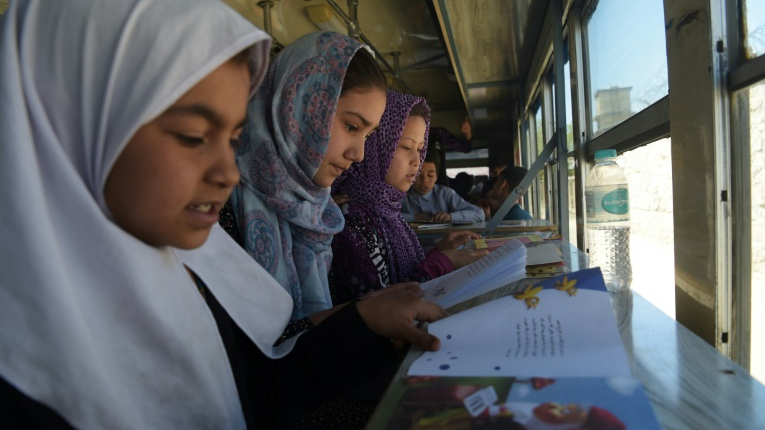
The door of the blue bus slides open and dozens of children excitedly bound up the steps, eager to get their hands on hard-to-find books in Kabul's first mobile library.
Named Charmaghz - the Dari for walnut, which is associated with logic in Afghanistan because the nut resembles a brain - is a converted public bus and is hard to miss as it winds through the dusty streets of the Afghan capital.
The library-on-wheels offers pupils and street kids free access to children's books, which are in short supply at public schools and libraries.
The library bus stops at schools, parks or orphanages throughout the week. /AFP Photo
The library bus stops at schools, parks or orphanages throughout the week. /AFP Photo
It also offers one of the few spaces outside the home that children can use in a city where fear is increasingly keeping residents behind closed doors.
As both the Taliban and the Islamic State group step up their attacks in Kabul, with civilians paying the price, many parents - traumatized by the violence, some of them already devastated by loss - have stopped taking their children out in public.
Charmaghz, used by as many as 300 children every day, is a rare exception.
The vehicle, which is rented from a state-owned bus company and takes precautions to avoid government buildings, main roads or other crowded areas targeted by militants in Kabul, is a relatively secure place for them to read, play chess and see friends.

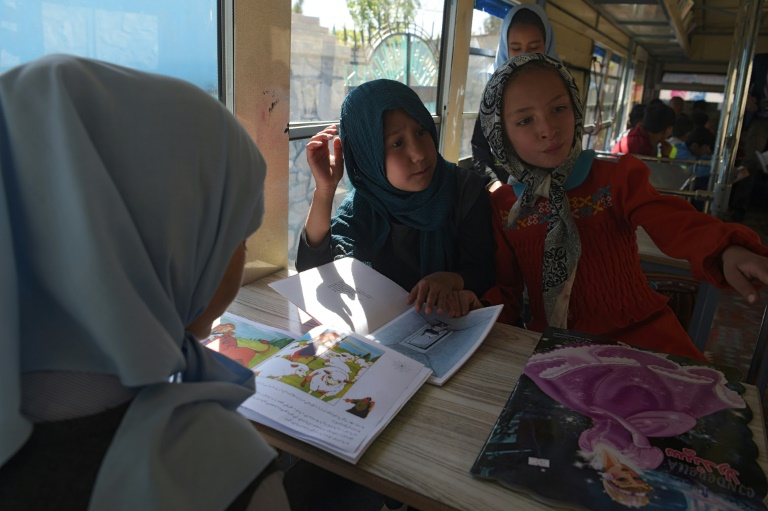
The library-on-wheels offers pupils and street kids free access to children's books, which are in short supply at public schools and libraries in Afghanistan. /AFP Photo
The library-on-wheels offers pupils and street kids free access to children's books, which are in short supply at public schools and libraries in Afghanistan. /AFP Photo
"Boys, you sit in the back and girls in the front. It is important to be organized," one of three volunteers tells the children as he pulls books from an overhead shelf and places them in outstretched hands.
Unlike traditional libraries where chatting is discouraged, the constant hum of voices fills Charmaghz.
Children sit cross-legged on the carpeted floor or at desks reading aloud from some of the 600 books that have been donated by Afghan publishers.
"I come to the bus once a week to read books," 13-year-old Zahra told AFP.
"Today I'm reading about how to improve your health. I'm reading what I should do and what I should eat."
"When I go home I share the stories I read here with my brothers and sisters."
4191km