
Opinions
10:41, 16-Jul-2018
Opinion: World Youth Skills Day: Preparing youth for tomorrow’s world
Updated
09:55, 19-Jul-2018
 ["china"]
Share







Copied

Editor's note: Wang Yan is the Senior Specialist for National Institute of Education Sciences.The article reflects the author's opinion, and not necessarily the views of CGTN.
Today’s youth are tomorrow’s workers, entrepreneurs, parents, active citizens and leaders. The skills that youth aged between 15 and 24 have will largely shape the future well-being of individuals and nations.
Youth with poor skills face a much greater risk of being economically disadvantaged and a higher likelihood of unemployment and dependency on social benefits. Young people are almost three times more likely to be unemployed than adults and continuously exposed to a lower quality of jobs and greater labor market inequalities.
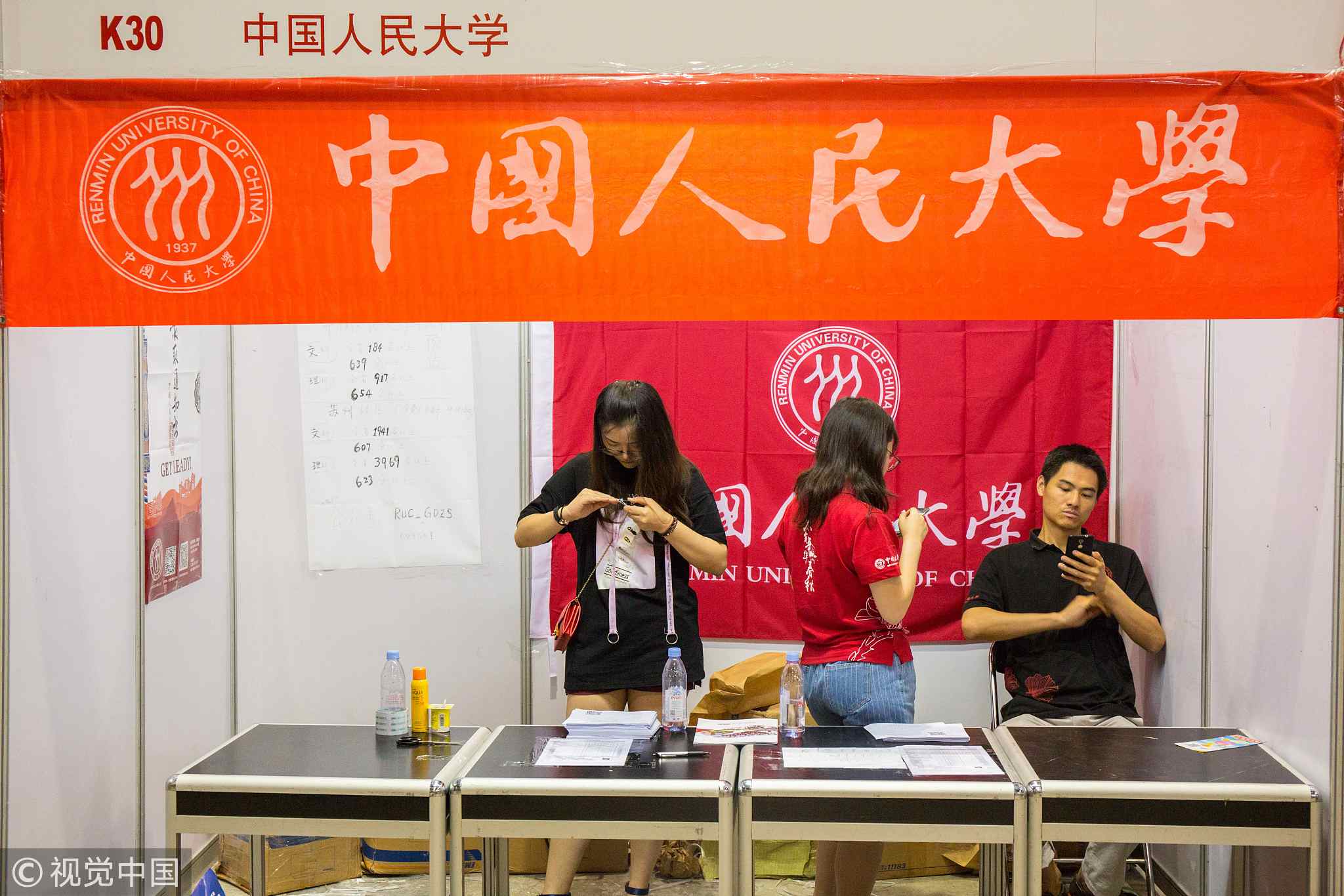
A recruitment exercise for undergraduate students in China took place in Guangzhou on Jun 27, 2018. /VCG Photo
A recruitment exercise for undergraduate students in China took place in Guangzhou on Jun 27, 2018. /VCG Photo
A skills mismatch, i.e. the skill that education sector supplies and that the labor market demands, prevails in many countries. Many youths continue to struggle in their transition from school to work.
To raise awareness on the importance of investing in youth skills development, the United Nations General Assembly designated July 15 as World Youth Skills Day on November 11, 2014.
China, like many other developing countries in pursuit of social well-being and economic prosperity, has pushed progressively to improve youth skills, with substantial achievements. But formidable challenges are ahead.
China has impressed the world with its performance at the conclusion of the 2017 WorldSkills Competition in Abu Dhabi. Thirty medals, ranging from baking and bricklaying to tiling and welding, were captured by the Chinese team, including 15 gold. China's Bia Song also won the Albert Vidal Award for the best competitor, after taking gold in the industrial mechanic millwright skill.
This could partly be attributable to China’s progress in educational reform and development. In 2016, 93.7 percent of junior secondary graduates continued their study in senior secondary schools (in 2005 only around 40 percent of junior secondary graduates attended senior secondary schools). About 16 million students are enrolled in various secondary vocational education programs, accounting for 40.28 percent of total enrollment at senior secondary education level.
China has also eased entrance requirements into tertiary vocational education programs by setting separate pathways for high school graduates in recent education reform. Meanwhile, the government has transformed an array of colleges into universities of applied science as a building block of a modern vocational education system as part of efforts to address the gap of highly skilled workers in the transition from a “labor-intensive economy“ to a “technology-intensive economy.”
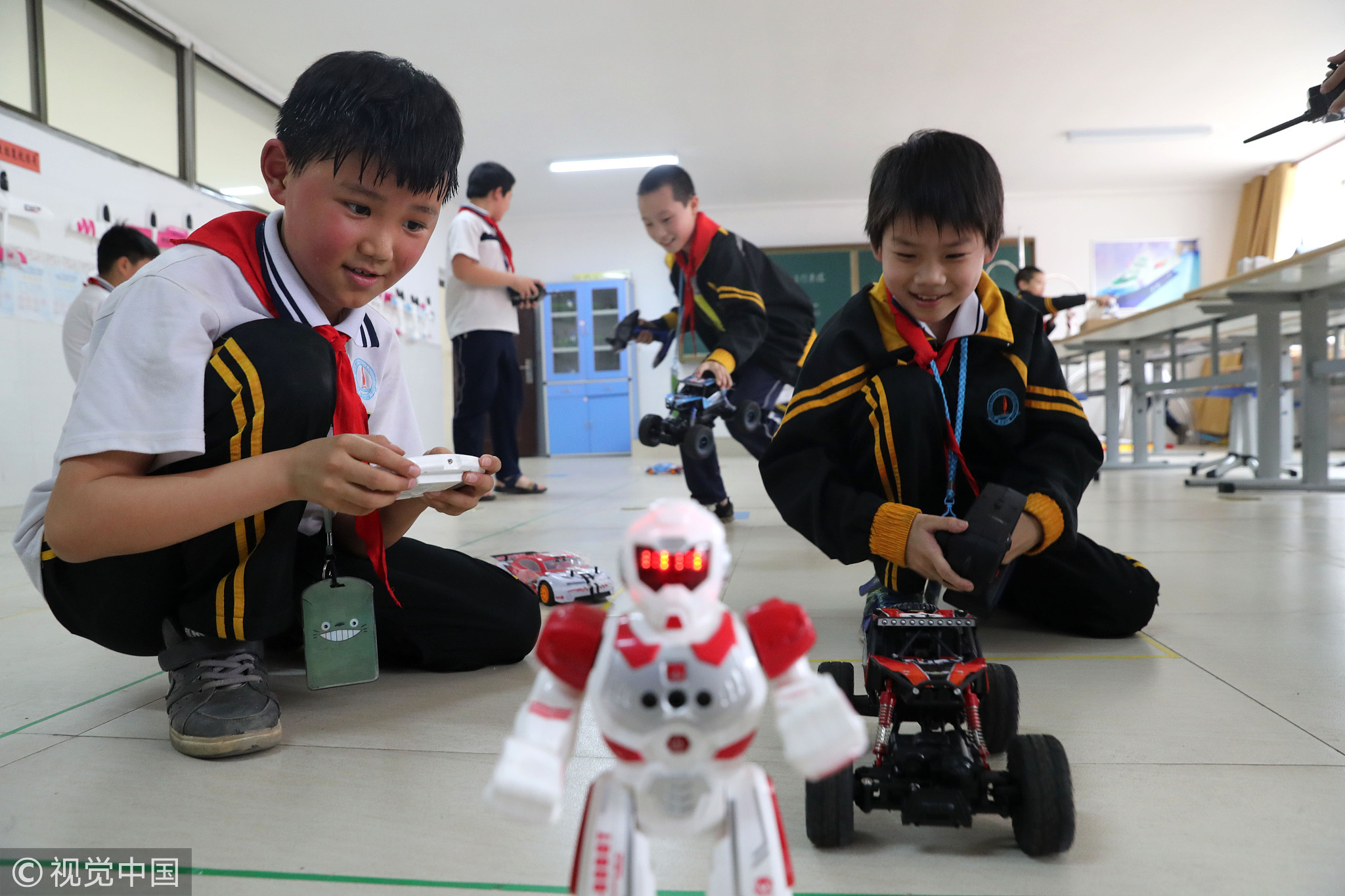
Pupils study how to control robots in Fuzhou Jiangxi Province on May 2, 2018. /VCG Photo
Pupils study how to control robots in Fuzhou Jiangxi Province on May 2, 2018. /VCG Photo
China launched a campaign with the theme “New Era, New Skill and New Dream” to observe World Youth Skill Day. In today’s world, as innovation and emerging technologies are transforming labor markets, what skills do youth need to operate in future economies and to become drivers of a sustainable future?
Foundation/basic skill still counts. OECD research shows that Individuals with the lowest level of foundation skills are 1.8 times more likely to be unemployed, 1.4 times more likely to report health problems and 1.5 times more likely to have low levels of general trust, as compared with individuals with the highest level of foundation skills.
Automation and technological progress has resulted in an ever-growing change in the types of skills needed. These changes imply a decline in the demand for craft skills and physical labor, and a rise in the demand for “higher order soft skills” such as creativity and interpersonal and communication skills.
In general, employment prospects improve for youth who have attained higher education qualifications. Those with post-secondary education are much less likely to be unemployed than who have not completed upper secondary education. People with higher levels of education, in particular post-secondary education graduates, are at the lowest risk of losing to automation.
Studies also show that employment prospects are better among those with higher skills, particularly in ICT, and those who are comfortable with using ICT for problem-solving. Such skills may be acquired outside of formal education and in some cases can help people find jobs despite lower educational attainment
In short, skills have become the global currency of 21st-century economies and education and training are key determinants of success in the labor market. It is important to reform education systems to respond to changing demands for skills in the labor market. Choosing effective ways to equip youth with skills and realize their full potential is also a high priority.
Not only does government need to determine and anticipate the skills required in the labor market, but also create education and training opportunities for youth to develop and use those skills effectively in better jobs that lead to better lives. Only by engaging all the stakeholders, including governments, employers, employees, parents and students, can we achieve this and prepare our youth for tomorrow’s world.