
Analysis
08:10, 31-May-2019
Will Saudi successfully rally support against Iran at Mecca summits?
 ["china"]
Share







Copied
Editor's note: Guy Burton is a visiting fellow at the LSE Middle East Centre and adjunct fellow at Vesalius College, Brussels. He was previously an assistant professor at the Mohammed Bin Rashid School of Government in Dubai. The article reflects the author's opinion, and not necessarily the views of CGTN.
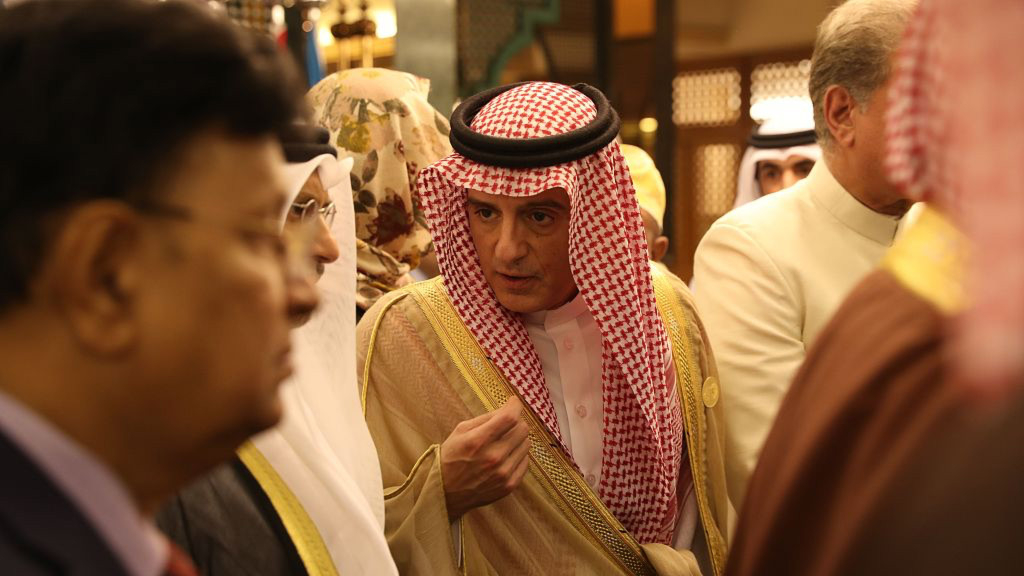
On Thursday and Friday, Mecca will play host to three summits: the Organization of Islamic Cooperation, the Arab League and the Gulf Cooperation Council (GCC). While the first had already been penciled in, Saudi King Salman requested on May 18 that the Arab and Gulf states also meet following a series of attacks on tankers off the UAE coastline and a pipeline in the kingdom.
The attacks coincided with rising tensions in the Gulf. Last year President Donald Trump made good on his election promise to withdraw the U.S. from the international nuclear deal with Iran. Although the U.S. move was unilateral and received widespread criticism, it was supported by the Saudis. Both see Iran as a regional threat, which if unchecked will advance its interests and influences across the Middle East. For Trump and the Saudi ruling elite, the agreement was inadequate for the task: the removal of sanctions meant Iran was able to generate more revenue from its oil exports which could be used to finance groups like the Houthis in Yemen, Hezbollah in Lebanon, Hamas in Gaza, Shia politicians in Iraq and the Assad government in Syria.
The Saudi proposal for the Arab League and GCC to meet in Mecca was important for two reasons. It occurred at the same time that the rhetoric between the U.S. and Iran was becoming increasingly inflammatory. Much of this came from the top, by Trump and his security adviser, John Bolton.
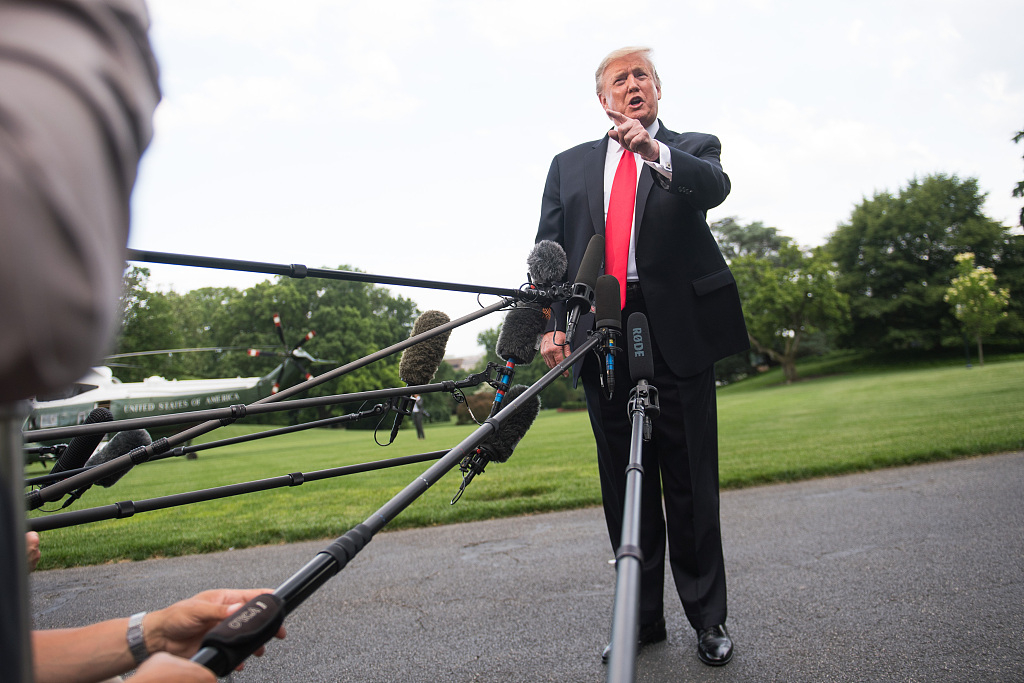
U.S. President Donald Trump speaks to journalists as he departs the White House for Pennsylvania in Washington, D.C., May 20, 2019. /VCG Photo
U.S. President Donald Trump speaks to journalists as he departs the White House for Pennsylvania in Washington, D.C., May 20, 2019. /VCG Photo
As well as playing up the dispatch of warships to the Gulf, Trump also initially signaled the willingness to increase U.S. troop numbers in the region. Yet soon after making those threats, he seemed to back down, around the same time that American military intelligence was reported to have seen no discernible increase in the threat level posed by Iran.
Another reason that makes the Mecca summits important is a more regional one. By bringing Arab leaders together, Saudi Arabia is looking to take a leading role in forming a consensus against what it sees as the threat posed by Iran. It wants to frame and shape the narrative, as well as ideally a response as to how to proceed against Iran.
Will the Saudis be successful in this regard? In terms of concrete action, that seems unlikely, especially from the Arab League. Beyond regular summits and expressions of solidarity since its creation in 1945, the organization has long been relatively toothless, especially when it comes to providing collective security.
The same can also be said for the GCC. Formed in 1981 in response to the fear of Iran, it has also struggled to provide collective security. The most notable example of this was Iraq's invasion of Kuwait in 1990, which led to a reliance on the U.S. to provide and guarantee for security where the Arab and Gulf states could not.
King Salman's appeal for Arab unity also challenges the prevailing narrative that has dominated the GCC over the past two years. Since June 2017 it has been internally fractured, when Saudi Arabia, the UAE, and Bahrain publicly split from Qatar. They accused Qatar of supporting terrorism and groups like the Muslim Brotherhood, which they associated with terrorism. They also criticized Qatar for hosting the Al Jazeera network, whose media coverage cast the Saudi and Emirati perspectives and actions in their war in Yemen in a bad light. To compound matters further, the Saudi-led group also claimed that Qatar was too close to Iran.
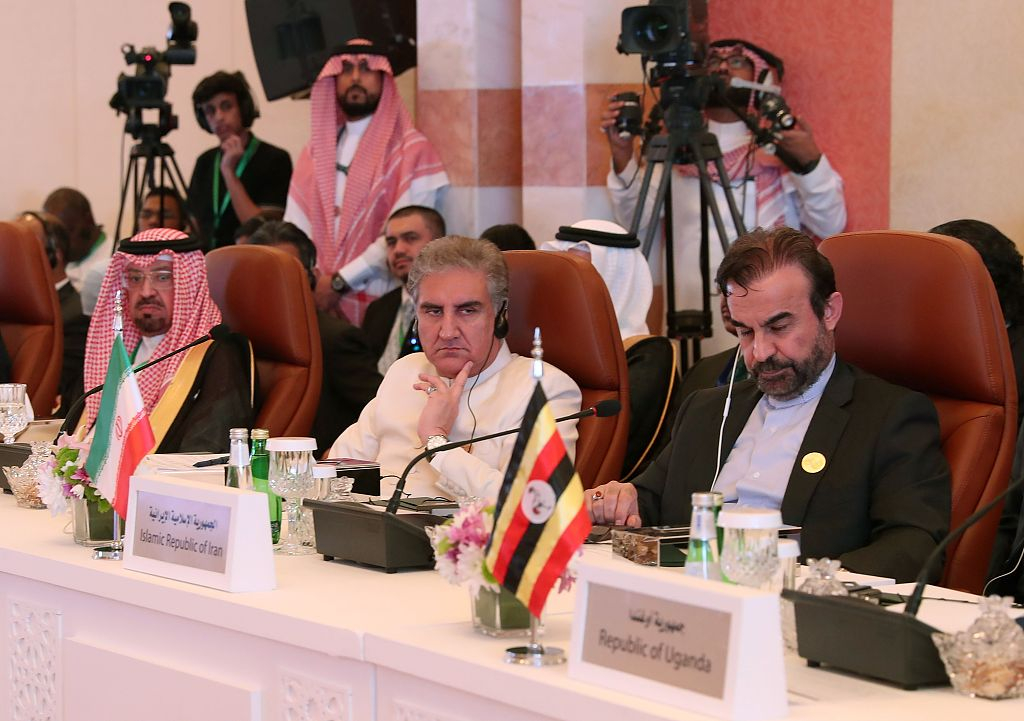
Iranian Director General of the Department of International Peace and Security Affairs Reza Najafi (R) and Pakistani Foreign Minister Shah Mehmood Qureshi (C) look on during a meeting of Islamic and Arab Foreign Ministers in Jeddah, May 30, 2019. /VCG Photo
Iranian Director General of the Department of International Peace and Security Affairs Reza Najafi (R) and Pakistani Foreign Minister Shah Mehmood Qureshi (C) look on during a meeting of Islamic and Arab Foreign Ministers in Jeddah, May 30, 2019. /VCG Photo
The split resulted in a diplomatic and economic blockade. But despite Saudi and Emirati expectations, Qatar has largely weathered the crisis by making use of the vast wealth it has generated through its natural gas exports, large sovereign wealth fund and investment in domestic manufacturing and industry. In addition, the closure of Saudi and Emirati trade and infrastructure also – and ironically – pushed Qatar closer to Iran to find alternatives.
Despite the bad blood, however, Saudi King Salman extended an invitation to Qatar's ruler, Sheikh Tamim bin Hamad Al Thani, to join the summits in Mecca. Although Sheikh Tamim will not be going, Qatar's Prime Minister Abdullah bin Nasser bin Khalifa Al Thani will attend. Sheikh Abdullah's presence is significant, since it constitutes the highest level of direct contact between the two Arab Gulf states since 2017.
Sheikh Abdullah's involvement does not signal an end to the divisions within the GCC and reconciliation between Saudi Arabia and Qatar. But it does offer the prospect of building confidence between them. It may also reflect Saudi awareness of the greater challenge presented by Iran and – perhaps privately – an appreciation of the consequences of their actions in driving Qatar towards Iran.
At the same time, Qatar's presence in Mecca offers a practical course for the future. Both the U.S. and Saudis may hope that Qatar's leaders may be able to use its contacts to open back-channel talks with Iran. While this is unlikely to lead to a wholesale change in relations between Iran and rivals like the U.S. and Saudi Arabia, it may go some way to alleviating some of the current tensions, both in the Gulf and in relation to the GCC.
In sum then, while it is unlikely that the Mecca summits will generate anything other than general statements and expressions of support towards a reduction of tensions in the Gulf, it will be worth looking at the exchanges that take place between Saudi and Qatari leaders during the summits. While it is unlikely that they will lead to any immediate results and changes in temperature between the two GCC states, it could well set the stage for more substantive developments to take place over the coming weeks and months.
(If you want to contribute and have specific expertise, please contact us at opinions@cgtn.com.)