
World
22:21, 28-Jun-2018
Conditions of refugee camps in Greece need improvement
Updated
22:12, 01-Jul-2018
 ["china"]
Share







Copied
03:44
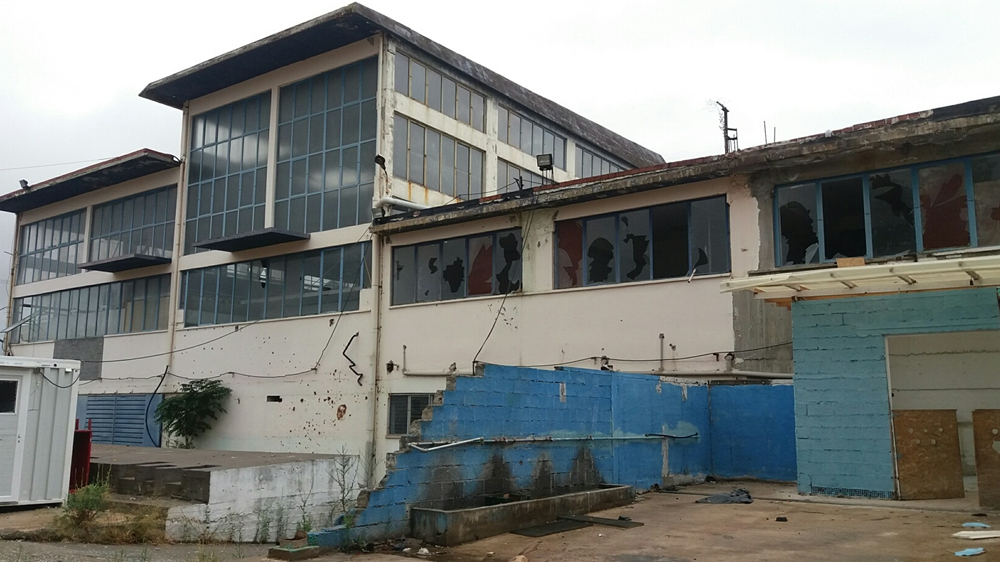
At the end of May, a large group of refugees from the Oinofyta camp, located in an isolated, industrial area one hour away from Athens, blocked the street in front of their camp. They were again protesting their harsh living conditions and demanded that the government move them to another location where conditions would be more humane and livable. They also demanded to speak to journalists but no one showed up. I was the first to do so a month later.
It is extremely rare for the government to allow journalists to film at refugee camps in Greece. And usually, the visit is limited to 45 minutes. At Oinofyta, we were the first TV crew allowed in since the camp hastily reopened in March. It was a last-resort move from the government to accommodate, temporarily they said, some of the thousands of asylum seekers entering Greece in the last few months, mostly through the land border with Turkey.
According to Greece's migration minister, between January and April, arrivals from the land border, where the EU-Turkey deal is not in effect, surpassed those at the islands by almost 3,000. The agreement stipulates that those arriving by sea from Turkey are restricted to the Greek islands, in specially-designed camps called "hotspots" while waiting for their asylum application to progress. In contrast, asylum seekers arriving from the land border have to be housed as soon as possible anywhere where there's space across the country. And that's how the Oinofyta camp was brought back to life.
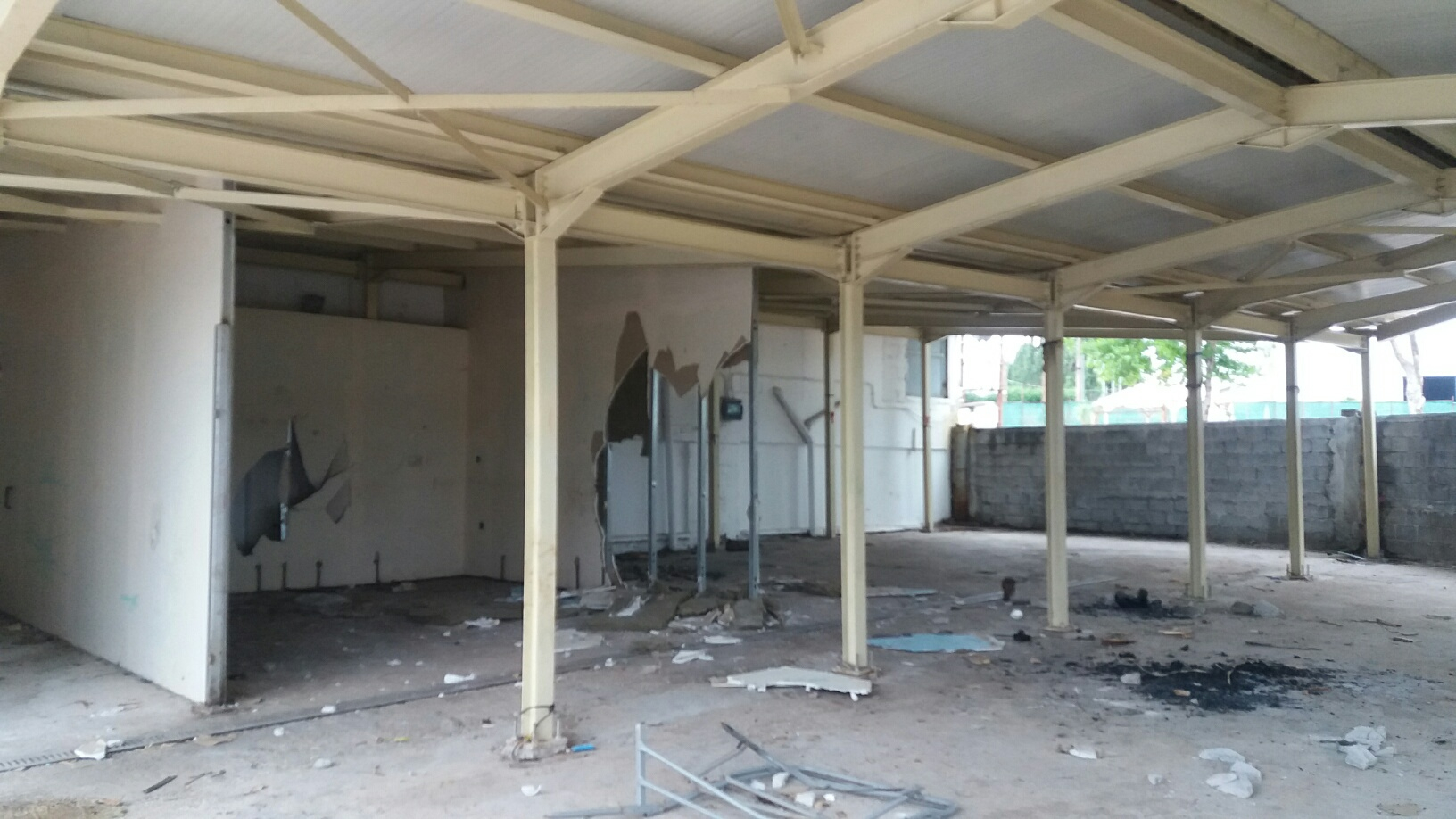
Oinofyta reopened in March 2018. When asylum seekers were first transferred there, they rioted and set up fires in the camp. /CGTN Photo
Oinofyta reopened in March 2018. When asylum seekers were first transferred there, they rioted and set up fires in the camp. /CGTN Photo
Only that compared to what it was before, when it was managed by a small American organization, despite the hundreds of people living there, there is no life.
All I saw was people carrying their existence from one concrete hallway to the other, from their 3x3 room to their neighbor's, from the nothingness of their morning to the nothingness of their afternoon. Baby milk was sitting inside plastic water bottles. Old men were walking around in plastic women's slippers. A Kurdish woman was frying some bread in a room that's supposed to be a kitchen with water from the rain covering the floor.
As they rightfully complain about the conditions, I tell them there are 58,000 people like them in Greece. "That's the mistake everyone makes," they stop and say to me. "Everyone thinks of us as numbers. We are not."
Yet, caring for the refugees remains a massive task for the government, which has moved at a slow pace. They say the migration ministry promised they will at least remove vulnerable residents like pregnant women and babies. We saw dozens of brand new electric kitchenettes being installed when we were there. Yet, not much of that matters to most.
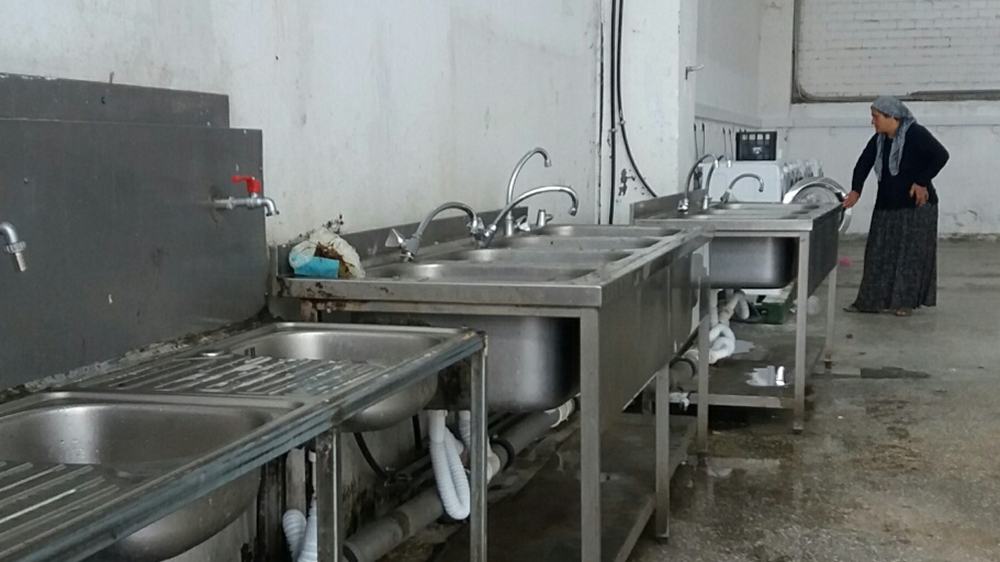
Several washing machines are installed inside this vast room next to sinks where refugees can wash their dishes. /CGTN Photo
Several washing machines are installed inside this vast room next to sinks where refugees can wash their dishes. /CGTN Photo
It is here, far away from Europe's halls of power where these days European leaders will again decide the fate of these people, that refugees from Syria, Palestine, Afghanistan gather around me.
They offer me Arabic coffee and anxiously ask if Europe will decide to reopen the borders. "La, la!" No, no, they shout. No one I ask wants to stay in Greece.
A handful later say they would if only they could find a job in a country that is struggling to provide jobs for its own people. Some of the people here have not even applied for asylum and so they are not entitled to the limited benefits Greece provides to refugees, like a monthly cash allowance used mostly to buy food. They are determined to leave illegally anyway they can and seek a new life elsewhere in Europe. But even that is getting harder.
As security checks at Greece's largest international airport in Athens are tighter than ever, many asylum seekers during the busy summer tourist season opt to try and leave through smaller, regional airports. Even there, arrests happen daily. Three days ago at Corfu island, police arrested 29 asylum seekers from Somalia, along with three smugglers, who tried to board flights to Europe on fake travel documents.
The list of such incidents has been endless. And so asylum seekers resort to another option. They patiently wait in Greece until their asylum application is accepted and then apply for their legal travel documents. With that, they are free to travel to several countries across Europe. Many, though, never come back. Instead, they apply for asylum again, in another European country like Germany and France.
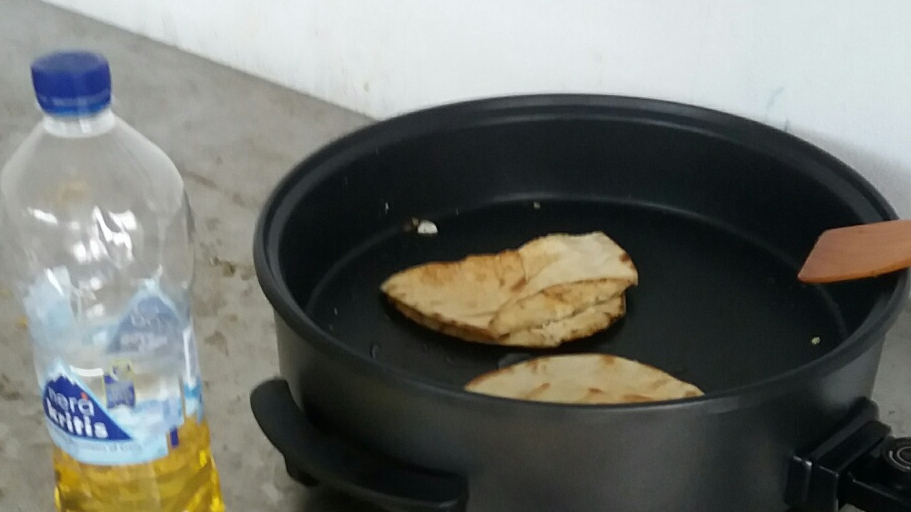
Refugees at Oinofyta are offered three meals a day but they can also cook their own food. /CGTN Photo
Refugees at Oinofyta are offered three meals a day but they can also cook their own food. /CGTN Photo
But all that could change. Since the Dublin agreement, countries like Austria and Germany want to adopt a tougher stance towards migration, according to which asylum seekers must settle in the country where they first entered the European Union, but the rule is not being enforced.
German Chancellor Angela Merkel has said since Europe failed to find a joint solution to the migration issue, which threatens her government, she will seek direct deals with frontline countries like Greece to curtail "secondary movement." Under such a deal, even if registered asylum seekers make it out of Greece and on to Germany, Germany would send them back.
For some a curse, for others a blessing, Greece is situated at the crossroads of three continents – Europe, Africa and the Middle East – and has long been a traditional migrant route and destination. It is a small country of 10.7 million people still trying to stand back on its feet from a reeling economic crisis. And it is part of the European Union, which was established to promote some of its core values: freedom, democracy and respect for human rights, along with solidarity among its members.
These values are now tested as Europe tries to come up with a common migration policy. And this is not just about richer EU states providing financial assistance to the poorer ones so they can feed and house those seeking refuge on the continent.
"I did not come here to fight every morning for some food and a bottle of water," Ibra, a young refugee from Syria, told me at the Oinofyta camp. "I came here to find a life, like the one I had before."