
Opinion
09:51, 18-May-2019
Expert: Australia's new government should prioritize income distribution
 ["china"]
Share







Copied
Editor's note: The article is written based on an interview with Tim Harcourt, J.W. Nevile Fellow in Economics University of New South Wales (UNSW) Sydney. The article reflects the interlocutor's opinions, and not necessarily those of CGTN.
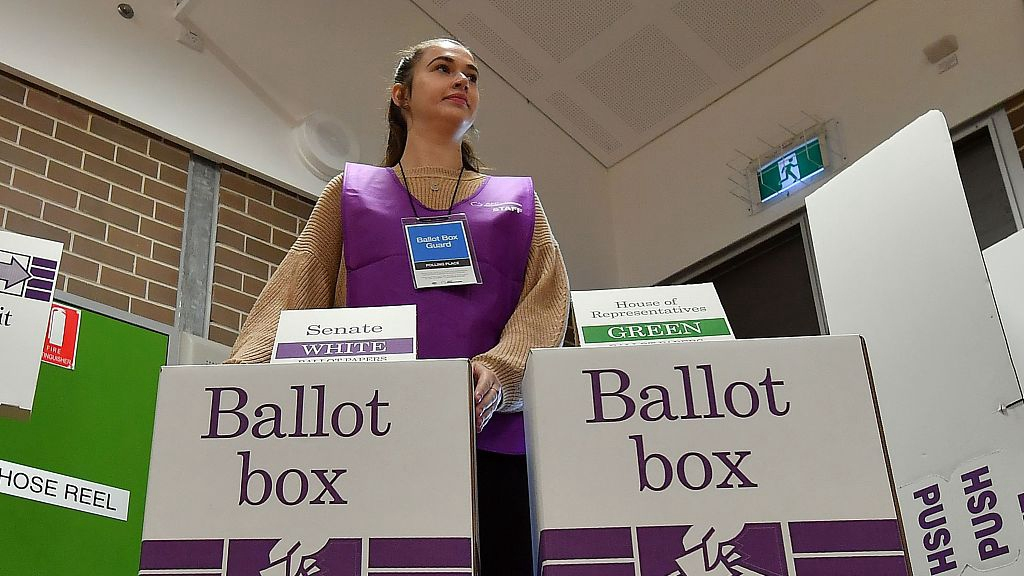
Australia's polling stations on Saturday are easily identified by the long queues stemming out of them. Within set regions, people get together not only for the sausage sizzle but also for the decision; who will take office in Canberra.
This election is considered to be the most intense Australian election in the past 20 years. In recent years, in the context of major changes in the international trade order, the question of how to ensure the sustained and healthy growth of the Australian economy will be one of the most important in this election.

Volunteers prepare traditional sausage sizzle for voters at a polling station in Sydney, NSW, Australia, May 18, 2019. /VCG Photo
Volunteers prepare traditional sausage sizzle for voters at a polling station in Sydney, NSW, Australia, May 18, 2019. /VCG Photo
Australia's current economic situation is generally good
Tim Harcourt, J.W. Nevile Fellow in Economics University of New South Wales (UNSW) Sydney believes that the economic situation in Australia is generally good. This conclusion is based on statistics.
In the past four years, Australia's unemployment rate has steadily dropped from 6.1 percent in March 2015 to 5.0 percent in March 2019. At the same time, Australia's annual inflation rate has fallen from 1.8 percent in the last quarter of 2018 to 1.3 percent in the first quarter of 2019, which is below the expectations of 1.5 percent.
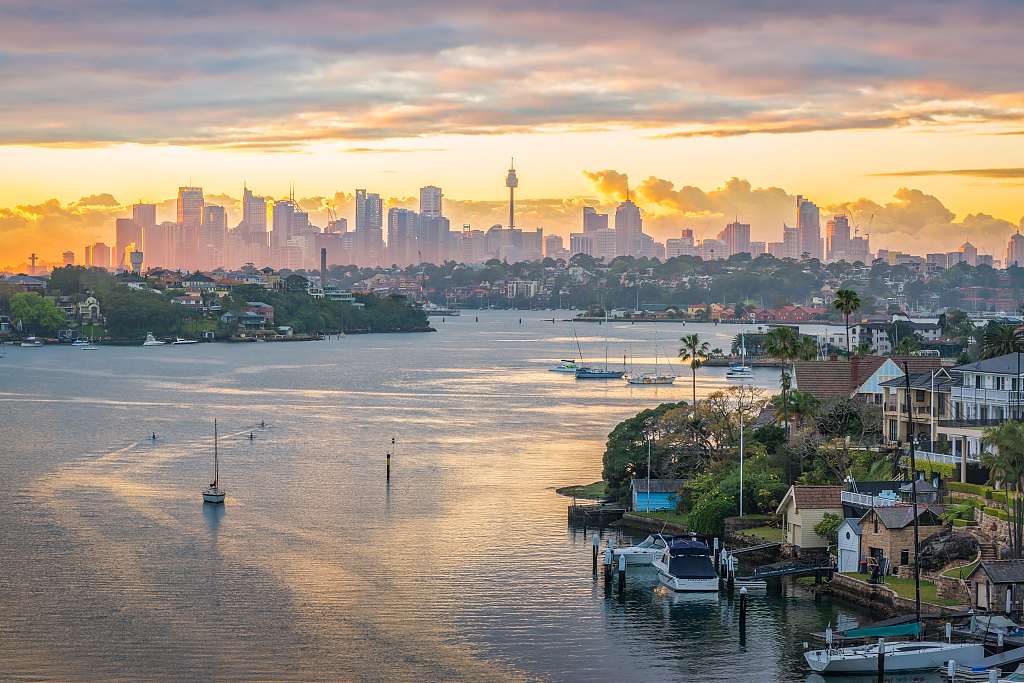
Sydney's skyline, Sydney, NSW, Australia. /VCG Photo
Sydney's skyline, Sydney, NSW, Australia. /VCG Photo
Although Australia's overall economic situation is good, Tim Harcourt believes that there are certain problems in the Australian economy, such as weak wage growth. This seriously restricts the further development of the Australian economy.
In last year's December quarter, Australian wage growth unexpectedly decelerated. As Australian Bureau of Statistics (ABS) points out, Hourly wage growth excluding bonuses grew by 0.54 percent in Q4 2018, falling short of the expected pace of 0.6 percent and the previously reported 0.62 percent increase, while marking the slowest rate of growth since Q3 2017.
Income distribution should be given into priority
For the continued healthy development of the Australian economy, Harcourt believes that the new government must increase wages, especially for low-income people.
The Australian government must ensure fairness of income distribution and allow Australia's income to be equally distributed as much as possible so that the rights of vulnerable groups can be guaranteed. Therefore, in the election campaign, whether it is the Australia Liberal Party or the Australia Labor Party, the two parties have focused on equitable income distribution.
According to Harcourt, the Coalition (liberal) Government's main focus has been its commitment to return the budget to surplus ('back in black') next financial year and to argue they are superior economic managers to Labor. When it comes to the tax, they believe that it is discouraging individual incentives, and therefore they intend to reduce the tax burden on high-income earners to enhance their working efficiency.
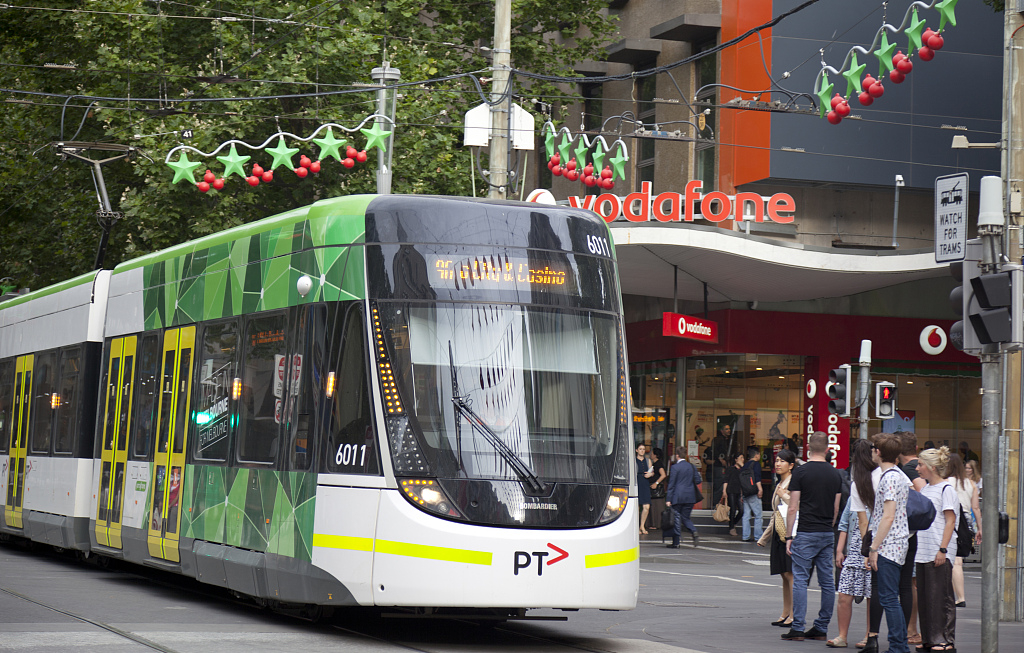
Melbourne's city center, Melbourne, Victoria, Australia. /VCG Photo
Melbourne's city center, Melbourne, Victoria, Australia. /VCG Photo
Labor Party, as Harcourt points out, has run a campaign with a number of policies aimed at redistribution – such as ending franking credits and negative gearing tax concessions in the housing market. Some of these policies, though aimed at income redistribution and enabling young people to enter the housing market for the first time are unpopular in areas populated by retirees with many on self-funded superannuation (pension) plans.
The new government is supposed to avoid the China-U.S. trade war
Harcourt believes that the China-U.S. trade war has had a rather negative impact on the Australian economy, as they are Australia's two most important trading partners. He argues that U.S. President Donald Trump has increased the tariff on Chinese goods worth 200 billion U.S. dollars from 10 percent to 25 percent, which has not only damaged business between China and the United States but has also hit the Australian economy hard.
Harcourt believes that in the era of globalization, the global economic situation is very influential for Australia's economy because Australia's economy depends on global trade. Once the trade war between China and the United States escalates, Australia's foreign trade is bound to be greatly affected.
In other words, Australia will be a victim of trade wars. Therefore, whether the Liberal Party or the Labor Party wins the election, the new government will do its utmost to avoid being involved in the global trade war.
“Australia wants to avoid a China-U.S. trade war as a global trade war would hurt an open economy like Australia,” Harcourt told CGTN.
(If you want to contribute and have specific expertise, please contact us at opinions@cgtn.com.)