
Business
20:59, 13-Aug-2018
EV market competition heats up in China
Updated
20:38, 16-Aug-2018
 ["china"]
Share







Copied
02:42
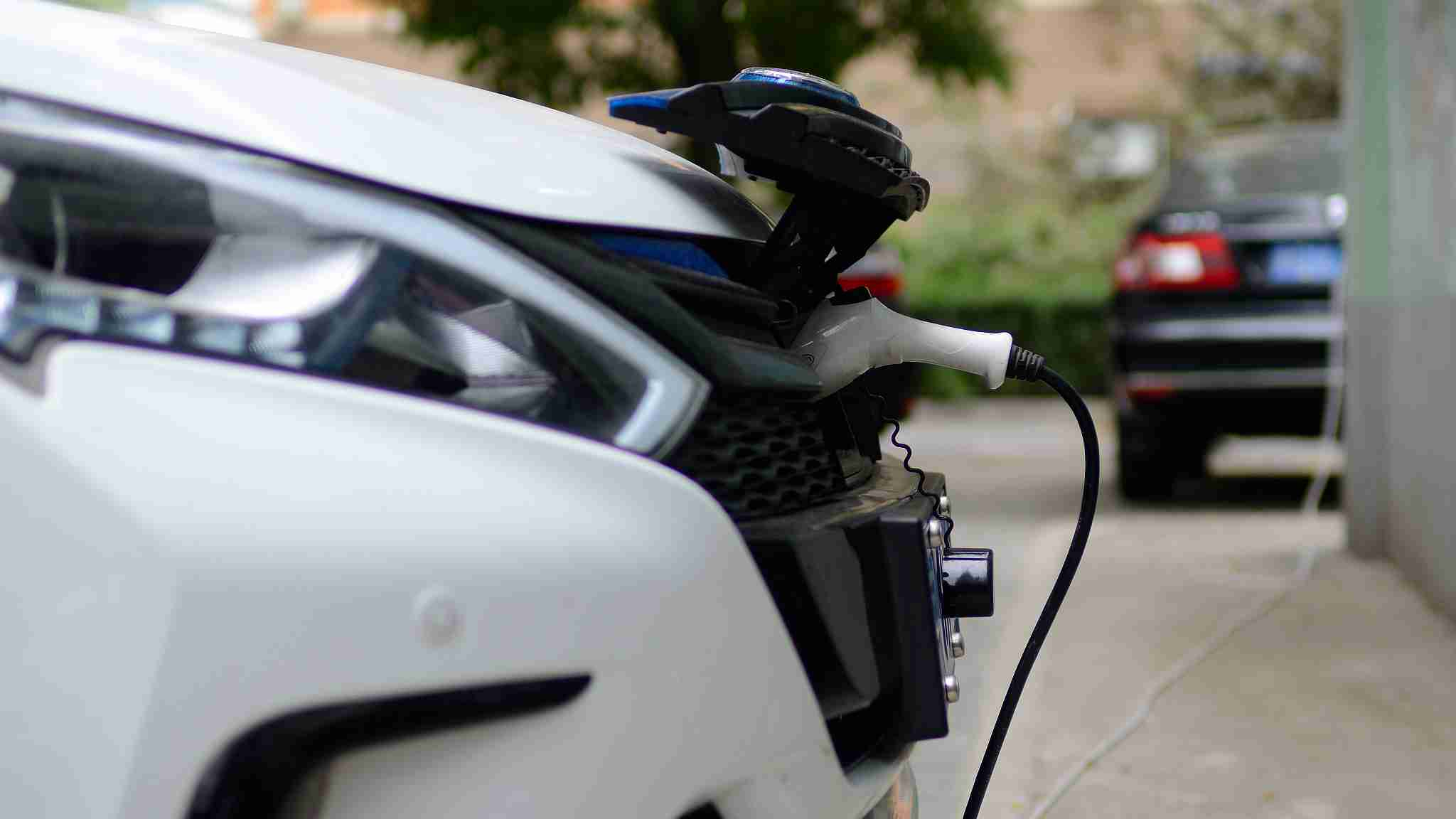
One American company hit by the growing trade tensions between China and the US is electric vehicle maker "Tesla." Despite this, the international brand recently signed a deal to build a super factory in Shanghai, and set up a research center in Beijing.
China's market for electric vehicles (EV), is already growing rapidly.
The sales volume of general new energy vehicles in the first half of this year exceeded 410,000 units. China Automobile Association data says that's a year-on-year increase of 111 percent. Chinese consumers are very much embracing the trend, especially because in most cases, it's easier and faster to get an EV on the road with a new energy registration plate than a normal petrol vehicle, particularly in big cities.
"A lot of my friends, they were kind of waiting to buy a Tesla car so they've been watching the Tesla company for ages and as soon as it hit the Chinese market, they were like all over it and ordering one. To be honest, I can't really mention what exact technology is in this car but you do feel it on a day-to-day use," Tesla car owner, Joanna Zhao, told CGTN.
Joanna can recharge her 930,000 yuan car for free at any Tesla charging station, but wishes her car was more suitable for long-distance driving.
The California-based company also recently signed a deal to build a super factory in Shanghai. Once completed, the facility will have a production capacity of 500,000 vehicles a year.
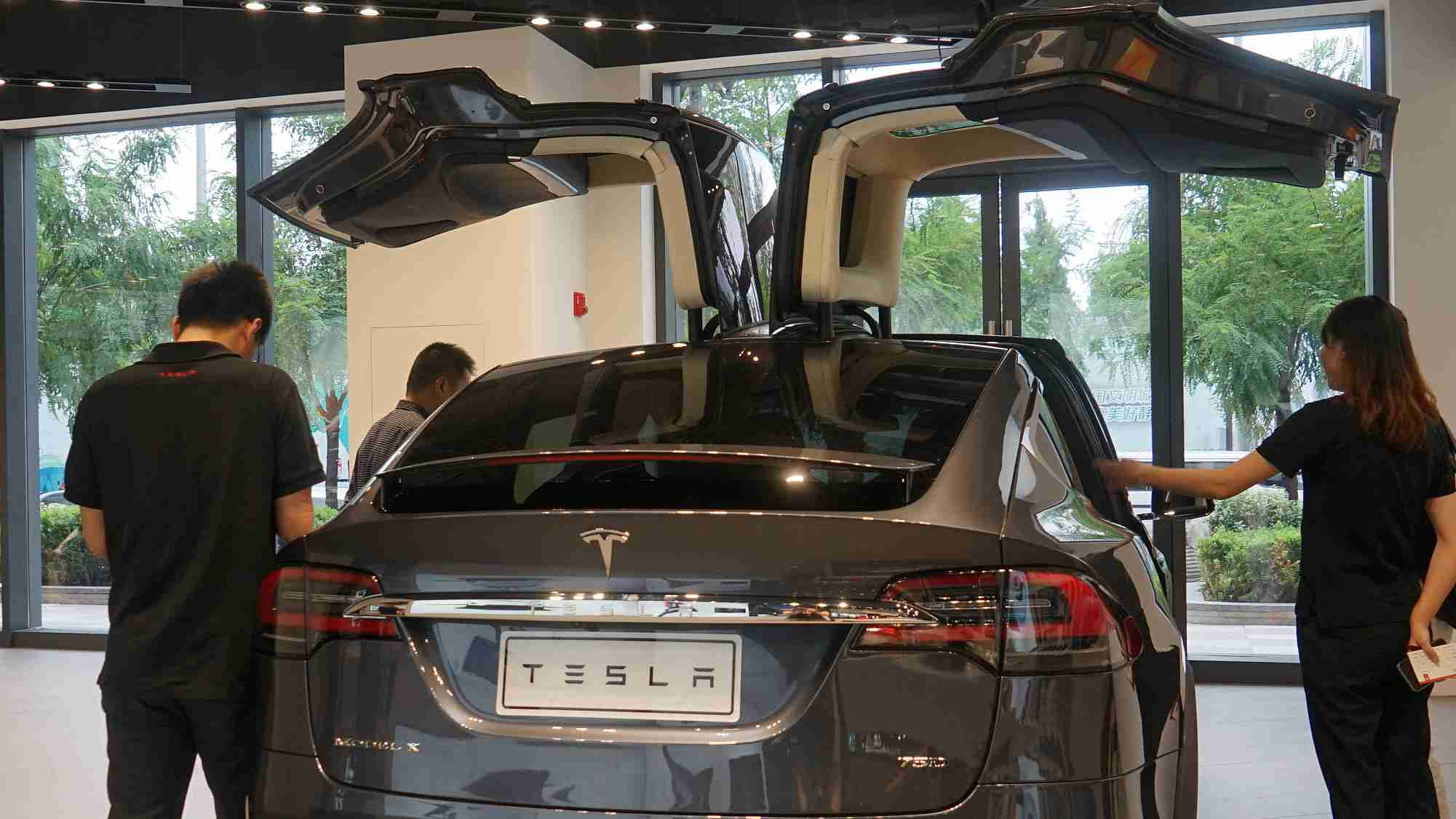
A Tesla store in Shanghai /VCG Photo
A Tesla store in Shanghai /VCG Photo
"They are doing something to change the costs. If there are some trade barriers between China and the United States, they must face lot of tariffs from Chinese government if they want to export to China. And they also see that the Chinese consumption market has a very big potential, so they made some wise decisions," said Deputy Director of the Chinese Academy of International Trade & Economic Cooperation of the Chinese Ministry of Commerce, Dr. Zhou Mi, regarding to Tesla's recent moves in China.
"The manufacturing power and the cost here, I think, will be much lower than in the United States, if they can do everything better. I mean, for the integration of the systems and to use the massive manufacturing power of the Chinese industries here," Zhou said.
The government is encouraging the use of new energy cars because they want environmentally-friendly vehicles to account for one-fifth of total sales by 2025. That's part of China's international commitments to reduce its carbon emissions.
With the giant Tesla entering the Chinese market, domestic EVs will now have some stiff competition, even though Tesla products are roughly two or three times more expensive.
"We have two core strategies. One is to adhere to the core technology and always stand at the height of new energy vehicle technology. The second is to further open up, including in our teams, suppliers, hardware platforms and software ecosystems, and to provide users with a better driving experience," said Du Guozhong, Assistant General Manager of BYD, a leading EV maker in China.

Du Guozhong (right), BYD's Assistant General Manager, shows a BYD EV to a customer. /CGTN Photo
Du Guozhong (right), BYD's Assistant General Manager, shows a BYD EV to a customer. /CGTN Photo
China aims to become a car superpower over the coming decades, and based on the country’s domestic market, EVs have a bright future here.
However, the government and manufacturers need to create a better infrastructure for electric vehicles to succeed, for example, more charging stations outside of cities, and better safety and capacity – not just for personal EVs, but for all electric public transportation vehicles as well.