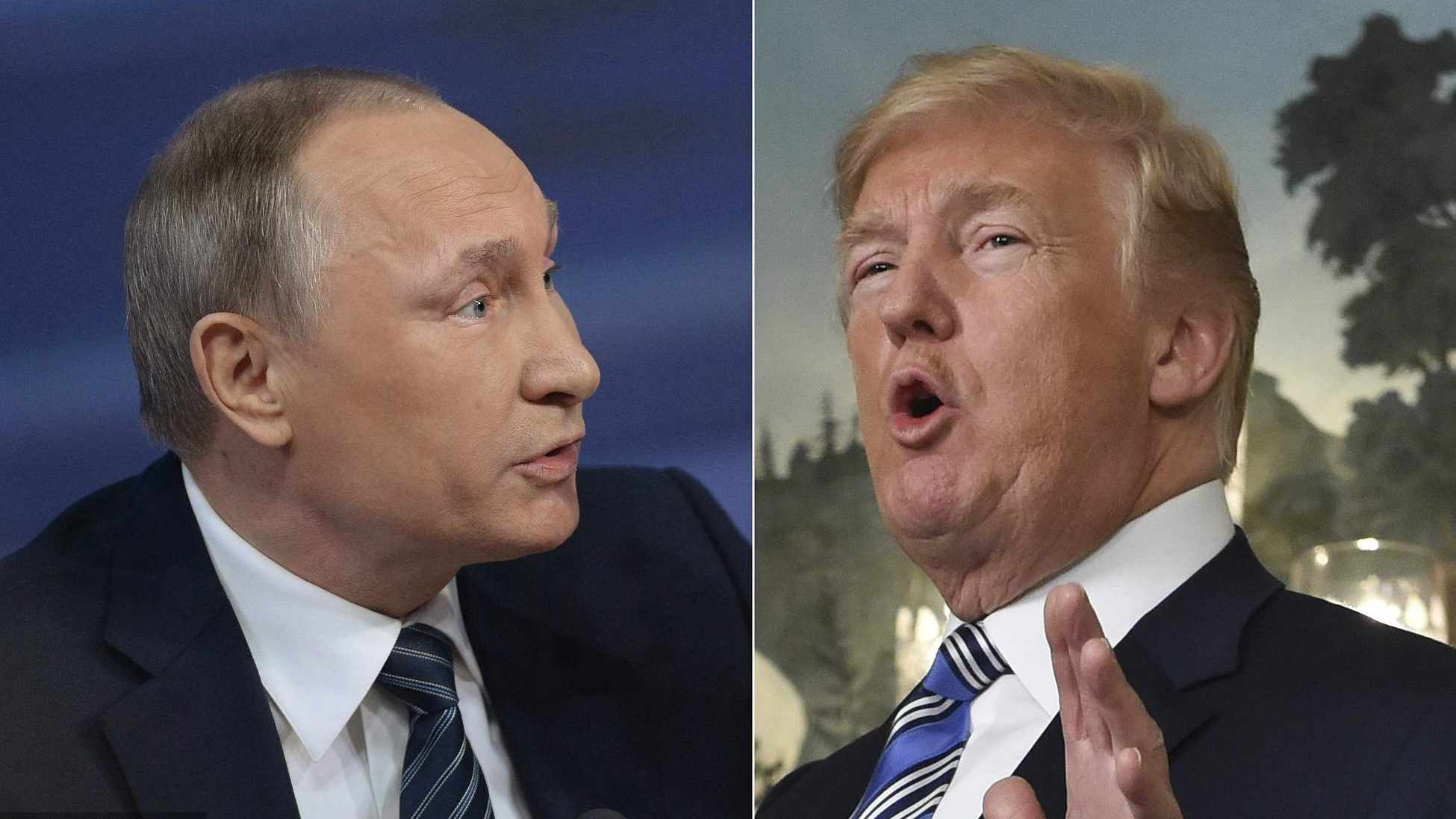
US President Donald Trump will meet his Russian counterpart Vladimir Putin on July 16 in Helsinki after his NATO trip in Belgium and a visit to Britain, which will be the first full summit for the two leaders.
At a time of uncertainty in the US-Russia relationship, the encounter is an important step forward in clarifying the ties that make Helsinki significant.
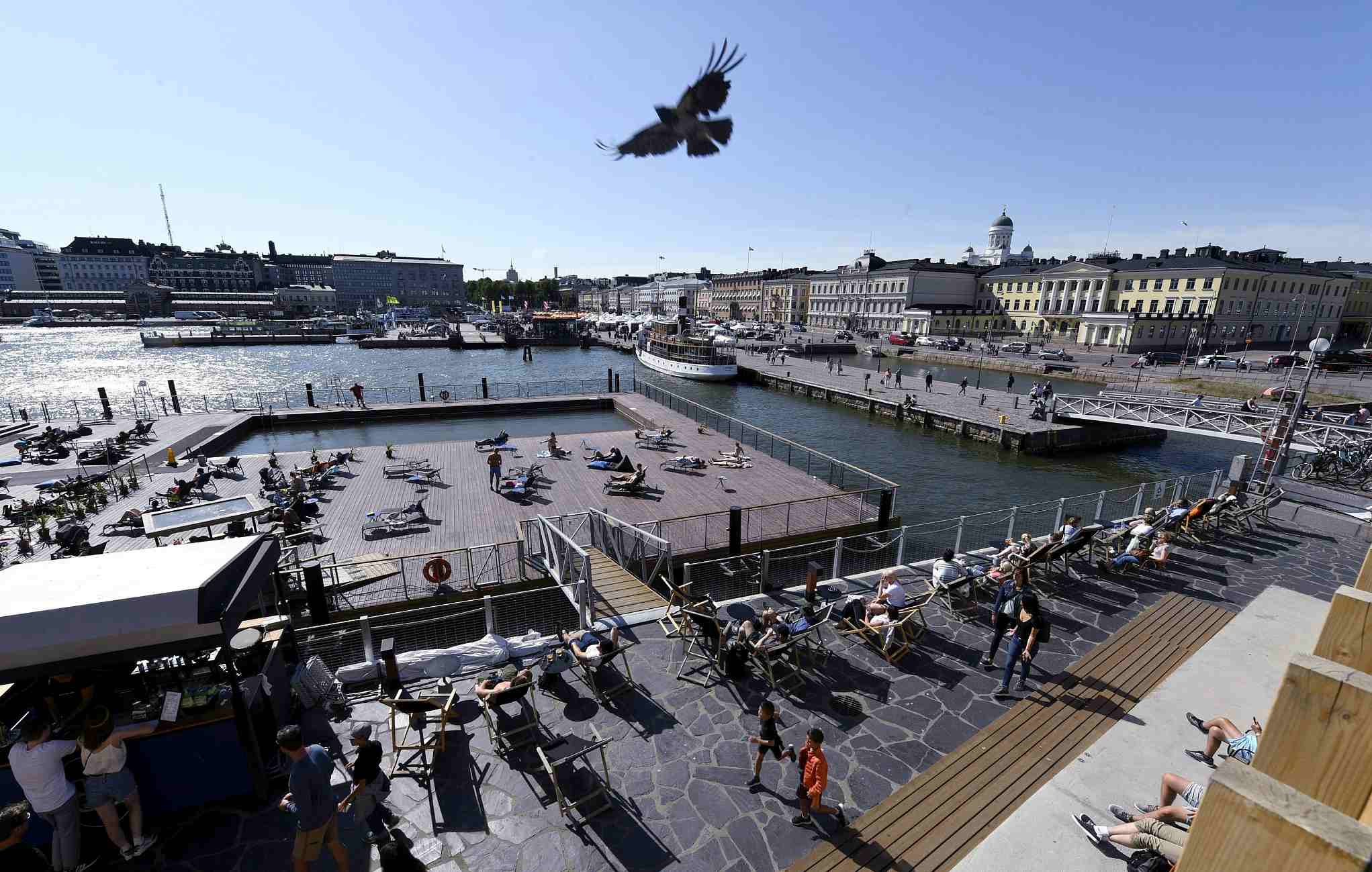
June 28, 2018: The Market Square and the Presidential palace (R) are pictured in Helsinki, Finland. /VCG Photo
June 28, 2018: The Market Square and the Presidential palace (R) are pictured in Helsinki, Finland. /VCG Photo
Why Helsinki?
The historical role Helsinki played in US-Russia relations and practical concerns of both leaders make the city a good choice for the talks.
"Finland is seen as an easy place to arrange meetings in a relatively peaceful place, a bit apart, and there is the symbolic significance too," said Mika Aaltola, an analyst of Finnish Institute of International Affairs.
Neutral Finland attempted a balancing act between East and West during most of the Cold War, which makes the capital Helsinki a place of choice for talks between the US and Russia.
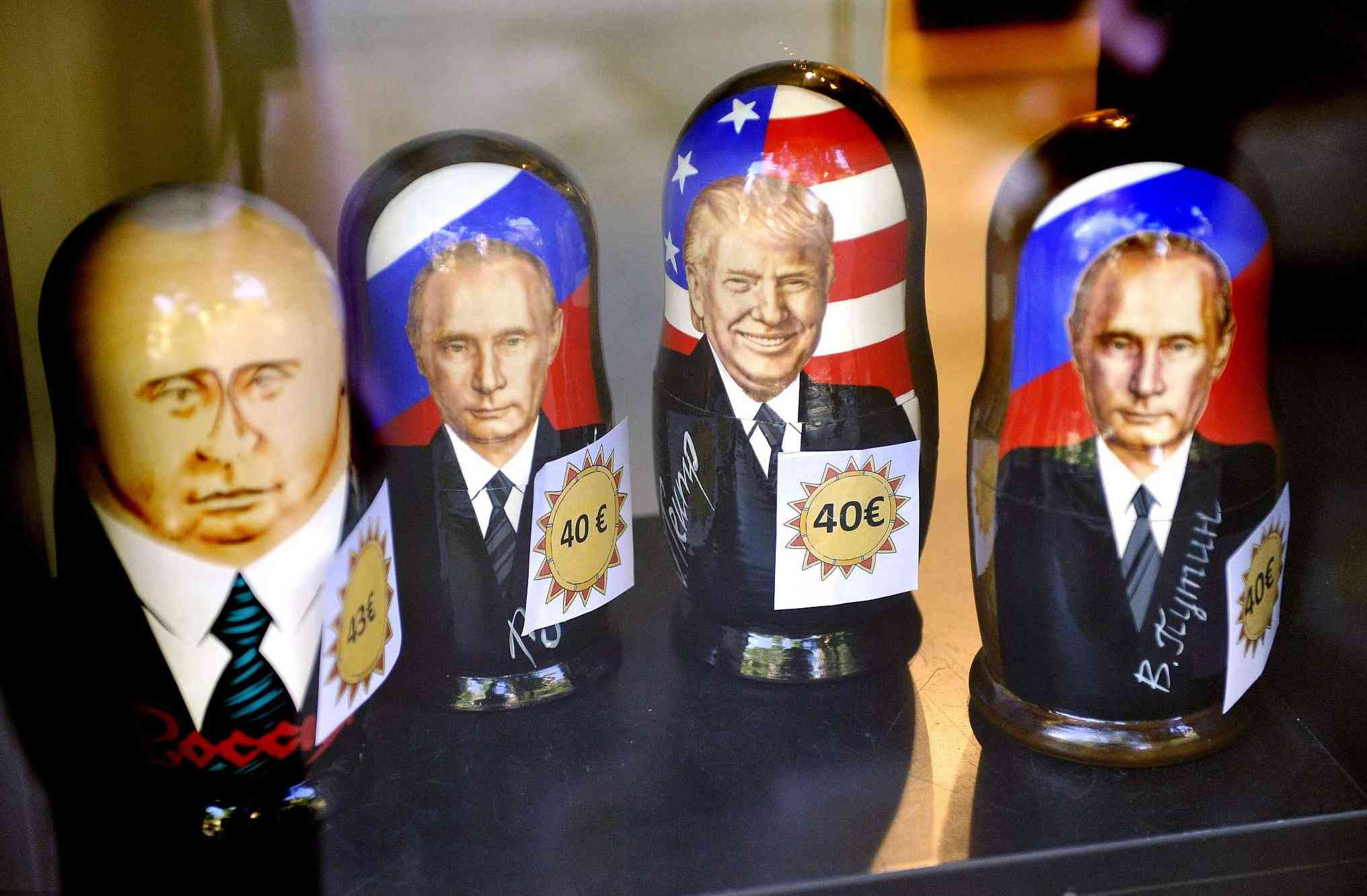
July 9, 2018: Russian Matryoshka dolls depicting Russian President Vladimir Putin and US President Donald Trump are on sale in Helsinki. /VCG Photo
July 9, 2018: Russian Matryoshka dolls depicting Russian President Vladimir Putin and US President Donald Trump are on sale in Helsinki. /VCG Photo
The most significant summit hosted by the city was in 1975, while US President Gerald Ford met with the Soviet leader Leonid Brezhnev for talks that produced the “Helsinki Accords".
"Finland was an in-between country in the Cold War era... It wanted to form this bridge and stressed its neutrality in its relations with the superpowers," said Teija Tiilikainen, director of the Finnish Institute of International Affairs.
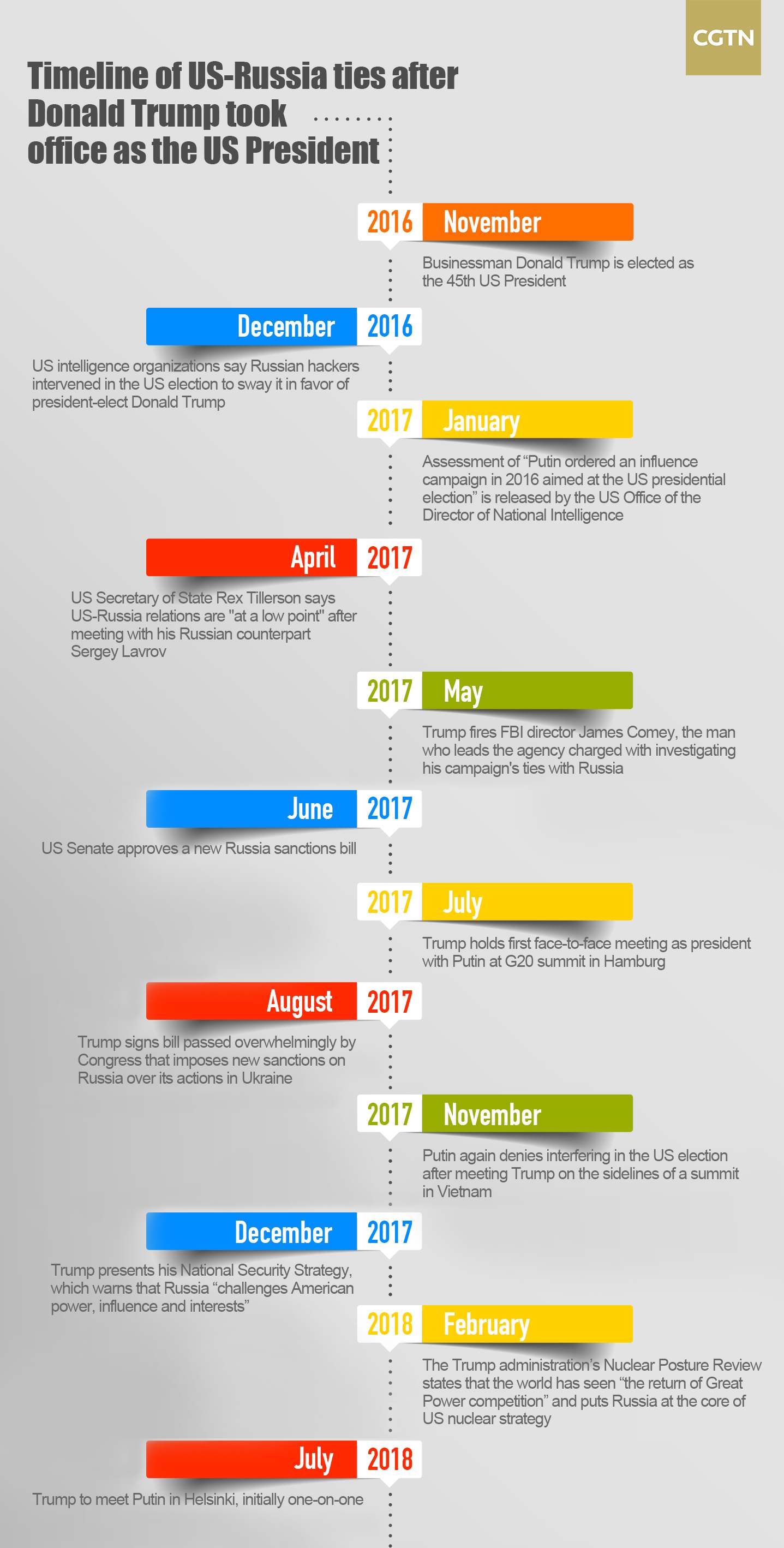
Infographic by CGTN's Yu Peng
Infographic by CGTN's Yu Peng
Not a member of NATO, which is the military alliance founded in the wake of WWII to protect Europe from potential Soviet aggression, seems the second reason why the city is chosen.
Its non-NATO status offers Trump the chance to make the kind of symbolic gesture that carries significant weight in international relations.
Read more:
Leaving NATO territory to meet with Putin symbolizes the move that will underscore his recent criticisms of NATO leaders as he pressures them to increase their defense spending and thus lighten the American load.
01:03
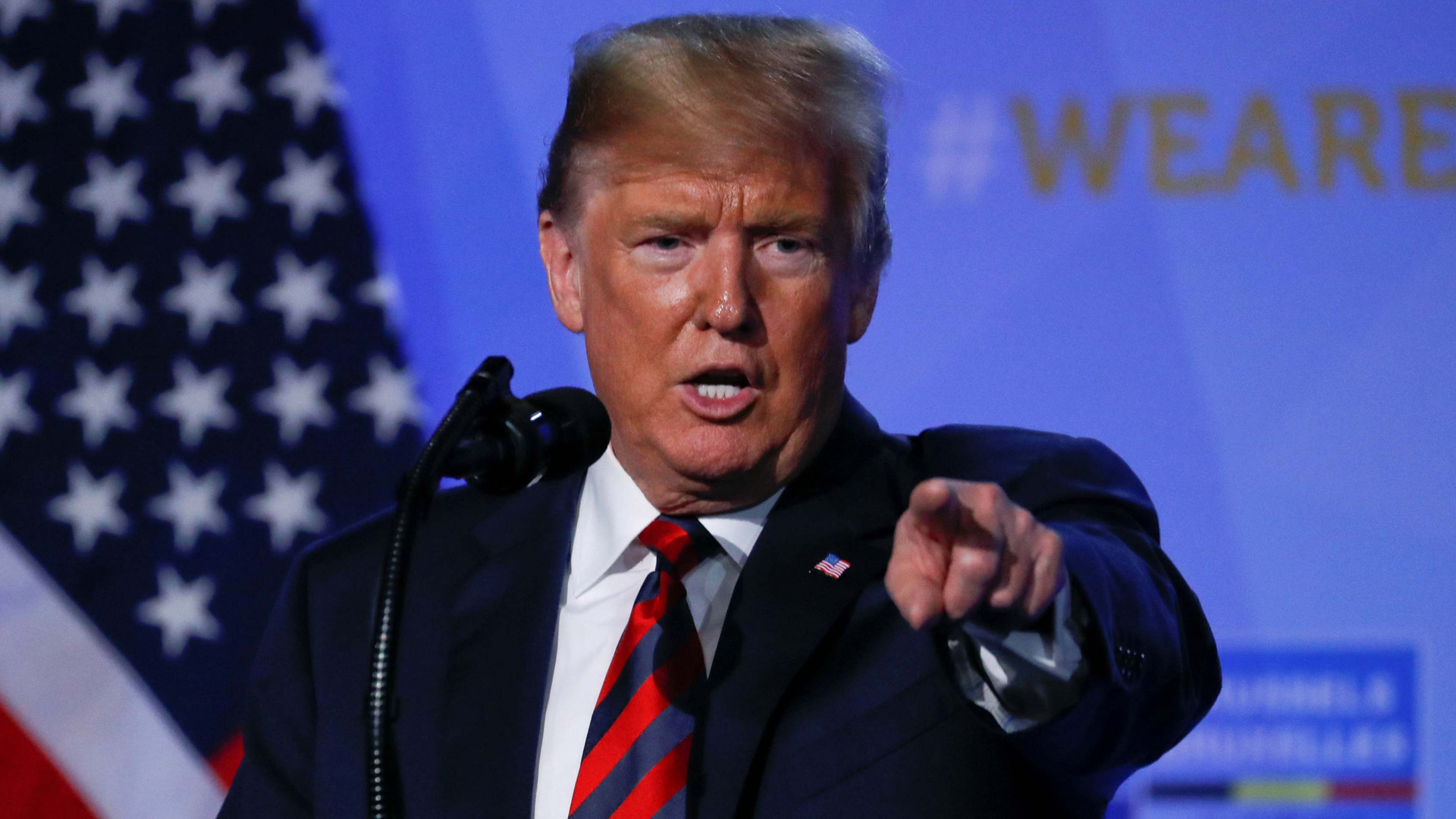
Also, the choice is practical as Helsinki is located just three hours by train from Saint Petersburg and one hour by plane from three Baltic states now part of NATO, which makes the city convenient for both leaders as Trump is already in Europe while Putin was in Moscow on Sunday for the World Cup final.
Moreover, Finland’s President Sauli Niinisto contributed to the strong ties with the pair: He is the person that was one of the first to congratulate Trump on his 2016 election victory and invited Putin in several of Finland's independence celebrations in 2017.
Speaking of the meeting, Niinisto confirmed his stance that his country is always ready to offer good services if asked, illustrating his attitudes to continue the positive relationship with both the US and Russia.
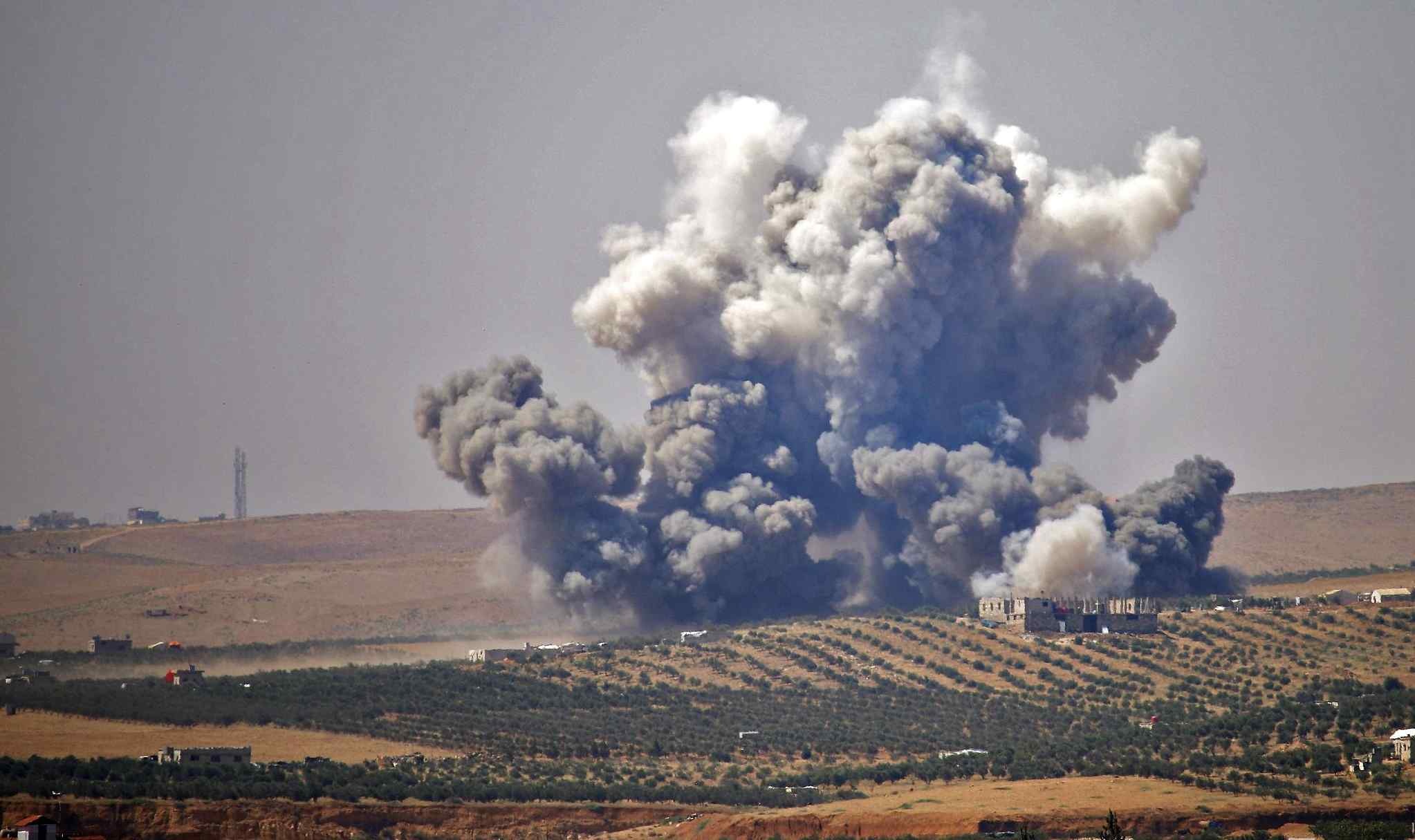
July 5, 2018: Smoke rises above rebel-held areas of the city of Daraa, during reported airstrikes by Syrian regime forces. /VCG Photo
July 5, 2018: Smoke rises above rebel-held areas of the city of Daraa, during reported airstrikes by Syrian regime forces. /VCG Photo
What will be discussed?
US Secretary of State Mike Pompeo is confident that the topic of the election meddling will be addressed during the summit.
Syria is another contentious topic between the two countries, with Putin supporting Syrian President Bashar al-Assad's government and the US backs other factions in the country.
An array of geopolitical issues, notably the Ukraine conflict will also be part of the discussion, the US president said at the White House on June 27.
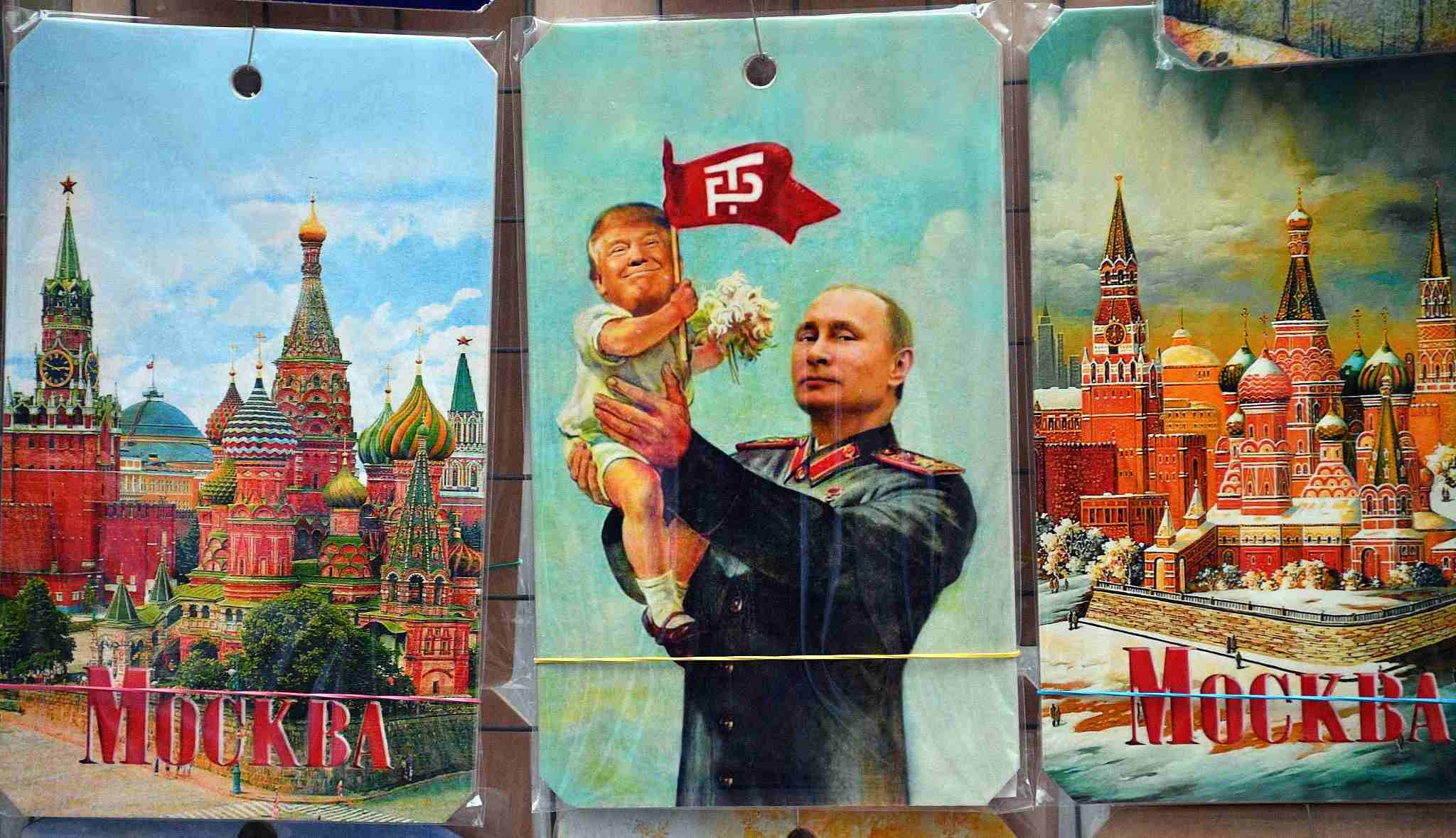
July 5, 2017: A drawing depicts Russian President Vladimir Putin holding a baby with the face of US President Donald Trump in Moscow. /VCG Photo
July 5, 2017: A drawing depicts Russian President Vladimir Putin holding a baby with the face of US President Donald Trump in Moscow. /VCG Photo
Trump: 'Putin is not my enemy'
Before heading to Europe, Trump mentioned that Putin is not his enemy.
“Somebody was saying, is he an enemy? He’s not my enemy. Is he your friend? No, I don’t know him very much. Hopefully, someday, he’ll be a friend. It could happen.”
Read more:
The president's gesture hints at a potential sign that the meeting may help Trump build trust and friendship with Putin rather than clear misunderstandings and reduce tensions on issues where the two sides have common interests.
Not sure whether it is good news for Trump administration, but it is a good one for his Russian counterpart.
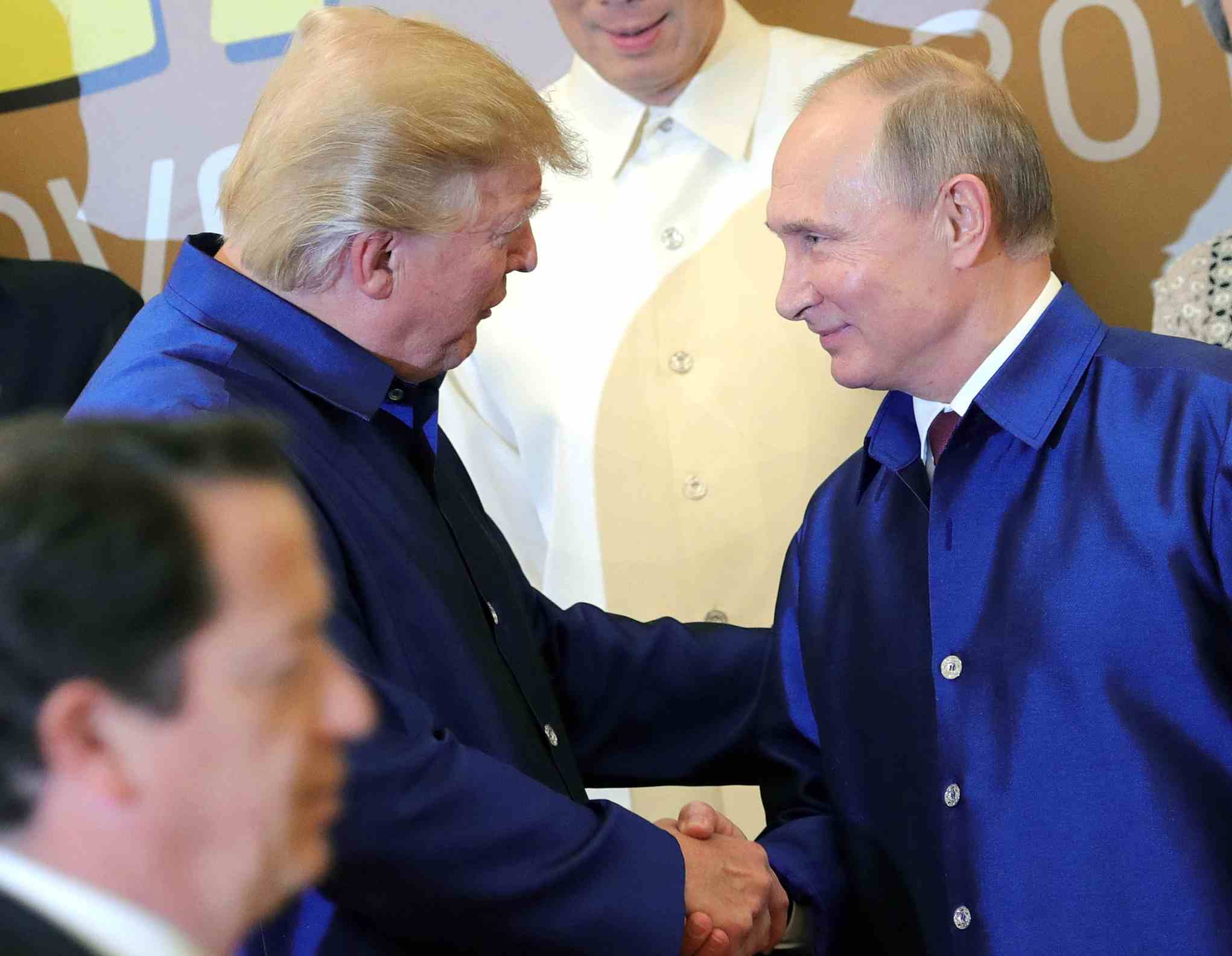
November 10, 2017: US President Donald Trump (L) shakes hands with Russian President Vladimir Putin (R) as they pose for a group photo ahead of the Asia-Pacific Economic Cooperation (APEC) Summit leaders gala dinner in the central Vietnamese city of Danang. /VCG Photo
November 10, 2017: US President Donald Trump (L) shakes hands with Russian President Vladimir Putin (R) as they pose for a group photo ahead of the Asia-Pacific Economic Cooperation (APEC) Summit leaders gala dinner in the central Vietnamese city of Danang. /VCG Photo
Is Putin already the winner?
"Putin has already got his victory," said Andrey Kortunov, head of RIAC, a foreign policy think-tank close to the Foreign Ministry.
"It allows him to make his point that Russia is not isolated, that Russia is a great power, and to some extent can even claim an equal status with the US, at least in the security field."
Trump's rattling of NATO and his attendance might be serving Putin's interests.
Concerns also raised from the US side as Alexander Vershbow, a former US ambassador to Russia, noted that Putin is able to charm Trump into changing his position or dropping longstanding US positions if he’s alone with him for too long.
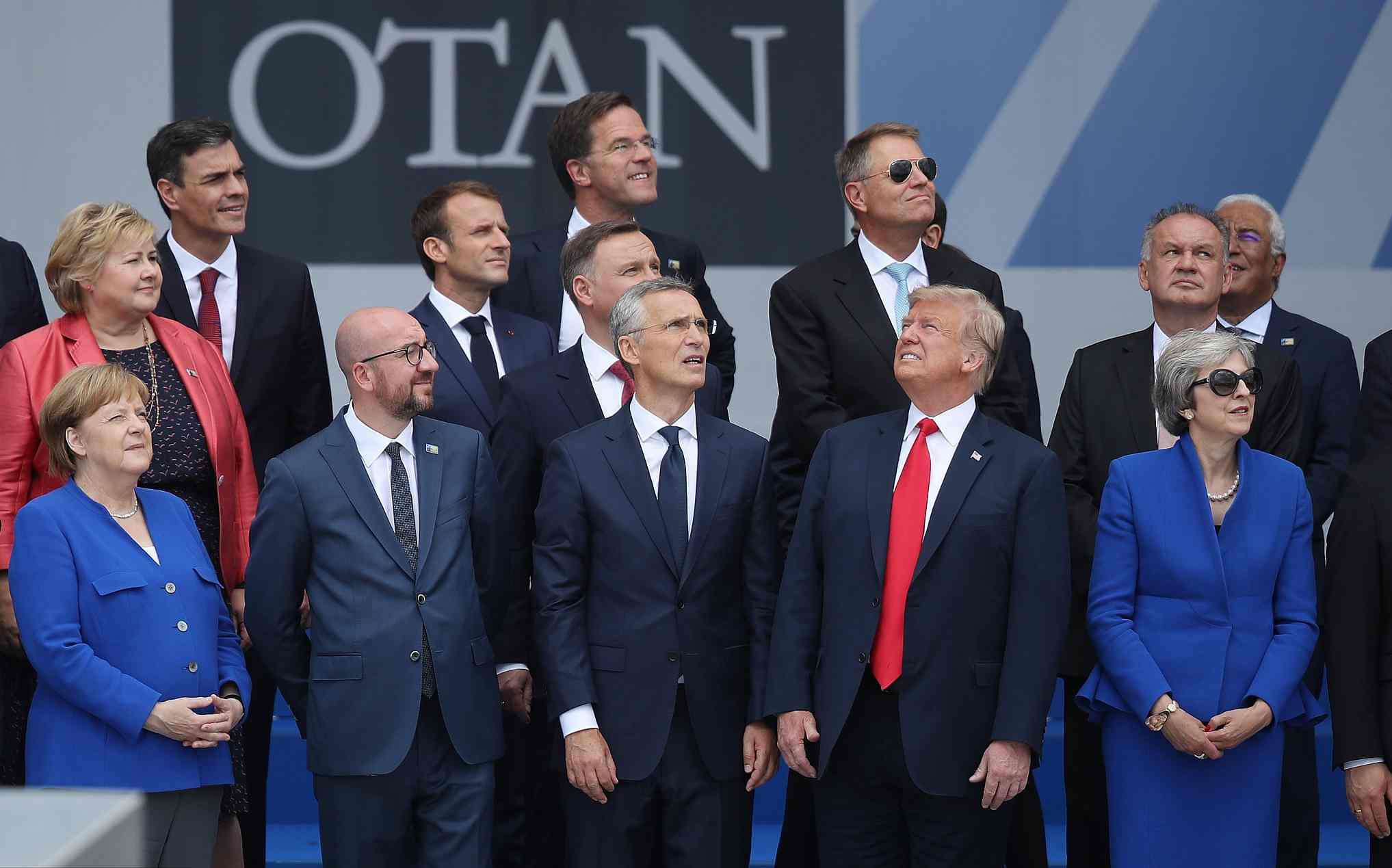
July 11, 2018: Leaders from NATO member and partner states attend the opening ceremony at the 2018 NATO Summit at NATO headquarters in Brussels, Belgium. /VCG Photo
July 11, 2018: Leaders from NATO member and partner states attend the opening ceremony at the 2018 NATO Summit at NATO headquarters in Brussels, Belgium. /VCG Photo
Low expectations
For scholars and commentators who object the summit, the encounter will be nothing but merely a photo opportunity for Trump and Putin. They suggested the world to minimize all their expectations.
Although there are a number of issues to discuss, it will be challenging for the leaders to make any form of progress at the meeting, said Eugene Chausovsky, a senior analyst at geopolitical intelligence firm Stratfor.
The truth is, the two leaders met twice since Trump was elected as the US president, which took place during the G20 summit in Germany and on the sidelines of the APEC summit in Vietnam respectively.
But they have made little progress in reaching agreements on any of the issues related to the election meddling, Syria, or Ukraine before.
Whereas there are voices that support the talks. NATO's chief Jens Stoltenberg, for example, said "the dialogue is a sign of strength."
"We don't want a new Cold War, we don't want to isolate Russia, we want to strive for a better relationship with Russia."
However, the real agreement will still be difficult, in part because these issues affect the interests of many other parties and this is unlikely to change anytime soon for both sides.
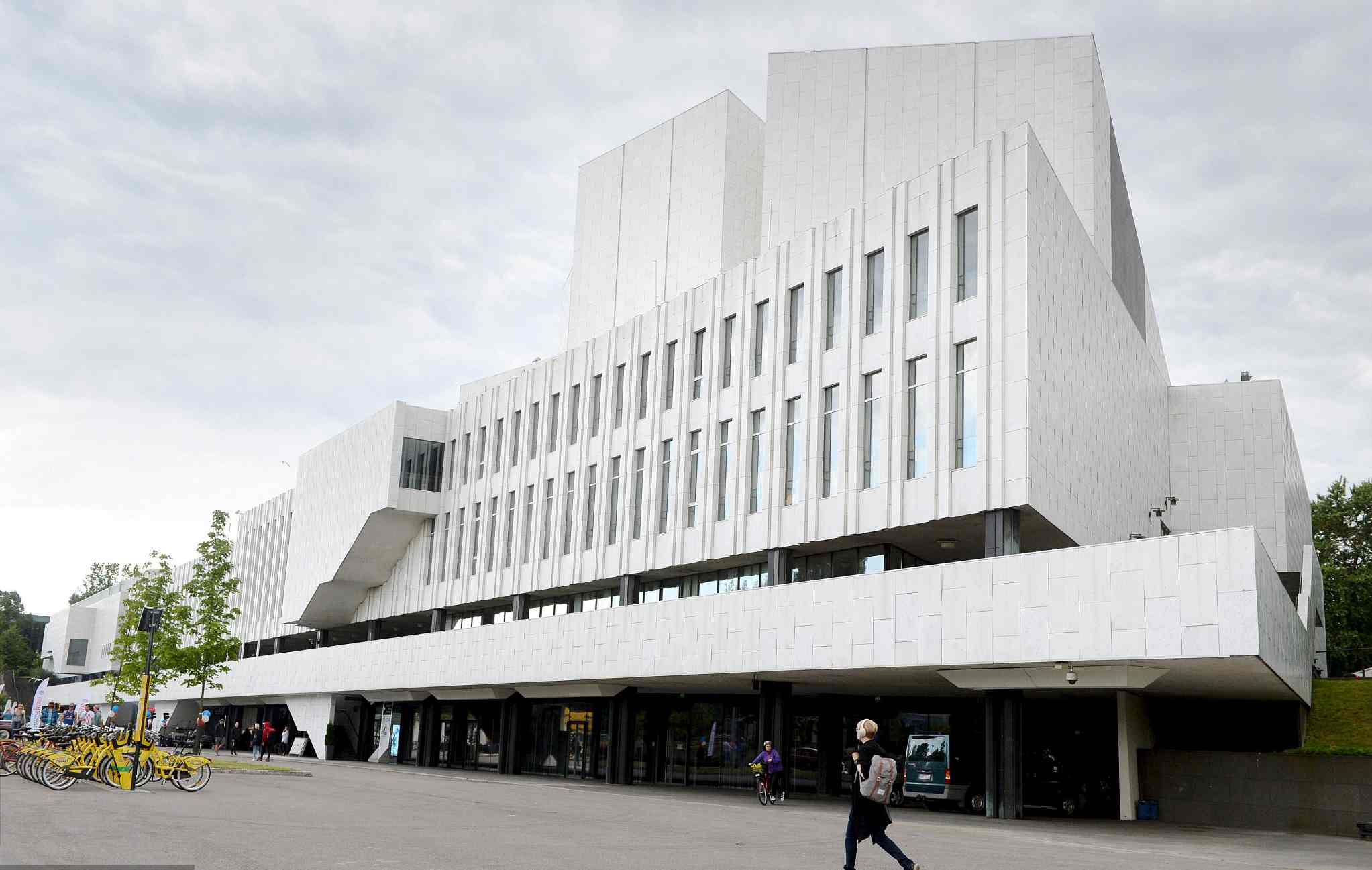
July 4, 2018: Finlandia Hall, which will serve as a media center during the meeting of US President Donald Trump and Russian President Vladimir Putin on July 16, is pictured in Helsinki, Finland. /VCG Photo
July 4, 2018: Finlandia Hall, which will serve as a media center during the meeting of US President Donald Trump and Russian President Vladimir Putin on July 16, is pictured in Helsinki, Finland. /VCG Photo
A hubbub of voices
As the Trump-Putin summit is around the corner, Helsinki will witness at least ten demonstrations of different scales and objectives before and during the meeting, Helsinki police said.
Abdrirahim Hussein, one of the organizers of Helsinki Calling, said the demonstration is not explicitly directed against either Putin or Trump but to "defend human rights, freedom of speech, democracy and freedom of the press.”
According to Finnish legislation, the minimum notification time to the police before a demonstration is six hours and more protests may be announced as late as Monday morning.
Besides the voices from protesters, other voices could also be heard during the talks.
Over one thousand media representatives from 61 countries have traveled to Finland to report on the summit, local media YLE News reported, adding that most of the journalists made the trip from the US, Russia, and Europe.
(Cover: In this file combination of pictures created on March 26, 2018 shows Russian President Vladimir Putin(L) during his annual press conference in Moscow on December 17, 2015, and US President Donald Trump speaking about the spending bill during a press conference at the White House on March 23, 2018. /VCG Photo)

 ["china"]