
World
14:32, 23-Jul-2018
Brazil’s peacekeeping model
Updated
13:42, 26-Jul-2018
 ["china"]
Share







Copied
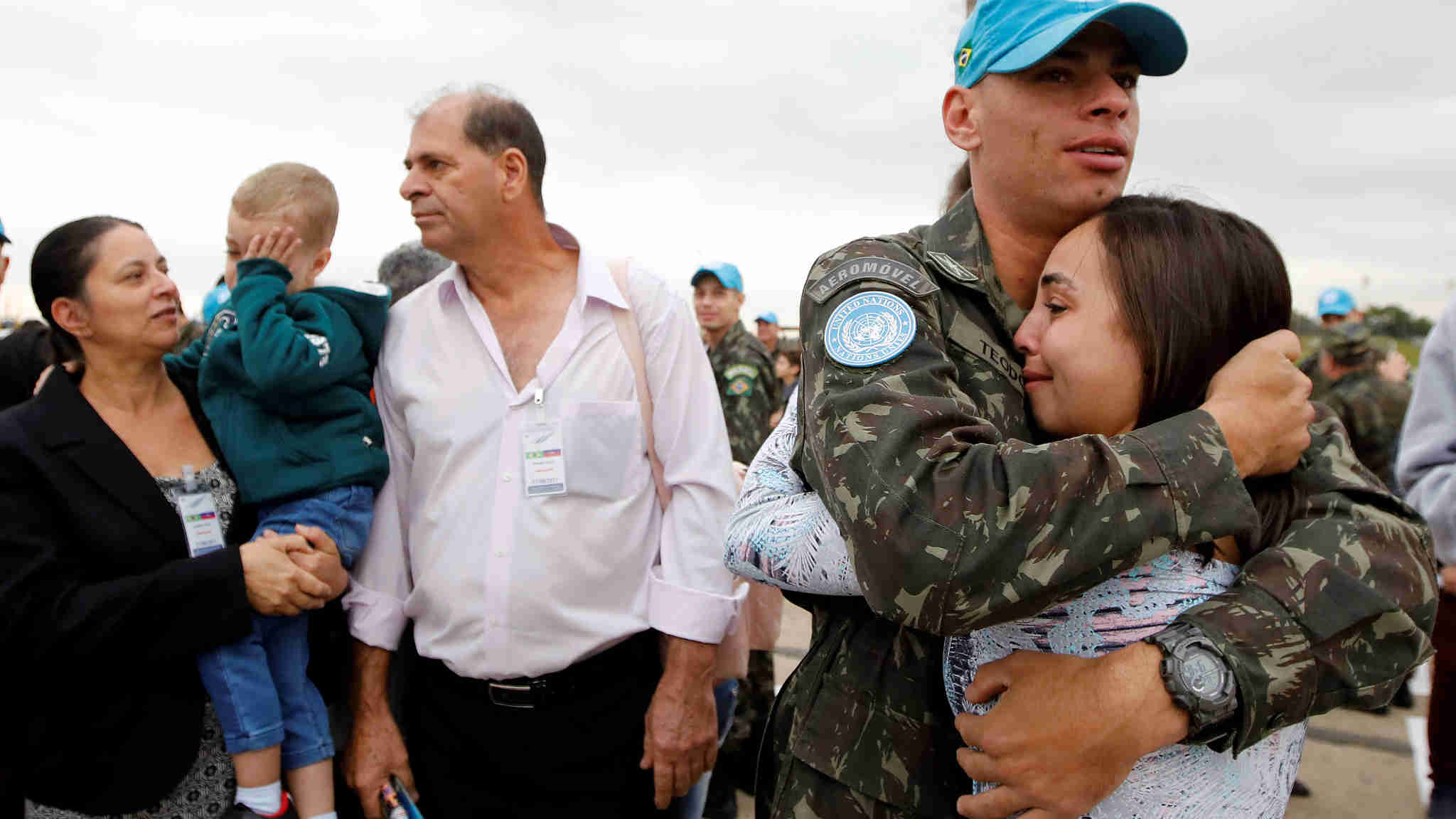
Brazil has been involved in peacekeeping operations since the late 1940s, but it really emerged as a key player in conflict resolution after its 13-year mission in Haiti, one of the most successful pacification efforts in UN history.
The Brazilian soldiers, which ended their mission in the Caribbean nation only last year, were trained at the renowned Joint Center for Peacekeeping Operations in Rio de Janeiro.
Colonel Marco Antonio Machado, the center’s commander, said that Brazil earned respect and admiration after the Haiti operation because of a methodology that can be summed up in one concept: The way Brazilian troops approached the population were they are serving, the way they tried not to just use force nor only focus on security issues, but also to think how they could help that society.
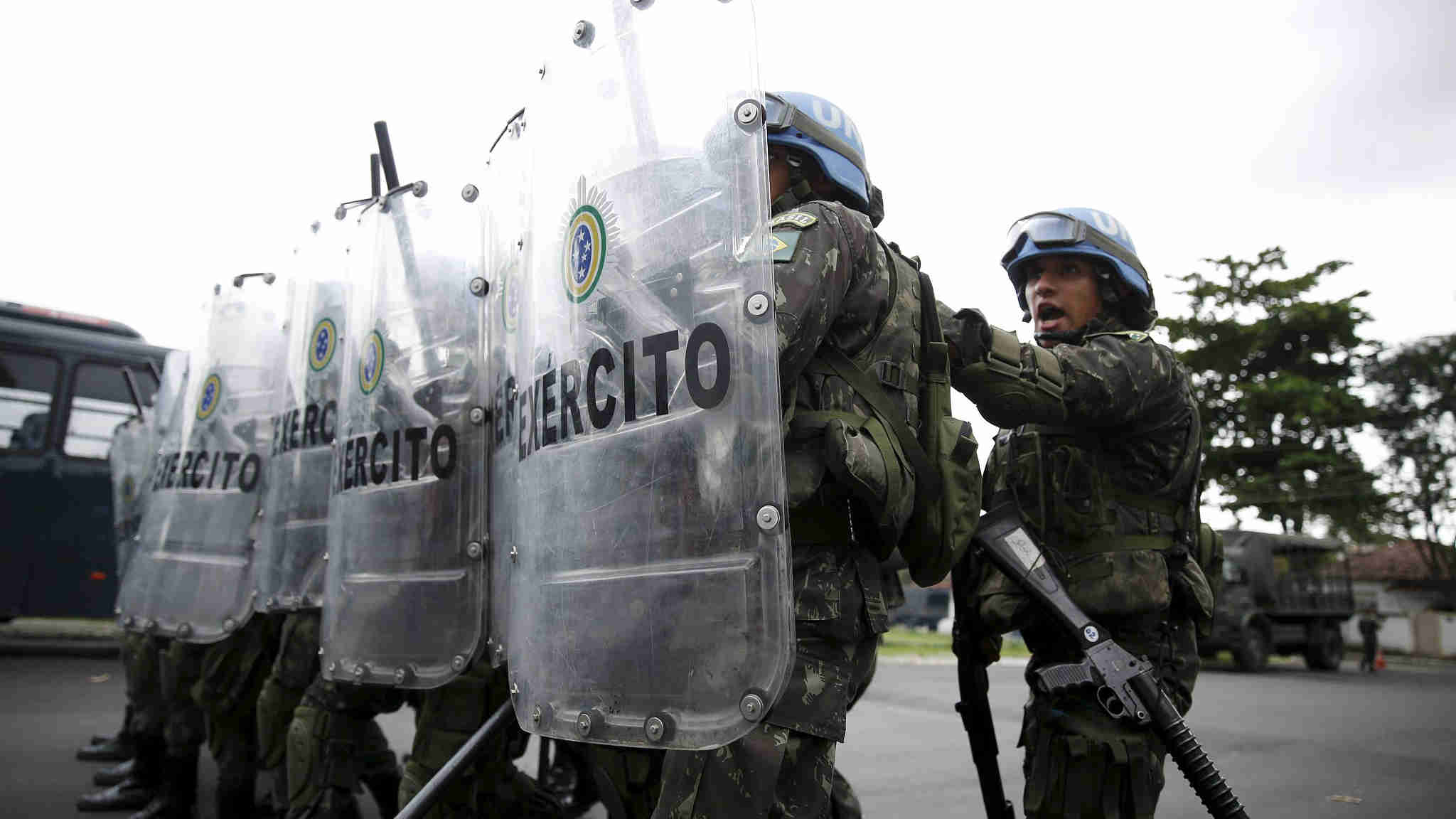
Brazilian soldiers of the UN Peacekeeping Forces attend a training exercise in Rio de Janeiro April 23, 2015, before departing to Haiti. /VCG Photo
Brazilian soldiers of the UN Peacekeeping Forces attend a training exercise in Rio de Janeiro April 23, 2015, before departing to Haiti. /VCG Photo
The center offers regular and intense instruction to the military personnel and civilians, including media professionals, from Brazil and abroad for warzone survival.
"A lot of the training I have been receiving here, whether it has to do with explosive devices or dealing with CS gas, it looks as though it will be something that will be hugely beneficial in my future if I go on to cover wars or any peacekeeping mission throughout the world,” said Carson Gardiner, a Canadian journalist who recently participated in a one week immersion course for warzone survival in Rio De Janeiro.
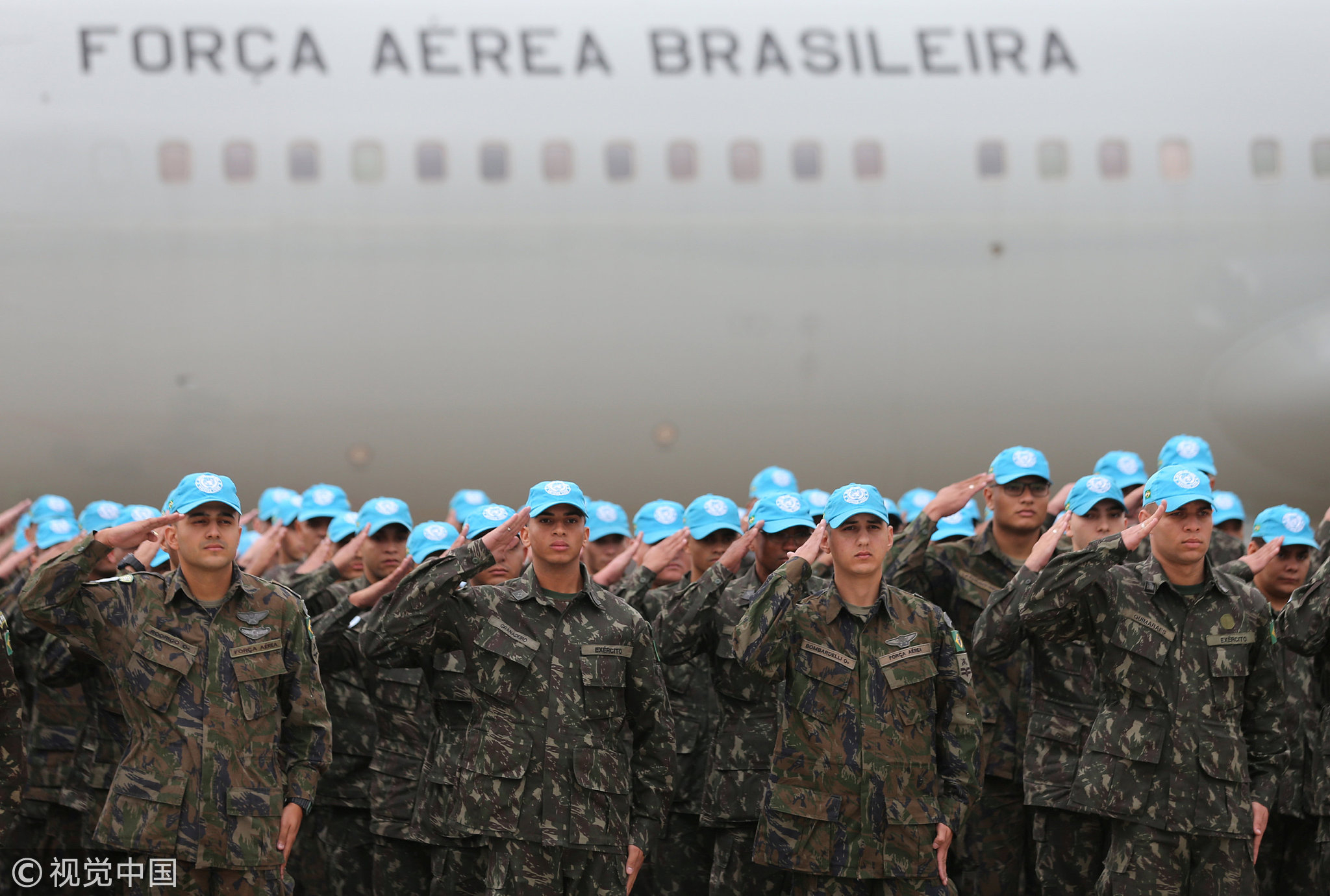
Brazilian UN peacekeeping soldiers salute as they prepare to embark for Haiti at Viracopos International Airport in Campinas, Brazil June 1, 2017. /VCG Photo
Brazilian UN peacekeeping soldiers salute as they prepare to embark for Haiti at Viracopos International Airport in Campinas, Brazil June 1, 2017. /VCG Photo
Now the center is planning to partner with other BRICS countries, especially China. Major Flavio Henrique Costa, who is in charge of the center’s international planning, recently trained in China, where he learned about the country's interest in Brazil. According to the Major, the center is in search for cooperation in peacekeeping training between Brazil and China.
Despite Brazil’s challenges at home, the country continues to be a peacekeeping model because of its non-threatening approach and it is currently taking part in 10 UN operations around the world.
17291km