02:29
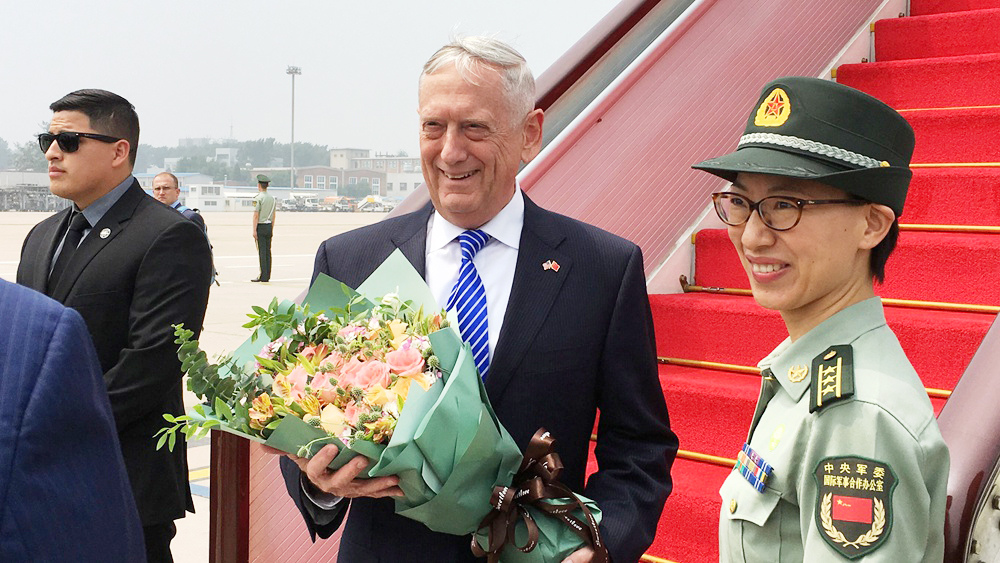
US Secretary of Defense James Mattis is
visiting China from Tuesday to Thursday amid tensions between the two countries over the South China Sea, Taiwan and trade.
Beijing hopes the United States and China can "meet each other halfway" and make their military relations an important "stabilizing factor" for the overall ties between the two countries, according to Senior Colonel Ren Guoqiang, spokesman for China's Ministry of National Defense.
Will the first visit by a US secretary of defense to China since 2014 narrow gaps between the top two military spenders in the world – and help stabilize one of the most important bilateral relations?
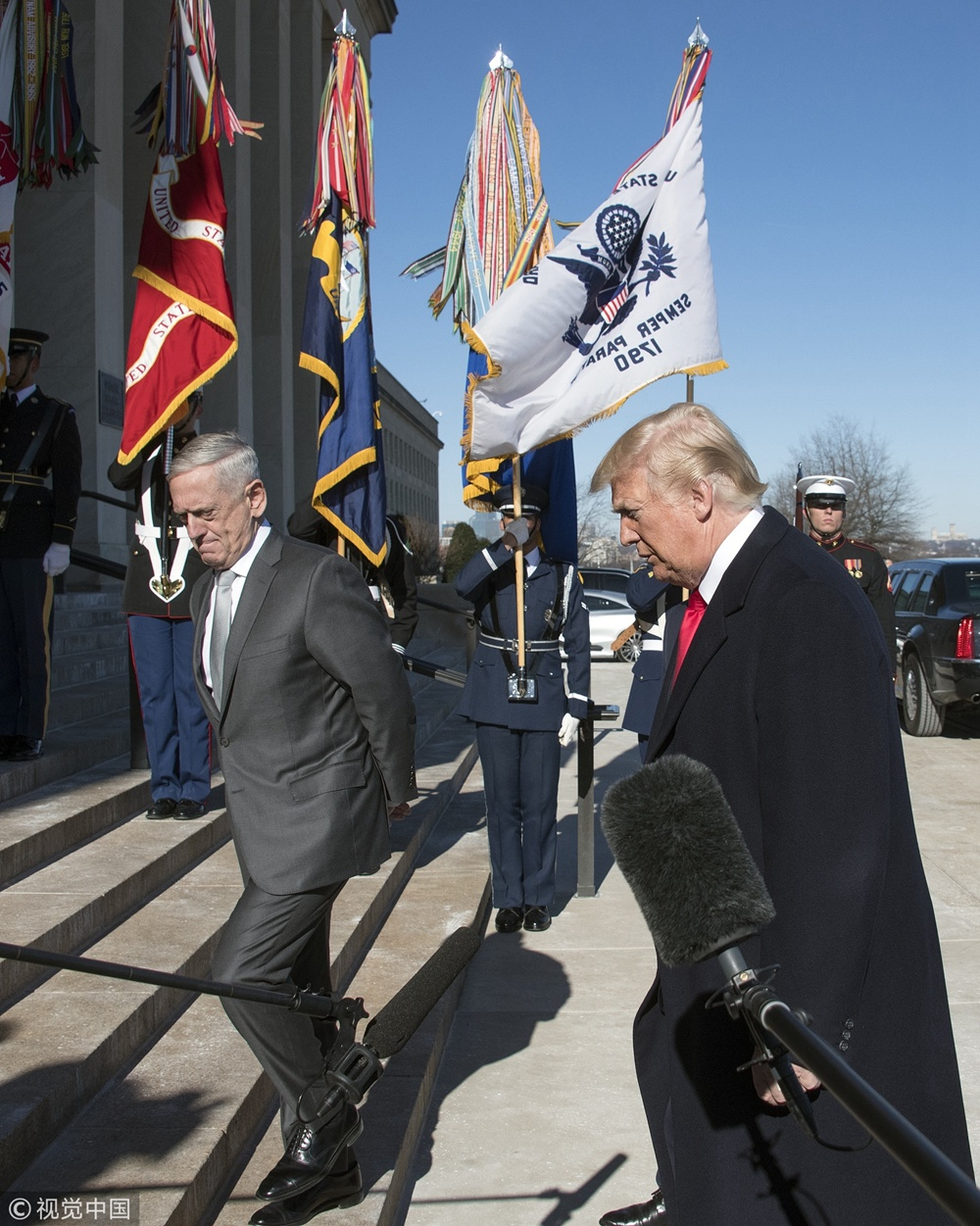
January 18, 2018: US President Donald Trump (R), accompanied by US Secretary of Defense Jim Mattis (L), walks up the steps into the Pentagon in Washington, DC. /VCG Photo
January 18, 2018: US President Donald Trump (R), accompanied by US Secretary of Defense Jim Mattis (L), walks up the steps into the Pentagon in Washington, DC. /VCG Photo
"I want to go in right now without basically poisoning the well at this point. I'm going there to have a conversation," Mattis said on Sunday ahead of the visit. "I want to go in and do a lot of listening."
Being a good listener is the first step toward better understanding and enhanced trust, but Mattis also stressed he wants to "take measure" of China's strategic ambitions – a tone that reflected Washington's mistrust toward Beijing.
Despite the mistrust, China and the US are working together on various security fronts, particularly denuclearization of the Korean Peninsula. Such common ground constitutes the basis for more cooperation and less confrontation.
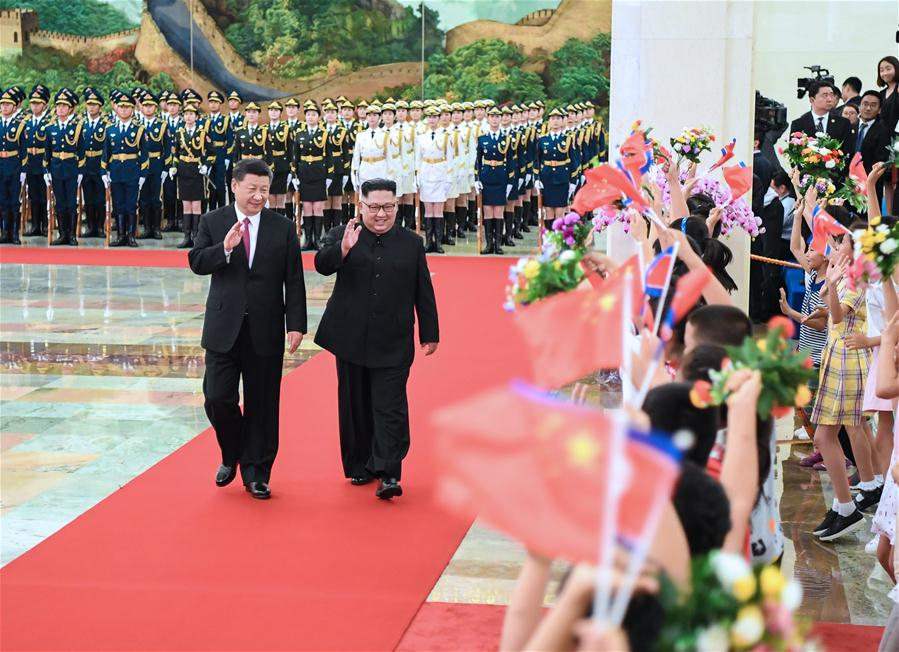
DPRK leader Kim Jong Un's visit to China on June 19-20 – a week after his summit with US President Donald Trump – has shown Beijing's vital role in the Korean Peninsula issue. /Xinhua Photo
DPRK leader Kim Jong Un's visit to China on June 19-20 – a week after his summit with US President Donald Trump – has shown Beijing's vital role in the Korean Peninsula issue. /Xinhua Photo
Read more:
Troubled ties
China-US relations have been undergoing escalated disputes in the security field after US President Donald Trump labeled China as a "revisionist power" and "strategic competitor" when outlining his national security strategy late last year.
On May 23, the Pentagon
disinvited China to participate in this year's Rim of the Pacific (RIMPAC) military exercise, accusing Beijing of "militarization of islands in the South China Sea." China participated in the two previous RIMPAC exercises in 2014 and 2016.
Beijing has repeatedly said it has indisputable sovereignty over islands in the South China Sea and its adjacent waters.
"It is an inherent right for China, as a sovereign state, to carry out normal construction activities and normal military training on its own territory," Chinese Foreign Ministry spokesman Lu Kang responded on May 24. "The activities and training are necessary measures for China to safeguard its sovereignty and maintain regional peace and stability, and they have nothing to do with so-called militarization."
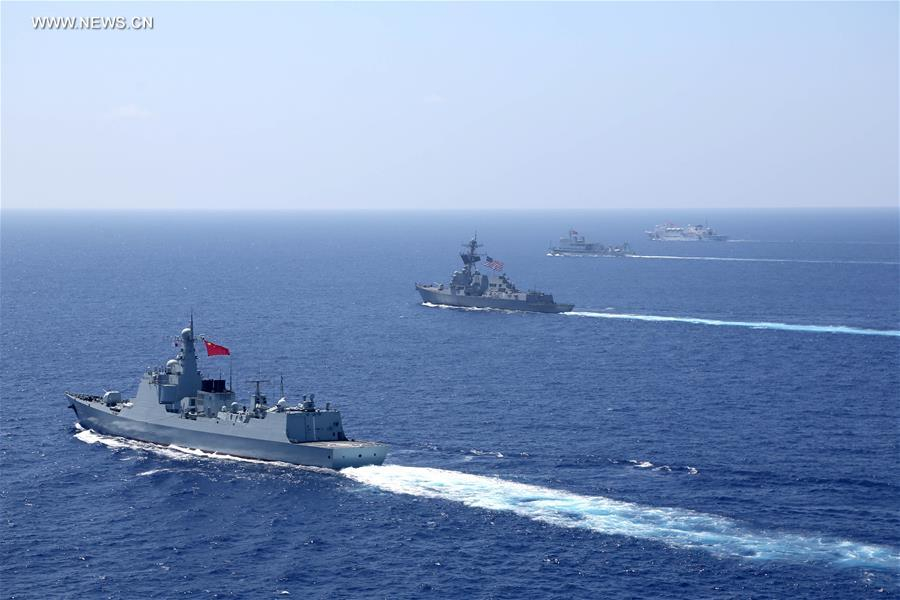
June 20, 2016: A Chinese fleet participates in the Rim of the Pacific (RIMPAC) multinational naval exercises with US warships in west Pacific Ocean. /Xinhua Photo
June 20, 2016: A Chinese fleet participates in the Rim of the Pacific (RIMPAC) multinational naval exercises with US warships in west Pacific Ocean. /Xinhua Photo
On May 27, Lu revealed that two US warships had trespassed into China's territorial waters off the Xisha Islands in the South China Sea, and the Chinese navy had identified the warships, warned and expelled them.
At the Shangri-La Dialogue – the Asian security conference – in Singapore on June 2, Mattis warned that the US will "compete vigorously" with China in the South China Sea if necessary, vowing to continue with its "freedom of navigation" exercises.
Read more:
Meanwhile, Washington is also playing the "Taiwan card," ignoring repeated warnings from Beijing. On March 16, Trump signed the "Taiwan Travel Act," which encourages "visits between officials from the United States and Taiwan at all levels." Earlier this month, Washington sent officials to the opening ceremony of a new office of the American Institute in Taiwan.
In response, Beijing urged the US to firmly adhere to the one-China principle and avoid damaging China-US ties and peace and stability across the Taiwan Strait.
The ongoing trade frictions between the two largest economies of the world have further dampened their relations.
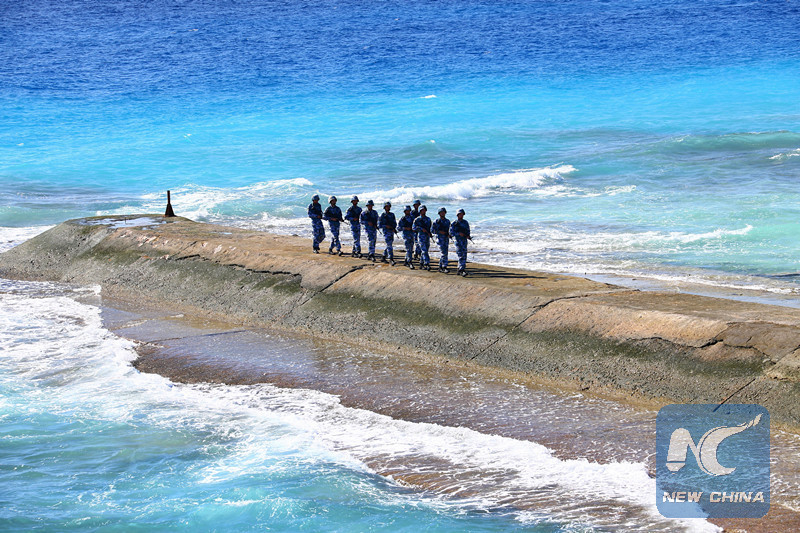
January 6, 2016: Chinese soldiers are on patrol on a breakwater on the Yongshu Jiao in the South China Sea. /Xinhua Photo
January 6, 2016: Chinese soldiers are on patrol on a breakwater on the Yongshu Jiao in the South China Sea. /Xinhua Photo
Common ground and risk management
The good news is that Beijing and Washington are willing to address their differences though talks and they do share significant common ground.
Mattis, who will visit South Korea and Japan after leaving Beijing, said the US and the three East Asian countries "have a common goal: the complete, irreversible and verifiable denuclearization of the Korean Peninsula."
The Korean Peninsula situation is set to be another focus of Mattis' East Asia tour, which takes place two weeks after a
historic summit between Trump and leader of the Democratic People's Republic of Korea (DPRK) Kim Jong Un in Singapore.
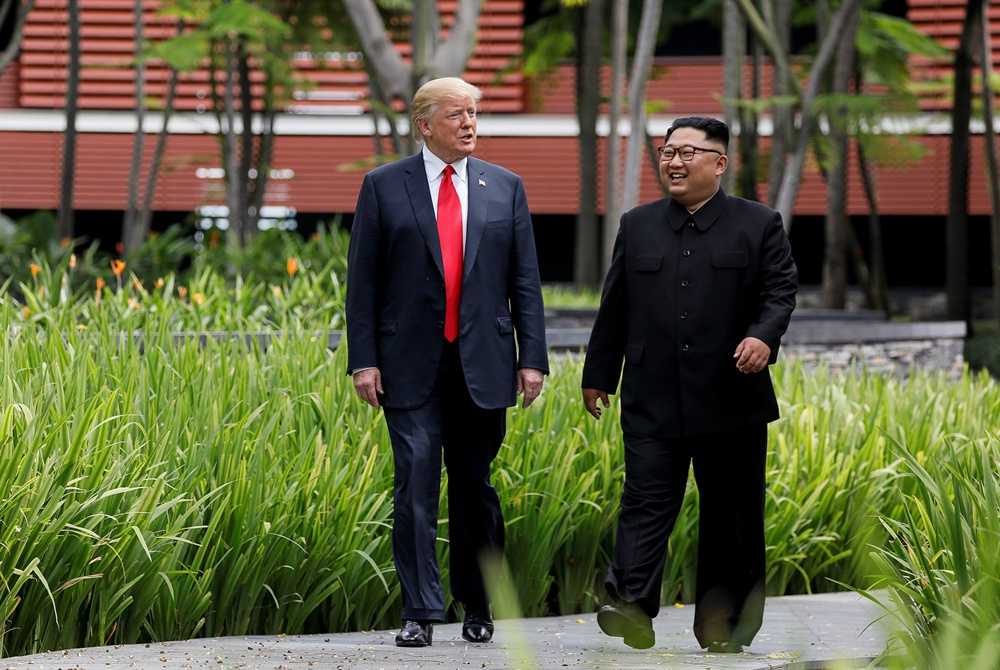
US President Donald Trump (L) and DPRK leader Kim Jong Un walk together before their working lunch during their summit in Singapore, June 12, 2018. /VCG Photo
US President Donald Trump (L) and DPRK leader Kim Jong Un walk together before their working lunch during their summit in Singapore, June 12, 2018. /VCG Photo
According to a joint statement signed by Trump and Kim, the US and the DPRK will make joint efforts to build a lasting and stable peace regime on the Peninsula. The DPRK is committed to working towards "complete denuclearization" of the Peninsula. The US is committed to providing security guarantees to the DPRK.
To iron out details of the deal, Washington has been exchanging views with Beijing, Seoul and Japan since the June 12 summit. US Secretary of State Mike Pompeo visited China on June 14 and met with Chinese President Xi Jinping. Xi told Pompeo that China and the US
share broad common interests and shoulder important responsibilities in safeguarding world peace and stability.
"The Korean Peninsula will also be a key issue during Mattis' trip. After the summit in Singapore, the US and North Korea (the DPRK) are moving toward détente after the US agreed to stop its war games with South Korea. Future regional security arrangements will be extremely crucial," Diao Daming, an American studies expert and an associate professor at the Renmin University of China, told Global Times.
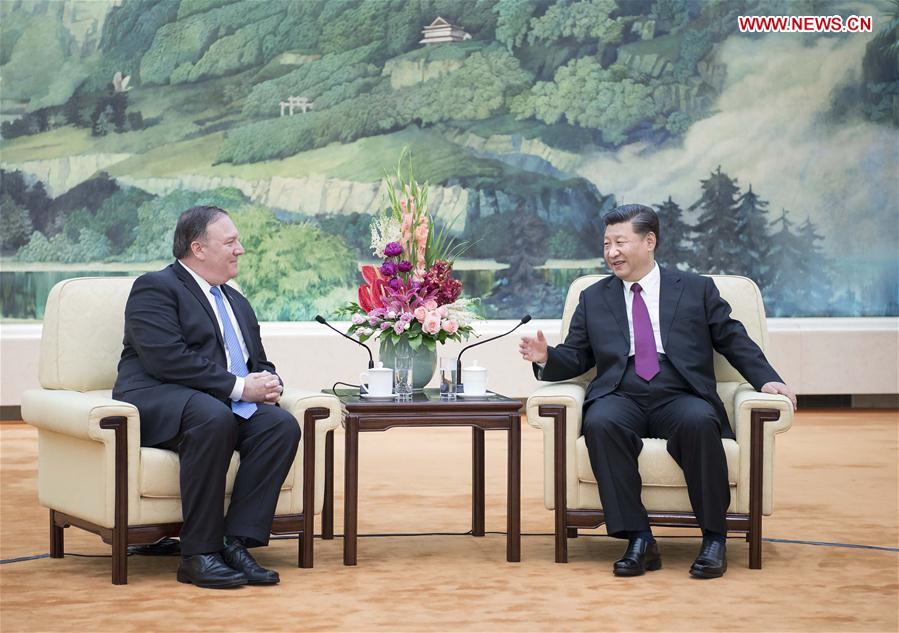
Chinese President Xi Jinping (R) meets with US Secretary of State Mike Pompeo at the Great Hall of the People in Beijing, June 14, 2018. /Xinhua Photo
Chinese President Xi Jinping (R) meets with US Secretary of State Mike Pompeo at the Great Hall of the People in Beijing, June 14, 2018. /Xinhua Photo
Wang Yunfei, a Beijing-based military expert and a retired officer of the Chinese navy, said that China might also ask the US to withdraw its Terminal High Altitude Area Defense (THAAD) anti-missile system from South Korea during Mattis' visit.
The two sides are expected to voice each other's security concerns, with Mattis explaining Washington's Indo-Pacific strategy to Beijing, said Zhao Xiaozhuo, director of the Xiangshan Forum Secretariat.
Therefore, whether China and the US can meet each other halfway will depend on how they consolidate and expand common ground while managing the risks in their relations. Face-to-face communication is a good start.
(Top photo: US Secretary of Defense Jim Mattis receives a bouquet upon arrival at an airport in Beijing, China, June 26, 2018. /Reuters Photo)

 ["china"]