
Opinions
14:23, 16-May-2018
Opinion: Israel-Palestine conflict is child of foreign intervention
 ["other","Middle East"]
Share







Copied
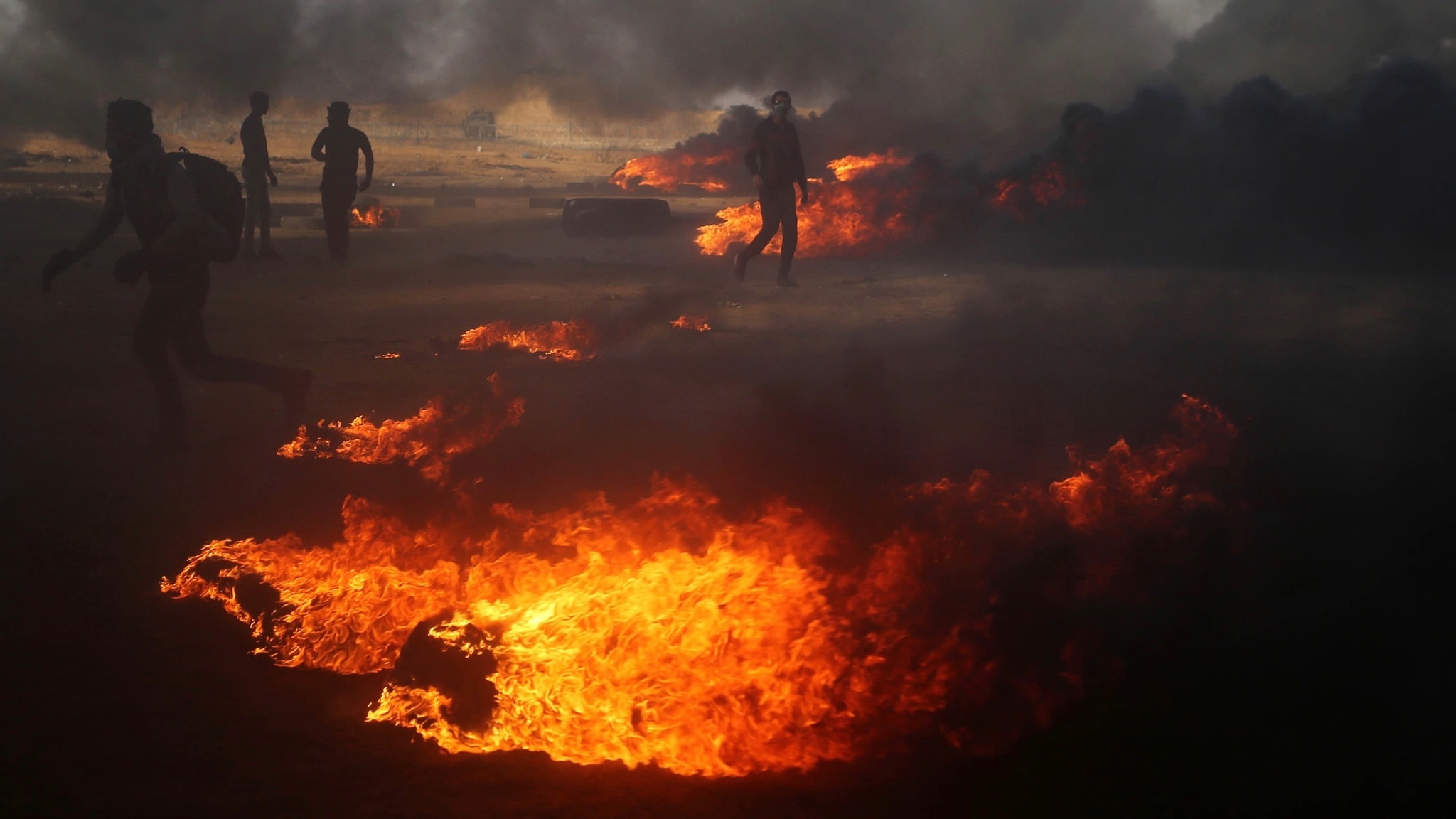
The Middle East was plunged into further bloodshed as the Great March of Return campaign continued into Tuesday – the 70th Nakba day for Palestinians. Funerals for dozens of Palestinians shot dead at the Israel-Gaza border were held after the bloodiest day in the coastal enclave since the war in 2014.
The latest protest in this movement was launched Monday against the US moving its embassy in Israel from Tel Aviv to Jerusalem. While Israel was immersed in a festive mood for the relocation, violence broke out barely 40 miles away as Israeli soldiers fired at Palestinian protesters.
Among the 40,000 demonstrators, most were unarmed. Over the past two days, the death toll has surpassed 60, and some 2,800 Palestinians were wounded.
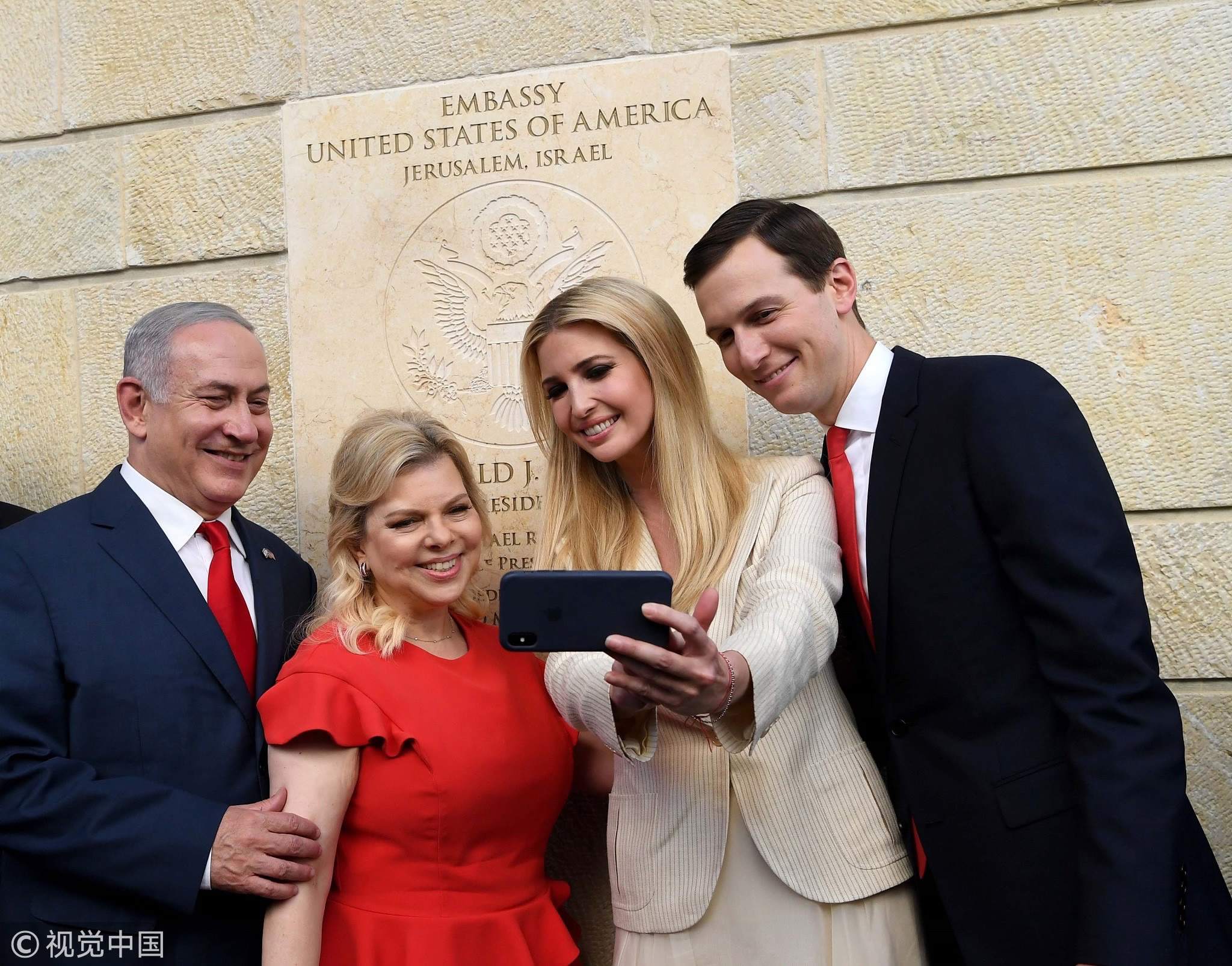
US President's daughter Ivanka Trump (2nd R), Israel Prime Minister's wife Sara Netanyahu (2nd L), Donald Trump's son-in-law and Senior Advisor Jared Kushner (R) and Israeli Prime Minister Benjamin Netanyahu (L) attend the opening of the US embassy in Jerusalem, May 14, 2018. /VCG Photo
US President's daughter Ivanka Trump (2nd R), Israel Prime Minister's wife Sara Netanyahu (2nd L), Donald Trump's son-in-law and Senior Advisor Jared Kushner (R) and Israeli Prime Minister Benjamin Netanyahu (L) attend the opening of the US embassy in Jerusalem, May 14, 2018. /VCG Photo
As Palestinians risk their lives approaching the fence separating Israel from Gaza, the barrier also symbolizes an enduring hindrance to peace between Israel and Palestine.
The fence has stood for seven decades since May 15, 1948, when more than 700,000 Palestinians were expelled from or fled home, one day after the founding of Israel on May 14 during the Arab-Israeli war. The Nakba, known as “Catastrophe,” has since become a day of mourning for Palestinians.
The Israel-Palestine conflict is not simply a battle between two competing geopolitical entities vying for land and resources – it is also the legacy of colonialism.
The British controlled Palestine before the creation of Israel, but the influx of Jews escaping persecution in Europe led to conflict with Arabs already living there, who saw the resettlement as a European colonial movement to take their homeland away.
This tension led to violence, and resulted in the UN dividing the land into two countries. Further conflict ended with Israeli dominance in the region, eventually leaving Palestinians with no state and living under Israeli occupation.
The artificial boundaries created by outside powers, enclosing peoples with different ethnic and religious backgrounds without respecting the differences in their lifestyles and customs, is part of the problem.
There are already more than 1.6 million Arabs in Israel, so if the government were to allow the other millions of Palestinian Arabs into its country and take part in its democracy, then its current Jewish majority would lose its dominant voice.
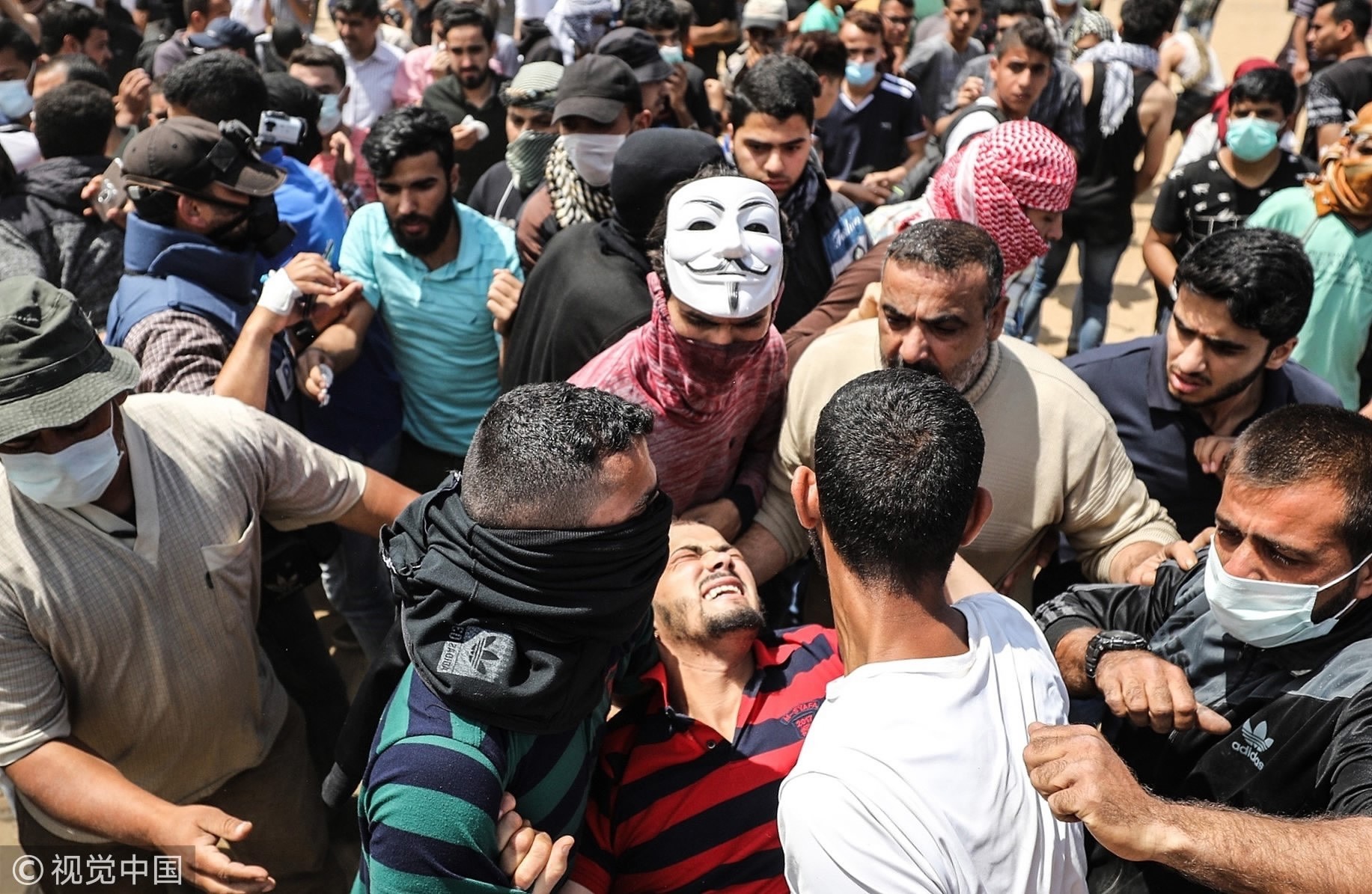
Palestinians carry an injured protestor during a demonstration marking the 70th anniversary of Nakba and against the US's plans to relocate the US embassy in Israel from Tel Aviv to Jerusalem, near Gaza-Israel border in Khan Yunis, Gaza, May 14, 2018. /VCG Photo
Palestinians carry an injured protestor during a demonstration marking the 70th anniversary of Nakba and against the US's plans to relocate the US embassy in Israel from Tel Aviv to Jerusalem, near Gaza-Israel border in Khan Yunis, Gaza, May 14, 2018. /VCG Photo
The issue stems from a colonial past, just as many African countries that were former colonies grouped together different ethnicities and tribes with little in common.
The Great March of Return movement in Gaza, starting from March 30 this year, is the outgrowth of this storied history, with Palestinians seeking to return to what they see as land taken away from them.
The region has all along been a crossroads for different ideologies and ethnicities, but it all started with fear — the Jews’ fear of possessing no land of their own after millennia of persecution, and the Arabs’ fear of colonial encroachment coupled with loss of ethnic identity.
External powers have taken sides at one point or another, but these seemingly irreconcilable positions have fueled acts of violence perpetrated by local governments and militant groups over the decades.
What’s more, Palestinian civilians in Gaza have never forgotten this history, and are seeking to reclaim what they see as their homes, as well as to escape poverty and instability. Meanwhile, Israel is trying to ensure that its people continue to prosper under a Jewish majority.
Donald Trump’s decision last December to relocate the US embassy to the ancient city of Jerusalem has added fuel to the fire across the region. In the past months, tensions have been brewing, setting to bring more chaos to the afflicted region comprising stakeholders with intertwined geopolitical interests.
Washington’s maneuver may open a Pandora’s box in the Middle East, as some 10 countries including the Czech Republic, Romania and Uruguay announced they would follow suit in moving their embassies in Israel to Jerusalem.
“It looks that the vehement turmoil in this region will last for a decade or two, and this is just another beginning. And Syria is an incarnation of the entanglement,” Wang Chong, a senior research fellow with the Charhar Institute, told CGTN.
In a recent move, Israel struck a majority of Iran’s military targets on Syrian land.
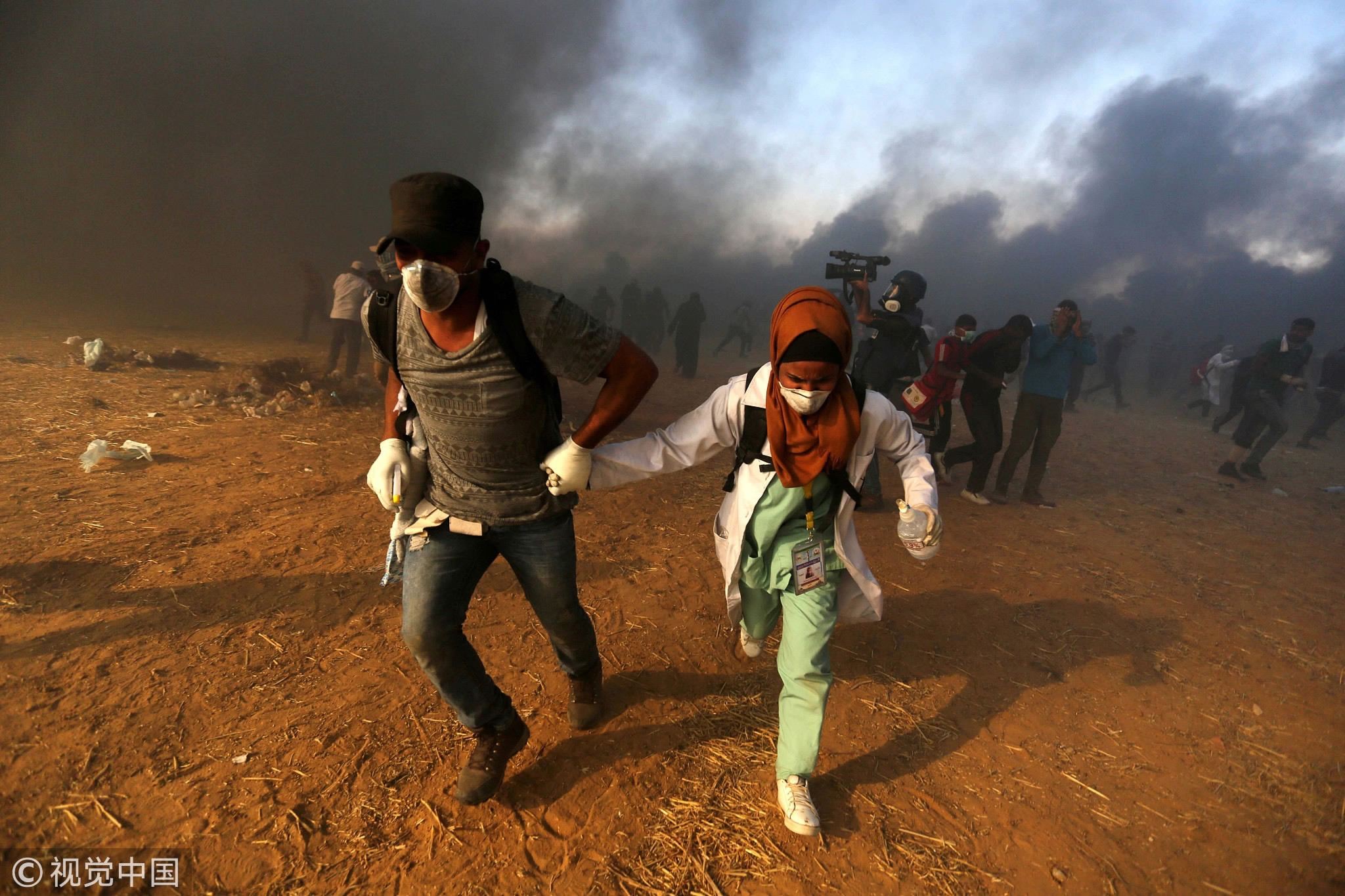
Palestinian protesters react to tear gas during clashes with Israeli security forces in a tent city protest in Khan Younis in the southern Gaza Strip, May 15, 2018. /VCG Photo
Palestinian protesters react to tear gas during clashes with Israeli security forces in a tent city protest in Khan Younis in the southern Gaza Strip, May 15, 2018. /VCG Photo
Even if Bashar al-Assad falls from power and Syria is split apart and occupied by different states, the tensions are unlikely to ease, Wang added. Perhaps the history of the Middle East will be rewritten forever, if regional stakeholders continue to be embroiled in conflict.
In this modern day, colonialism has disappeared in most parts of the world. But the Israel-Palestine land seems to have been left out, with world powers coveting its abundant oil reserves and contending for exorbitant profits from munitions deals.
It might be better to look for a recipe for the Israel-Palestine conflict through regional effort without damaging interference from external powers. Washington should learn from history and leave the embattled region alone if it cannot facilitate peace there.
This year, the Muslim holy month of Ramadan started with the sunset of May 15. Millions of Muslims around the world are abstaining from all food and drink from dawn to dusk.
It’s hoped that regional powers will also practice fasting – keeping restraint and ceasing to intervene, to avoid repeating the Ramadan back in 2014 when the Israel-Gaza war killed over 100 Palestinians.
(The author is a reporter for CGTN Digital.)
(Cover Photo: Palestinian protesters gather during clashes with Israeli security forces in a tent city protest on the occasion of the 70th anniversary of the Nakba and against US embassy move to Jerusalem at the Israel-Gaza border, in Khan Younis in the southern Gaza Strip, May 15, 2018. /VCG Photo)