
Politics
15:58, 24-Apr-2018
Finland abandons high-profile 'basic income' pilot
 ["europe"]
Share







Copied
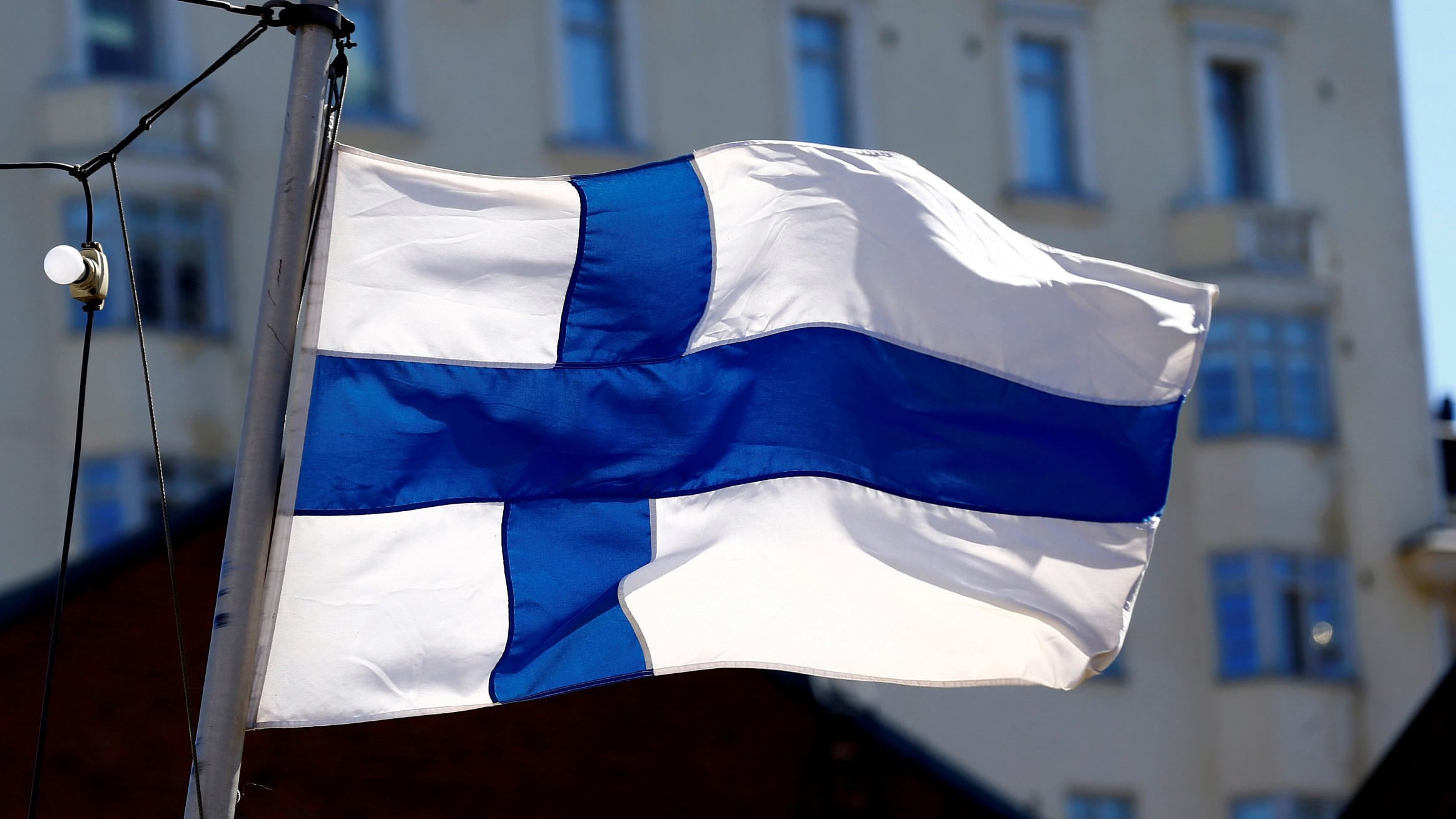
Finland is to scrap its closely-watched basic income experiment, in which a small selection of unemployed people receive a monthly payment without conditions in lieu of benefits.
The scheme attracted global attention when introduced in 2017, tapping into revived interest in the centuries-old concept of Universal Basic Income (UBI).
Universal Basic Income
For: Supporters argue UBI would offer security to short-term workers and promote well-being, as well as encourage labor mobility and income equality. They also say it would be more efficient than existing welfare systems by cutting out complexities and limiting the risk of fraud.
Against: Critics warn that providing a cash sum to all citizens could be inflationary, and simply lift the poverty line higher rather than help those in the most need. They also say a UBI could reduce the incentive to work and in doing so lead to less government tax revenues.
UBI proponents believe making a regular, livable payment to all citizens could reduce poverty, broaden wealth distribution and encourage labor mobility, as well as provide security for workers as automation becomes the norm and employment models change.
However, the small sample size and limited ambition of the Finnish scheme mean that it was not a true example of UBI.
What was the Finnish trial?
The Helsinki government began a two-year trial of a scheme whereby 2,000 unemployed Finns received 560 euros (685 US dollars) tax-free every month without conditions in January 2017.
Unemployed people between the ages of 25 and 58 were chosen at random to take part in the trial. There was no requirement to seek a job to continue receiving the payment, and those who did find employment continued to receive the monthly sum.
The government hoped the payments would encourage job-seeking in a society with a costly and complex welfare system and unemployment at over 9 percent. By replacing high welfare payments with a single fee, it was hoped there would be a greater incentive to work.
Why is it ending?
The Finnish project raised eyebrows from the outset for being too narrow in focus. The government has said it will not fund the scheme once the initial two-year run ends, and is now looking at other welfare reforms.
"The eagerness of the government is evaporating. They rejected extra funding," Olli Kangas, one of the experiment's designers, told the BBC. He added that the government had turned down a request to expand the scheme to employed people, which researchers say was essential to analyzing the benefits of the system.
The 2,000 Finns currently receiving the monthly basic income payment will continue to do so until the scheme formally ends next year.
"Two years is too short a time frame to be able to draw extensive conclusions from such a vast experiment," Business Insider quoted Kangas as telling Finland's public-service broadcaster YLE. "We ought to have been given additional time and more money to achieve reliable results."
Other possible schemes include a negative income tax, whereby a person whose income falls below a certain level receives income from tax revenues, and a universal credit.
The universal credit system, which aims to simplify benefit costs into a single payment, was recently praised by the Organization for Economic Cooperation and Development as preferable to UBI as a means to reduce poverty and income inequality.
Have there been other trials?
UBI has been floated as a means to more even wealth distribution since the 18th century, but has not been comprehensively implemented.
The fundamental principle of UBI is to provide every citizen with a regular cash payment, irrespective of employment. It has gained a new audience in recent years with the increase in short-term contracts and self-employment as well as the automation of many jobs.
The Times reported that the Netherlands, France, Kenya and California are considering similar schemes, while trials are underway in Canada's Ontario and Spain's Barcelona.
UBI has high-profile backers in the US, particularly in the tech community. Tesla's Elon Musk, Facebook's Chris Hughes and Google's Ray Kurzweil have all spoken in support of the idea.
Andrew Yang, who is running for the Democratic nomination for the US presidency in 2020, has pledged to give every American between 18 and 64 a 1,000-US-dollar payment per month if elected. CNBC reported that the 43-year-old this week announced that he would pay one New Hampshire resident 1,000 US dollars per month for the next year to prove the value of the policy.
Over three-quarters of Swiss voters opted not to implement a guaranteed basic income equal to around 2,500 US dollars in a referendum in 2016.
6329km