
Opinions
18:40, 22-Jul-2018
Opinion: Africa striving for a self-reliant and integrated development
Updated
17:53, 25-Jul-2018
 ["china"]
Share







Copied
Editor’s note: Yang Lihua is a senior research fellow at the Institute of West-Asian and African Studies of the Chinese Academy of Social Sciences. The article reflects the author’s opinion, and not necessarily the views of CGTN.
The 21st century will see a multi-polar world. One of the decisive factors for the change is the collective rising of developing countries and regional groupings. Africa is becoming an independent and dynamic polar of her own right.
Africa has embarked on a self-reliant and integrated development approach since 1980, with the adoption of the Lagos Plan of Action for the Economic Development of Africa (1980-2000).
But Africa’s efforts were disrupted by the “Structural Adjustment Programs (SAPs)” of the World Bank and the IMF which actually forced the African countries to shift to policies of privatization and liberalization of their respective economies by conditionality for loans and assistance.
The SAPs were lack of African countries’ ownership and participation, and resulted in economic setbacks and worsened poverty.
The failure of the SAPs led to the “African Alternative Framework to Structural Adjustment Programs for Socio-Economic Recovery and Transformation” by the United Nations Economic Commission for Africa in 1989, encouraging African countries to make their own development programs.
The Organization of African Unity (OAU) in 1991 adopted the Treaty establishing the African Economic Community (AEC), commonly known as “the Abuja Treaty”, in seeking to create the AEC through six stages culminating in an African Common Market using the Regional Economic Communities (RECs) as building blocks. The Treaty has been in operation since 1994.
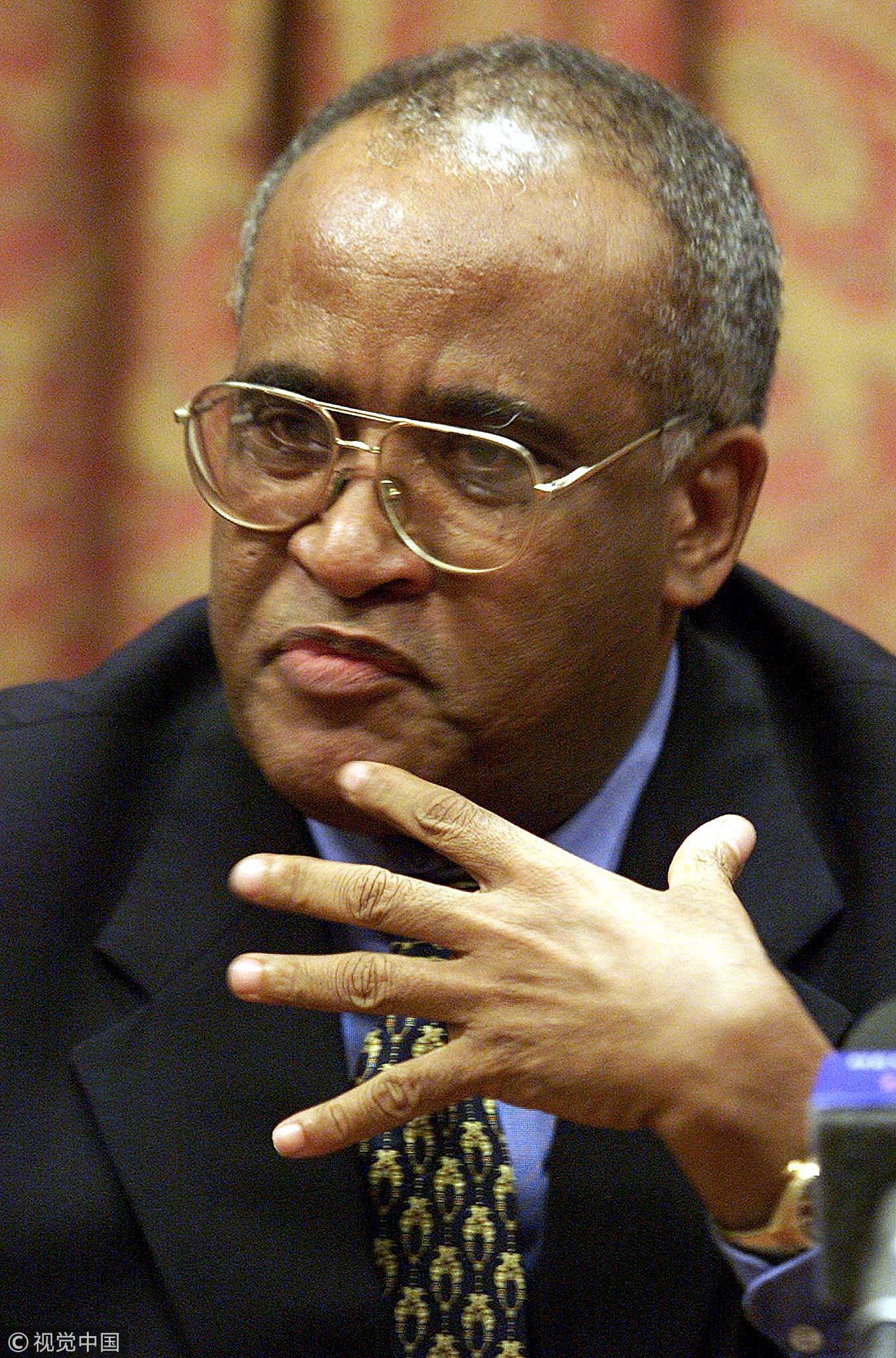
May 5, 1999: Former Secretary General of the Organization of the OAU Salim Salim speaks to the media at the Union Buildings in Pretoria./ VCG Photo
May 5, 1999: Former Secretary General of the Organization of the OAU Salim Salim speaks to the media at the Union Buildings in Pretoria./ VCG Photo
In the last four decades, African countries, in their quest for unity, economic and social development have taken various initiatives and made substantial progress in many areas.
That has brought to the launch of the African Continental Free Trade Area Agreement (AfCFTA) on March 21, 2018, during the AU summit in Rwanda. The AfCFTA will come into effect after 22 countries ratify it.
It will be the largest free trade area that creates an African market of over 1.2 billion people with a GDP of 2.5 trillion US dollars. By early July, 49 of the 55 member states of the African Union have signed the agreement which is evidence of African unity and commitment.
Africa’s consistent strategies and efforts have brought about encouraging results. Many research reports have given positive, optimistic perspectives for Africa’s future. International financiers have changed their tones on Africa from marginalization to top-priority.
In the last decade, African international trade and intra-regional trade were boosted considerably. And Foreign direct investment (FDI) inflows to African countries were also on the rise in the last ten years, due to stability, healthy economic fundamentals and high investment returns.
At the same time, intra-Africa investment has been growing. In 2011, intra-African investment accounted for 17 percent of all new FDI projects on the continent, which highlights Africa’s growing self-confidence.
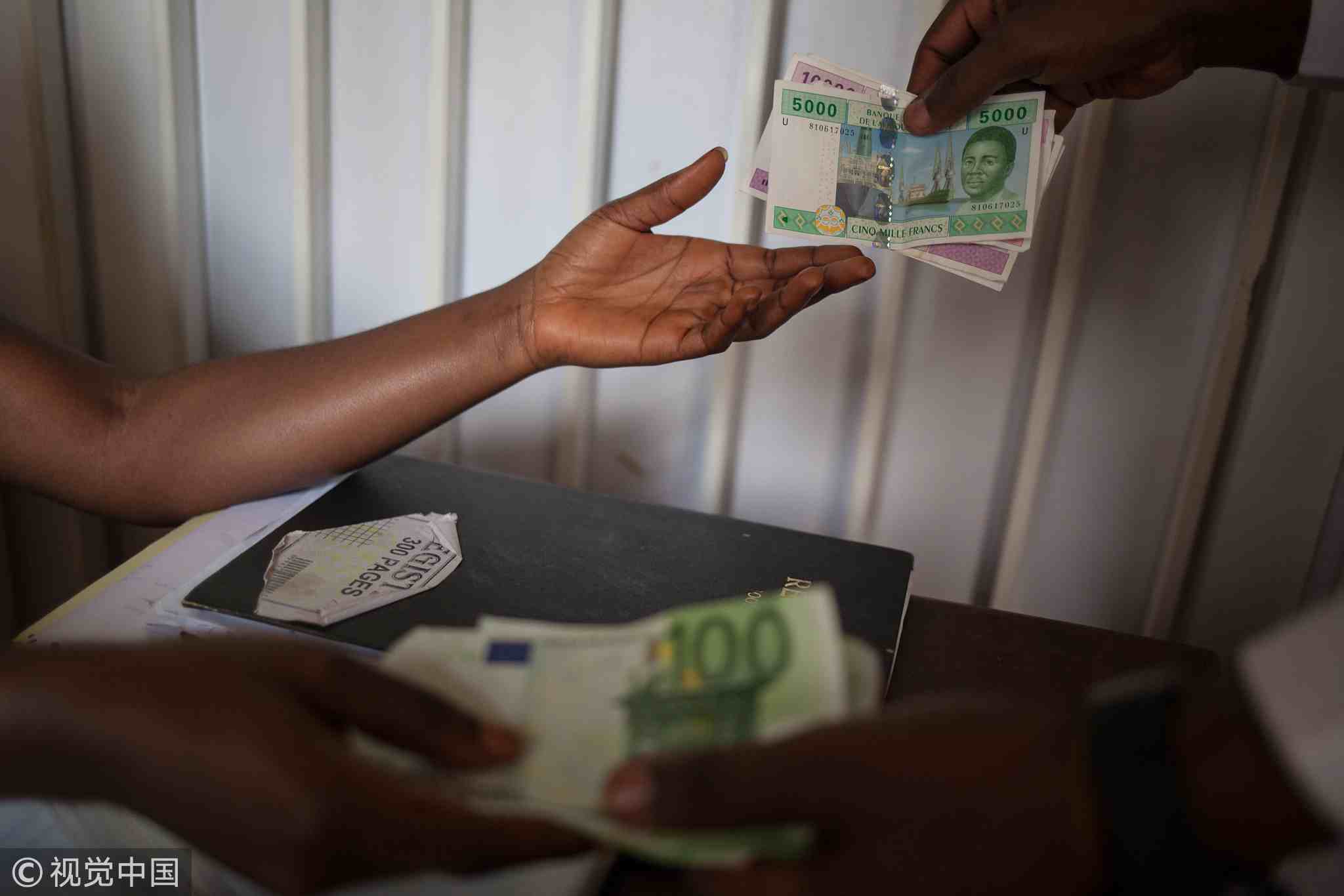
A customer exchanges Central African franc banknotes for Euro banknotes in a money exchange booth in the Bastos neighborhood, Yaounde, Cameroon, June 4, 2018./ VCG Photo
A customer exchanges Central African franc banknotes for Euro banknotes in a money exchange booth in the Bastos neighborhood, Yaounde, Cameroon, June 4, 2018./ VCG Photo
However, due to various factors, the continent has development deficits to be addressed, particularly unemployment and poverty.
The continent is still the least-developed manufacturing region of the world, with only a few countries in sub-Saharan Africa succeeding in developing a sizable and dynamic manufacturing sector above 20 percent of GDP.
Yet, more African countries than ever before have moved up the industrial development ladder and industrial growth has accelerated and even exceeded GDP growth.
To accomplish a self-reliant and self-sustained development, Africa is to push industrialization parallel with regional integration. There have been initiatives of building production chains/network and supply chains for deepening integration, for a rational location of industries to avoid duplication in investment.
Africa needs to exploit domestic market potential, as the World Bank estimated, “By 2020, Africa will likely become the fastest growing consumer market in the world.” African countries are open to international cooperation in their economic and social development.
To Africa’s self-reliant development strategies, there have always been different attitudes from the outside world: respect Africa’s initiatives or repress Africa’s efforts.
China is for the principle of mutual respect. China and Africa have had a relationship of mutual respect and mutual benefit in the last five decades and the cooperation has been carried on in an ever deepening and comprehensive way.

December 4, 2015: Former South African President Jacob Zuma delivers a speech during the opening session of the Forum on Africa and China Cooperation at Sandton, Johannesburg./ VCG Photo
December 4, 2015: Former South African President Jacob Zuma delivers a speech during the opening session of the Forum on Africa and China Cooperation at Sandton, Johannesburg./ VCG Photo
The Forum on China-Africa Cooperation, established in 2000, has been an effective mechanism for the aim of common development. Currently, China and Africa are both going upward in their economic and social development.
They are in different stages of industrialization and are undergoing respective economic structural adjustment.
China gives the commitment of expanding its investment and financial assistance to African countries’ efforts in industrialization, as well as in building peace and security on the continent.
Africa hopes that China will continue to speak up for Africa in the international arena, and African countries will continue to firmly support China in the formation of a better world.
China-Africa cooperation has increased Africa’s opportunities for choosing partners. China respects Africa’s sovereignty and initiatives. Africa is not anyone’s sphere of influence. Any outside powers attempting to make Africa their dependency will have no justice to speak of, nor have any chance to succeed. Africa has come of age.