
World
17:55, 20-Sep-2018
Nations pool insurance risk to fight natural disasters
Updated
17:56, 23-Sep-2018
 ["other","Asia"]
Share







Copied
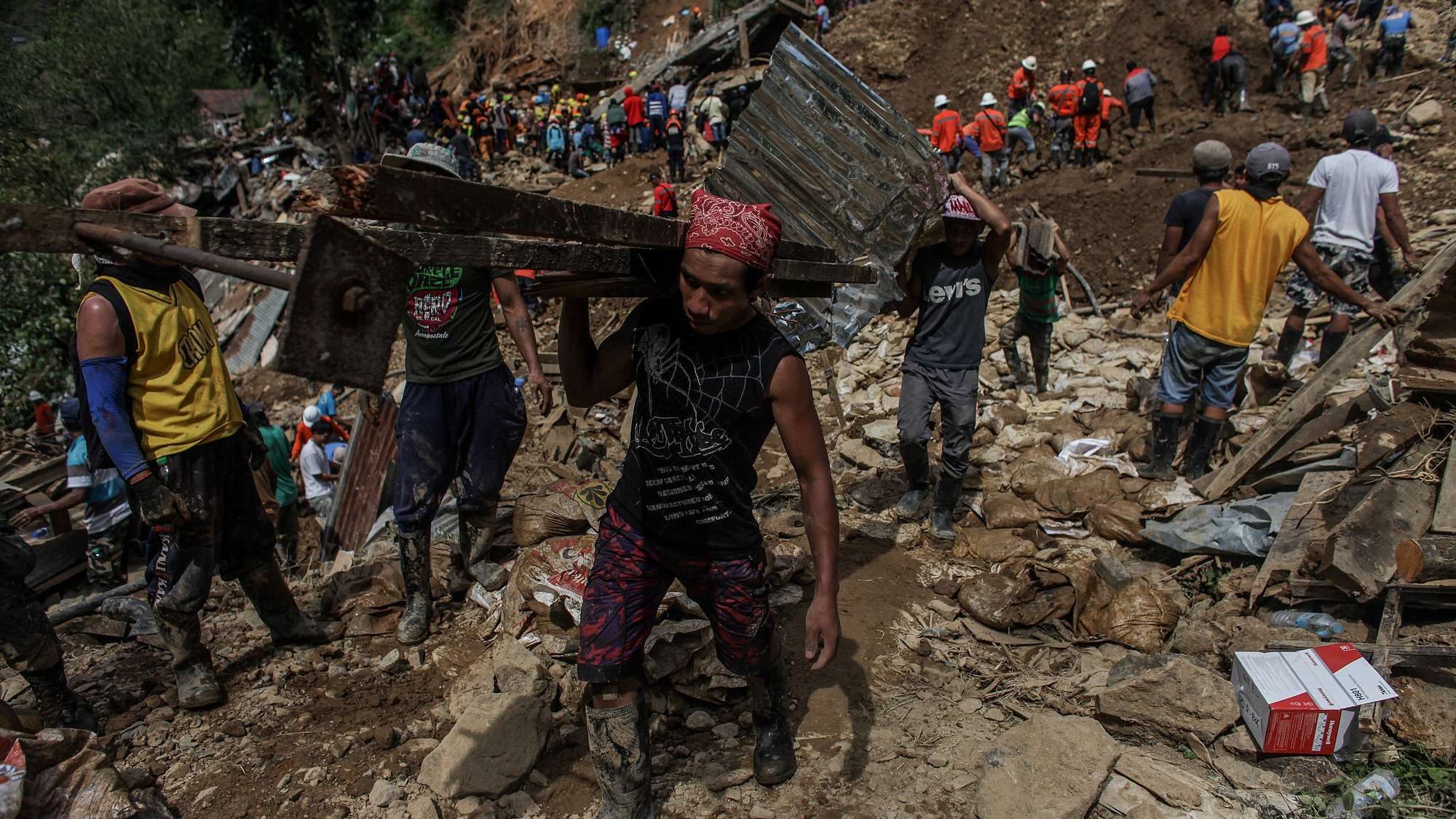
Storms are routine events for the Philippines.
This month, violent winds and heavy rains associated with Typhoon Mangkhut killed at least 80 people, swamped farm fields in the agricultural north and smashed houses in one of the world's most disaster-prone nations.
Southern China was also hit, highlighting once again the fact that natural disasters, especially floods, cause billions of dollars in damage in Southeast Asia every year.
When disaster strikes, countries can experience severe short-term cash problems.
That's why some members of the Association of Southeast Asian Nations are hoping to establish a parametric disaster insurance pool by the end of the year.
Cambodia, Laos and Myanmar are the initial signatories to the plan for a regional catastrophe risk pool to provide rapid response financing in the immediate aftermath of a disaster -- whether storm, earthquake or flood - rather than wait on time-consuming damage assessments.
The Caribbean is the pioneer in this field, having set up its own parametric intergovernmental insurance system 11 years ago that triggers the automatic release of funds depending on how severe the disaster is. The final payout is determined by rainfall, wind speed or magnitude of tremors.
Since its inception, the Caribbean Catastrophe Risk Insurance Facility (CCRIF) has made payouts totaling 130.5 million US dollars to member governments - who now number 20 - with all having been made within 14 days of the end of the calamity.
Some 55 million US dollars of that amount went to nine member governments following Hurricanes Irma and Maria in 2017. This no doubt spurred the decisions of St Maarten and the British Virgin Islands which sustained severe hurricane damage last year, as well as Montserrat, which is still smarting from a deadly volcanic eruption in 1995, to join the facility recently.
"These countries all recognize that climate change is likely to exacerbate the impacts of hydrometeorological events - resulting in more frequent intense storms as well as greater variability in periods of excess rainfall and drought - and that the use of parametric insurance can be applied to strengthen their climate resilience," the CCRIF said.
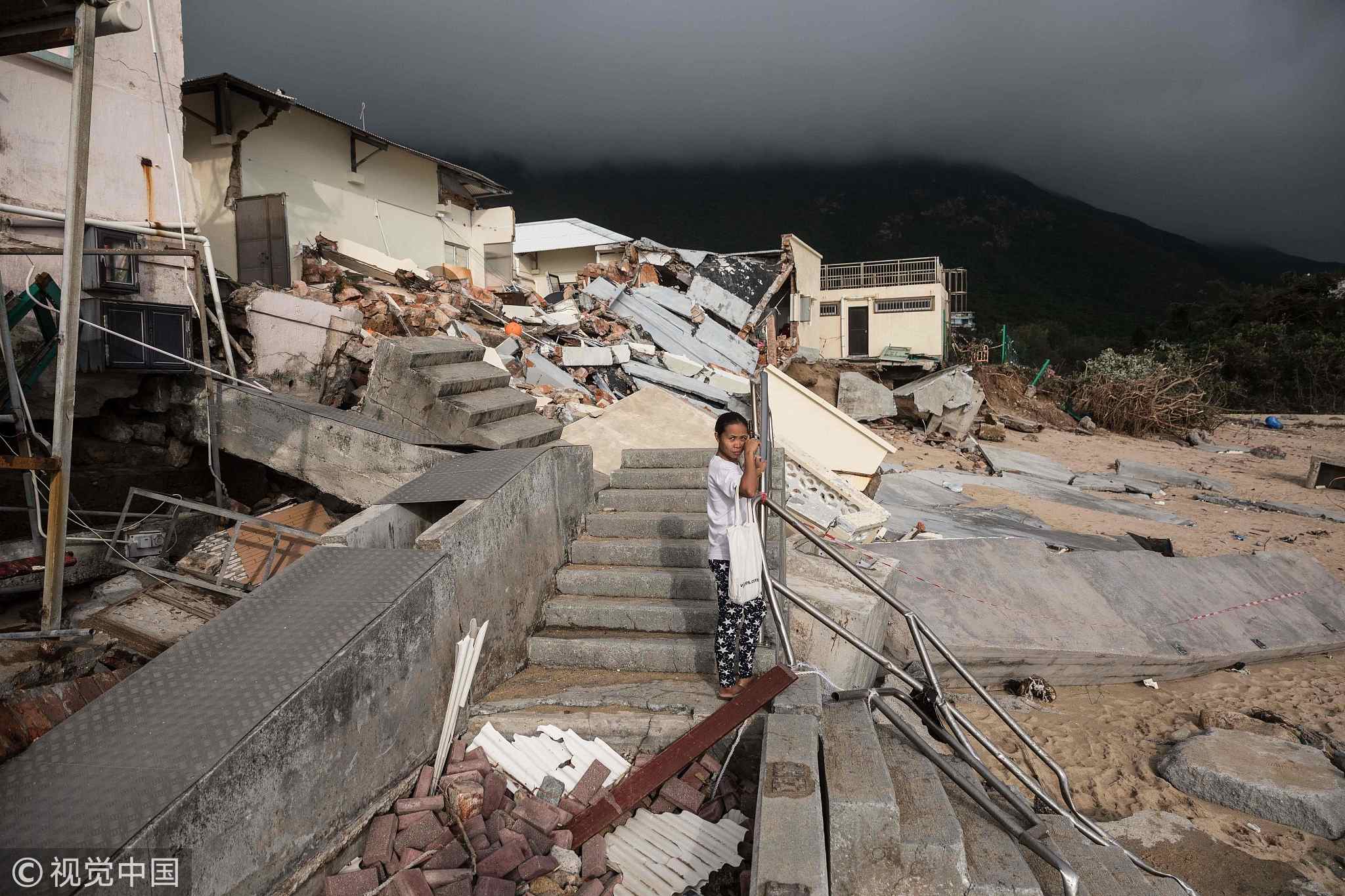
A woman stands before a collapsed building of a school next to a beach in the aftermath of Typhoon Mangkhut in the coastal village of Shek O in Hong Kong, China on September 18, 2018. /VCG Photo
A woman stands before a collapsed building of a school next to a beach in the aftermath of Typhoon Mangkhut in the coastal village of Shek O in Hong Kong, China on September 18, 2018. /VCG Photo
The Caribbean Development Bank stepped in this month to subsidize the 2018-2019 CCRIF premiums for Haiti, the region's poorest nation and one of the most vulnerable to natural hazards.
Since the Caribbean's lead, Africa and the Pacific have also established sovereign catastrophe risk pool with the help of technical and financial support from donors.
Now Southeast Asia is poised to follow suit. Japan has agreed to work with its neighbors on the insurance project in an area where it's vitally needed with the UN reporting this year that only eight percent of disaster losses in the Asia-Pacific are covered by insurance.
"Through sovereign catastrophe risk pools, countries can pool risks in a diversified portfolio, retain some of the risks through joint reserves and capital, and transfer excess risk to the reinsurance and capital markets," the World Bank says.
"Since it is highly unlikely that several countries will be hit by a major disaster within the same year, the diversification among participating countries creates a more stable and less capital-intensive portfolio, which is cheaper to reinsure."
Last month, the World Bank helped to launch a new catastrophe risk insurance program to help the Philippines better respond to losses from climate and disaster risks, just in time for Typhoon Mangkhut. As with CCRIF, payouts are made when pre-defined parametric triggers are met.
The Philippines may have decided to go it alone for now because of its extreme proneness to natural disasters. When the Southeast Asia Disaster Risk Insurance Facility was being discussed, Insurance Commissioner Dennis B. Funa said Manila would like to join, but he felt it might use up too much of the funding. "I don't think they want us there," Funa told the BusinessMirror, a daily business newspaper in the Philippines. "We are exposed to more natural disasters than them. We would end up utilizing more of the funds than them."
Whatever the final membership composition of the Southeast Asia sovereign insurance facility, it is clear that governments are seeking innovative joint regional financial solutions when catastrophes strike.
Top Photo: Workers carry metal debris as rescuers dig at the site where people were believed to have been buried by a landslide on September 18, 2018, in Itogon, Benguet Province, the Philippines, that was triggered by Typhoon Mangkhut. /VCG Photo