
Politics
14:16, 28-May-2018
Reporter's Journal: For S. Koreans, denuclearization has many meanings
 ["china"]
Share







Copied
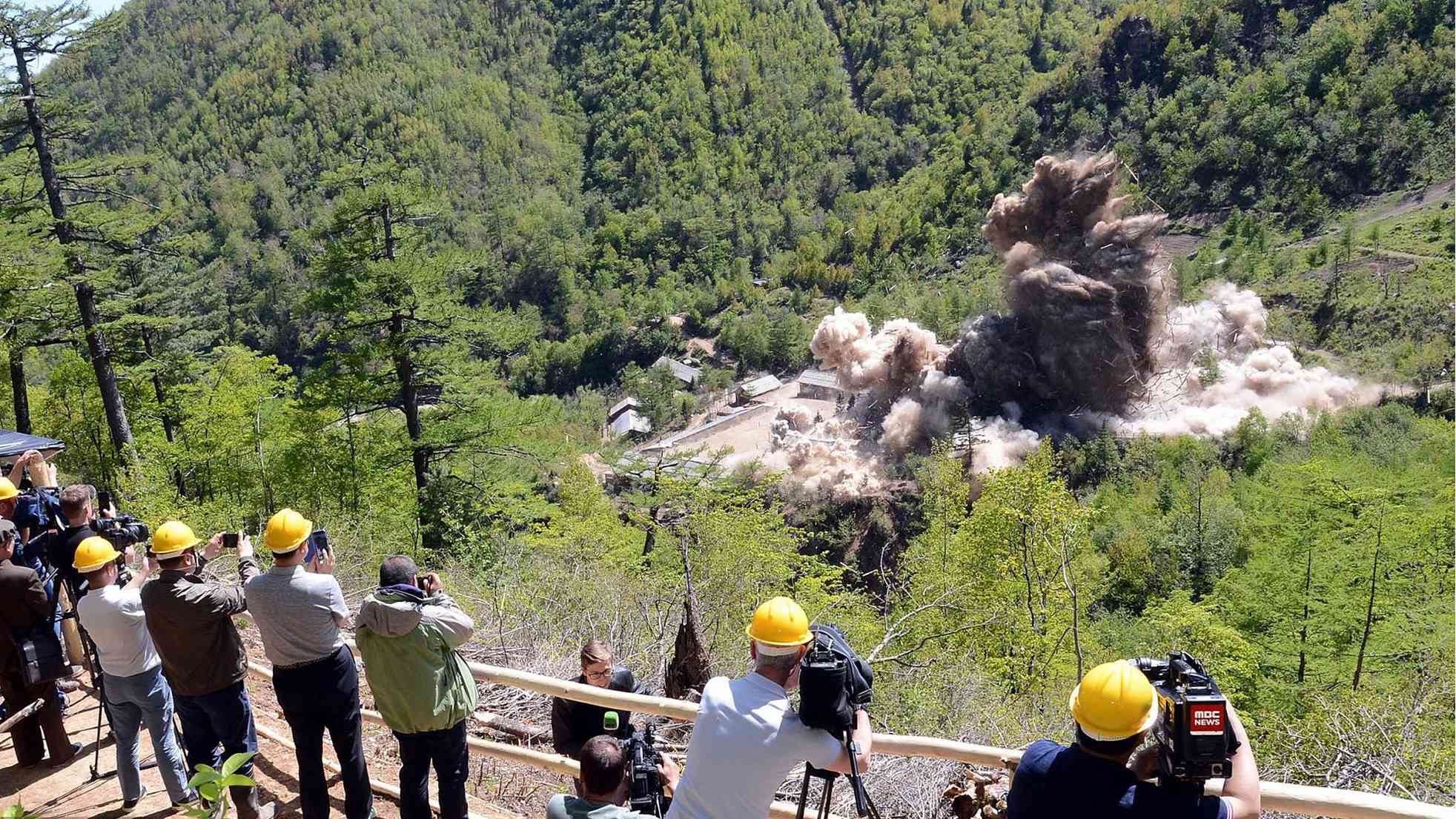
Nuclear show or showdown?
The Democratic People's Republic of Korea (DPRK) invited international journalists last week to witness the dismantling of its nuclear test site at Punggye-ri in the country’s northeast.
Independent experts and inspectors were not present to watch the demolition, leading some pundits to question the DPRK’s intent.
The event conjured up images of 2008 when Pyongyang blew up a cooling tower at its Yongbyon nuclear plant.
South Korean people have grown accustomed to nuclear threats posed by the DPRK.
But the recent détente between Seoul and Pyongyang is giving citizens south of the demilitarized zone a mix of hope and cautious optimism.
Han Min-chang, 65.
Han raises horses on a farm in the coastal city of Gimhae.
He watched media footage of the DPRK dismantling its nuclear test site but was far from convinced.
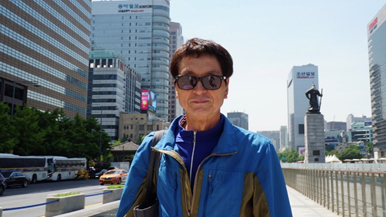
Han Min-Chang /CGTN Photo
Han Min-Chang /CGTN Photo
“I feel like the DPRK is toying with our government. If you make a promise you should keep it. But instead of following through on their promises, their policies have flip-flopped. That’s the problem, so I’m a little disappointed,” Han said.
He knows what it means to live under hostile conditions. He grew up in the aftermath of the Korean War, which technically never ended as a treaty was never signed, only a ceasefire.
For him, denuclearization means completely ridding the country of nuclear-based weapons.
“South Korea has nuclear energy reactors. If the DPRK were to use its nuclear technology for reactors like us, it could give an abundance of wealth to its citizens, but the problem is they use it for weapons,” Han added.
Younger South Koreans, however, are more optimistic.
Choi Yoon-a, 26.
Choi is a recent political science graduate, who believes the DPRK is sincerely willing to denuclearize.
“Blowing up Punggye-ri seems like too much of a major step forward to label it as a show. The DPRK has never done anything like this before and is displaying its will to denuclearize through actions,” Choi said.
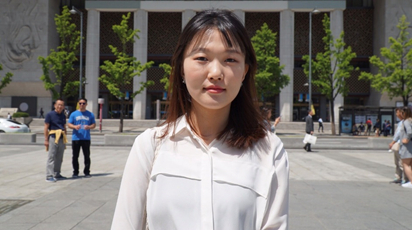
Choi Yoon-a /CGTN Photo
Choi Yoon-a /CGTN Photo
Regardless of one’s position, DPRK policy is a divisive issue in South Korea that often splits families as much as it does political parties.
As a summit between the leaders of the United States and the DPRK hangs in the balance, experts speculate the two sides are in a tug-of-war on how to achieve denuclearization.
That’s what compelled US President Donald Trump to cancel the summit last week.
“The Trump administration was really surprised that there was no agreement between Washington and Pyongyang on a minimally, mutually acceptable definition of denuclearization that can be used for the summit meeting between Trump and Kim,” said DPRK expert Bong Young-shik at Seoul’s Yonsei University.
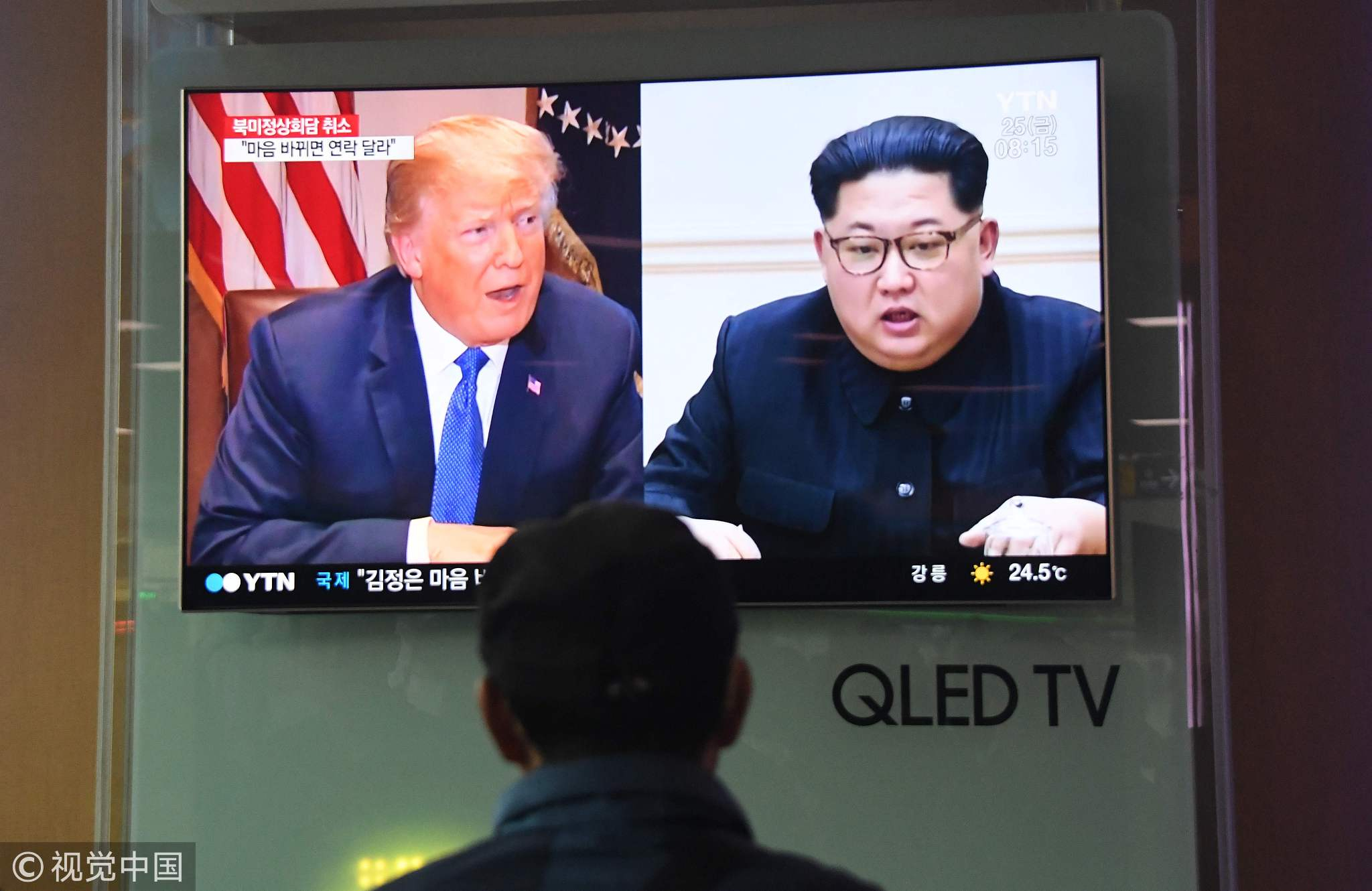
A man watches a television news screen showing US President Donald Trump and DPRK leader Kim Jong Un at a railway station in Seoul on May 25, 2018. /VCG Photo
A man watches a television news screen showing US President Donald Trump and DPRK leader Kim Jong Un at a railway station in Seoul on May 25, 2018. /VCG Photo
All eyes are on how denuclearization will be addressed at the on-again, off-again summit between Pyongyang and Washington scheduled for June 12 in Singapore.
For many South Koreans, denuclearization has a symbolic meaning.
“It means peace and breaking away from the threat of war,” according to Choi.