
World
20:53, 29-Jun-2018
First trial over 'stolen babies' in Spain underway
Updated
19:57, 02-Jul-2018
 ["china"]
Share







Copied
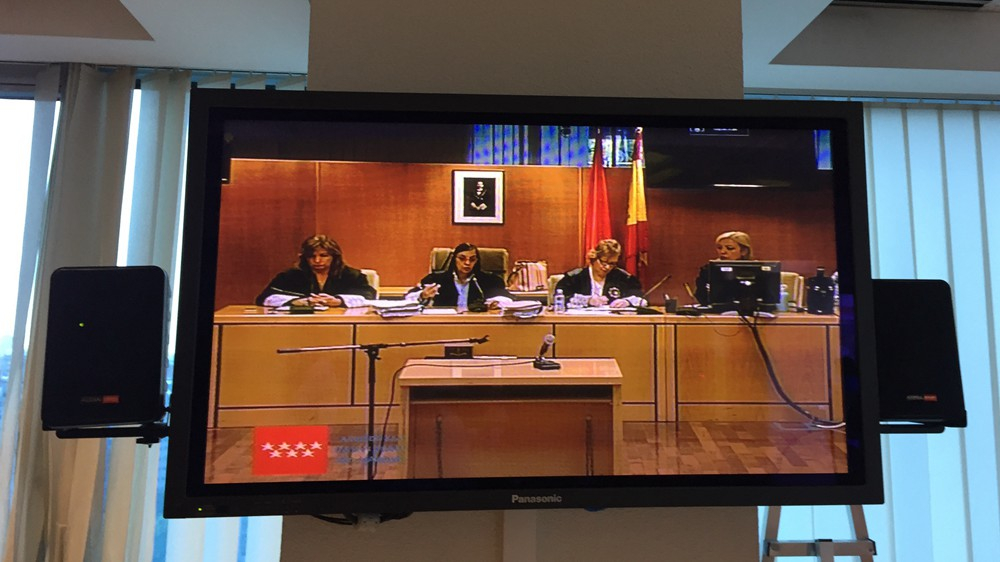
Spain's first trial over "stolen babies" was about to start its second day of proceedings in Madrid Provincial Court when there was a sudden, unexpected interruption.
The lawyer for the lone defendant, retired doctor Eduardo Vela, 85, told the three-judge panel that his client had gone to a hospital emergency room, feeling ill. The judges suspended the trial.
A few days later, the defendant was still in hospital. He had, however, appeared in court on the first day of the highly anticipated trial on June 26.
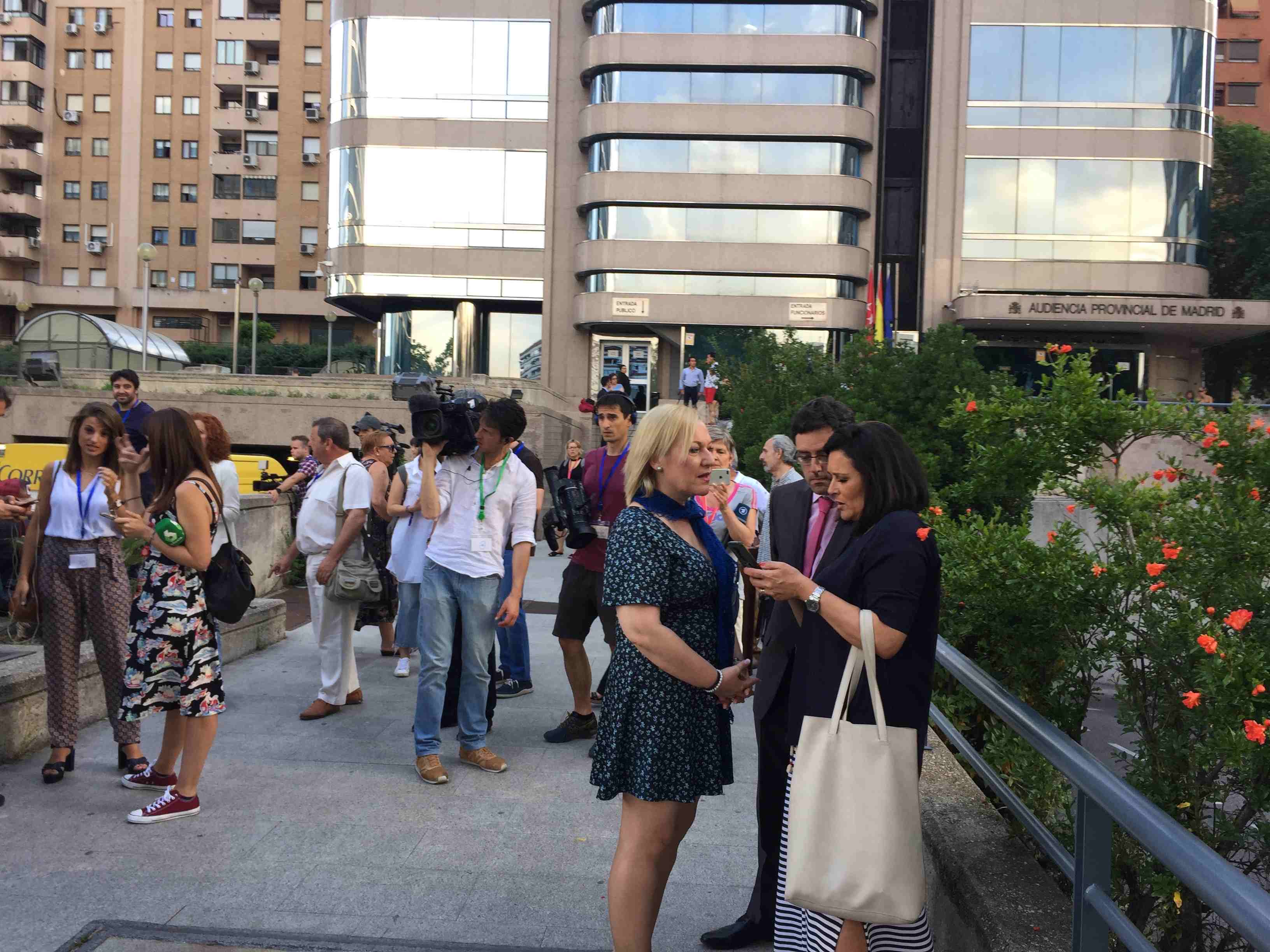
Inés Madrigal(L) and her lawyer stand outside the court house. /CGTN Photo
Inés Madrigal(L) and her lawyer stand outside the court house. /CGTN Photo
There, he staunchly denied the charges that he had stolen a newborn baby 49 years ago at a Madrid hospital where he worked and given it to another family.
Pressed by a prosecutor, Vela said, in halting answers, that he couldn't remember details. But a woman sitting nearby in the court has painstakingly researched the details and she's spearheaded the charges against Vela.
Her name is Inés Madrigal. She's 49, and says she was that baby, taken long-ago by Vela shortly after birth at a Madrid hospital, and handed over to a woman who would become her adopted mother.
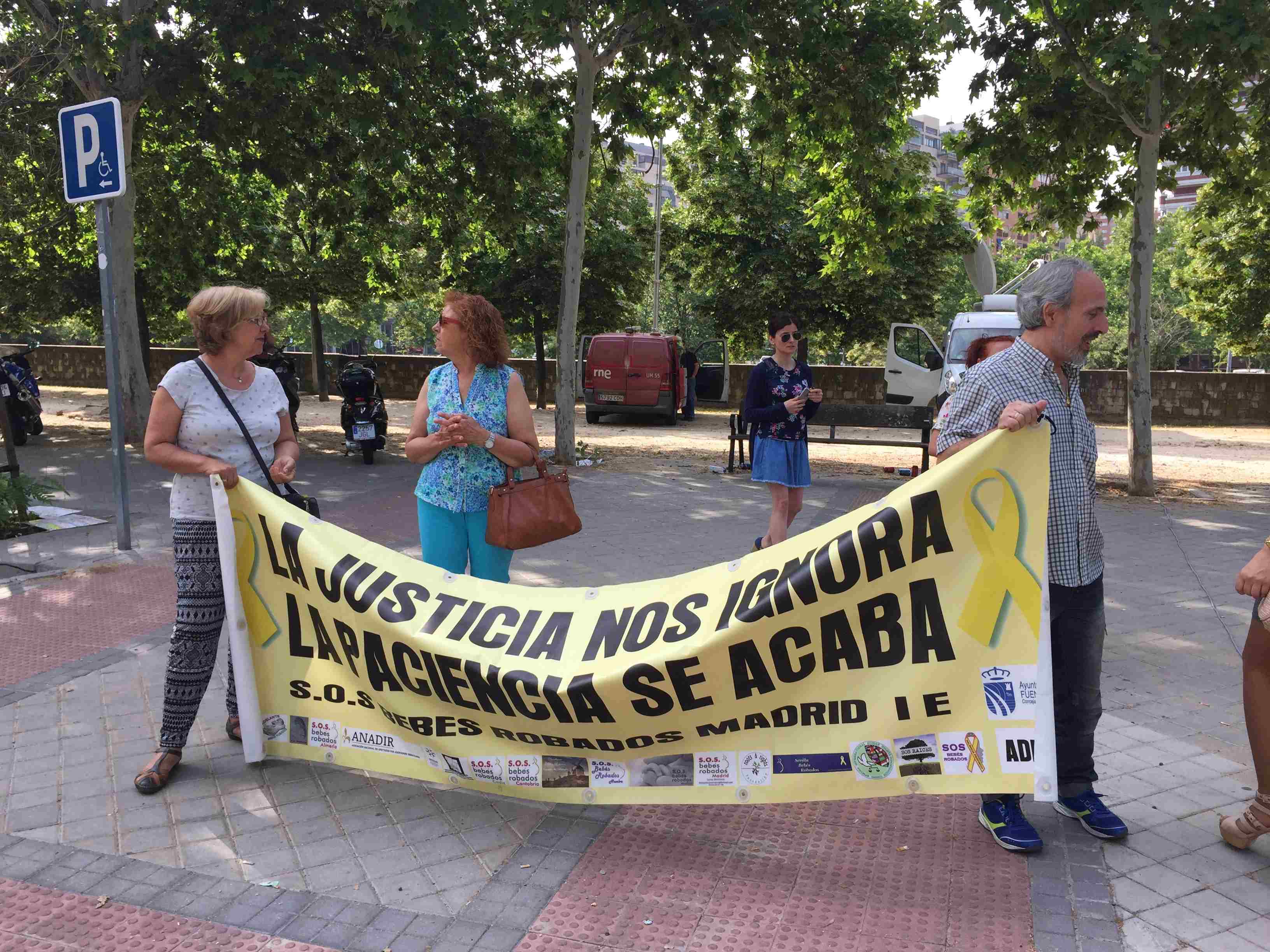
Protesters against the "stolen babies." /CGTN Photo
Protesters against the "stolen babies." /CGTN Photo
Madrigal says it was decades later, when she was reading widespread news reports about potentially thousands of stolen babies in Spain, that she realized she might have been one of them.
Madrigal's lawyer, Guillermo Peña, says there are now 13 associations across Spain seeking answers to the issue of stolen babies, a practice that investigators and academics say started under the right-wing dictatorship of Francisco Franco after Spain's Civil War that ended in 1939.
Babies were taken from mothers deemed "unsuitable," often seen as leftists and a threat to the regime, and in some cases, just for the sale of the babies.
Reuters reported that a decade ago, then-Spanish investigating magistrate Baltasar Garzon recorded the cases of about 30,000 Spanish children taken at birth under Franco's rule.
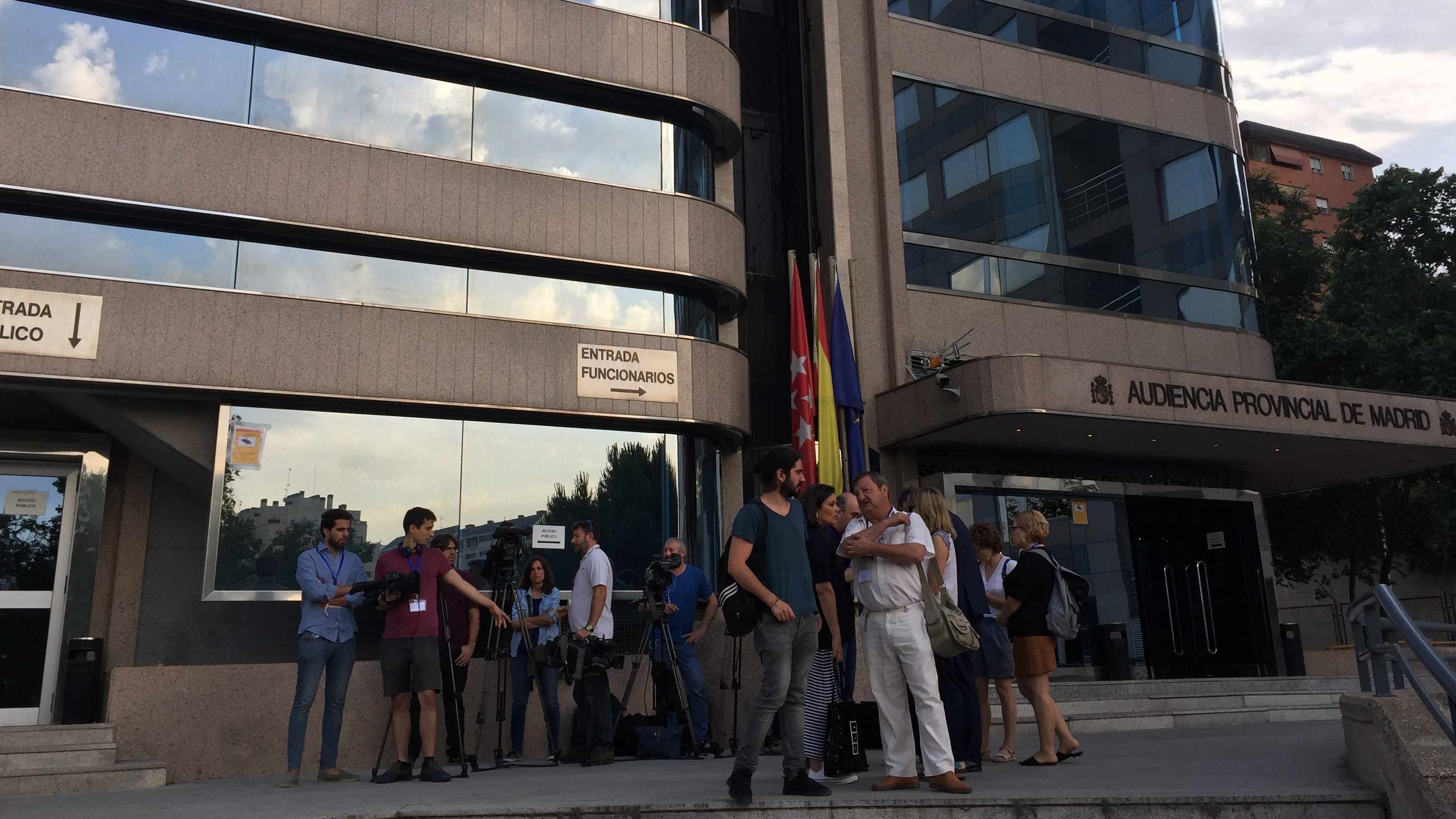
Madrid provincial court. /CGTN Photo
Madrid provincial court. /CGTN Photo
In an April 27, 2016, charge sheet before the trial, investigating magistrate Elena Martinez Gutierrez charged that Vela forged a birth certificate to show that baby Inés had been born to her adopted mother, who has since died, and not her biological mother.
The charge sheet says that Inés Madrigal only heard in 2010 from her adopted mother that she was not, in fact, her real mother.
The retired doctor Vela faces up to 11 years in prison if convicted of illegal detention and document forgery.
The renewal of the trial depends on the health of Vela. An attempt a few years ago to bring an elderly nun to trial on similar charges ended because she died before the trial could begin.
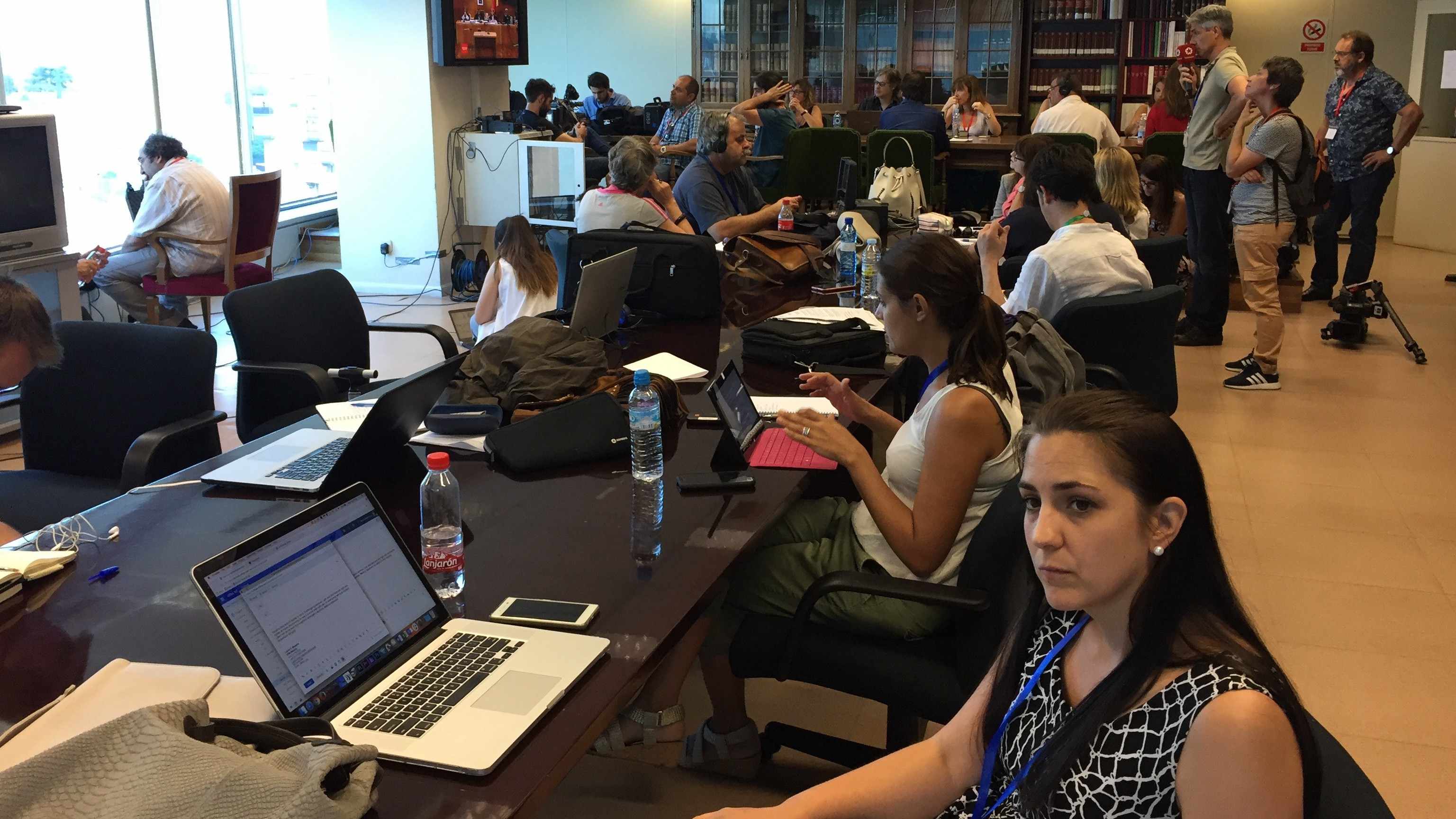
Journalists at the press room of the court house. /CGTN Photo
Journalists at the press room of the court house. /CGTN Photo
Madrigal told reporters outside the courthouse she is not seeking a prison sentence for Vela or financial compensation. She says she just wants the truth to come out. "I hope this trial will be a turning point for the thousands of victims," Madrigal said, "and that there will be a new law about stolen babies, allowing for research and for biological families to be reunited."
Her lawyer, Guillermo Peña, said there are 147 other cases being investigated now by the associations focused on stolen babies. Many of the alleged defendants are elderly, Peña said, "But in other cases all across Spain, there are other doctors who are accused and who are not quite as old, and who are in good enough condition to appear in court."
All of this, while Spain tries to come to terms with a dark moment from its past.