
Business
19:55, 19-May-2018
Stability highlighted at Tsinghua PBCSF Global Finance Forum
 ["china"]
Share







Copied
02:27
China will further open its financial industry, but maintaining stability is seen as a priority, according to the Tsinghua PBCSF Global Finance Forum in Beijing.
The two-day forum discussed the key challenges facing China's financial industry under the theme of financial reform, opening-up, and stability in the new era.
"At the time of co-existence of prosperity and disorder, the shift of old and new dynamics, can China's financial industry progress in the process of deleveraging and risk management? When innovation isn't coordinated with corporate governance, can China's financial industry remain competitive during further continued opening-up? These challenges also have higher requirements on financial regulation," Wu Xiaoling, Dean of Tsinghua PBCSF, said on Saturday.
How will China manage its next round of reforms in the financial sector? China's former central bank governor Zhou Xiaochuan shared his experiences in dealing with the 2008 financial crisis.
"It's been 10 years since the breakout of 2008 financial crisis. We need to look at our economic and financial research and policy making during the 10 years. What progress has been made, and what more needs to be studied. We have reached consensus that correcting the excessive positive feedback of the economic and financial system, and introducing more negative feedback is an important measure to safeguard financial stability."
As the world's second largest economy, China now faces a more complicated external environment. Participants say that maintaining financial stability is key in the new opening-up era.
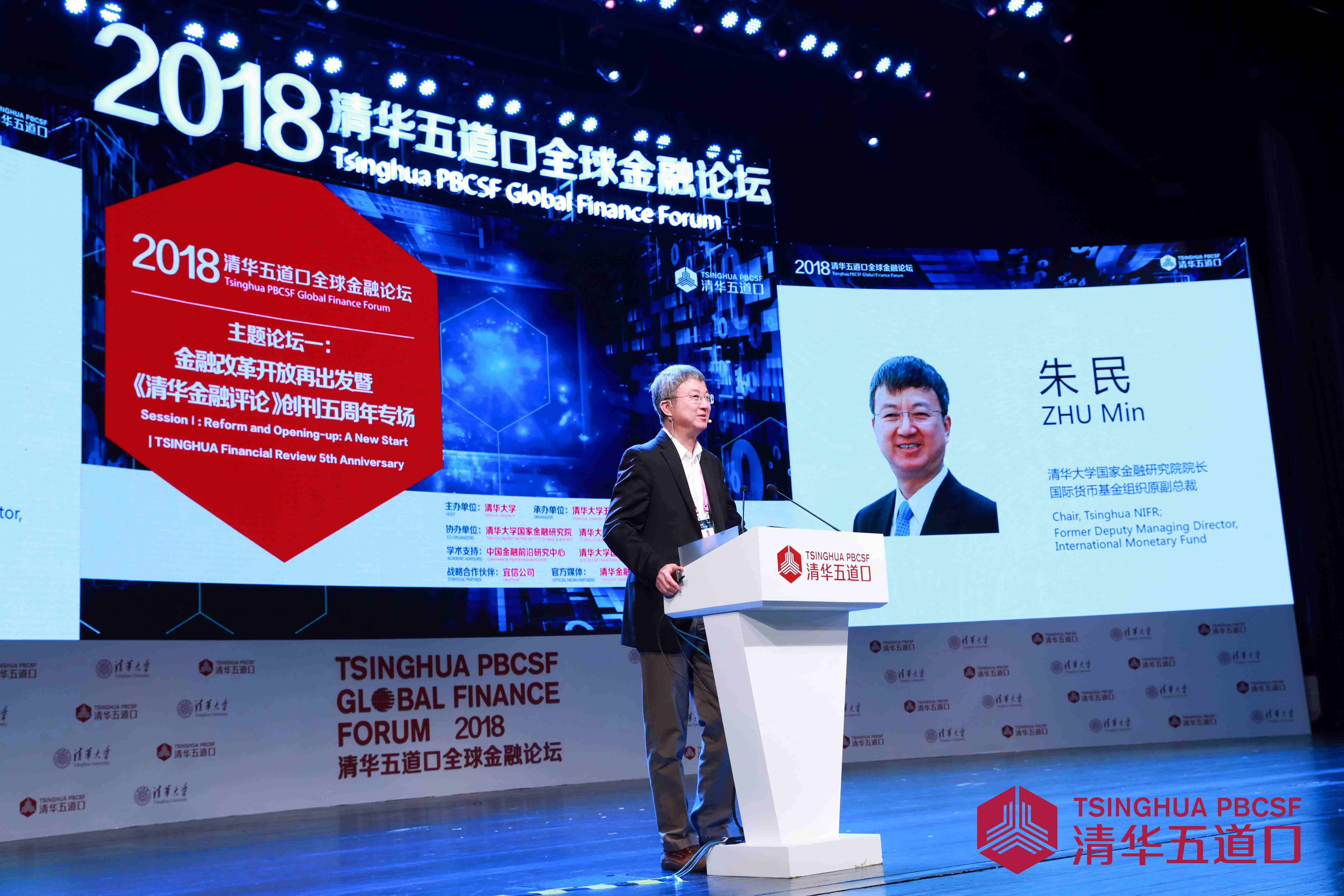
Tsinghua PBCSF Photo
Tsinghua PBCSF Photo
Zhu Min, the former deputy director of the IMF said China should create an internationalized financial industry, and there is still a long way to go.
"China's new era requires new finance. Market competition pushes ahead financial market development, and further lays the foundation for all-round opening-up of the financial system. Only with a stable market, can we have all-around stability in capital accounts, RMB's convertibility, etc."
China recently announced a new round of measures to reform and liberalize the financial sector, including policies to encourage foreign investment, increasing cross-border capital flows, and regulations on wealth management products.
(CGTN's Guan Xin contributed to the story.)