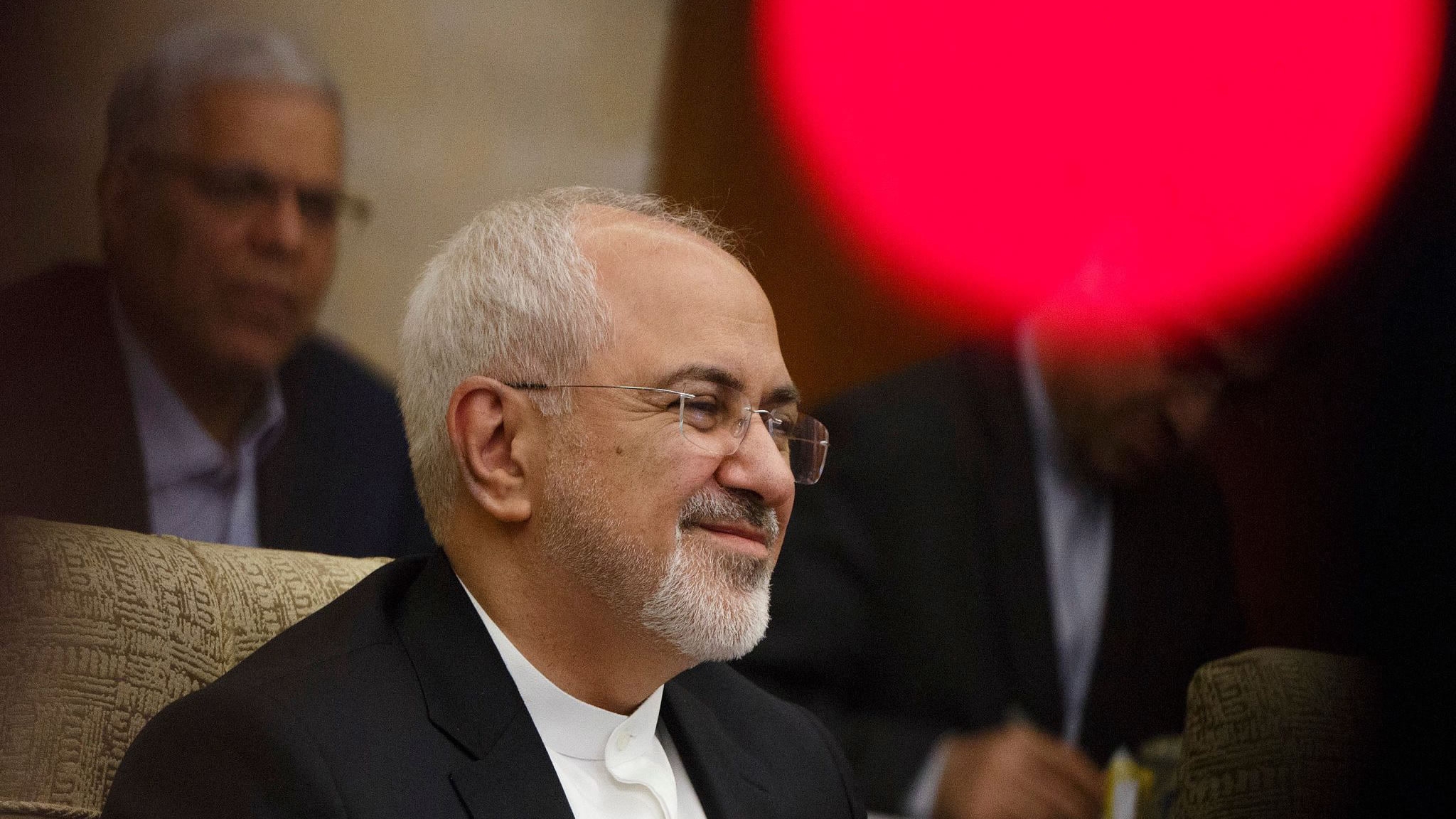
On May 12-15, Iranian Foreign Minister Mohammad Javad Zarif visited Beijing, Moscow and Brussels as part of a series of international diplomatic meetings aimed at saving the nuclear deal following the United States' withdrawal.
During the discussions, all sides stated their strong support for the accord and stressed the importance of keeping it, which was signed in 2015 with the aim of both halting Iran’s nuclear program and stimulating its economy by lifting the international sanctions regime.
For now, China, Russia and America’s allies around the world, including Germany, France and the United Kingdom, have all said they would like to keep the original deal, known as the Joint Comprehensive Plan of Action, in place.
It’s not clear how they are going to do that – Tehran says Germany, France and the UK have 60 days to provide Iran with enough guarantees to ensure it could stay in the deal.
It is also not certain whether Tehran will sit down for talks with US President Donald Trump over its ballistic missile defense program to avoid this new saga.
However, there are at least three takeaways from Zarif’s diplomatic journey in this long-running and complex dispute with consequences far beyond Iran:
China
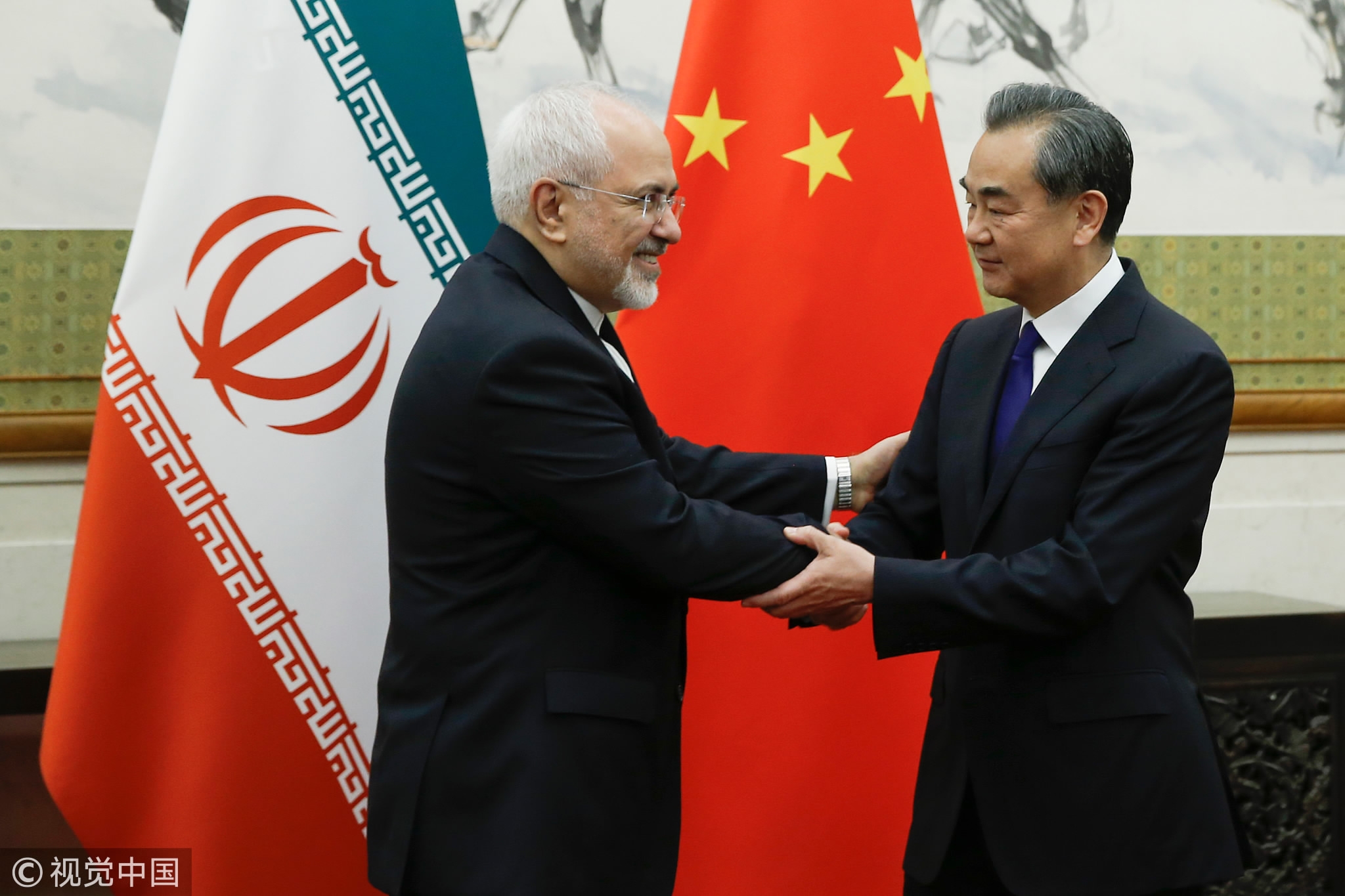
Chinese State Councilor and Foreign Minister Wang Yi (R) meets Iran's Foreign Minister Mohammad Javad Zarif at Diaoyutai State Guesthouse in Beijing, May 13, 2018. /VCG Photo
Chinese State Councilor and Foreign Minister Wang Yi (R) meets Iran's Foreign Minister Mohammad Javad Zarif at Diaoyutai State Guesthouse in Beijing, May 13, 2018. /VCG Photo
There are two reasons why Zarif touched down in Beijing.
Firstly, China is an influential global player and also played a constructive role in finalizing the 2015 nuclear deal. Tehran has faith that Beijing will repeat its constructive role again.
To substantiate, during the meeting, Foreign Minister Wang Yi reiterated Beijing's support for the deal. "China will take an objective, fair and responsible attitude, keep communication and cooperation with all parties concerned, and continue to work to maintain the deal," Wang said, adding the agreement was "hard-earned."
Moreover, China’s investment and trade relations with Iran are growing despite US sanctions. This is while the nuclear deal never delivered more than a trickle of Western investment – and even that is poised to dry up, after US President Donald Trump pulled out of the agreement and said he will re-impose sanctions.
To develop its $430 billion economy, Iran has no choice but to rely on its political allies in the east, including China.
Trade with China has more than doubled since 2006, to $28 billion. The biggest chunk of Iran’s oil exports goes to China, about $11 billion a year at current prices.
That explains why Iran is slowly abandoning the idea of ever being open to the West. The Chinese have been in Iran for the past 30 years. They have the contacts, the guys on the ground, the links to the local banks – and the political will to defy Washington’s NPT-illegal sanctions and pressures.
Russia
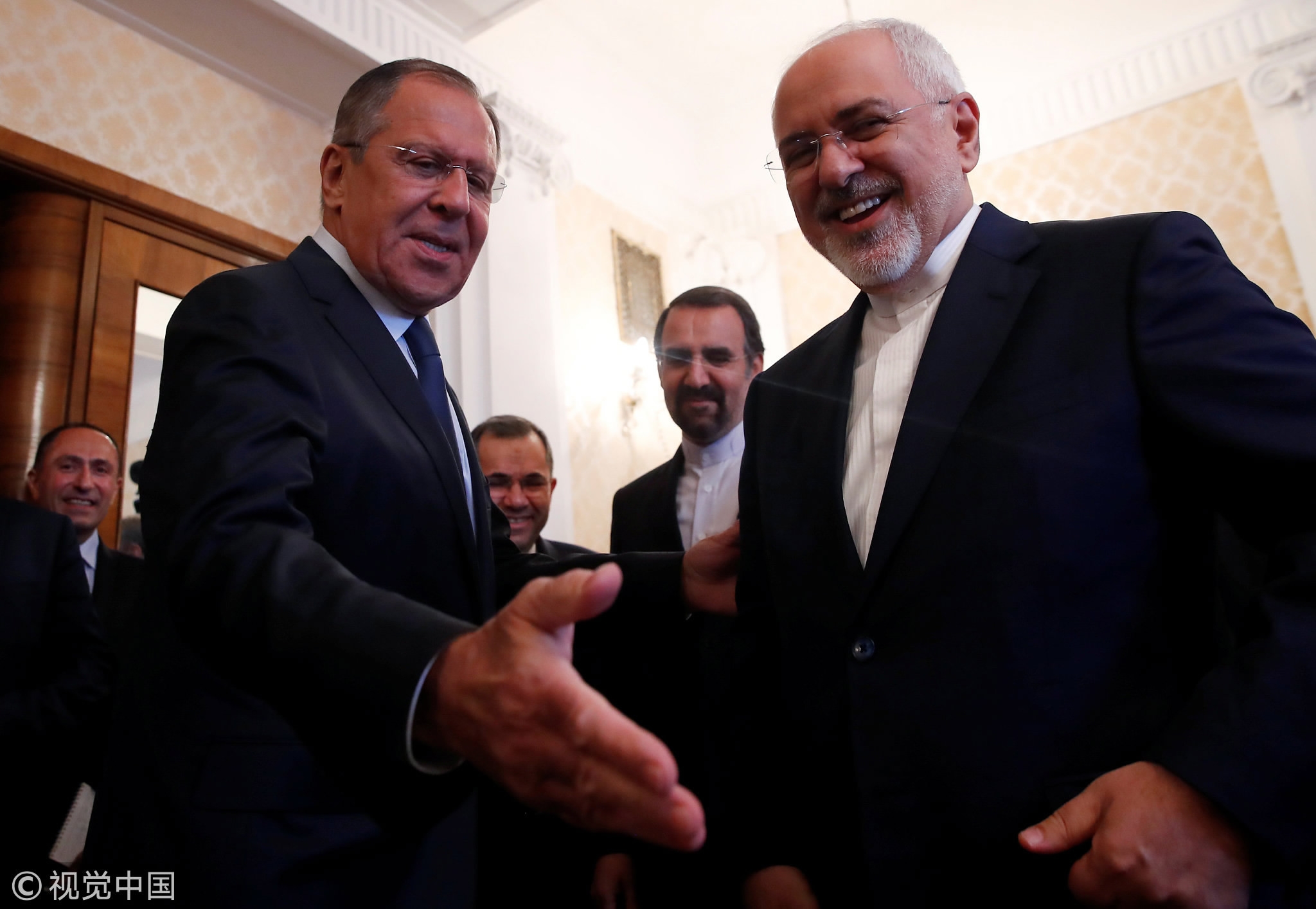
Russian Foreign Minister Sergei Lavrov invites his Iranian counterpart Mohammad Javad Zarif to have a seat during their meeting in Moscow, Russia, May 14, 2018. /VCG Photo
Russian Foreign Minister Sergei Lavrov invites his Iranian counterpart Mohammad Javad Zarif to have a seat during their meeting in Moscow, Russia, May 14, 2018. /VCG Photo
Let’s face it, Russia will never leave Iran alone but it’s not China when it comes to the size of its economy. True, Moscow has confirmed its preparedness to respect the seven-party nuclear agreement despite the US exit, but still it doesn’t have China’s clout to help Iran weather the perfect economic storm that’s coming.
At a meeting on Monday with his Russian counterpart, Sergei Lavrov, in Moscow, the second destination on his diplomatic tour aimed at saving the nuclear deal, Zarif said that Tehran and Moscow would do their utmost to keep the deal in place.
What’s certain is that Russia will veto any anti-Iran resolutions at the Security Council too, or sell Iran its passenger jets and S-400 missiles, and also help Iran and Syria fight foreign-backed terrorist groups in the Arab country.
But that’s all really. Russia doesn’t have the technology to modernize and hold up Iran’s economy like China.
EU
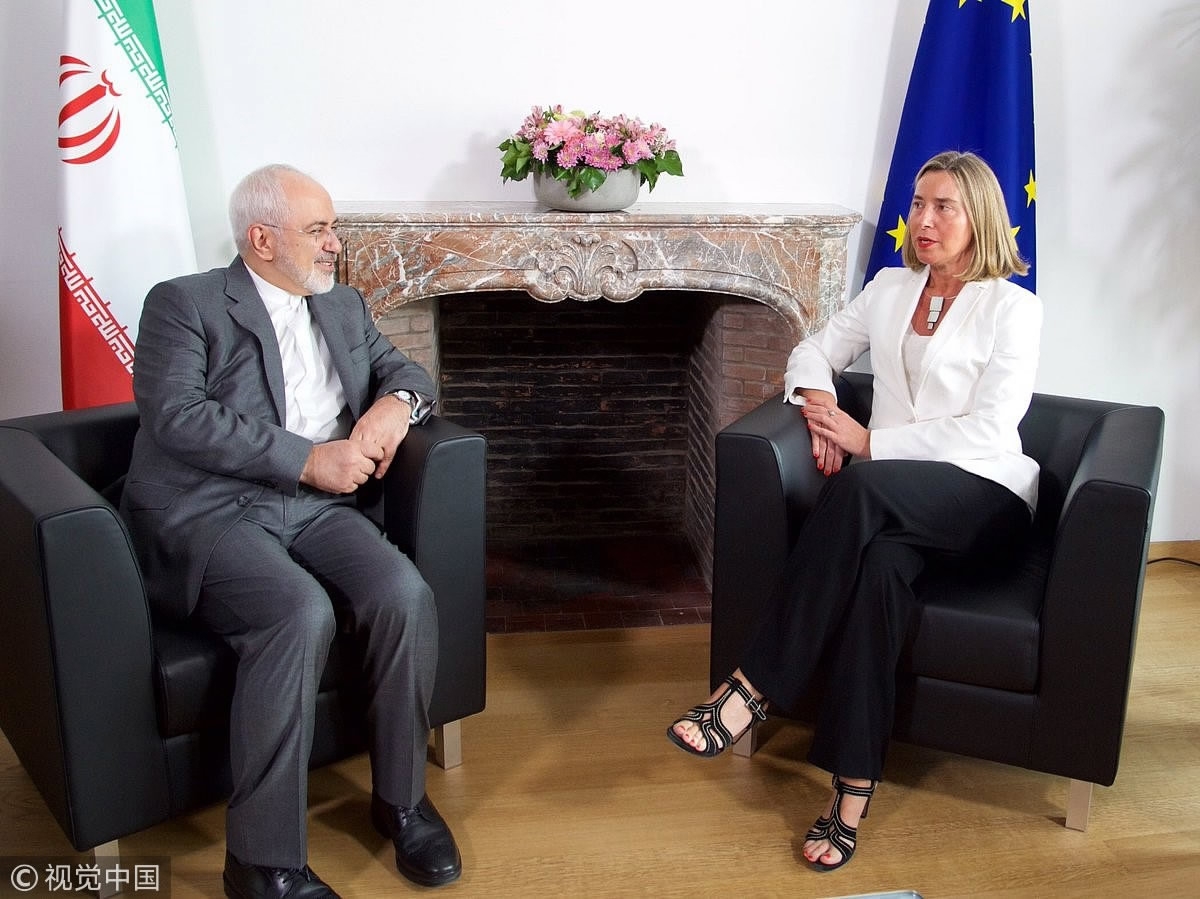
Iranian Foreign Minister Javad Zarif (L) meets with High Representative of the European Union for Foreign Affairs and Security Policy Federica Mogherini (R) in Brussels, Belgium, May 15, 2018. /VCG Photo
Iranian Foreign Minister Javad Zarif (L) meets with High Representative of the European Union for Foreign Affairs and Security Policy Federica Mogherini (R) in Brussels, Belgium, May 15, 2018. /VCG Photo
European banks and manufacturers know full well that Trump the consummate will go after them if they do business with Iran. Some of those that were ready to do so say they are now reconsidering in light of tougher American rules. This includes Airbus Group SE’s contract for 100 jetliners, worth about $19 billion at list prices. The Boeing deal was also held up amid financing problems, and now the US Treasury says the export license will be revoked.
Total SA also has a contract to develop the South Pars gas field together with China National Petroleum Corp., but has signaled it would pull out if the US re-imposes sanctions and it can’t win an exemption.
In that event, the Chinese partner will take over Total’s share. There are many other European companies that are also within the reach of American regulators and Treasury – like Italy’s Eni. That gives the Trump White House leverage to go after European companies that are doing business and discourage others from engaging in Iranian markets.
To make matters worse, the politics are different, too.
The UK, France and Germany are long-time US allies in the Middle East, wary of a direct clash with Trump. They have told Zarif they will keep the nuclear deal alive, but many Iranians doubt they are able or willing to do so.
History tells them Europe doesn’t have the power to take important decisions, much less stand its ground and face America.
What Next?

October 13, 2017: President Donald Trump makes a statement on the administration's strategy for dealing with Iran, in the Diplomatic Reception Room in the White House in Washington, DC. /VCG Photo
October 13, 2017: President Donald Trump makes a statement on the administration's strategy for dealing with Iran, in the Diplomatic Reception Room in the White House in Washington, DC. /VCG Photo
The question is, can Europe avoid getting into an economic fight after Trump imposes sanctions against Iran, even if neither side wants this? The recent talks between the Iranian foreign minister and his German, British and French counterparts in Brussels told us nothing is risk-free.
If Western history is any indication, American politics will intrude on EU’s multilateralism ambitions and they will cave in – just as they did before.
On the other hand, it’s still a matter of principle – their leaders say. The European powers might try and salvage what they can of the accord, both to keep Iran on side and to shield European companies from US sanctions that threaten billions of dollars of investment.
After all, John R. Bolton, Trump’s national security adviser, told European officials they should have known that President Trump would withdraw from the nuclear deal, despite months of negotiations to salvage the accord that they believed had brought them close to satisfying the president’s demands. This could further exasperate the Europeans. Still, there is light at the end of tunnel.
There is an existing EU "Blocking Statute", from 1996, aimed at countering US sanctions linked to communist Cuba. EU officials can revamp the Statute to avoid the latest US restrictions on firms doing business with Iran.
Here, the Statute's legal power could work if there is political will in Brussels as well. On Tuesday, the EU leaders told the Iranian foreign minister that the political will is there.
Let’s hope they are right; that France, Germany and the UK mean business, will remain committed to the nuclear deal with Iran, and will expand their business ties irrespective of Trump’s threats and psychological warfare.
Lest they forget, Foreign Minister Zarif told them in Brussels that’s the only way to encourage Iran to stick to its commitments.
(Ghanbar Naderi is an Iranian columnist and political commentator. The article reflects the author’s opinion, and not necessarily the views of CGTN.)

 ["china"]