
Politics
10:22, 02-Aug-2018
DR Congo ex-warlord Bemba returns home to mount election challenge
Updated
10:00, 05-Aug-2018
 ["china"]
Share







Copied
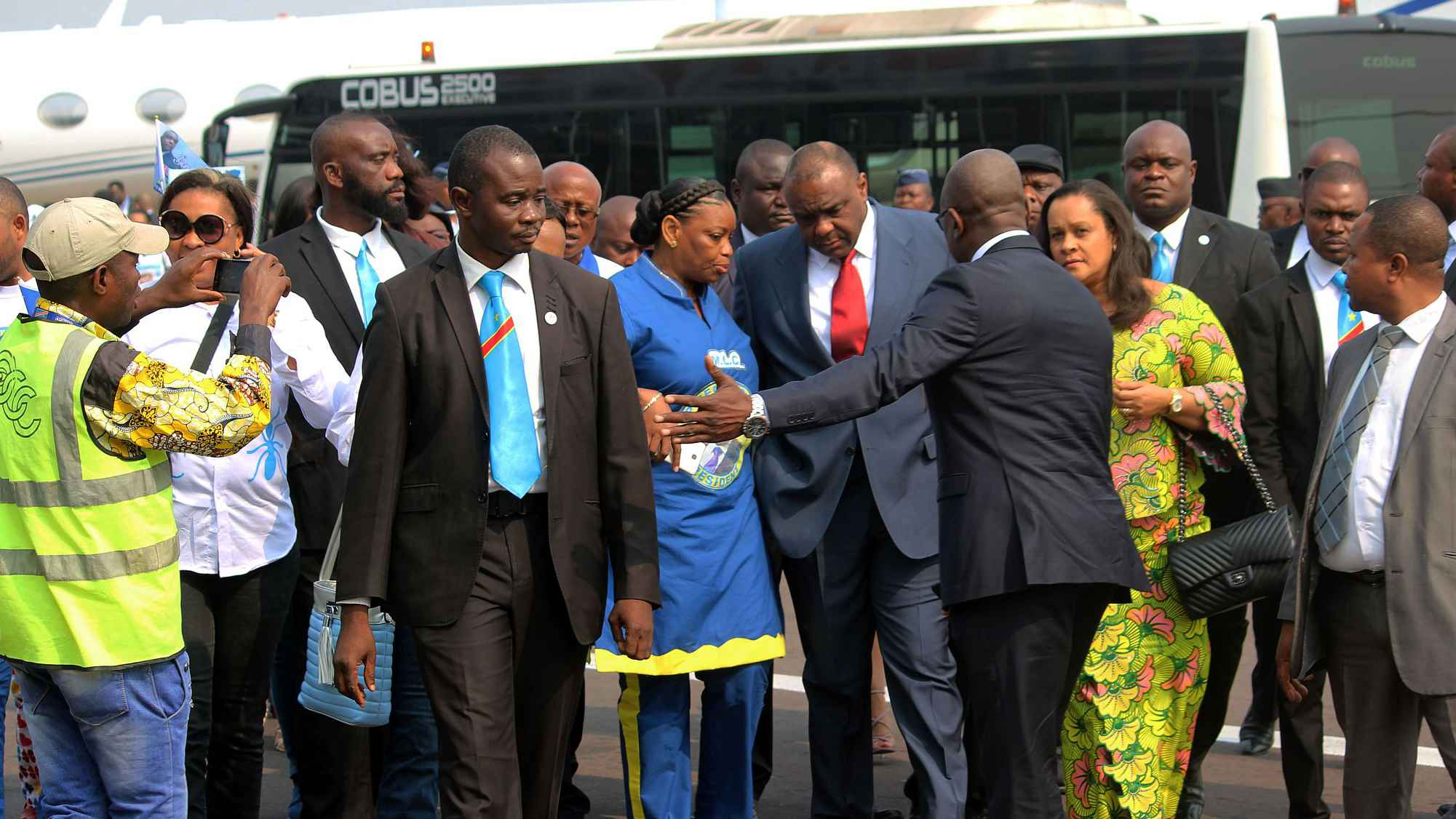
After more than 11 years abroad – a decade of it behind bars – former DR Congo warlord Jean-Pierre Bemba made a triumphant return home on Wednesday in front of several hundred thousand supporters who compelled police fire tear gas to control them, reflecting the country's highly volatile political mood.
Bemba, throwing down the gauntlet to his rival President Joseph Kabila, has vowed to contest twice-delayed elections due to take place on December 23.
He landed at Kinshasa from Belgium aboard a private plane after the International Criminal Court (ICC) acquitted him of war-crimes charges in June.
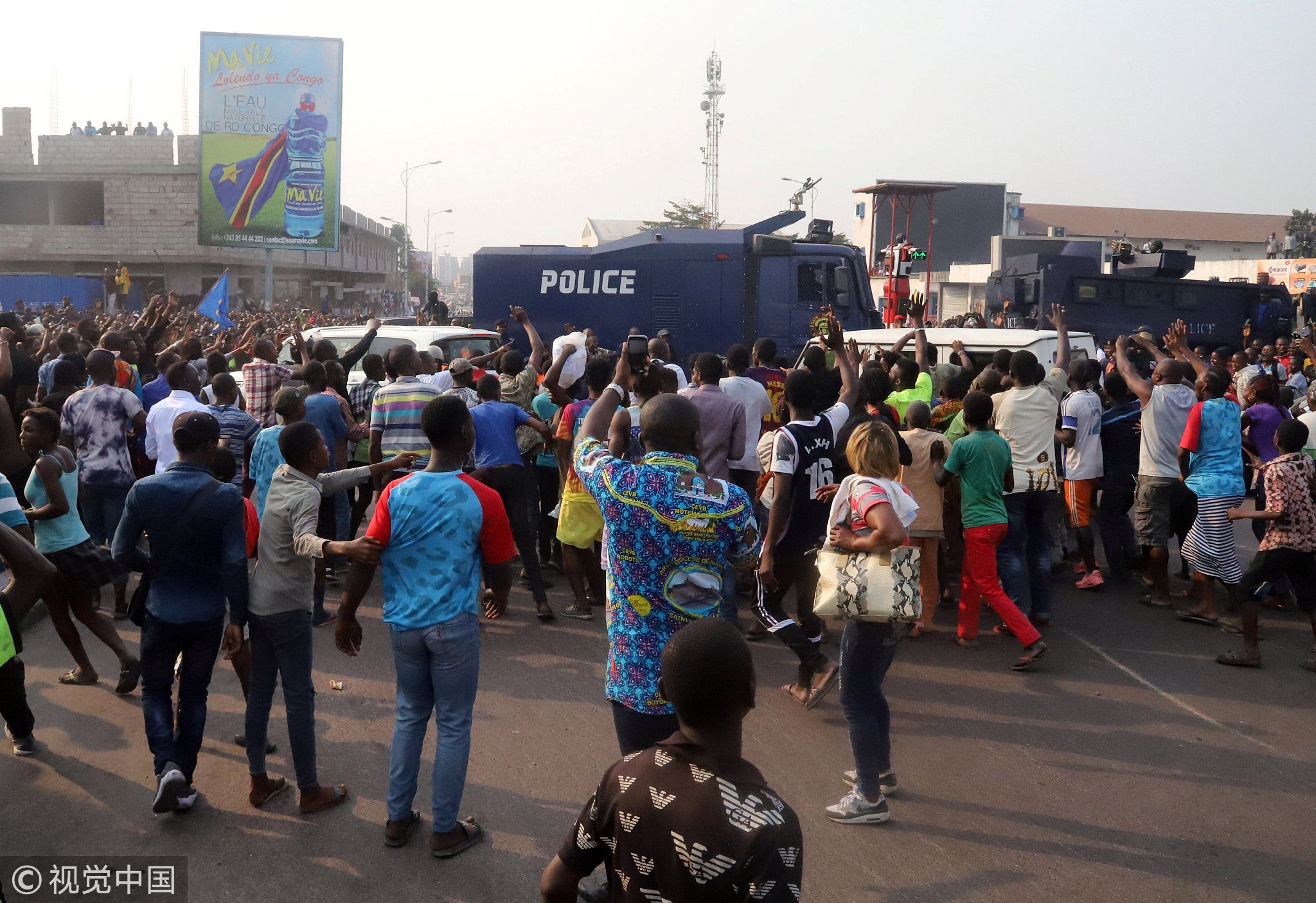
Crowds of people, many of them chanting anti-Kabila slogans, gathered along the city's main highway, prompting police to fire tear gas to try to make a path for his open-topped Mercedes.
The huge numbers greeting Bemba, 55, is the largest politically-related gathering in the Democratic Republic of Congo in two years as Kabila has cracked down heavily on protests since 2016.
Police had to cordon off a major avenue that leads directly to Kabila's presidential palace, where two of Bemba's properties are also situated, causing a temporary standoff.
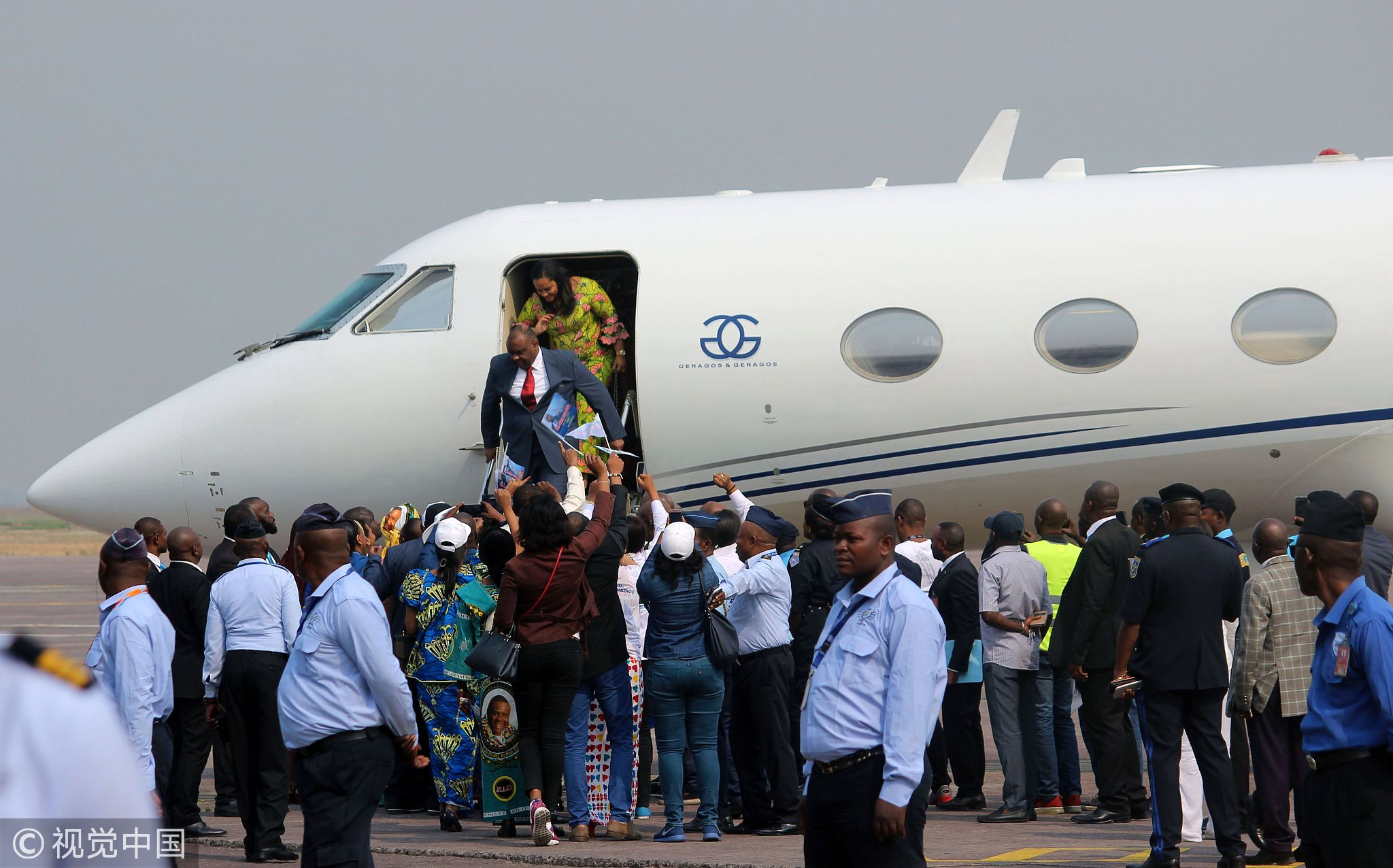
Former DR Congo warlord Jean-Pierre Bemba (C) arrives with his wife Lillian Teixeira (REAR) at Kinshasa airport, August 1, 2018, after more than 11 years abroad. /VCG Photo
Former DR Congo warlord Jean-Pierre Bemba (C) arrives with his wife Lillian Teixeira (REAR) at Kinshasa airport, August 1, 2018, after more than 11 years abroad. /VCG Photo
"I have received clear and precise instructions: Senator Bemba cannot cross this barrier," said Kinshasa police chief Sylvano Kasongo.
But after negotiations, Bemba was allowed to cross the police cordon and travel to a different family property further away from the presidential palace.
Analysts say Bemba's return introduces even more uncertainty into an already volatile election. Candidates must submit their applications by August 8 and physically be in the country to do so.
The DRC has never known a peaceful transition of power since it gained independence from Belgium in 1960, and some experts fear the current crisis may spiral into bloodshed.
Two wars unfolded from 1996-97 and from 1998-2003 that sucked in other countries in central and southern Africa. Smaller, but still bloody, conflicts continue to dog the centre and east of the vast country today.
Kabila, 47, took over from his father, Laurent-Desire Kabila, after he was assassinated by a bodyguard in 2001.
Kabila was scheduled to stand down at the end of 2016 after his second elected term, technically the last permitted under the constitution.
Supporters of Congolese opposition leader Jean-Pierre Bemba cheer his convoy as they drive past riot police trucks in downtown Kinshasa, DR Congo, August 1, 2018. /VCG Photo
Supporters of Congolese opposition leader Jean-Pierre Bemba cheer his convoy as they drive past riot police trucks in downtown Kinshasa, DR Congo, August 1, 2018. /VCG Photo
But he has stayed in office, invoking a constitutional clause enabling him to stay in power until a successor is elected.
He has refused to spell out whether he will seek a new term. Political sources say he has been lately scouting around for a favorable candidate that he could support, which would enable him to officially step down.
Dozens have died in anti-Kabila protests amid the mounting political uncertainty. The influential Roman Catholic Church has called for three days of popular mobilisation on August 12-14 should Kabila announce a re-election bid.
Hostility to the incumbent was clear in Wednesday's chants, such as "Kabila, take care, your term is over," "Goodbye Kabila," and "Bemba, shave off his white beard."
"The last episode in the Kabila series is unfolding today. The film's over," said a nurse who gave her name as Angelique.
Another rival to Kabila - tycoon Moise Katumbi,a 53-year-old former governor of the mineral-rich province of Katanga - plans to return home on Friday from a self-imposed exile abroad.
The third big opposition figure is Felix Tshisekedi of Union for Democracy and Social Progress (UPDS), which was led by former prime minister Etienne Tshisekedi until his death last year.
Source(s): AFP