
North America
07:59, 29-May-2019
U.S. Treasury again says China is not manipulating currency
Updated
14:34, 29-May-2019
 ["china"]
Share







Copied
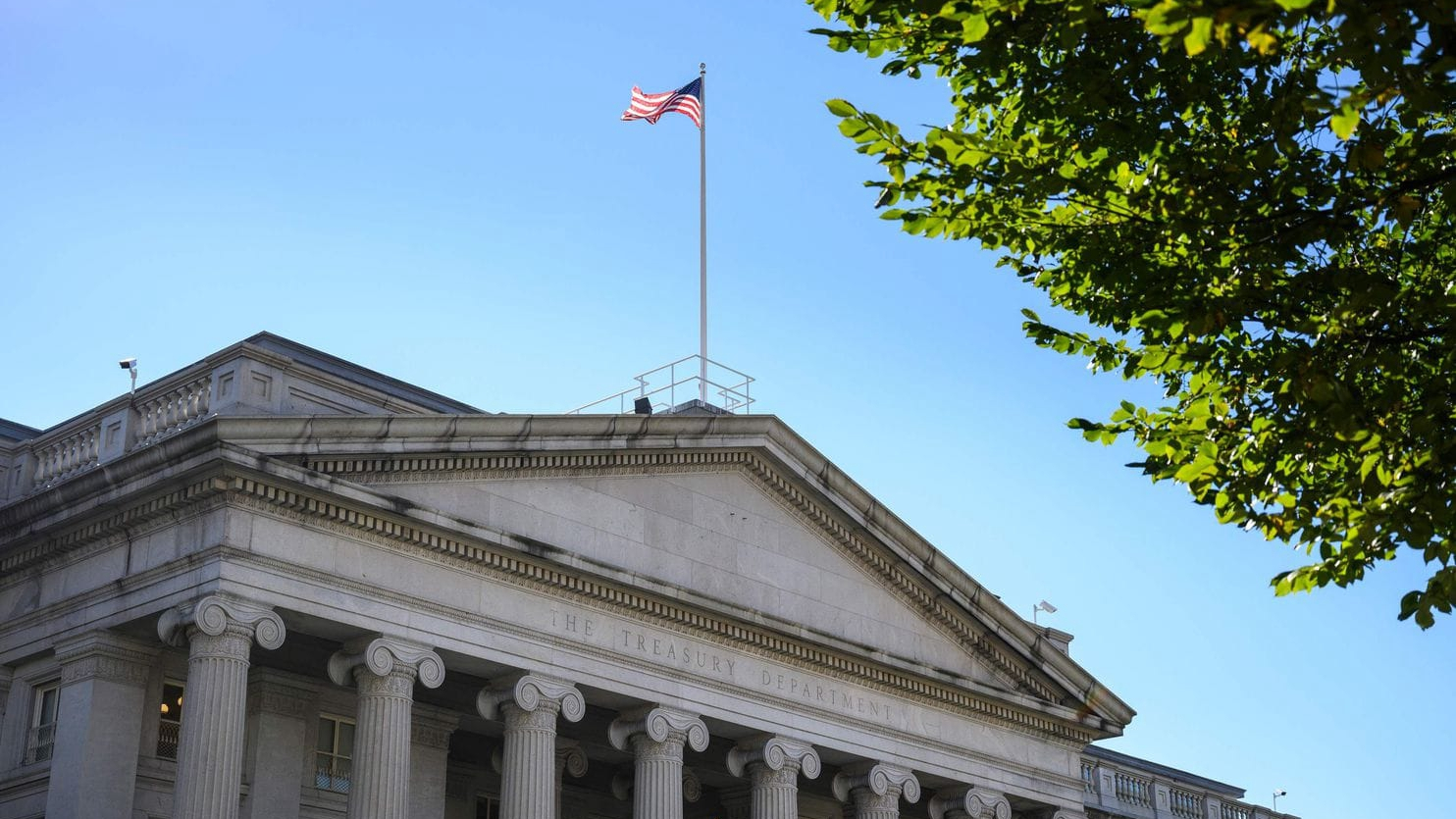
The U.S. Treasury said that none of its major trading partners, including China, was manipulating its currency in a Semi-Annual Report to Congress on Tuesday.
The report put China, Germany, Ireland, Italy, Japan, South Korea, Malaysia, Singapore and Vietnam on its "monitoring list," which means their foreign exchange policies bear close monitoring.
The Treasury Department called on China to take necessary steps to avoid "a persistently weak currency," noting that improved economic fundamentals and structural policy settings would underpin a stronger Renminbi (RMB) over time.
Liu Guoqiang, vice governor of the People's Bank of China, said last week that China is "capable and confident" of keeping the RMB exchange rate generally stable on a reasonable and balanced level.
Adam Posen, president of Peterson Institute for International Economics, a Washington, D.C.-based think tank, said earlier on Tuesday at a press briefing that it's "pretty close to absurd" to accuse China of currency manipulation as China basically has not manipulated the currency for the last several years.
Currency issue amid trade war
The closely-watched report broadened the field of its scrutiny for potential currency manipulation. The Treasury is assessing all U.S. trading partners with annual trade surpluses in goods of more than 40 billion U.S. dollars. Some 21 countries were examined in the report, up from 12 previously.
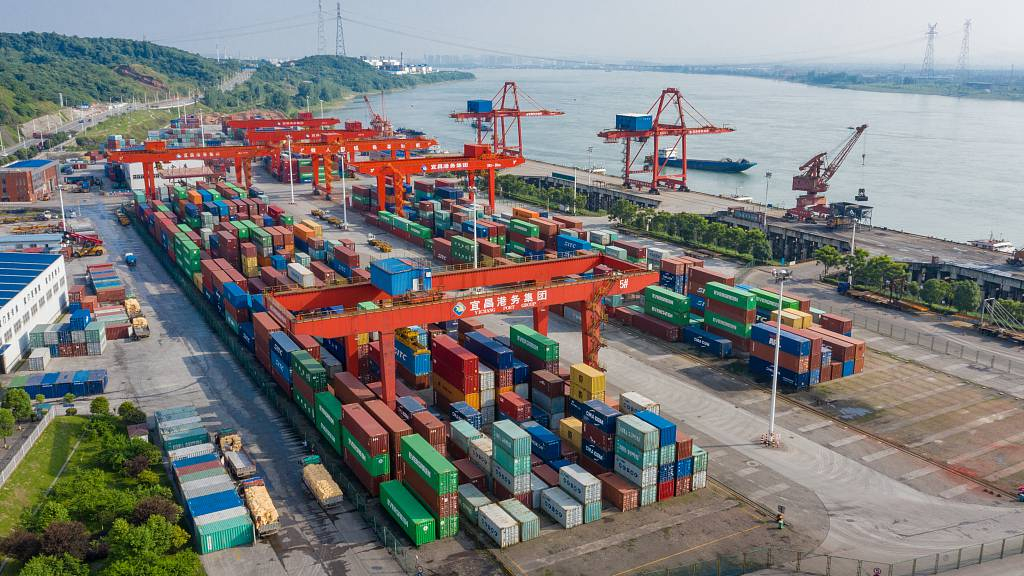
Containers at Yichang Port in Hubei Province, May 26, 2019. /VCG Photo
Containers at Yichang Port in Hubei Province, May 26, 2019. /VCG Photo
A weak currency, some argue, makes exports to the United States more competitive and could undermine Washington's current efforts to cut its soaring global trade imbalance.
The Trump administration has sought to reduce the U.S. trade deficit and crack down on what it sees as unfair currency policies. Despite the president's vows to tackle the trade gap, U.S. Commerce Department data shows that the U.S. goods deficit climbed to a record high of 891.3 billion U.S. dollars in 2018.
However, Lin Shu, an associate professor with the Department of Economics at the Chinese University of Hong Kong, told CGTN last year that such beliefs connecting trade to currency manipulation were "largely false," saying "existing academic studies find little correlation between bilateral exchange rates and bilateral terms of trade."
Recent years have seen U.S. lawmakers accuse China, Japan, South Korea, Thailand and Vietnam of artificially lowering their currencies. Even though Trump has repeatedly labeled China as a currency manipulator, no evidence has been found by the Treasury Department to support that accusation.
The International Monetary Fund has also previously stated on several occasions that China does not manipulate its currency, describing the RMB as "fairly valued". The last decade has seen the RMB appreciate by 35 percent against the dollar, a period which saw significant depreciations by other major currencies.
The U.S. Commerce Department proposed punitive duties on countries that artificially lower their currencies on May 23. However, no country currently meets the criteria for punishment. The U.S. hasn't labeled a major trade partner a currency manipulator since 1994.
Washington has sought to inject measures to prevent currency devaluations into trade deals. The agreement struck last year with Canada and Mexico to revamp NAFTA included a currency provision.
(with inputs from Xinhua)