
Opinions
09:59, 05-Aug-2018
Opinion: Hiroshima memories compel us to save the last child
Updated
09:49, 08-Aug-2018
 ["china"]
Share







Copied
Editor's note: Yoichi Shimatsu is a former editor of The Japan Times Weekly and founding faculty member of journalism schools in Hong Kong and Beijing, whose science studies were at the world’s top organic chemistry school in Purdue University. The article reflects the author's opinions, and not necessarily the views of CGTN.
From both ethical and scientific perspectives, the yearly commemorations of the Hiroshima and Nagasaki atom bombings are part of a larger historical cycle.
The A-bombings were meted out as “cruel justice against cruelty” to punish the wartime militarist state for its massacres of civilians at Nanjing, in east China and dozens of lesser-known places on the Asian continent.
If cause-and-effect, or karma, exists on the scientific curve, those mushroom clouds were a consequence of Japan’s virtually unknown role as a first-mover in the creation of atomic weapons, years before the Hahn-Strassman theoretical suggestion of atom-splitting in 1938. Racking one of the great mysteries of science history was not my initial objective in taking up field research after the Fukushima disaster, since it happened simply because my background as a student in a collegiate science program gave me an edge over other journalists.
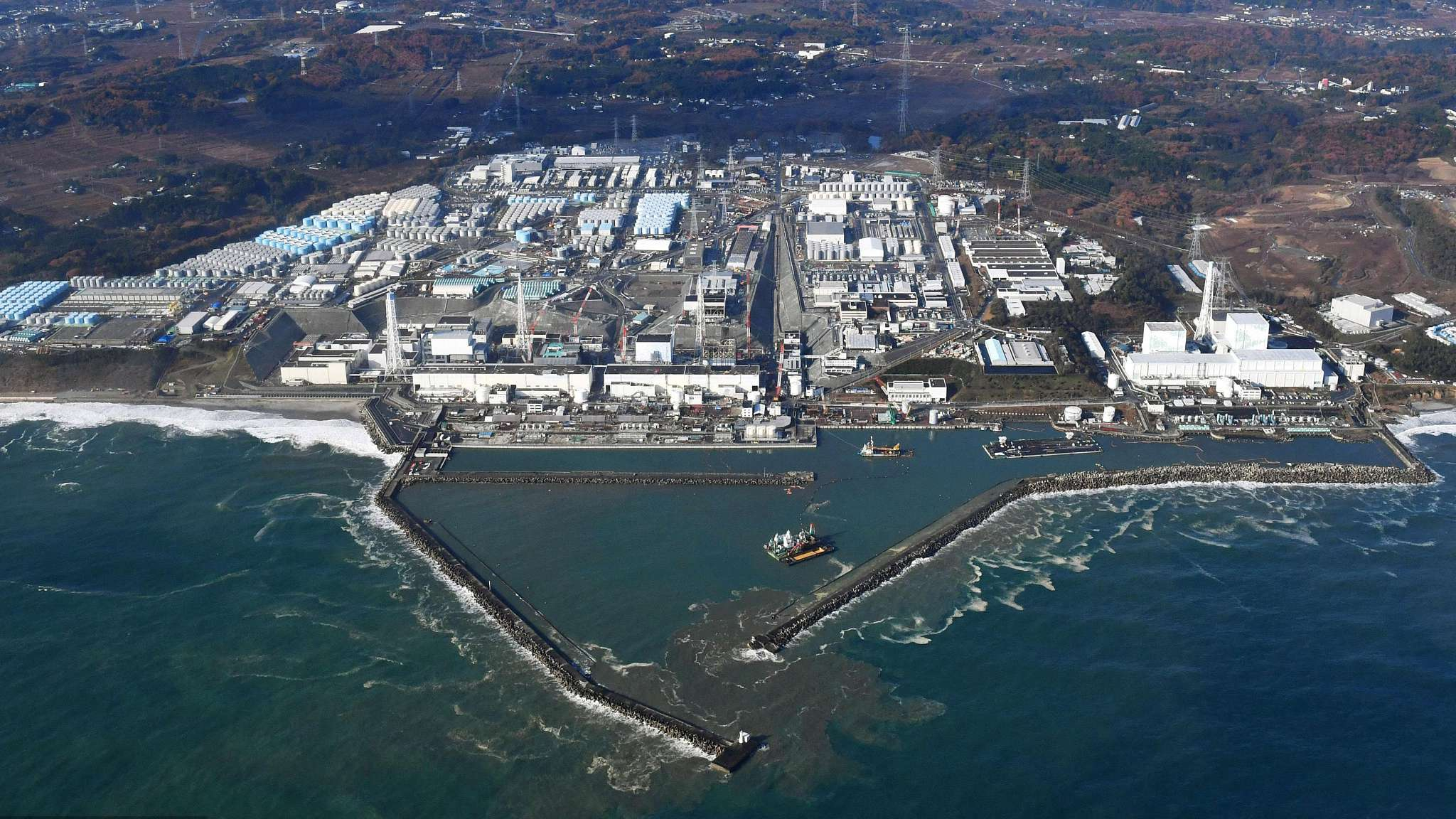
On 12 research visits inside the Fukushima nuclear exclusion zone from April 2011 until the end of 2016, I uncovered compelling evidence of two massive underground warhead labs hidden at two non-nuclear power stations on the outskirts of the Fukushima complex.
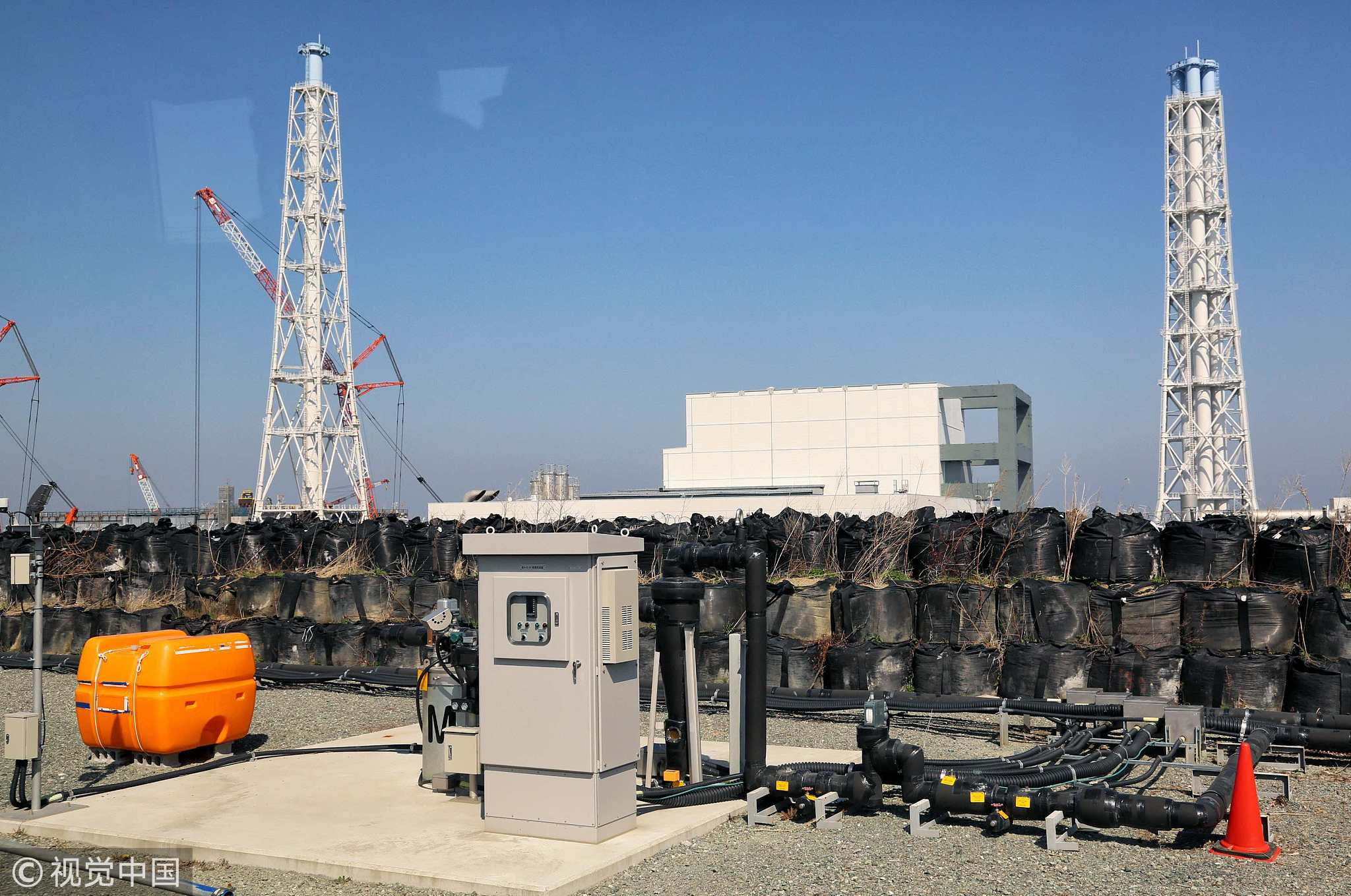
April 15, 2014: Water well unit haul from subsurface water is seen near No.3 (L) and No.4 reactor buildings at Tokyo Electric Power Co's (TEPCO)'s tsunami-crippled Fukushima Daiichi nuclear power plant in Fukushima Prefecture./ VCG Photo
April 15, 2014: Water well unit haul from subsurface water is seen near No.3 (L) and No.4 reactor buildings at Tokyo Electric Power Co's (TEPCO)'s tsunami-crippled Fukushima Daiichi nuclear power plant in Fukushima Prefecture./ VCG Photo
This kick-started my effort to trace back Japan’s secret atomic-bomb program to an abandoned uranium mine on the slopes of Mount Uzumine on the outskirts of Sukagawa, southeast Fukushima Prefecture.
There, locals explained that, contrary to geology journals, uranium had been extracted there since the mid-1930s under a joint program by a militarist Japanese and Nazi German consortium known as Bund-Eine (Alliance One).
The historical record indicates this secret project to build “super-weapons” arose from Werner Heisenberg’s 1929 tour of Japan.
The other major center for Japan’s pioneering work in nuclear weaponry was based on Hungnam (Konan) Island in the then Japanese colony of Korea, financed by the Munitions Ministry chief Nobusuke Kishi, the grandfather of the present prime minister Shinzo Abe.
Branded a Class-A war criminal after Japan’s surrender, Kishi re-emerged as the prime minister who authorized the US-Japan Security Treaty and founder of Japan’s first nuclear power plant, located in Ibaraki Prefecture neighboring Tokyo.
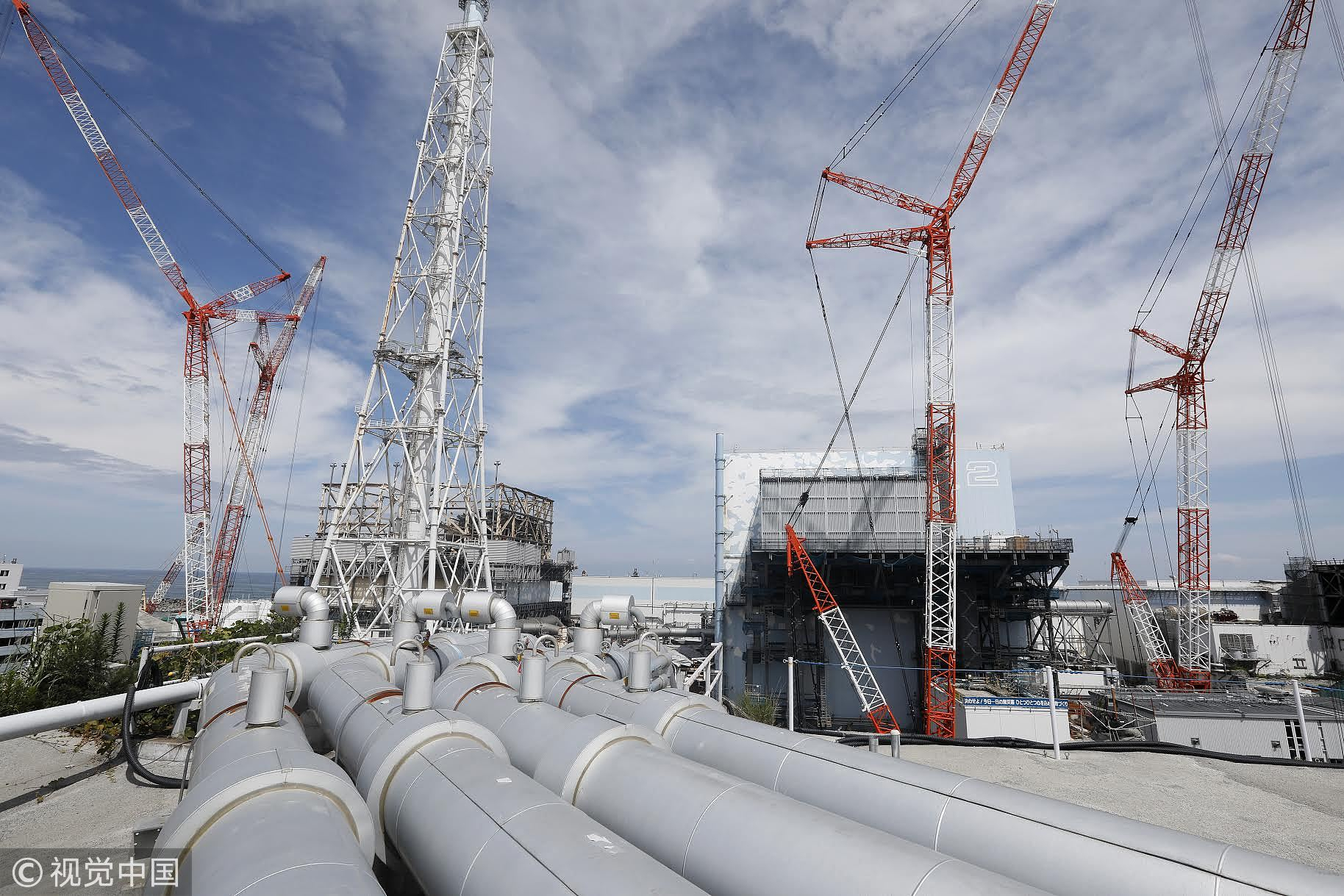
July 27, 2018: Pipes for groundwater bypass are arranged above the reactor unit 1 (L), unit 2 (C) and partially unit 3 of the tsunami-crippled Tokyo Electric Power Company (TEPCO) Fukushima Dai-ichi nuclear power plant in Okuma, Fukushima Prefecture./ VCG Photo
July 27, 2018: Pipes for groundwater bypass are arranged above the reactor unit 1 (L), unit 2 (C) and partially unit 3 of the tsunami-crippled Tokyo Electric Power Company (TEPCO) Fukushima Dai-ichi nuclear power plant in Okuma, Fukushima Prefecture./ VCG Photo
The sequence of events shows clearly that N-warheads came first and nuclear energy followed primarily as a means to enrich fissile materials, especially toward the production of plutonium.
The political cycle from the militarist Kishi to the Abe premiership was replicated in Japan’s atomic progress from Bund-Eine to the 2011 Fukushima nuclear disaster. This relationship between the “original sin” of invention and destruction at the “gates of Hell” is fundamental to the Hiroshima-Nagasaki narrative.
In this perspective, Tokyo was more responsible for the series of atomic disasters than was the United States.
In a similar cycle, my own work as a field researcher at Fukushima has the same roots. It was only after my dozen research visits did my aging mother tell me that as an adolescent she had traveled to the foot of Mount Fuji to purchase rice for her family in bombed-out Yokohama.
On her return, she boarded a dilapidated train so crowded that she had to clamber aboard through a window. To her surprise, the passengers told her that it was the last train out of Hiroshima before a bright flash illuminated the entire sky and the town was being blown away behind them.
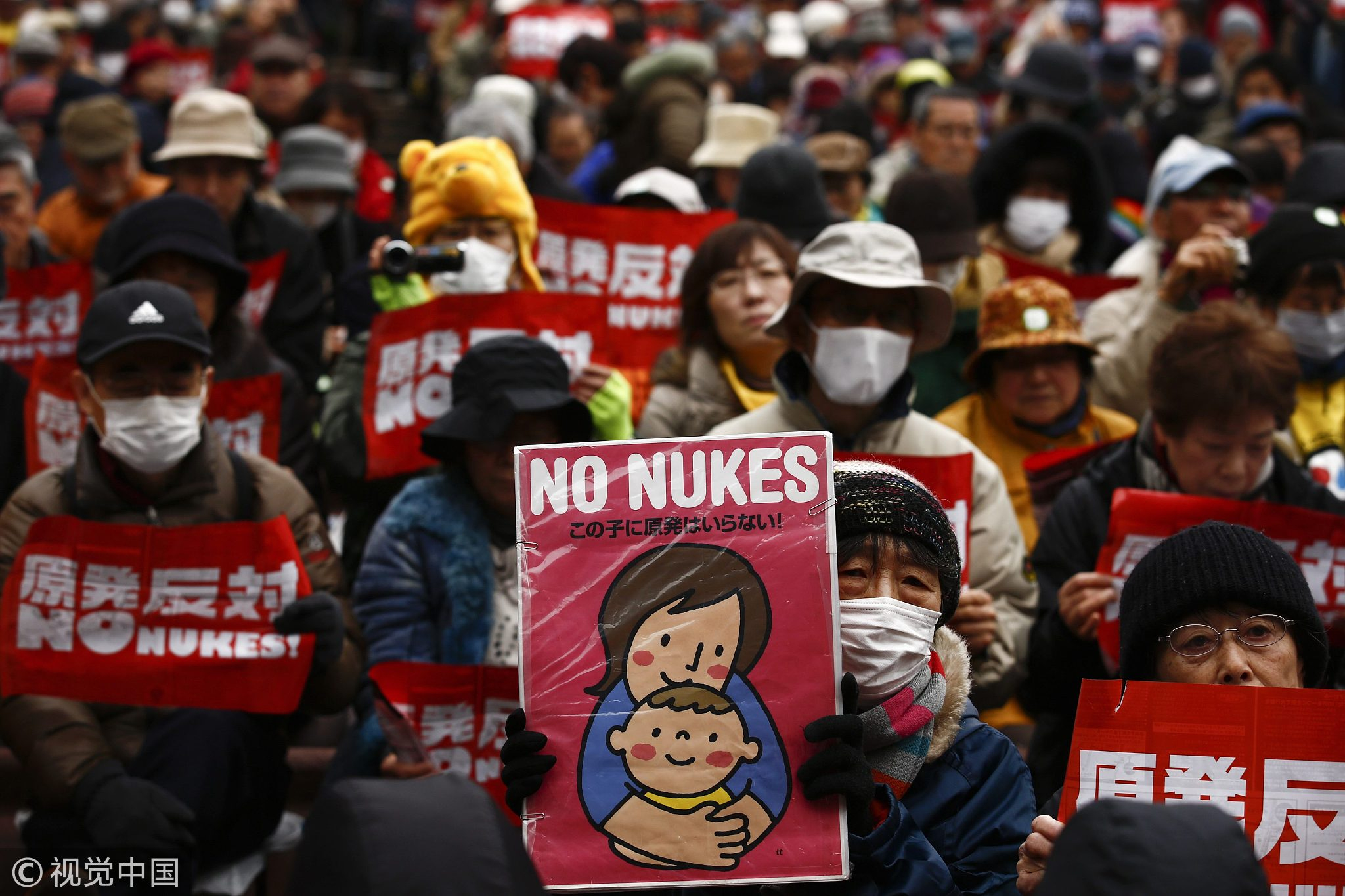
March 8, 2015: People hold placards denouncing nuclear energy during a rally in central Tokyo./ VCG Photo
March 8, 2015: People hold placards denouncing nuclear energy during a rally in central Tokyo./ VCG Photo
That explained the painful traumas during my infancy, including relentless fevers and pus oozing from my forehead.
My prenatal exposure led to an uncanny sensitivity to detect pulsations from radioactivity on my skin, which enabled me to survive long bicycle trips into the hot zone and spend nights outdoors in the black rain on a hammock, and avoid overstaying.
Along with every person alive today, radioactive elements are not just “out there” in the air and water, but also inside of our bodies and our consciousness. We are all hibakusha of eight decades of nuclear folly, and unless we heed the lessons from Hiroshima and Nagasaki on these sweltering August days, humankind along with thousands of other species will soon cease to exist.
The voices from the past warn us to end our illusions about nuclear safety and shut down this unprecedented threat to the human genome before it kills the last child.