
Politics
13:07, 10-May-2018
Battle to save Iran deal continues as US plans fresh sanctions
 ["other"]
Share






Copied
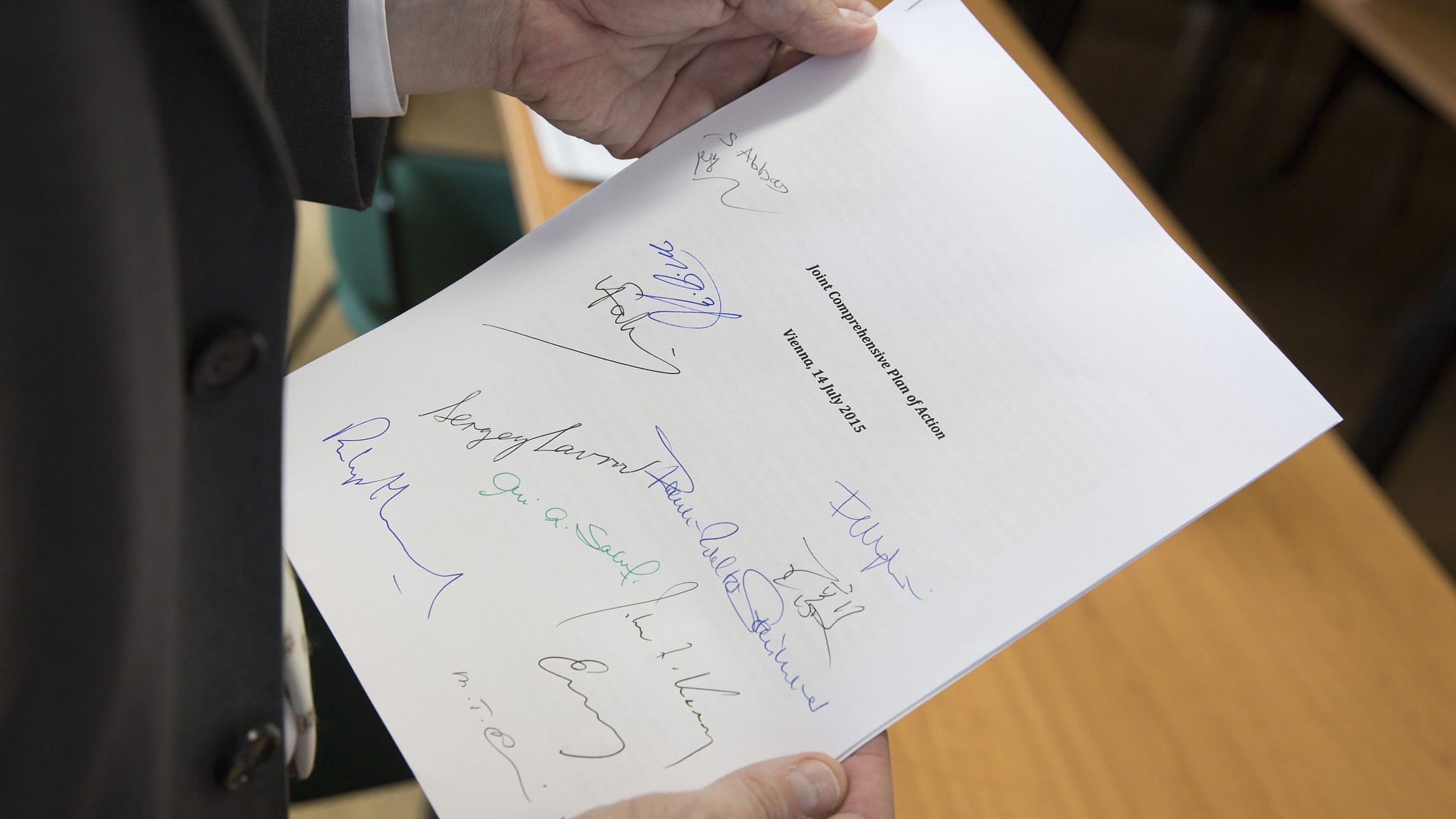
Signatories to the Iran nuclear deal are fighting to save the agreement and preserve trade with Tehran, as the US upped the pressure on the Middle Eastern country on Wednesday by announcing fresh sanctions would soon be imposed.
Read more: China regrets US decision
Read more: Nine questions as US withdraws
Opinion: Trump proves he is not to be trusted
Explainer: What is the Iran nuclear deal?
President Donald Trump on Tuesday pulled the US out of the Joint Comprehensive Plan of Action (JCPOA), saying he would revive economic sanctions that would penalize foreign firms doing business with Tehran to undermine a deal designed to curb Iran's nuclear program.
US plans fresh sanctions
The White House said on Wednesday that Trump is preparing to impose new sanctions on Iran, perhaps as early as next week.
"We're going to continue to put maximum pressure, enormous sanctions on them," White House spokeswoman Sarah Sanders told a news briefing.
"All of the sanctions that were in place before the deal are back in place and we are preparing to add additional sanctions that may come as early as next week."
00:47
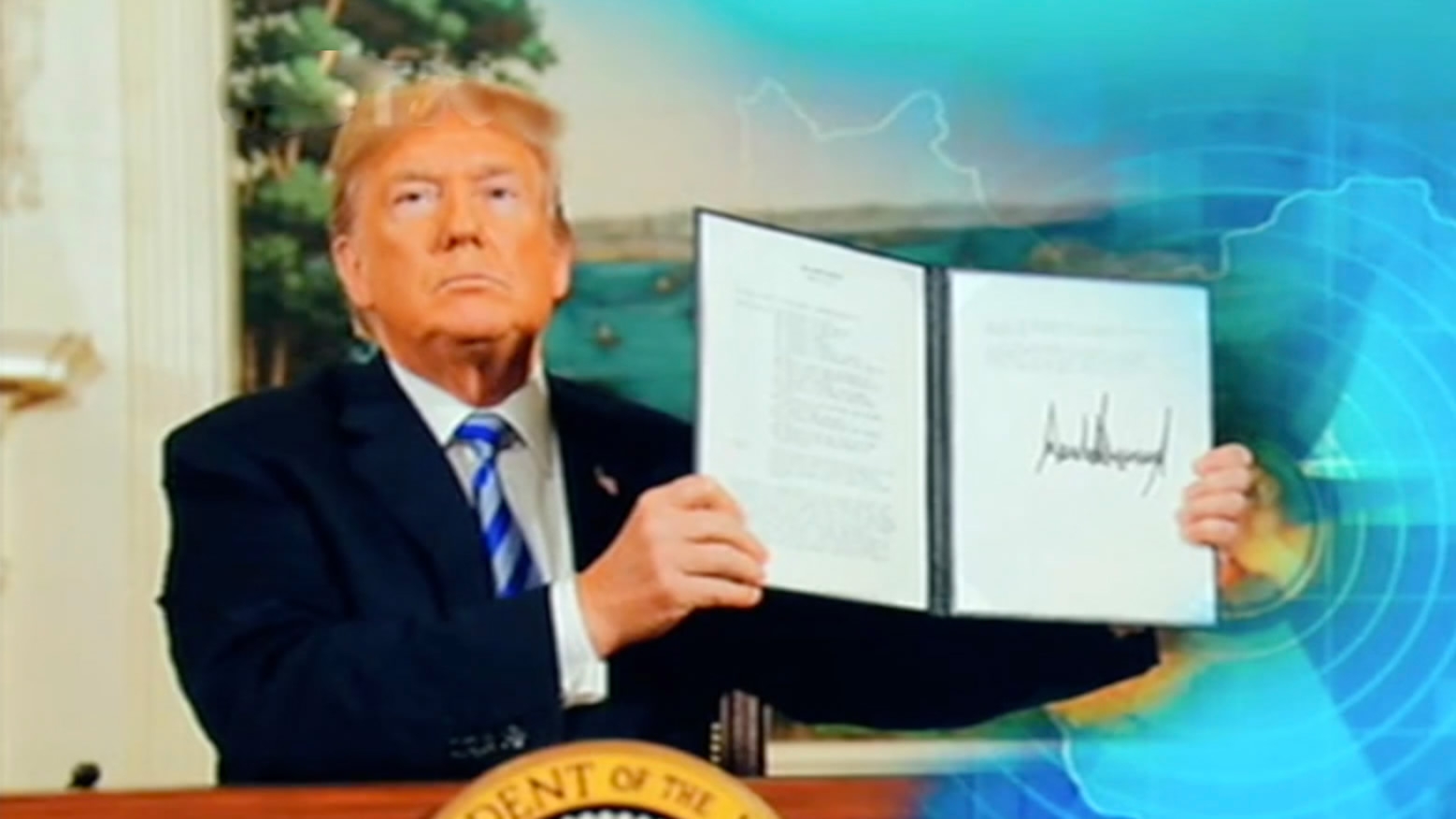
Trump said on Wednesday Iran would now either negotiate or "something will happen," without specifying what actions he was suggesting would take place.
The Trump administration kept the door open to negotiating another deal, but it is far from clear whether the Europeans would pursue that option or be able to win Iran over.
Europe searches for way forward
European leaders had lobbied Trump hard to keep the JCPOA, struck by China, Russia, Britain, France, Germany, the US and Iran in 2015.
The European Union said it would ensure sanctions on Iran remain lifted as long as Tehran meets its commitments, but the chances of saving the deal depend largely on whether international firms are willing and able to keep trading with Iran despite the threat of US sanctions.
Britain, France and Germany said they would do all they could to protect their business interests in Iran, yet it was unclear how much they can shield firms from US sanctions.
00:48
Brussels could implement a "blocking statute" that bans any EU company from complying with US sanctions and does not recognize any court rulings that enforce American penalties. But the statute has never been used and is seen by European governments more as a political weapon than a regulation, because its rules are vague and difficult to enforce.
A senior French diplomat said businesses would ultimately be forced to choose between their Iranian economic interests and their potential US interests, adding: "Generally, that decision is quickly made in favor of the US."
In a sign of what may be in store, Trump's ambassador to Berlin prompted an outcry by tweeting that German businesses should halt activities in Iran at once. French Finance Minister Bruno Le Maire said the US should not consider itself the world's "economic policeman."
'Limited opportunity'
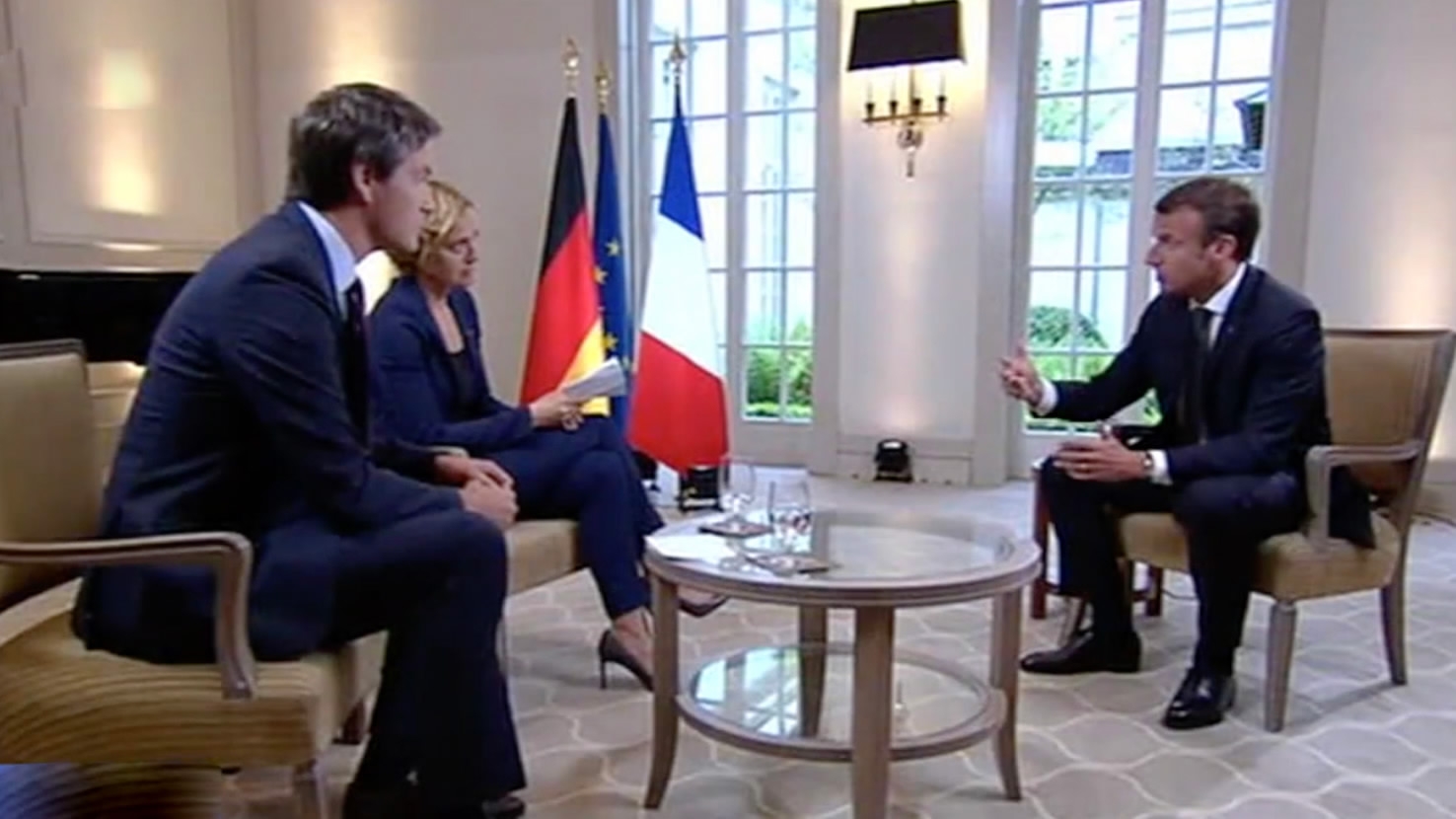
Iranian President Hassan Rouhani warned French counterpart Emmanuel Macron on Wednesday that there was a "limited opportunity" to preserve the pact, the Iranian Students' News Agency reported.
"(Europe)... must, as quickly as possible, clarify its position and specify and announce its intentions with regard to its obligations," ISNA quoted Rouhani as telling Macron. The French president urged Rouhani to adhere to the deal and to consider broader negotiations.
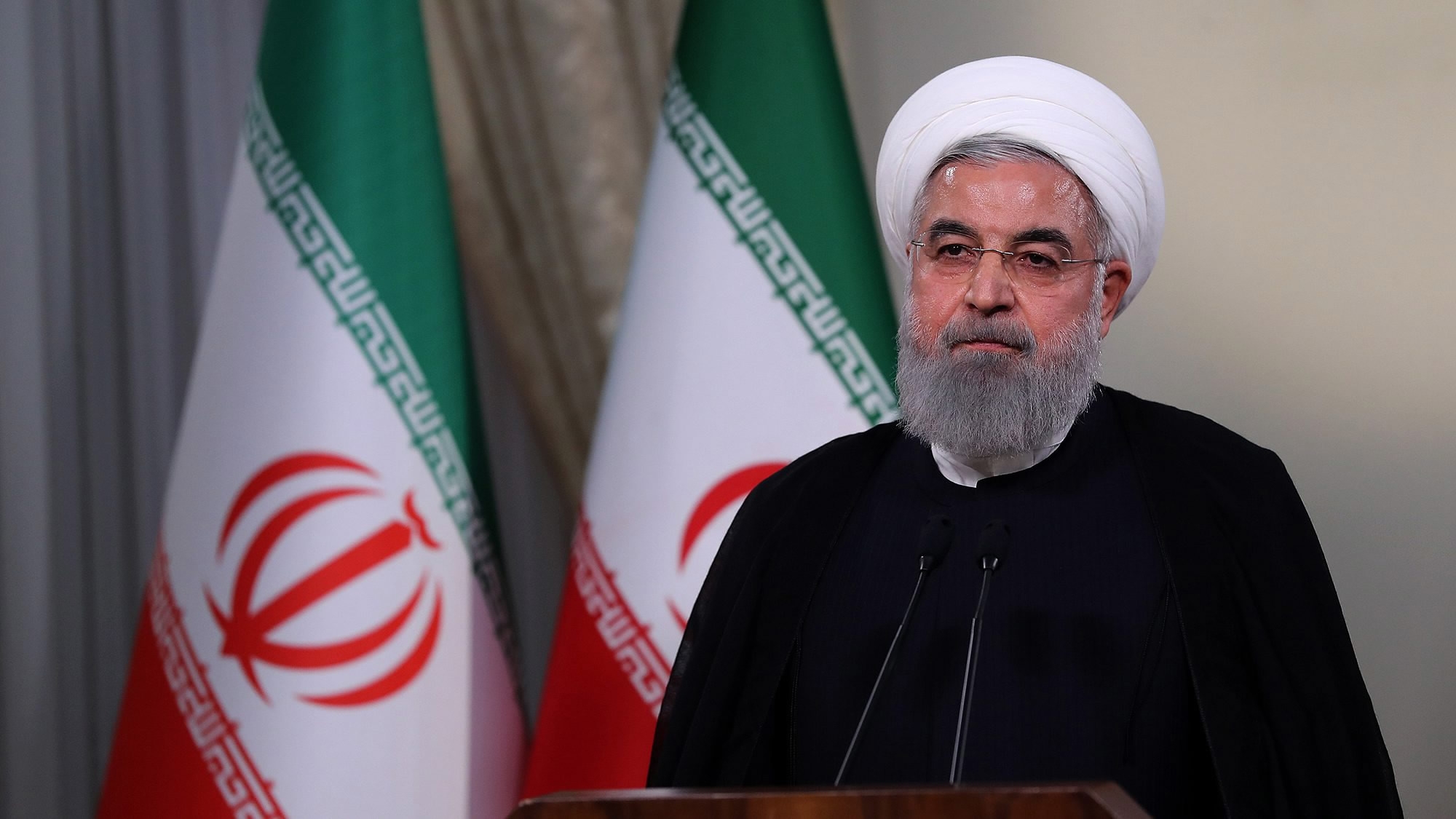
President Hassan Rouhani giving a speech on Iranian TV in Tehran, May 8, 2018. /VCG Photo
President Hassan Rouhani giving a speech on Iranian TV in Tehran, May 8, 2018. /VCG Photo
Macron has called for talks with all relevant parties on the development of Iran's nuclear program after 2025, when key elements of the current deal start to expire, as well as Iran's ballistic missile program and wider Middle East issues.
German Chancellor Angela Merkel called for a discussion of "a broader deal that goes beyond " the existing agreement, while British Foreign Secretary Boris Johnson spoke of a "follow-on agreement" but said it was up to Washington to come up with concrete proposals.
China on Wednesday expressed its regret at the US decision, while the Kremlin said Russian President Vladimir Putin was "deeply concerned" by the US withdrawal.
Iranian officials will next week meet counterparts from France, Britain and Germany, but Iranian Supreme Leader Ayatollah Ali Khamenei appeared skeptical whether they could deliver: "I don't trust these three countries."
'Death to America'
The US pullout could strengthen hardliners in Iranian politics at the expense of moderates like Rouhani who had pinned their hopes on the deal to boost living standards in Iran.
Khamenei, a hardliner, said: "Mr Trump, I tell you on behalf of the Iranian people: "You've made a mistake. ... I said many times from the first day: Don't trust America."
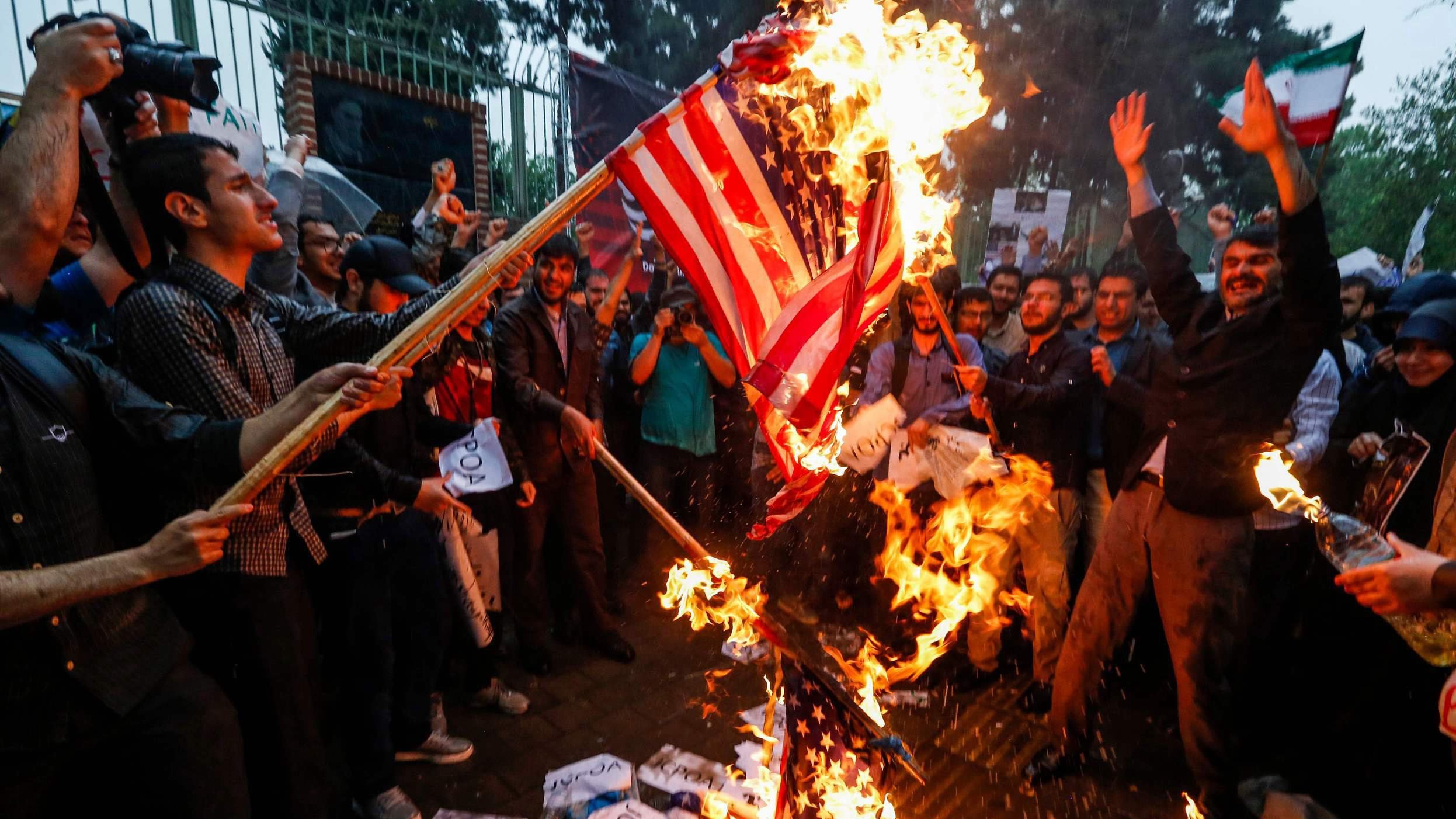
Iranians burn US flags during an anti-US demonstration outside the former US embassy headquarters in the capital Tehran, May 9, 2018. /VCG Photo
Iranians burn US flags during an anti-US demonstration outside the former US embassy headquarters in the capital Tehran, May 9, 2018. /VCG Photo
Hardliner lawmakers in Iran's parliament on Wednesday burned a US flag and a symbolic copy of the JCPOA chanting: "Death to America!"
Rouhani, who could be weakened by a blow to Iran's economy, struck a more conciliatory tone in a televised speech, saying Iran would negotiate with EU countries, China and Russia.
"If at the end of this short period, we conclude that we can fully benefit from the JCPOA with the cooperation of all countries, the deal will remain."
(With input from agencies)