
Tech & Sci
16:46, 19-Jul-2018
EU demand for timber is decimating Ukraine's forest cover: Probe
Updated
16:45, 22-Jul-2018
 ["europe"]
Share







Copied
Lax implementation of the law and massive demand for timber in the European Union (EU) are robbing Ukraine of its forest cover and revenue, a two-year probe revealed.
Ukraine’s vast tract of forest is home to rare animals such as bears, wolves, lynx, and bison. Large-scale logging is depriving these wild animals of their natural habitat.
Wood export is one of Ukraine’s largest export industries, bringing in 1.7 billion US dollars in foreign exchange in 2017. The timber sector employs 350,000 people contributing almost four percent to the country’s Gross Domestic Product (GDP).
“The EU's imports are undermining the efforts of Ukraine to establish the rule of law,” the report claimed.
Field investigations by EarthSight, a UK-based non-profit, claimed nearly 40 percent of the timber, being produced by the country's state-owned enterprises is illegally cut through the abuse of a loophole, allowing trees to be harvested to prevent the spread of disease.
The logging is carried out under “sanitary felling” to control the spread of disease. To prevent such illegal trading, EU formulated a Timber Regulation (EUTR), prohibiting the import of wood which was illegally sourced in the country of origin.
Research shows that this law is not working, and that wood of likely illegal origin continues to flood into the EU, report stated. "Your roof, your floor, your table, the newspaper you are holding, all might well be made from Ukrainian wood," said Sam Lawson, Earthsight's Director. "And if it is, there is a good chance it was cut or traded illegally, abetted by high-level corruption.”
According to EarthSight, EUTR is failing because the law only applies to the companies whose names appear on the import documents. Many of the largest buyers of Ukrainian wood deploy intermediaries to do the importing on their behalf, conveniently avoiding the risk of breaching the law.
The firms owned by middleman firms are typically small and opaque. “On the few occasions such firms have been caught out and had shipments seized, their owners simply dissolve them and begin trading under a new name,” report said.
The investigative data also warned that the EU probably imports more illegally sourced wood from Ukraine than it does from all of the countries of Latin America, Africa, and Southeast Asia combined.
“Some of the 'due diligence' measures these companies are using are laughable," Lawson added. "Yet the authorities are signing off on them. As far as Ukraine is concerned, right now the EU's law might as well not exist."
EarthSight suggests tackling the roots of timber corruption and effective regulations for the forestry sector to reduce the environmental damage and revenue loss due to the illegal timber trade in the country.
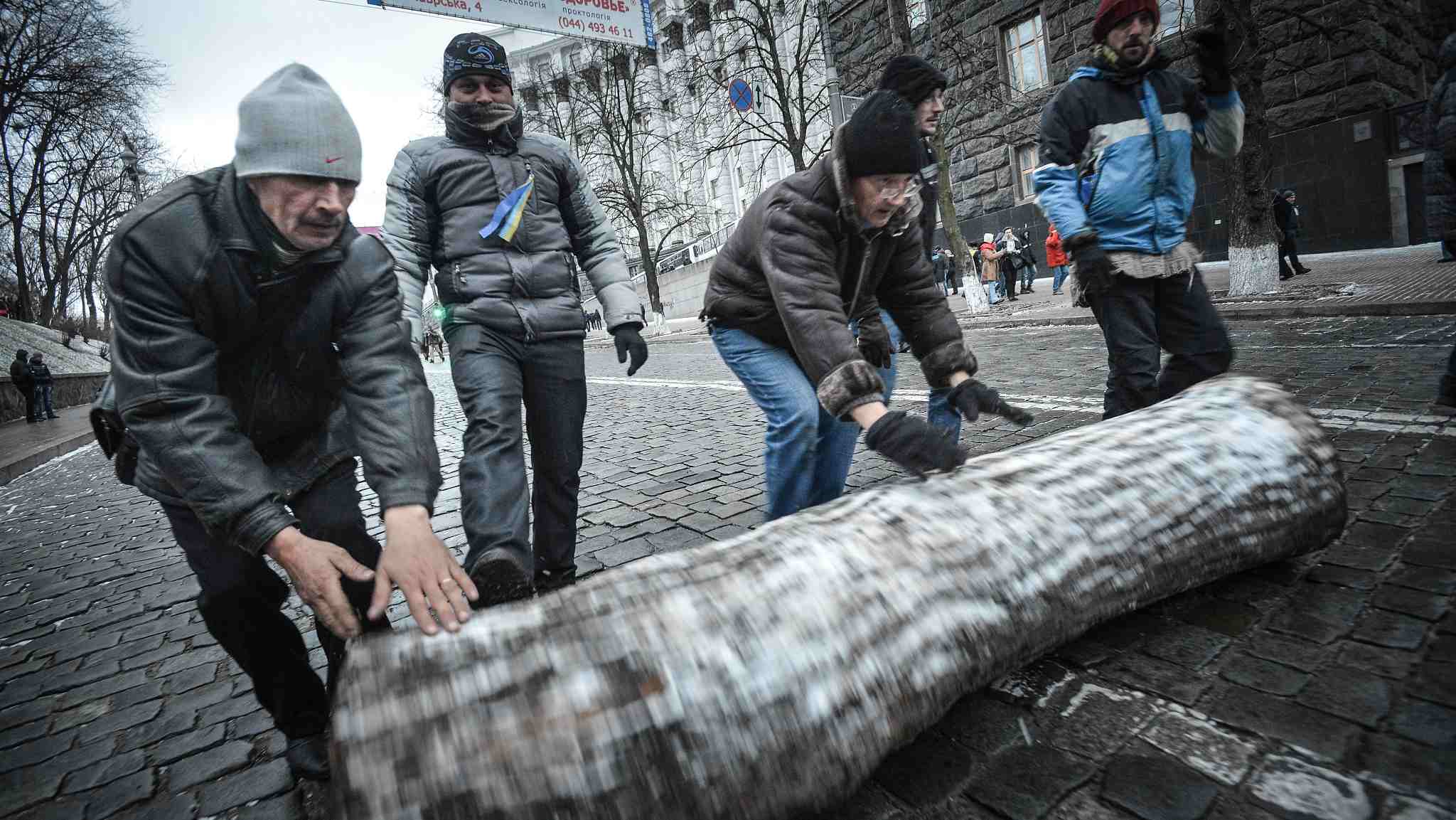
(Cover Image: Supporters of Ukraine's European integration wheel in timber for barricades on Hrushevskovo Street in front of the Cabinet of Ministers building in Kiev, August 2013. /VCG Photo)