
World
16:50, 18-Jun-2018
Women and sumo debate expands: concerns go beyond the sumo ring
 ["other","Japan"]
Share







Copied

In Japan, women are by tradition banned from entering the sumo wrestling ring, and this has resulted in a social dust-up over the rules on more than one occasion, including recently. Now, the practice is being debated as the "no women allowed" rule and has been brought back to life at the highest level, and in the eyes of the world.
Fusae Ohta is a member of Japan's House of Councilors, the upper house of Japan's national legislature. In the year 2000, due to her combined position as Osaka prefectural governor and mayor, it was her role to present the Governor's Trophy to the winner of the Osaka grand sumo tournament.
She recalls the situation: "The big sumo tournaments are held in Tokyo, Osaka, Nagoya, and Fukuoka. I was the first female mayor in these four cities. That's why this 'women's issue' in the sumo ring originally came up." Despite her political rank, as a woman, she was barred from entering the sacred sumo ring to present the Governor's Trophy. The incident sparked a debate.
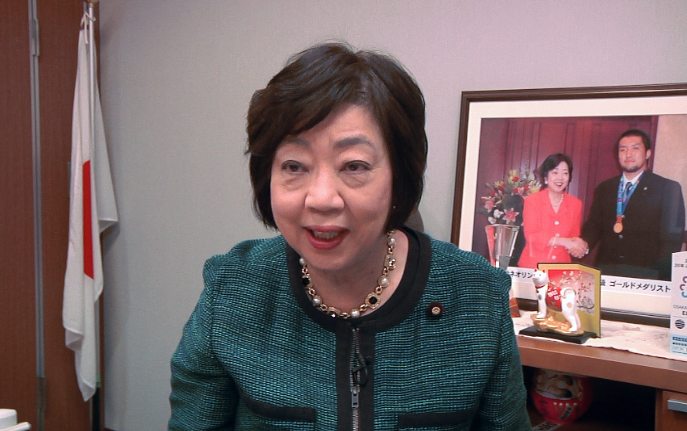
Politician Fusae Ohta. /CGTN Photo
Politician Fusae Ohta. /CGTN Photo
That debate was reignited in early April in Kyoto Prefecture when women administering first-aid to a suspected heart attack victim were told to leave the sumo ring, even though they were at that moment performing cardiac massage.
Video of the incident went viral on the internet, creating painful "optics" in Japan. Fusae Ohta reflected, "How does this look from an international perspective? They might say it looks strange. We call it 'foreign pressure,' but this is a global age, and I think it's good for Japan to shift to the correct way. I want other countries' to express their opinion about the prohibition of women."
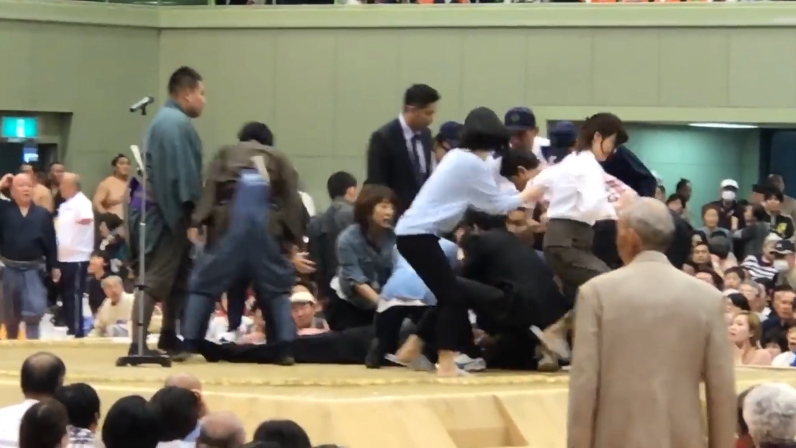
Women are ordered to leave the sumo ring in early April in Kyoto Prefecture. /CGTN Photo
Women are ordered to leave the sumo ring in early April in Kyoto Prefecture. /CGTN Photo
For major sumo arenas, the women and sumo issue has long generated controversy, but now the debate is about to reach a higher level. That is because the roots of the sumo heritage trace back to ancient shrine rituals that regard women as “ritually unclean” to enter the ring.
The same beliefs may also bar women from attending a certain number of Imperial Succession ceremonies next spring, when the current Emperor, Akihito, abdicates, and Crown Prince Naruhito ascends to the throne.
For the Japanese, the debate over the role of women in ceremonies is a difficult push-and-pull between tradition and modern values.
In a recent presentation at Japan's Foreign Press Center, Dr. Eiichi Miyashiro, writer of the popular Japanese newspaper Asahi Shimbun, commented on history and the evolving situation regarding women's participation in the upcoming Imperial Succession ceremonies: "The ceremonies that were held for the current emperor ascending to the throne, the one where he received some of the sacred treasures, these could not be attended by the female members of the Imperial Household, and it is now considered that, because we live in different times, maybe some changes should be made."
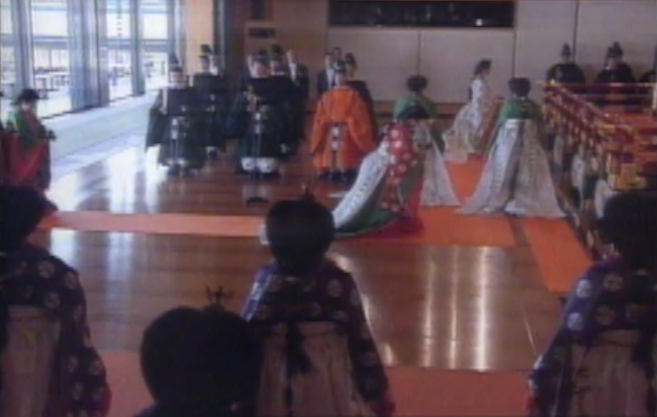
Women in imperial ceremonies. /CGTN Photo
Women in imperial ceremonies. /CGTN Photo
In the months to come, the Imperial Household and other influential parties must arrive at a consensus as to the degree whether women will participate in Imperial Succession proceedings. Greater inclusion of women in ceremonies could provide the social signal necessary to trigger expanded participation of women in the workplace, in government, and – perhaps someday – even in the sacred sumo ring.
"This is an opportunity for the people of Japan to consider what the role of the emperor should be going forward; in other words, what kind of values he should have and represent," Dr. Miyashiro said. And, while offering no predictions, he presented the possibility that, through the example of the Imperial Succession ceremonies, the nation may display its readiness for change.
(Cover photo: In this file photo taken on March 3, 2012, sumo wrestlers attend a morning practice session in preparation for the Grand Sumo Tournament at Yamasaka Shrine. /VCG Photo )
2104km