
Politics
22:35, 26-Jun-2018
US Supreme Court upholds Trump's travel ban on Muslim-majority countries
Updated
22:31, 29-Jun-2018
 ["china"]
Share






Copied
02:13
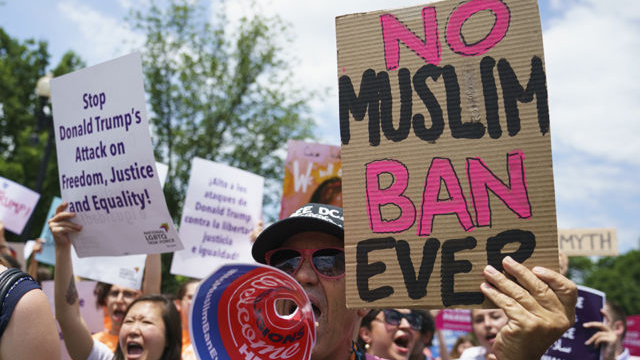
The US Supreme Court on Tuesday upheld President Donald Trump's travel ban targeting people from several Muslim-majority countries.
The 5-4 ruling, with the court's five conservatives in the majority, ends for now a fierce fight in the courts over whether the policy represented an unlawful Muslim ban.
Trump can now claim vindication after lower courts had blocked his travel ban announced in September, as well as two prior versions, in legal challenges brought by the state of Hawaii and others.
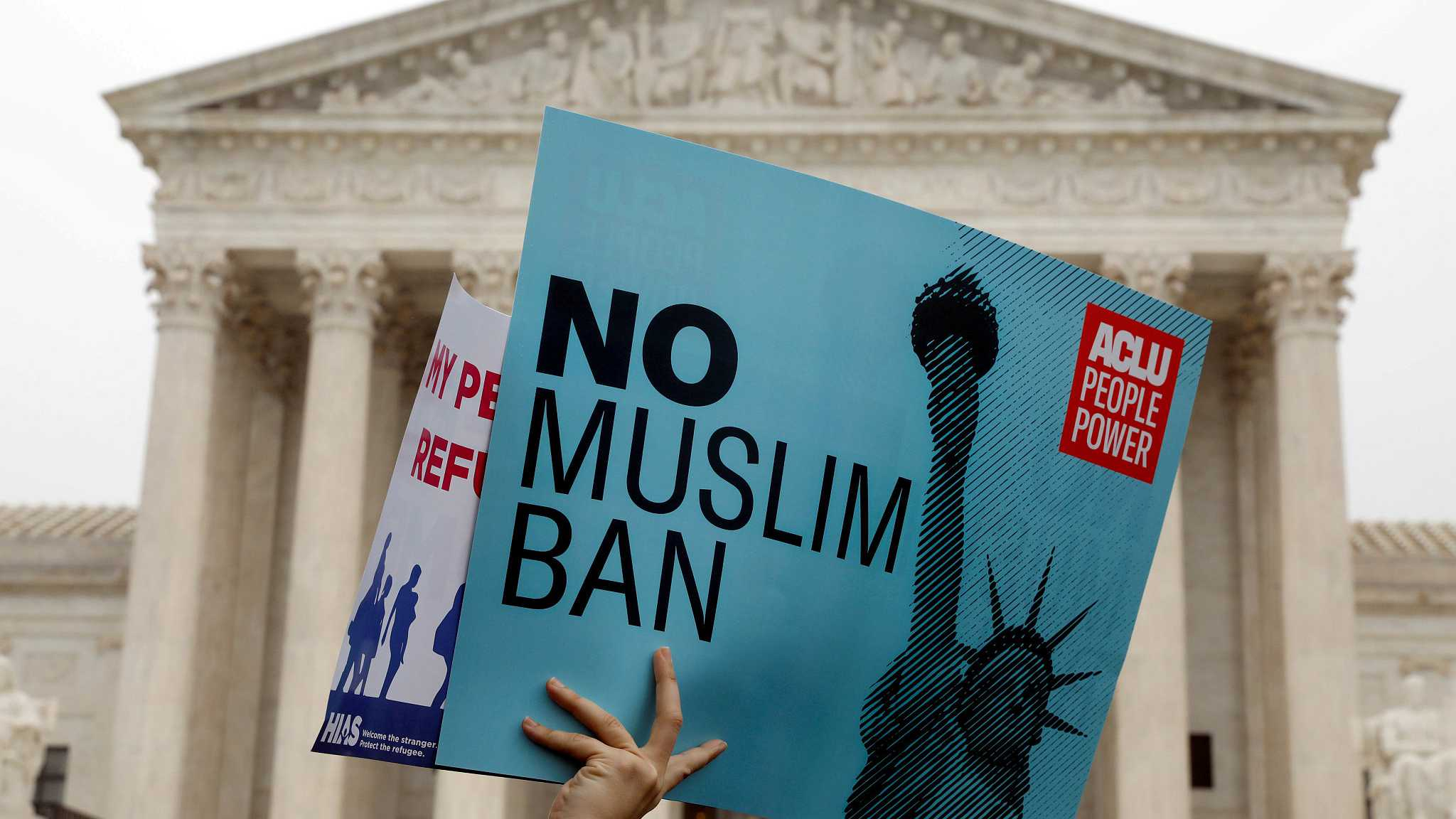
Protesters rally outside the US Supreme Court in Washington, DC, April 25, 2018. /VCG Photo
Protesters rally outside the US Supreme Court in Washington, DC, April 25, 2018. /VCG Photo
The court held that the challengers had failed to show that the ban violates either US immigration law or the US Constitution's First Amendment prohibition on the government favoring one religion over another.
Writing for the court, Chief Justice John Roberts said that the government "has set forth a sufficient national security justification" to prevail.
"We express no view on the soundness of the policy," Roberts added.
Soon after the court's ruling, Trump said on twitter: "Supreme court upholds Trump travel ban. Wow."
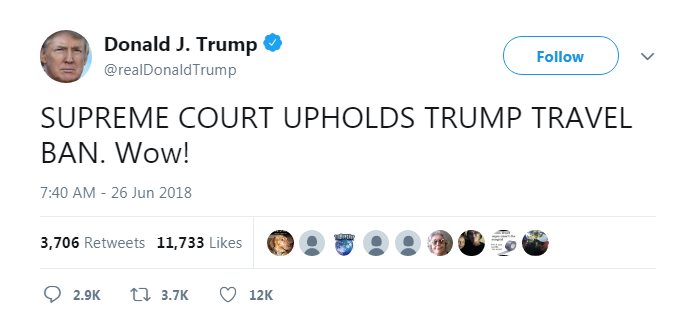
Screenshot of Trump's tweet
Screenshot of Trump's tweet
“Today’s supreme court ruling a tremendous success. A tremendous victory for the American people and for our Constitution. This is a great victory for Constitution. We have to be tough. We have to be safe and secure at a minimum and we have to make sure that we vet people coming into the country,” Trump remarked.
The ruling affirmed broad presidential discretion over who is allowed to enter the US. It means that the current ban can remain in effect and that Trump could potentially add more countries. Trump has said the policy is needed to protect the country against attacks by Islamic militants.
The current ban, announced in September, prohibits entry into the US of most people from Iran, Libya, Somalia, Syria and Yemen. The Supreme Court allowed it to go largely into effect in December while the legal challenge continued.
The challengers have argued the policy was motivated by Trump’s enmity toward Muslims and urged courts to take into account his inflammatory comments during the 2016 presidential campaign. Trump as a candidate called for "a total and complete shutdown of Muslims entering the United States."
The travel ban was one of Trump’s signature hardline immigration policies that have been a central part of his presidency and "America First" approach. Trump issued his first version just a week after taking office, though it was quickly halted by the courts.
11158km