
Tech & Sci
14:43, 08-Oct-2018
IPCC report: Even half a degree matters in limiting climate change
Updated
14:36, 11-Oct-2018
 ["other","South Korea"]
Share







Copied
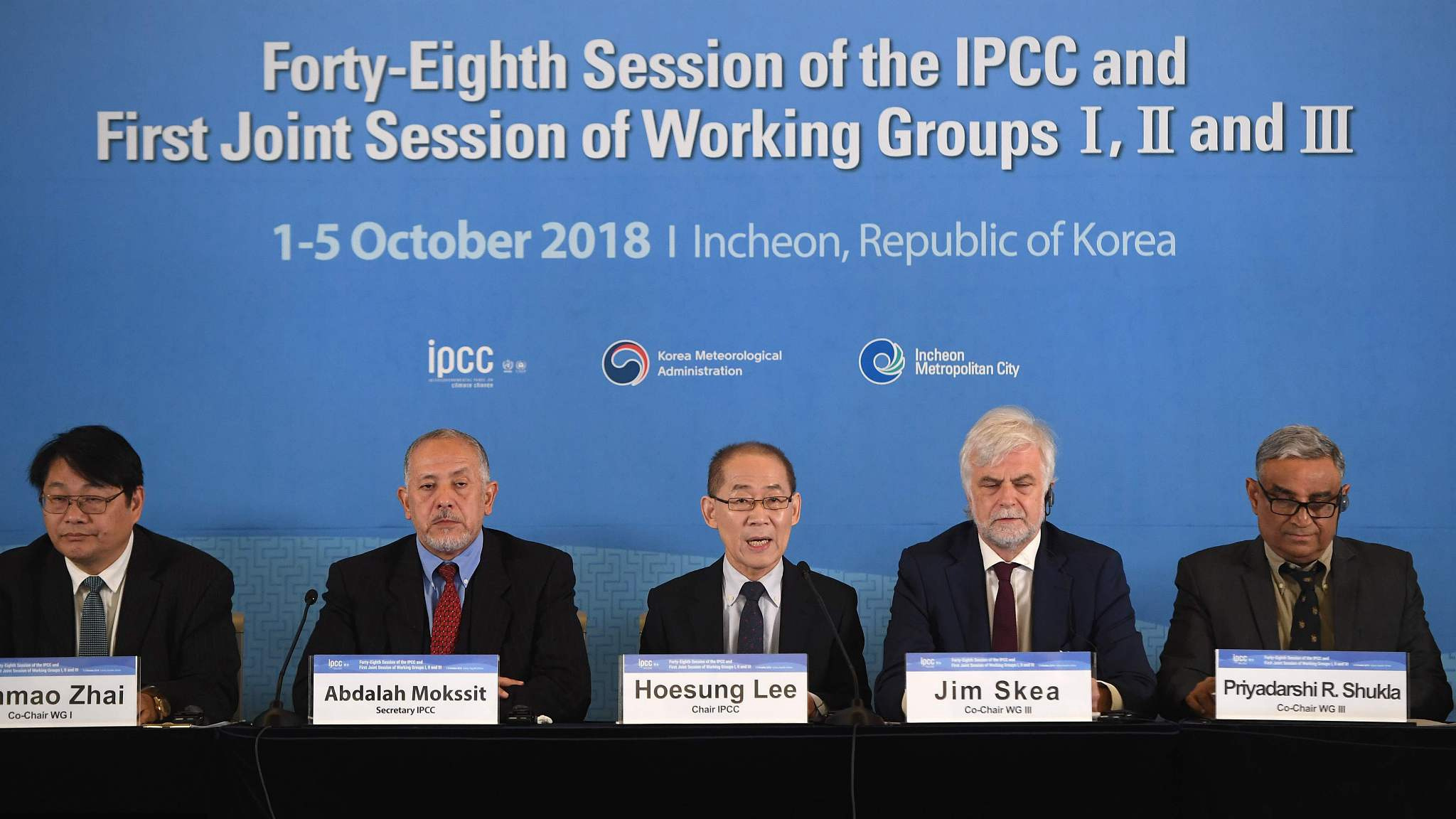
The global average temperature is likely to rise by 1.5 degrees Celsius between 2030 and 2052 from its pre-industrial level if the world continues business-as-usual, leading to an increase in disastrous weather events, warned a new report released by the Intergovernmental Panel on Climate Change (IPCC) at Incheon, S. Korea on Monday.
However, limiting global warming to the temperature rise of 1.5 degrees Celsius compared to the intended goal of two degrees Celsius under negotiation in Paris in 2015, could go hand in hand with ensuring a more sustainable and equitable society, working groups of the IPCC maintained.
The IPCC's findings are crucial as they are likely to act as key scientific input for governments and policymakers during the COP24 climate talks in Katowice, Poland for implementing the Paris agreement.
The negotiations at Paris in 2015 aimed to prevent the temperature from rising two degrees Celsius above the pre-industrial level.
“One of the key messages that comes out very strongly from this report is that we are already seeing the consequences of one degree Celsius of global warming through more extreme weather, rising sea levels and diminishing Arctic sea ice, among other changes,” said Panmao Zhai, Co-Chair of IPCC Working Group I.
Though it seems small, the impact of a half degree temperature rise could greatly reduce the impact of climate change.
Researchers said that by 2100, the global sea level rise would be 10 cm lower with global warming of 1.5 degrees Celsius compared with two degrees Celsius.
The Arctic Ocean would be free of sea ice in the summer roughly once per century with a global warming of 1.5 degrees Celsius, compared with at least once per decade at two degrees Celsius. Coral reefs would decline by 70-90 percent with global warming of 1.5 degrees Celsius, whereas virtually all would be lost with two degrees Celsius, said the report.
In limiting the global temperature rise to 1.5 degrees Celsius, researchers said, “rapid and far-reaching” changes in land use, energy, industry, buildings, transport, and cities are required. Furthermore, the "global net human-caused emissions of carbon dioxide should be about 45 percent from 2010 levels by 2030, and it should reach a ‘net zero' around 2050."
Sounding optimistic on achieving the goal, Jim Skea, the co-chair of IPCC Working Group III said, “Limiting warming to 1.5 degree Celsius is possible within the laws of chemistry and physics, but doing so would require unprecedented changes.”
The three IPCC working groups were invited to produce a study on the consequences of a scenario where global warming was limited to 1.5 degrees Celsius. Researchers also considered a global response to the threat of climate change, sustainable development, and efforts to eradicate poverty while preparing the report.
In a statement, Peter Frumhoff, a former lead author of the IPCC, said that meeting the 1.5 degrees Celsius temperature target will require bringing carbon dioxide emissions to net zero by mid-century and dramatically reducing emissions of other heat-trapping gases.
“This calls for transforming our energy economy and transitioning away from fossil fuels by greatly ramping up energy efficiency and embracing renewables and other low-carbon energy sources.”
“This report gives policymakers and practitioners the information they need to make decisions that tackle climate change while considering local context and people's needs. The next few years are probably the most important in our history,” IPCC maintained in a press statement.
(Top Image: Valene Masson-Delmotte, co-chair of the IPCC Working Group I, speaks during a press conference of the Intergovernmental Panel for Climate Change (IPCC) at Songdo Convensia in Incheon on October 8, 2018. /VCG Photo)