
World
22:16, 02-May-2018
An African-Canadian gets $10,000 payment from Toronto restaurant for charging customers up front
 ["north america"]
Share







Copied

When African-Canadian man, Emile Wickham, and his three friends celebrated his birthday at a well-known Chinese restaurant Hong Shing in Toronto, the waiter asked them to pay before being served. Wickham sued the restaurant and accused them of racial discrimination. The court ruled on Monday that the Chinese restaurant had been ordered to pay $10,000 in compensation.
According to the CNN report, the court documents revealed that Emile Wickham and his friends ate at the Chinese restaurant on the east side of Toronto’s Chinatown on May 3, 2014. At that time, the four people were the only African-Canadian customers in the restaurant. After they had sat down, they were informed by the waiter to pay for the food first. Wickham and his company felt dissatisfied and asked for a refund.
“I don’t think I could adequately describe leaving that restaurant … We were so dejected,” Wickham told the Guardian. “I was full of suspiciousness at the time, so I asked the other customers. They all said that there was no need to pay in advance. A sense of frustration came over in my mind and it turned into frustration and sadness." One of Wickham's friends in court also said that he had previously visited the restaurant 15 to 20 times and never needed to pay in advance.
According to the court documents, Wickham, who immigrated to Canada 11 years ago, has never been treated as a second-class citizen because of his race. Wickham is also not used to being treated maliciously because of his skin color. The incident caused emotional distress for Wickham because that day was his birthday.

Interfaith clergy leaders march from the Center City Starbucks, where two black men were arrested, to other nearby stores in Philadelphia, Pennsylvania, US. /VCG Photo
Interfaith clergy leaders march from the Center City Starbucks, where two black men were arrested, to other nearby stores in Philadelphia, Pennsylvania, US. /VCG Photo
After hearing about the case earlier this month, the adjudicator Esi Codjoe of the tribunal concluded that the actions of the restaurant Hong Shing violated the first section of province’s human rights law, which prohibits discrimination when providing a service. She found the staff’s conduct “was motivated by a stereotype that Black people are criminals, or deviants” and concluded that for Wickham, “at that moment it hurt to be Black,” the guardian reported.
The Chinese restaurant responded by saying that in order to avoid theft, they would make customers who are not regulars, pay before they are served. After further investigations, the human rights court held that the restaurant’s request for advance payment by the guests was unreasonable.
The verdict indicates that the restaurant inferred that Wickham would not pay for his food due to his skin color, so the restaurant is required to compensate Wickham but did not need to apologize. The restaurant Hong Shing opened in 1997. The proprietor stated that he would consider the appeal.
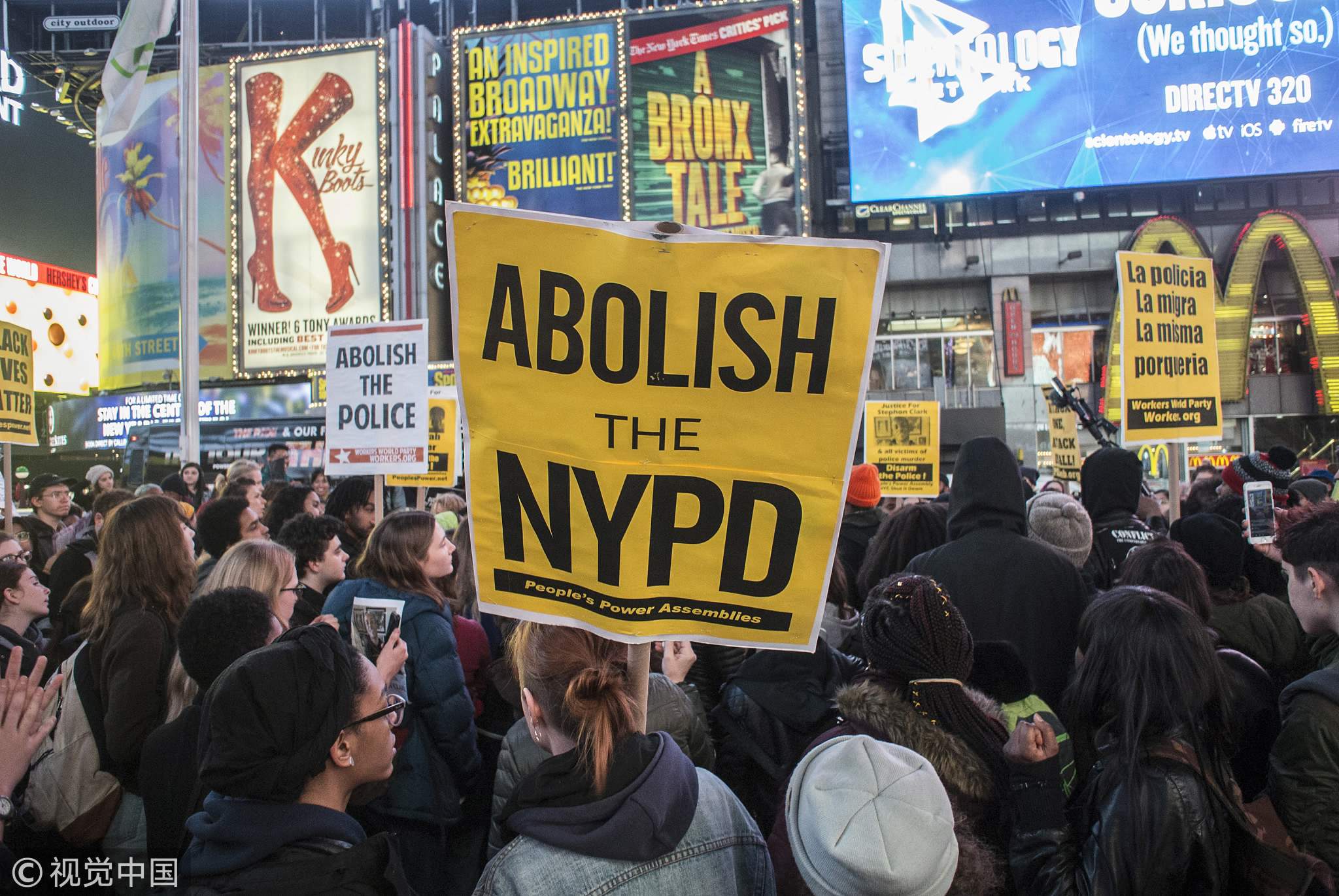
Protest in New York for the murder of unarmed Stephon Clark, who was killed by police officers in Sacramento, US /VCG Photo
Protest in New York for the murder of unarmed Stephon Clark, who was killed by police officers in Sacramento, US /VCG Photo
"A lot of people have been asking me if I'm happy about this. I feel more relieved and grateful. We believe," Wickham said. "If it wasn’t for the judge believing our testimony was reliable, if it wasn’t for the restaurant admitting this was a practice they indulge in, how would our facts about the case have been accepted by the public?” said Wickham.
The ruling highlights a growing push in Canada to address issues of systemic racism and discrimination. Although the country is celebrated for its diversity and inclusion, critics argue that the sunny image belies a grimmer daily reality for many: Canada's black prison population is the fastest-growing inmate demographic.
"To think that we're in a post-racial society is pretty absurd. I'm hoping that Canadians start to realize that we've made progress, but we have such a long way to go," said Saron Gebresellassi, a Toronto lawyer who works on discrimination cases.