
Opinions
19:14, 20-Jun-2018
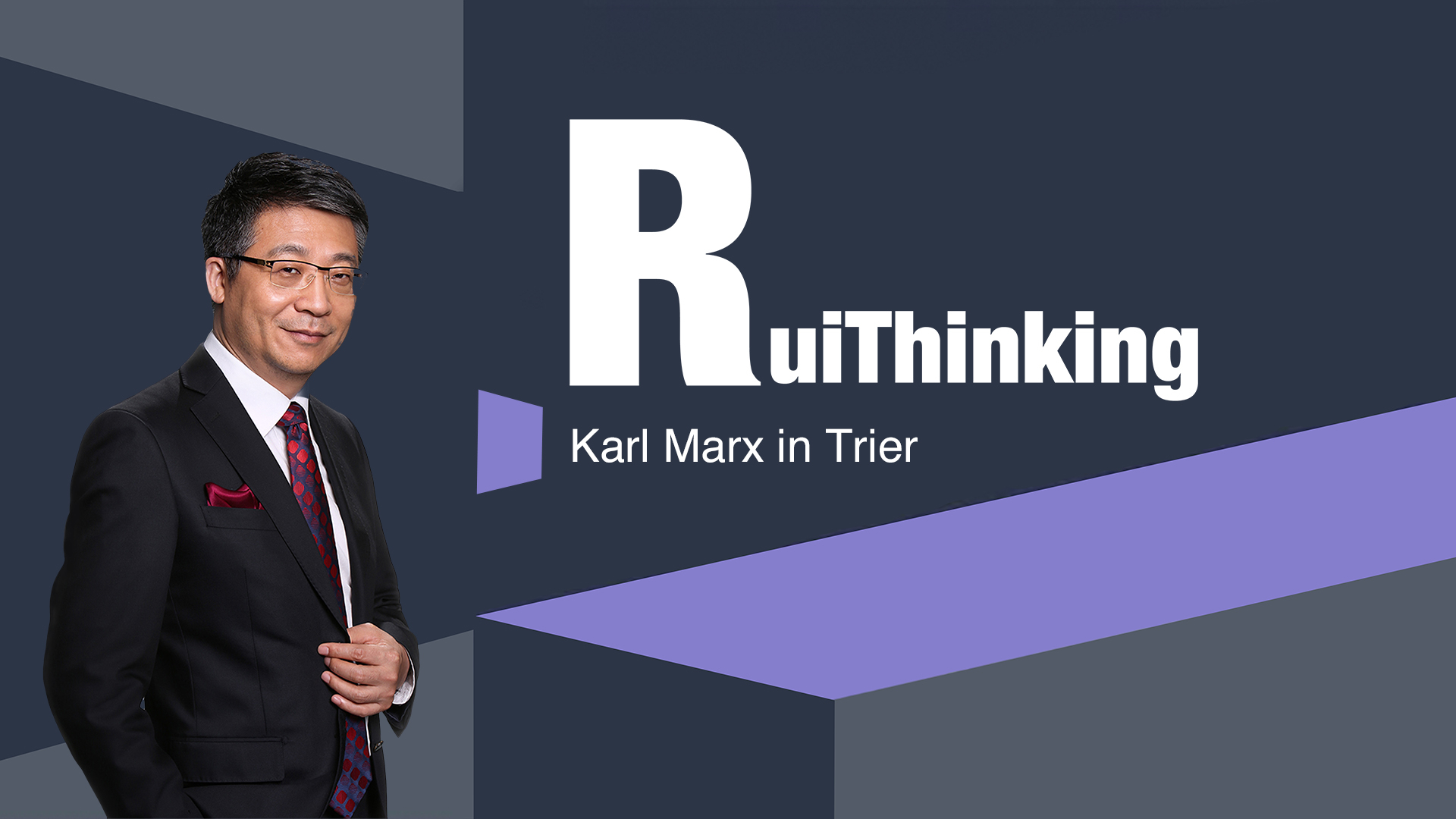
RuiThinking: Karl Marx in Trier
 ["china"]
Share







Copied
02:38
Surprisingly, I am here in Trier, the hometown of Karl Marx, a man who has profoundly influenced the world his way for well over one century. Karl Marx was a spiritual leader for communist parties but just one of the renowned scholars in Germany. People in his hometown did not know him much either due to ideological differences of the Cold War or the benefits of doubt.
Despite the invisible Berlin Wall, my colleagues and I have embarked upon a journey of rediscovery to commemorate the 200th anniversary of this thinker and economist. Not surprisingly, the statue of Marx as a gift from China has aroused a two-year debate for town folks here. The city assembly has eventually decided to accept the gift in recognition of history not out of the ideology that China shares with Karl Marx.
My questions for German historians and mayor of Trier focused on the relevance of class struggles and surplus value in the 21st century. Capitalism was severely criticized by Carl in the Communist Manifesto in 1848 in the wake of the Paris Commune Uprising. But the end of the Cold War in 1991 failed to eliminate capitalism or liberal democracy. Western politicians argue it is the other way around. But neither has it brought down the Chinese communist party.
Professor Zhang Xudong from New York University says the reform instead of revolution has helped shape the course of China’s modernization and opening up. Again, the issue is whether conflicting interest groups and income gaps instead of class struggles may have undermined the labor rights of Chinese workers most of whom have benefited enormously from private ownership, and poverty alleviation, a topic that Karl would have been very happy and fascinated about.
Many argue Marx goes down the history as a symbol of scrutiny in search of freedom, labor rights and comprehensive development of humanity. Marxism remains an open discourse and ready for revisionism. China knows this very well for its own good. We know the principles, and we are flexible. The point is whether we go back to history and the complete truth about Karl Marx in history.