
Opinions
13:45, 15-Oct-2018
Opinion: 'Rebel Brexiters' hold Britain to ransom as EU talks stall
Updated
13:12, 18-Oct-2018
 ["china"]
Share







Copied
Editor's note: Tom Fowdy is a UK-based political analyst. The article reflects the author's opinion, and not necessarily the views of CGTN.
Britain's departure from the European Union hit a stumbling block on Sunday as a high profile meeting between British “Brexit Secretary” Dominic Rabb and EU negotiator Michel Barnier failed to make any progress.
The issues of Northern Ireland and the UK's future customs relationship with Brussels acted as wedges in the discussions, with the EU's proposals being reportedly rejected as unacceptable by 10 Downing Street. As the scheduled March 2019 exit date looms and with no concrete future relationship in sight, the threat of a “no deal” edges slightly closer.
But who is exactly to blame? The answer is plain sight. The fanatical Brexiters situated in the right wing of the Conservative Party, content to blackmail their own government and country into pushing for unrealistic demands from Brussels.
Such factional squabbling has saddled the prime minister into attempting to navigate a highly unpopular “middle way” while simultaneously attempting to "appear tough", a strategy which is doomed to fall short of expectations on all sides of the argument. With party politics being but before country, Britain's future is being gambled away on a whim.
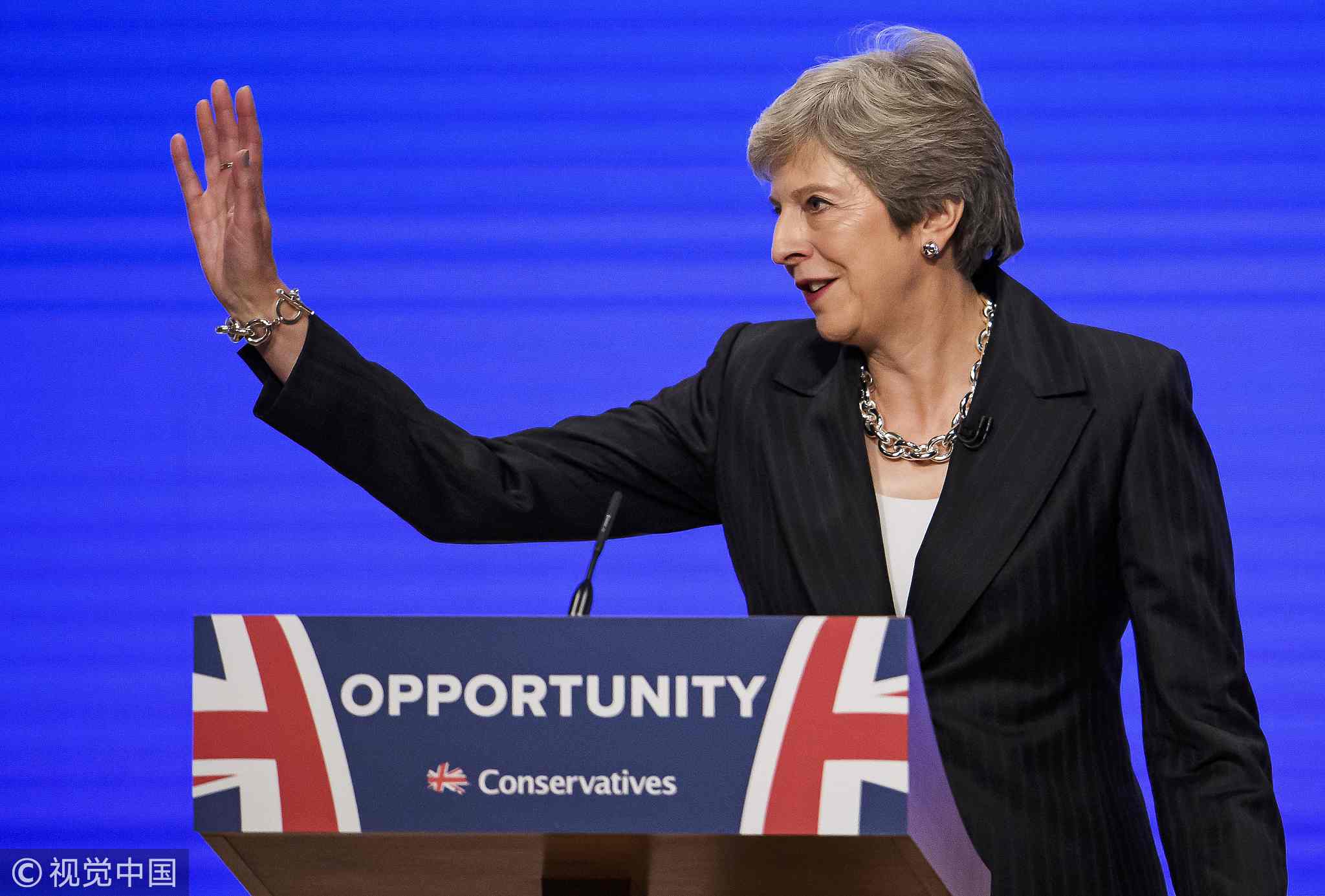
British Prime Minister Theresa May delivers her Leaders speech on the 2018 Conservative Party conference at the ICC in Birmingham, UK, October 3, 2018. /VCG Photo
British Prime Minister Theresa May delivers her Leaders speech on the 2018 Conservative Party conference at the ICC in Birmingham, UK, October 3, 2018. /VCG Photo
It is an understatement to assess that Theresa May is politically weak. She is a prime minister that is at large, unpopular and uninspiring. She inherited the leadership from David Cameron as the moderate candidate, drawing support from all wings of the party as a pragmatic individual who could take Brexit forwards on sensible grounds and reasonable terms.
Then it all went wrong. Believing she could increase her leverage over Brussels and legitimate her own leadership vision as prime minister, she threw away her parliamentary majority on a miscalculated campaign that spectacularly backfired. The coined "Strong and Stable leadership" phrase did not become an inducing and hypnotizing political slogan, but a meme and a subject of mockery.
Crawling out of the other end of the June disaster, May since found herself more reliant on the support of the party's right than ever before, as well as the similarly hardline Democratic Unionist Party in Northern Ireland who agreed to prop her government. She thus managed to achieve the opposite of what she set out to do. Now, when it came to Brexit, the election ensured she was no longer in the driving seat, they were.
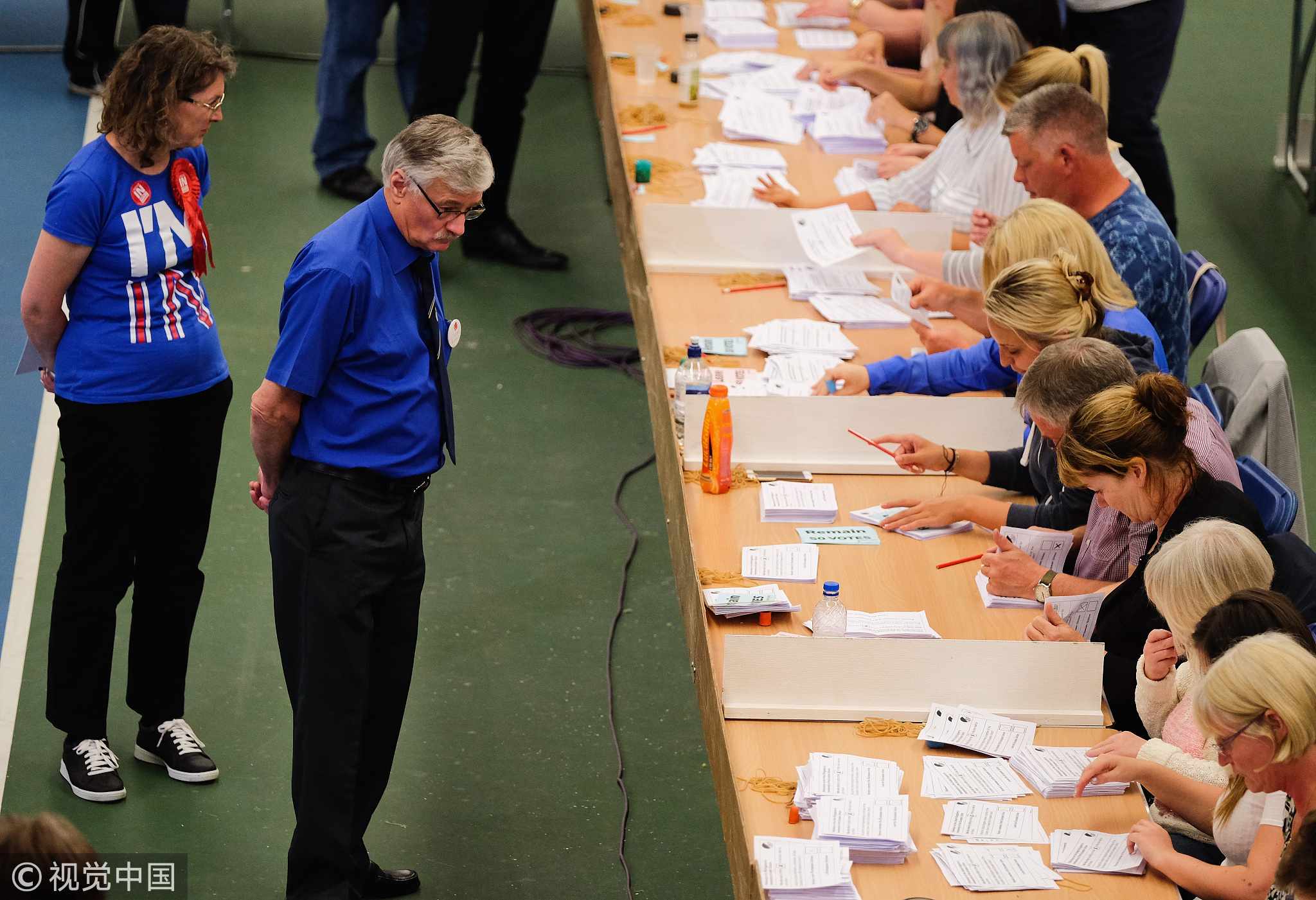
Observers look on as the North East region European Union referendum count takes place in Sunderland, UK, June 23, 2016. /VCG Photo
Observers look on as the North East region European Union referendum count takes place in Sunderland, UK, June 23, 2016. /VCG Photo
The walls then began to close in. As negotiations over Brexit intensified, so did the political pressures from all angles. As areas of public opinion began to turn against Brexit and lobby other parties to resist and scrutinize Britain's departure, such as by threatening to vote down May's deal, the Conservative right wing began to exploit May's weaknesses and publicly humiliate her to force through its own demands.
Support from these MPs was crucial for the government to succeed. Thus, when downing street produced its pragmatic "chequers proposal" of what a future relationship with Europe could look like, the right quickly savaged it. Boris Johnson resigned, David Davis quit and both publicly criticized the agreement as being too soft.
This didn't deter Theresa, who continued to advocate it despite the obvious loss of face. As resistance has continued, it has now reached a tipping point as leading Brexiters continue to be enraged at the prospect of the UK temporarily remaining in the Customs Union until a deal is reached over Northern Ireland. On Sunday morning, Davis called for a "cabinet rebellion" against the final deal, with others also threatening resignations.
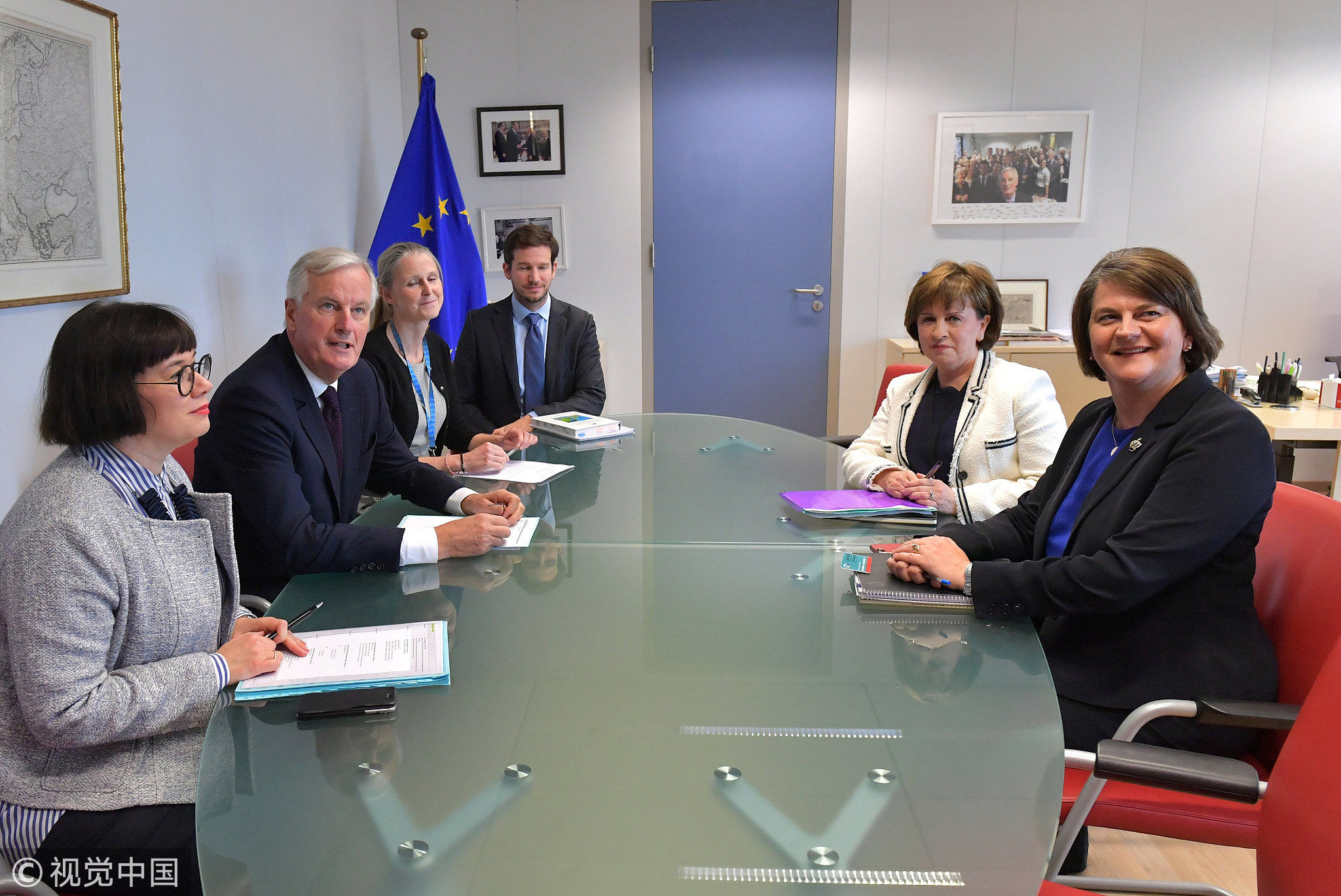
European Union's chief Brexit negotiator Michel Barnier attends a meeting with Northern Ireland's Democratic Unionist Party leader Arlene Foster and DUP member Diane Dodds at the EU Commission headquarters in Brussels, Belgium, October 9, 2018. /VCG Photo
European Union's chief Brexit negotiator Michel Barnier attends a meeting with Northern Ireland's Democratic Unionist Party leader Arlene Foster and DUP member Diane Dodds at the EU Commission headquarters in Brussels, Belgium, October 9, 2018. /VCG Photo
The infighting has left negotiations sour, inconsistent and hopeless. Sunday's outcomes are a sure sign of it. Theresa May faces monumental pressure to act tough, yet cannot change the fundamental realities of what the UK needs in order to sustain a pragmatic and stable economic relationship with Europe.
The right is disrupting talks and holding Britain to ransom. Yet, their posturing will not and cannot create a better deal. Instead, if negotiations do not result in the much-feared "no deal", they are likely to instead create a "no man's land" deal, an undesirable hash which is supported by nobody, seen as too conciliatory by Brexiters and far too unconvincing by remainders. It is people of the UK who will pay the price.
Time is ticking. Businesses are putting future investment on hold, canceling plans or even suspending operations. Yet, in Westminster and in 10 Downing Street, all that appears to matter truly is inter-party politics and saber rattling.
Brexit was sold on the argument that Britain would be better off, yet it has descended into an ugly race to the bottom. Brussels has made its own offers, but it is negotiating with a party that cannot even agree with itself on what Brexit fundamentally means, never mind 27 other member states.
(If you want to contribute and have specific expertise, please contact us at opinions@cgtn.com.)