
Opinions
13:44, 24-Oct-2018
Opinion: Disillusioned with Brussels, Italy looks to China
Updated
13:36, 27-Oct-2018
 ["china"]
Share







Copied
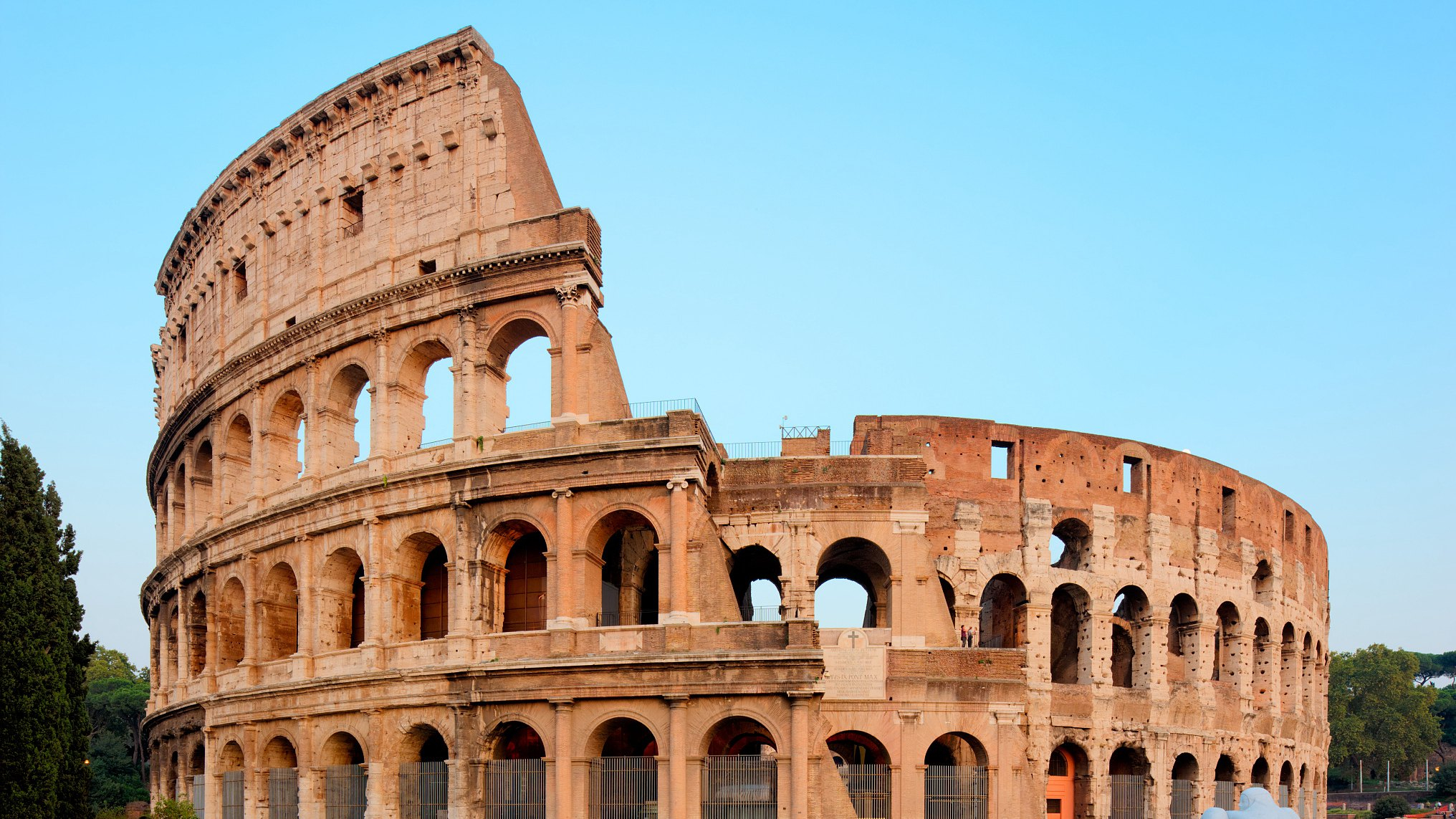
Editor's note: Tom Fowdy is a UK-based political analyst. The article reflects the author's views, and not necessarily those of CGTN.
On Tuesday, the European Commission expressed public opposition to Italy's national budget over fears that increases in spending could aggravate existing debt levels. The move, described as "unprecedented" by observers, has added to the increasing fiscal standoff between Rome and Brussels brought about by the entry of populists into the country's government.
With the same old solutions tried, tested and failed, radicalism is very much in the public mood; as it prolongs a spat with Brussels, disillusionment with the Eurozone is also leading Rome to look eastwards to fix its bleak economic picture.
With less reservation than its neighbors, Italy is openly throwing its weight behind China's Belt and Road Initiative (BRI). With so much at stake for a country with so many problems to battle, Rome has come to the recognition it must look beyond its own continent to prosper and ultimately reject Cold War mentalities.

Giuseppe Conte, Italy's prime minister, speaks during an interview at Chigi palace in Rome, Italy, October 23, 2018. /VCG Photo
Giuseppe Conte, Italy's prime minister, speaks during an interview at Chigi palace in Rome, Italy, October 23, 2018. /VCG Photo
Italy's economic and political problems are long and deeply-rooted. Nearly a decade after the Eurozone crisis of 2009, it has not recovered from the hit and has been saddled with an eye-watering national debt. The country's gross domestic product remains nearly 500 billion less than that of 2007. Unemployment remains at problematic levels, stretching up towards 10 percent for young people, many of whom see little opportunities for the future on the peninsula.
The economic decline has added to the population's growing disillusionment towards the government and authorities. Corruption levels have been higher than any country in western Europe, it has contributed to catastrophic local mismanagement and neglect.
The future and well-being of some historical monuments in Rome have been questioned, whilst the collapse of the Morandi bridge in Genoa has been endemic of the wider problems faced, with infrastructure old and tiring. It is an understatement to note that things are not well in Italy. For a country of monumental historical and civilizational achievement, it has been going rapidly downhill.
The economic and social upheavals within the country have led to radical political change. With minimal faith left in the status quo, the Italians have turned to populism as the answer, looking for individuals who vow to clean up the country's politics and take on the eurozone. The rapid rise of the Five Star Movement has been the result. It has claimed the votes of the angry and disaffected.
First sweeping to victory in local elections in Rome and then later in the 2018 elections, winning 227 seats in the Chamber of Deputies and ensuring its place in the governing coalition. The party's soft euroscepticism against the eurozone, its vow to tackle youth unemployment and its clash with Brussels over immigration all held sway on voters.
Facing the enormous challenge of rebuilding Italy's economy whilst feuding with Brussels, enhanced cooperation with China consequentially is seen as a lucrative and necessary prospect. With BRI seeking to expand the maritime Silk Road up through the red sea, through Suez, and into the Mediterranean, Italy's geography could not be better suited to benefit from it.
Italian ports could stand to become booming hubs of East-West trade, pinning together supply chains which connect to the rest of the continent. Deputy Prime Minister Luigi Di Maio recognizes this. Having visited China over a month ago, he pledged for Italy to become the first G7 member to cooperate with China through BRI that has yet to be included by any of the G7 members.
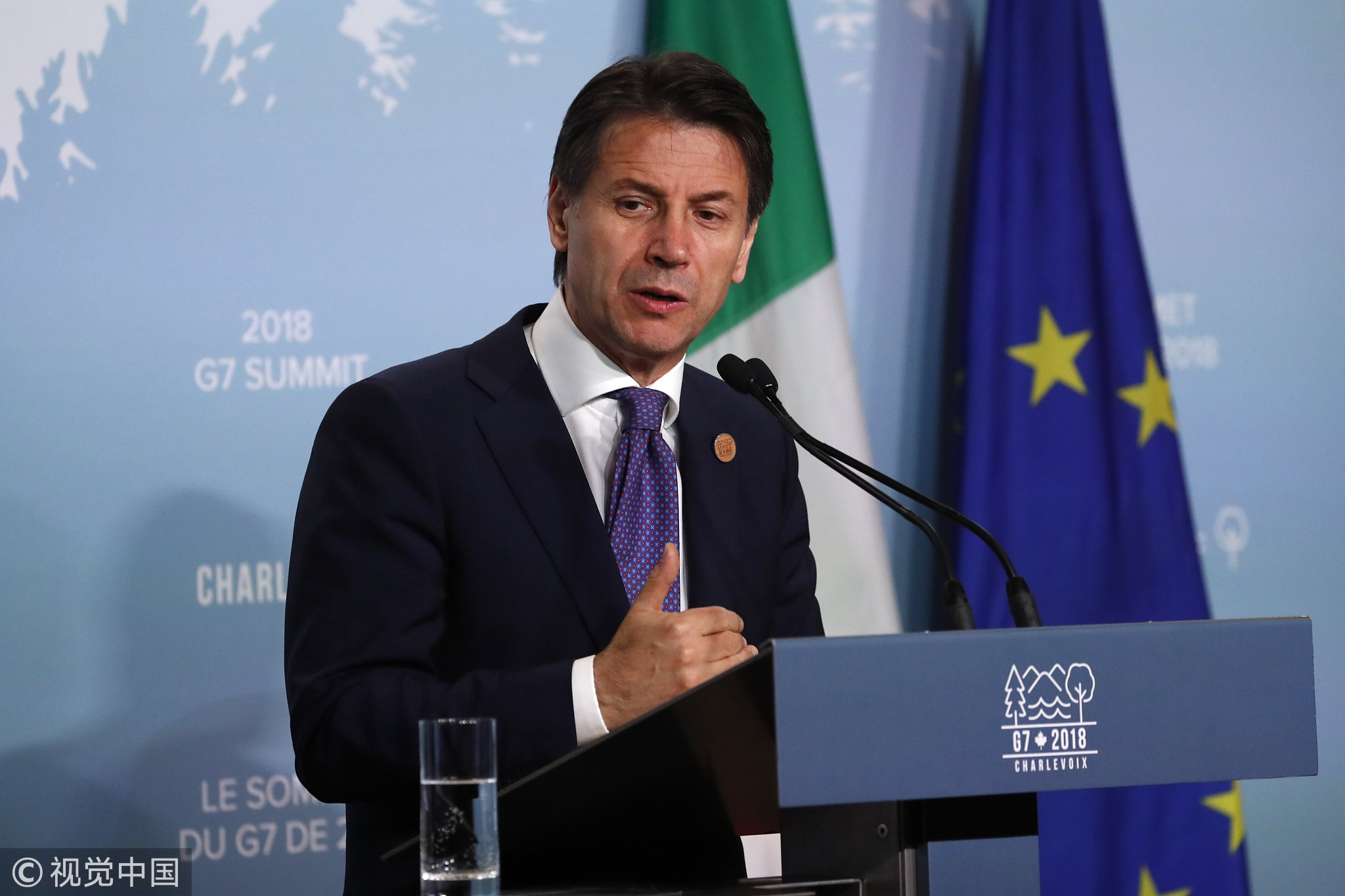
Italy's Prime Minister Giuseppe Conte addresses the final news conference of the G7 summit in the Charlevoix city of La Malbaie, Quebec, Canada, June 9, 2018. /VCG Photo
Italy's Prime Minister Giuseppe Conte addresses the final news conference of the G7 summit in the Charlevoix city of La Malbaie, Quebec, Canada, June 9, 2018. /VCG Photo
He also wanted to wrap up a new deal by the end of the year. This, of course, has worried key figures in Brussels, with several larger players continuing to advocate unnecessary skepticism towards the BRI.
However, Rome will not be swayed by such disapproval. Ultimately, Italy's current position demands that it makes the choices best suited to securing the country's economic future and ultimately such comes with the practical recognition that cooperation with China can only offer benefits to its fledgling system.
Whilst Italy is proud to be European and proud of the immense role it has played in shaping the continent's history in profound ways, through civilizational, spiritual and intellectual brilliance, there is nevertheless an underlying sentiment that cow-towing to Brussels' demands has only served to add to the country's economic woes.
With the Italians themselves having decided to try something different through the Five Star Movement, concurrently on foreign policy they are now deciding to try something different too.
It is time to give China a try.
(If you want to contribute and have specific expertise, please contact us at opinions@cgtn.com.)