
Opinions
19:43, 27-Apr-2018
Opinion: Why does Trump want to send a trade delegation to China?
 ["china","north america"]
Share







Copied
Treasury Secretary Steven Mnuchin and Trade Representative Robert Lighthizer will lead a trade delegation to China to negotiate on trade issues in "a few days", said US President Donald Trump on Tuesday.
The Chinese Ministry of Commerce (MOFCOM) stated that China welcomed the US trade delegations for negotiations on economic and trade issues.
The US has more than once touched upon a consultative negotiation with China since a unilaterally-provoking trade friction.
To listen to the words, to see the action
On April 6, Larry Kudlow, the White House’s chief economic adviser, revealed that the US and China were negotiating through a secret channel to resolve the escalating trade dispute between the two sides and even anticipated that the dispute could be resolved within three months.
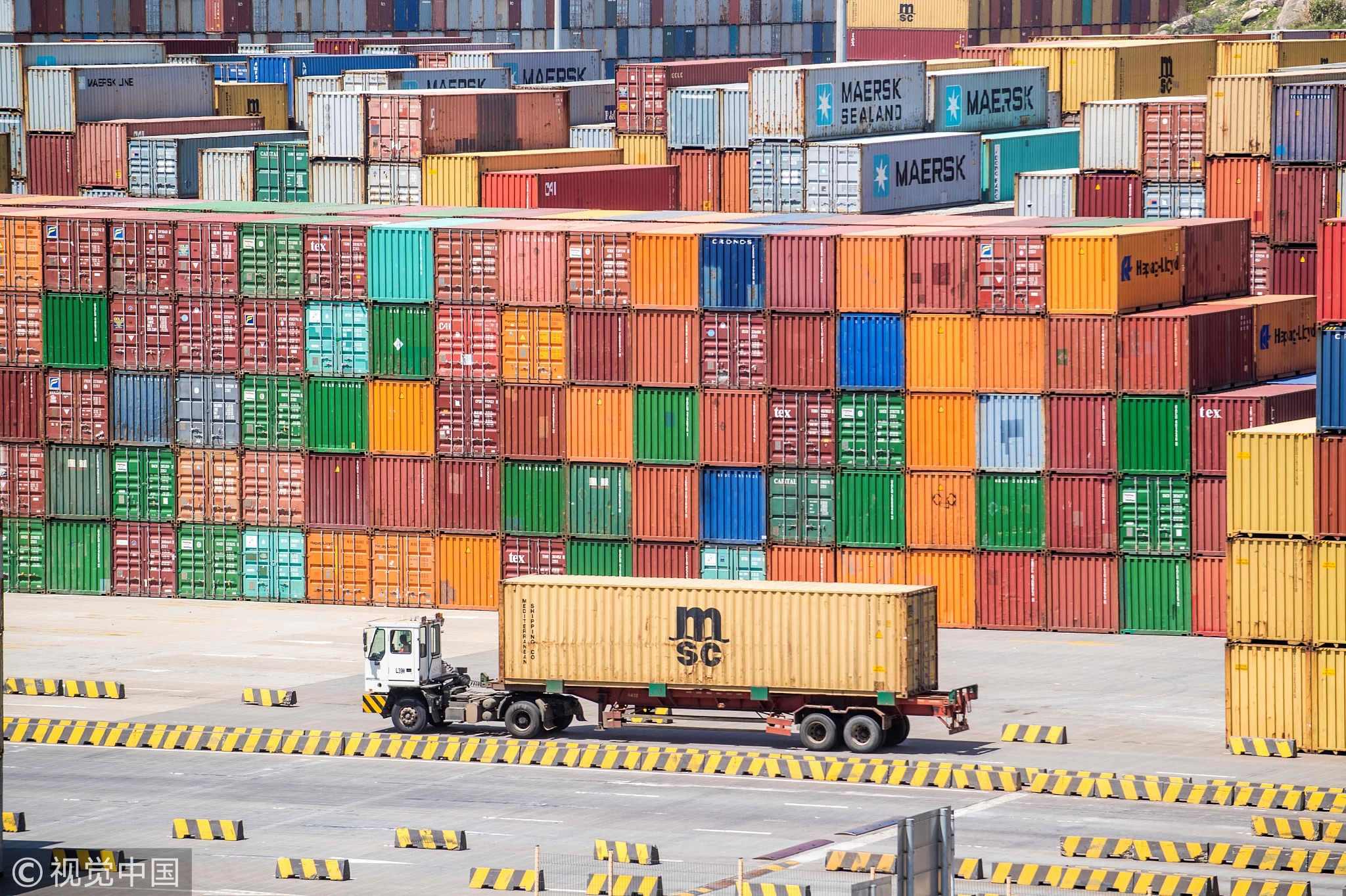
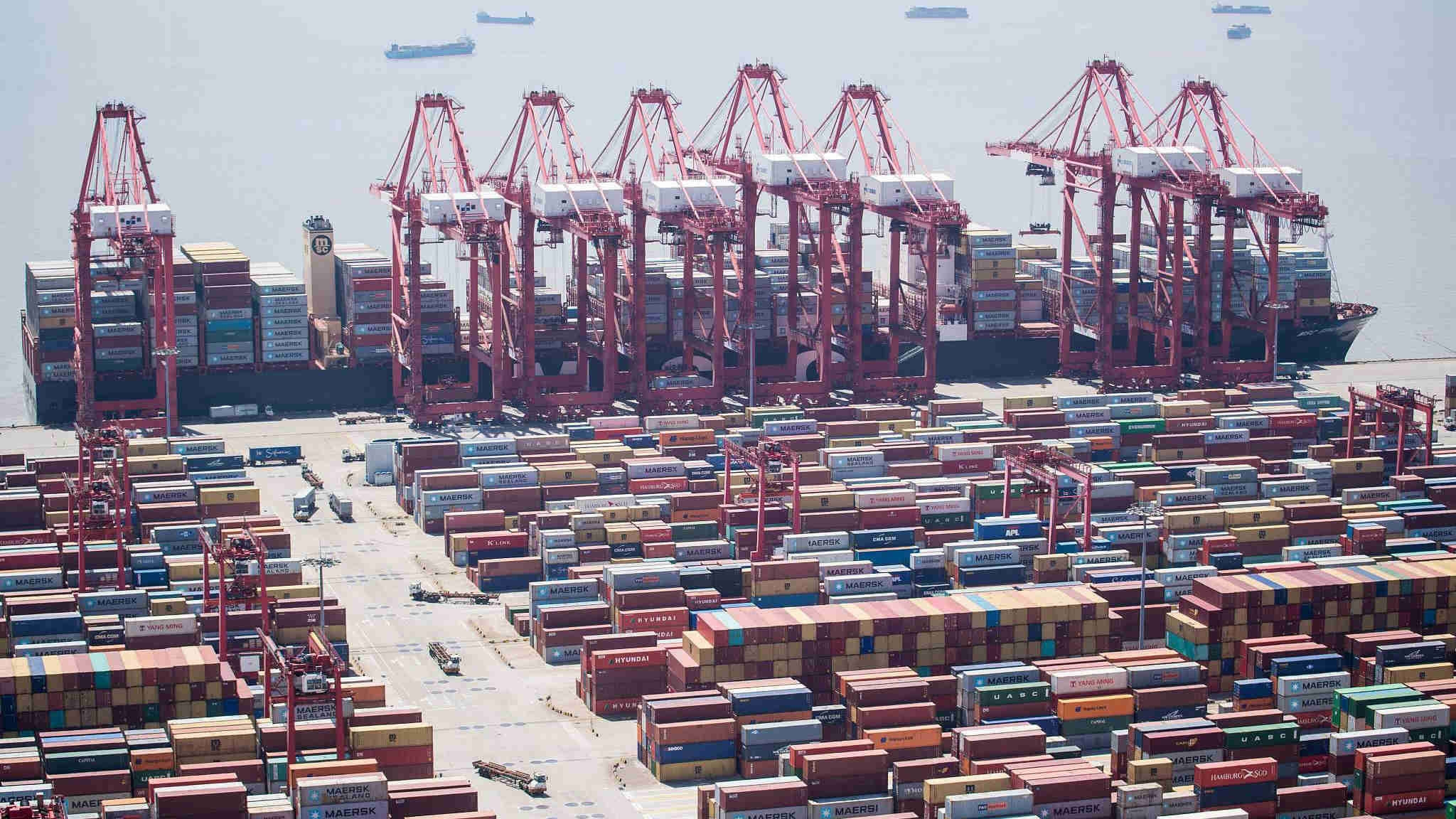
A general view of at the Yangshan Deep-Water Port, an automated cargo wharf, in Shanghai on April 9, 2018. /VCG Photo
A general view of at the Yangshan Deep-Water Port, an automated cargo wharf, in Shanghai on April 9, 2018. /VCG Photo
However, a spokesman from MOFCOM promptly responded "for some time, the financial officials of both sides have not conducted any negotiations on economic and trade issues" and emphasized "it is even less likely that both sides will have any negotiations on this issue" given that "the US once again proposed to add 100 billion US dollars of taxed goods".
Recently at the Spring Annual Meeting of the World Bank Group and International Monetary Fund (IMF), Steven Mnuchin noted that he was considering departing for China to negotiate on trade issues and was cautiously optimistic about resolving the dispute between the two sides in the future.
To talk or not to talk, the US does not have the final say
Earlier in April, the US published the 301 investigation report alongside a list of product proposals, and then threatened to add 100 billion US dollars in punitive tariffs after China's counter-measures.
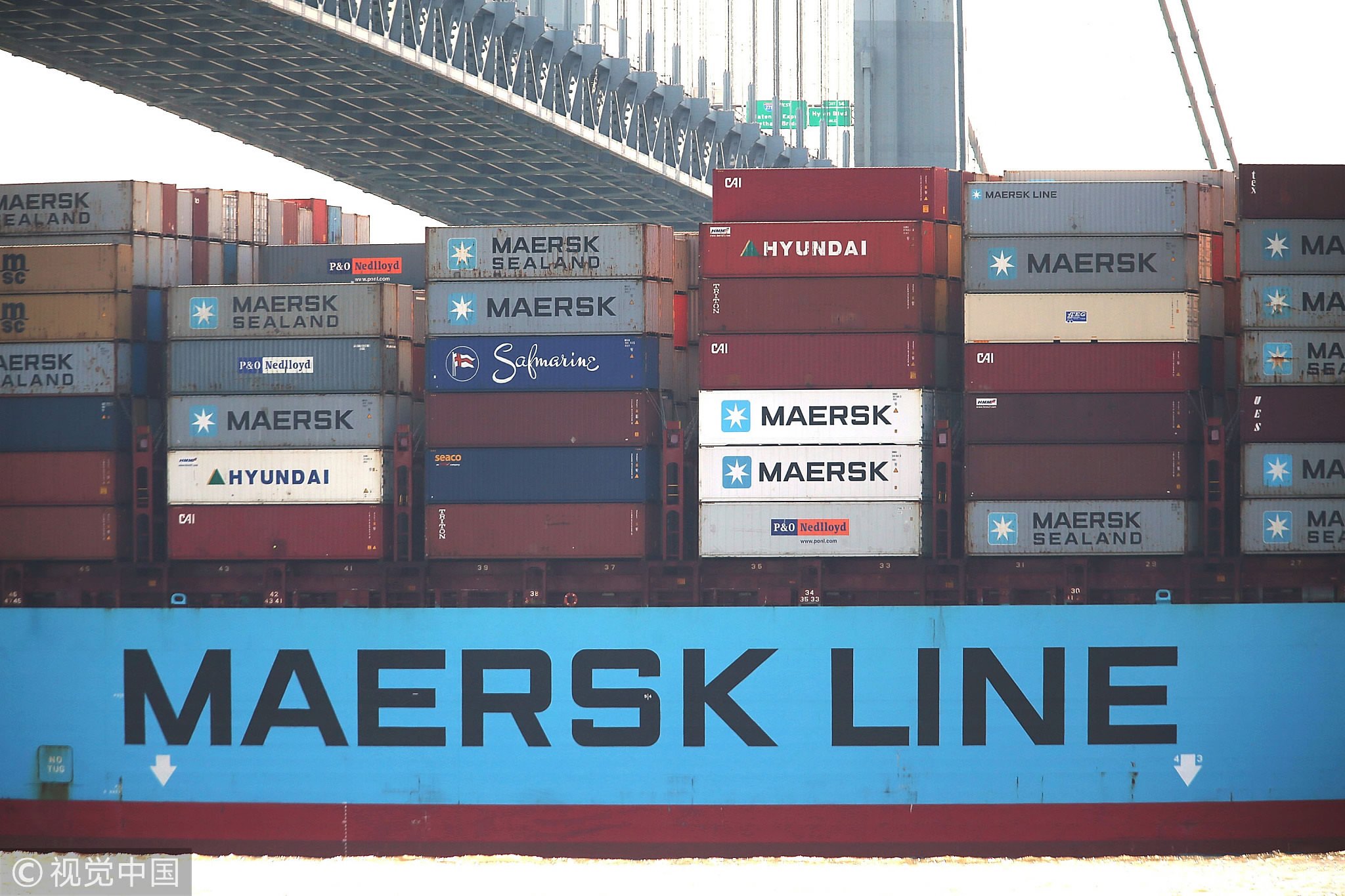
A cargo ship owned by Maersk arrives at the New York harbor on April 9, 2018 in New York City. /VCG Photo
A cargo ship owned by Maersk arrives at the New York harbor on April 9, 2018 in New York City. /VCG Photo
The US's aggressiveness shows no sincerity to resolving the problem and the "negotiation" would merely provide temporary relief to the stock market.
After realizing China's stand in firmly defending its rights the US has had to seriously reevaluate trade frictions and embark on a mission to adjust its policies. If negotiations are constructive, China will consider the US's consultation request.
US political misjudgment
Fundamentally, the US has misjudged policies by opting to provoke trade friction.
First of all, the US has underestimated China’s determination to safeguard national interests and international rules. Encountering provocations, China has maintained its strategic composure and responded fast and effectively, leaving the US unprepared. China's countermeasures have hit the US's weaknesses, triggering intense criticism and dissatisfaction within the country over trade policies.
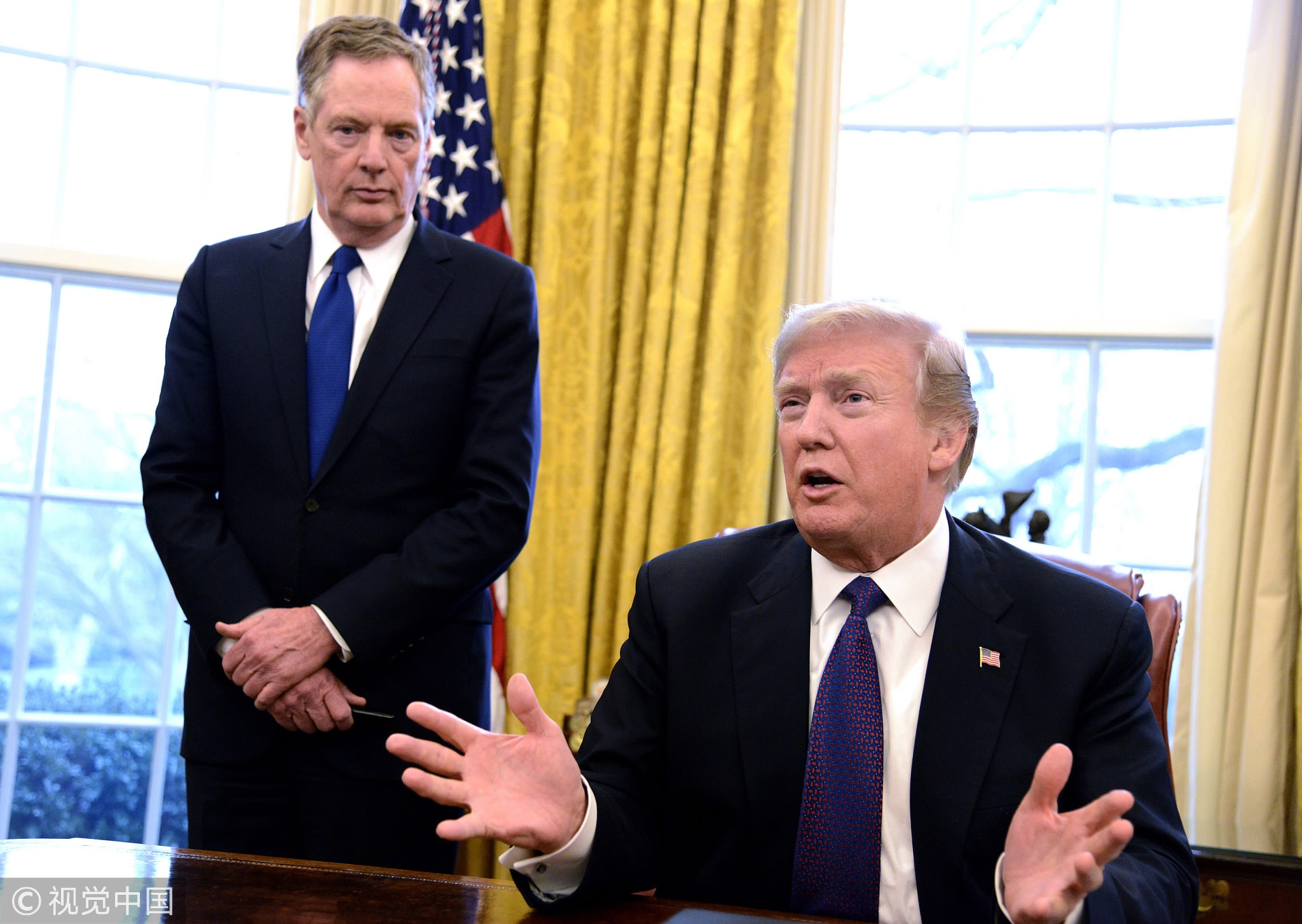
President Donald Trump makes remarks as he signs a Section 201 action as US Trade Representative Robert Lighthizer witnesses, in the Oval Office, at the White House, January 23, 2018, in Washington, DC. /VCG Photo
President Donald Trump makes remarks as he signs a Section 201 action as US Trade Representative Robert Lighthizer witnesses, in the Oval Office, at the White House, January 23, 2018, in Washington, DC. /VCG Photo
Secondly, the US has ignored the basic rules of international relations and doesn't seem to think that foreign policy is universal.
Finally, the US's international reputation and image has been damaged. Although some allies have followed the US's stance in imposing pressure on China in intellectual property and other areas. The international community has generally accused the US of violating the WTO rules and undermining the multilateral trade mechanism, which is detrimental to economic globalization prospects. After pressure from international opinions, the US has been forced to compromise.
(This piece is a translation of commentary by Su Xiaohui. Su Xiaohui is the deputy director of the Department of International and Strategic Studies, at the China Institute of International Studies. The article reflects the author's opinions, and not necessarily the views of CGTN.)