
Tech & Sci
13:13, 17-Jul-2018
Rising sea levels to disrupt global communications, Seattle, NY, Miami worst affected
Updated
12:35, 20-Jul-2018
 ["north america"]
Share







Copied
Thousands of kilometers of underground Internet cables, running through densely populated coastal regions of the US, are likely to suffer major damages due to rising sea levels in the next 15 years, a study claimed.
Researchers calculated, more than 6,400 km of optic fiber cables would be submerged causing Internet outages in Seattle, New York, and Miami. While Seattle will face the worst impact; New York and Miami are most susceptible to the damage.
The peer-reviewed study titled “Lights Out: Climate Change Risk to Internet Infrastructure By 2033” also found, that more than 1,100 internet traffic hubs will be surrounded by water which can also lead to global communications disruptions.
Ramakrishnan Durairajan who led the study warned that most of the damage could come in the next 15 years. “Strategies to reduce potential problems should be considered sooner rather than later.”
Researchers maintained it’s a race against time to protect cables from rising sea levels. “The expectation was that we’d have 50 years to plan for it. We don’t have 50 years,” Paul Barford, a computer scientist at the University of Wisconsin said.
The situation is grim for the US as transoceanic cables are waterproof, but the buried smaller fiber optic cables are not. According to the study, metro fiber links face the highest risk, especially in the northeastern and northwestern regions of the US and the gulf coast area from western Florida to Texas.
“In the next 15 years, as much as 2,429 miles (3,909 km) of metro fiber conduit will be submerged after a one feet of sea level rise, whereas as 2,637 miles (4,243 km) of metro fiber conduit will be affected in the next century.”
Researchers combined data from the Internet Atlas, a comprehensive global map of the internet's physical structure, and projections of sea level incursion from the National Oceanic and Atmospheric Administration (NOAA) for the study.
“Our analysis is conservative in that we only looked at the static dataset of sea level rise and then overlapped that over the infrastructure to get an idea of risk,” Durairajan added.
When the sea level rises it can induce tsunamis, hurricanes, coastal subduction zone earthquakes and may also pose a risk to the Internet’s infrastructure. Researchers suggest strengthening the coastal infrastructure as a mitigation strategy to control the damage.
“The first instinct will be to harden the infrastructure,” Barford said. “But keeping the sea at bay is hard. We can probably buy a little time, but in the long run, it’s just not going to be effective.”
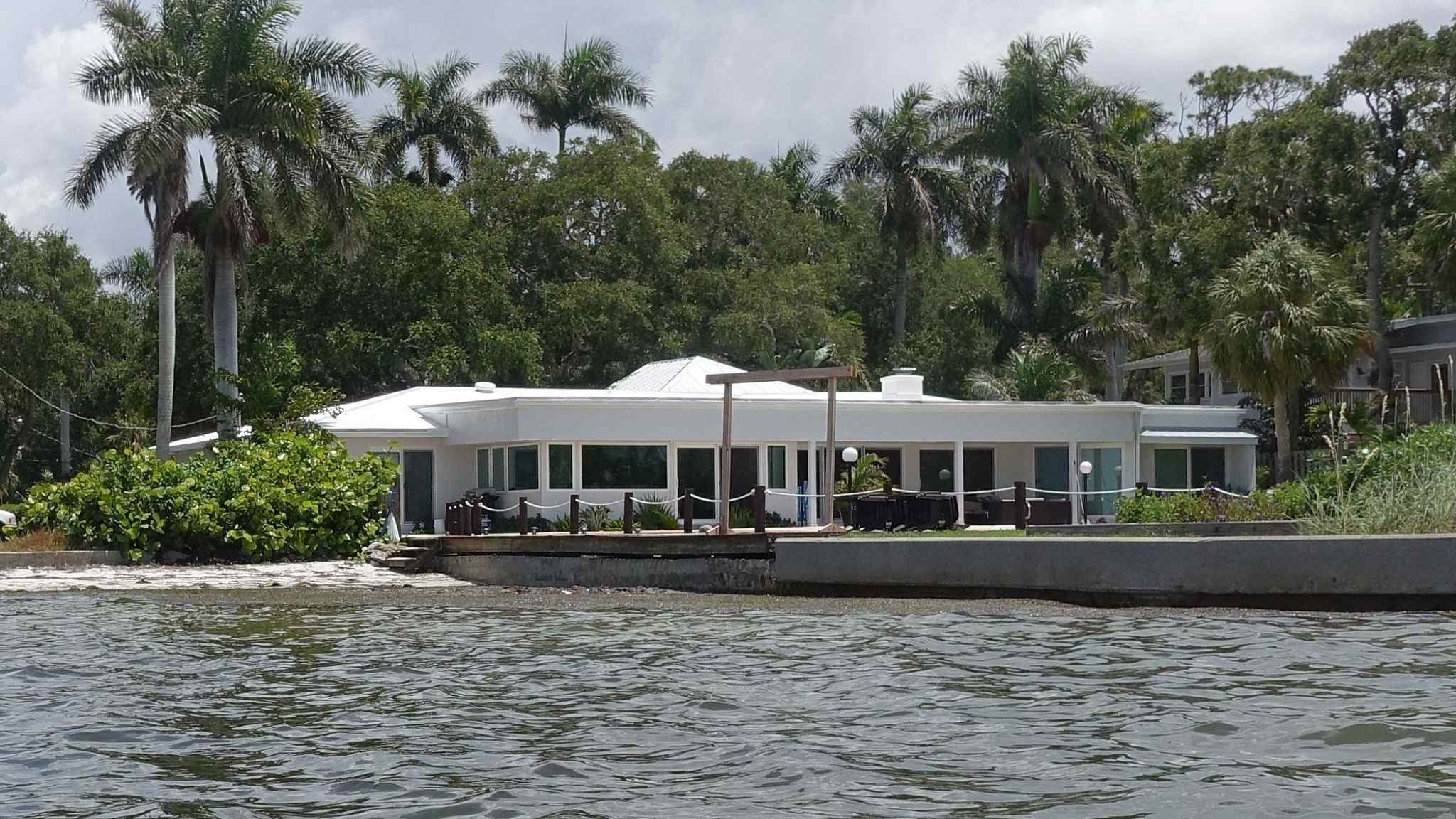
(Cover Image: This photo taken on June 16, 2018 shows a low-lying home near sea level in the Indian Beach neighborhood of Sarasota, Florida. /VCG Photo)