
Animal
22:53, 06-Jun-2018
Into a no-man zone, high on the 'roof of the world,' where the world’s highest-flying bird is breeding
 ["china"]
Share







Copied
06:59
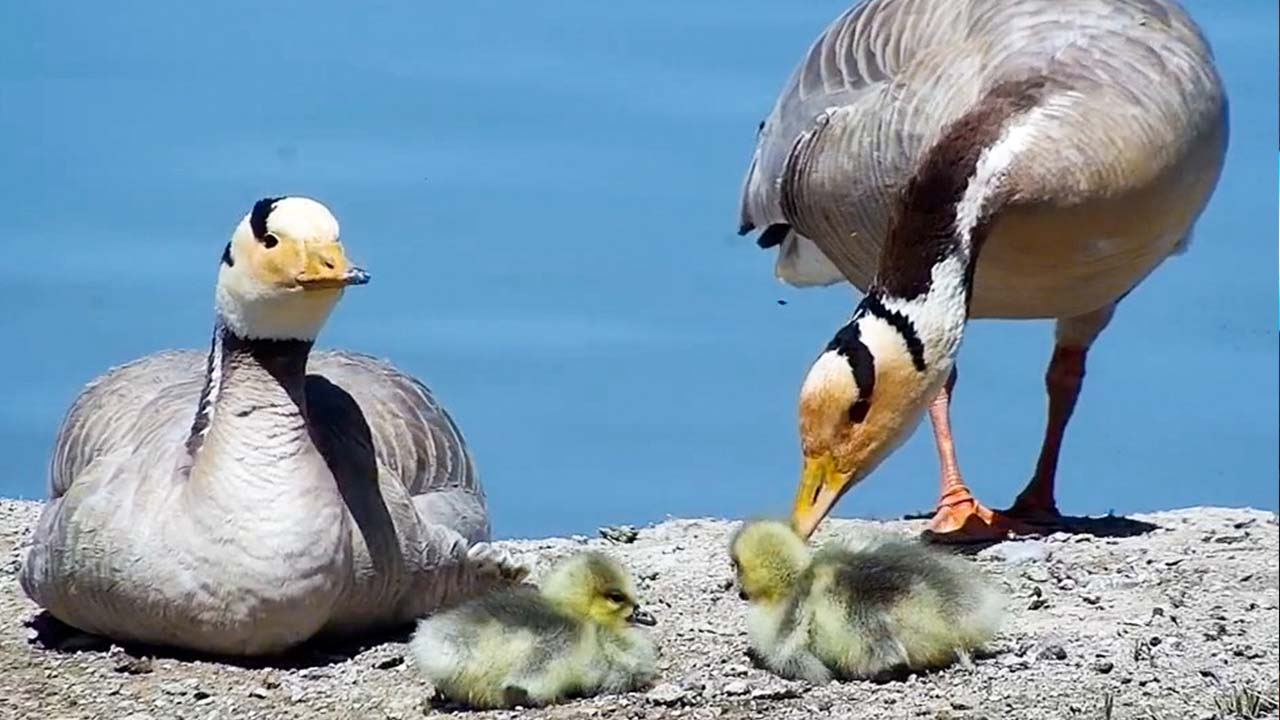
When Yang Xin texted me to say I should come to Tuotuo River again, my first response was a hard, cold “no.”
Memories of a painful two-day journey bumpy enough to throw you off your car seat just to get there, the cold and piercing plateau wind, the vehicle frequently getting stuck in swamps and the subsequent towing all flooded back as I sat comfortably in my Chengdu office, Starbucks in hand, overlooking the most modern stretch of the city.
Although I have to admit, the last trip turned out really nice. My team went to Tuotuo River last October to report on the world’s highest-flying birds and their extraordinary odyssey across the Himalayas, one of my proudest stories. A trip to a no-man zone high on the Qinghai-Tibet Plateau, 4,600 meters above sea level, is a once in a lifetime experience, the key word being “once.”
“We’ve set up satellite and 4G towers this year,” Yang continued texting. I could almost hear his grin on my iPhone screen. I knew what that meant, and the possibility to broadcast live the breeding of the bar-headed geese on the “roof of the world” was all too tempting. I pictured a fuzzy gosling breaking out of its eggshell.
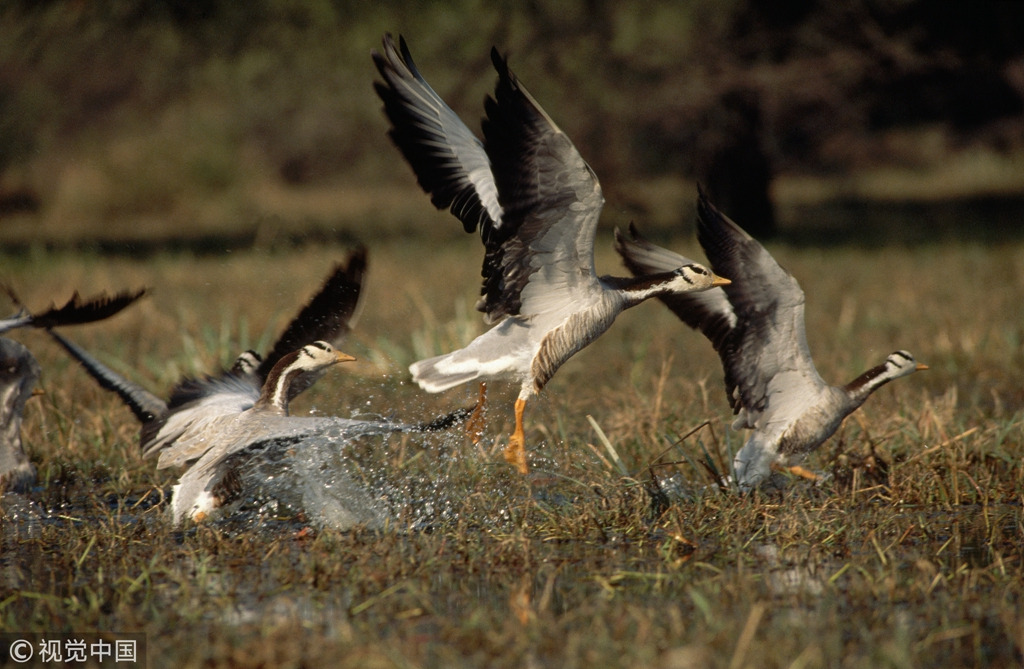
Bar-headed geese in motion. /Photo via VCG
Bar-headed geese in motion. /Photo via VCG
I caved in. Although many times on the road I hated myself for making that decision.
“You’re joining us for our team meeting,” Yang commanded as soon as we arrived, still disoriented from the journey and the altitude. The 54-year-old bearded man with shoulder-length hair looks more like an artist than a nature guy. In his early years, he was an adventurer. Then in 1996, Yang established China’s first civilian nature protection station on the Plateau, drawing the world’s attention to the reckless poaching of Tibetan antelopes.
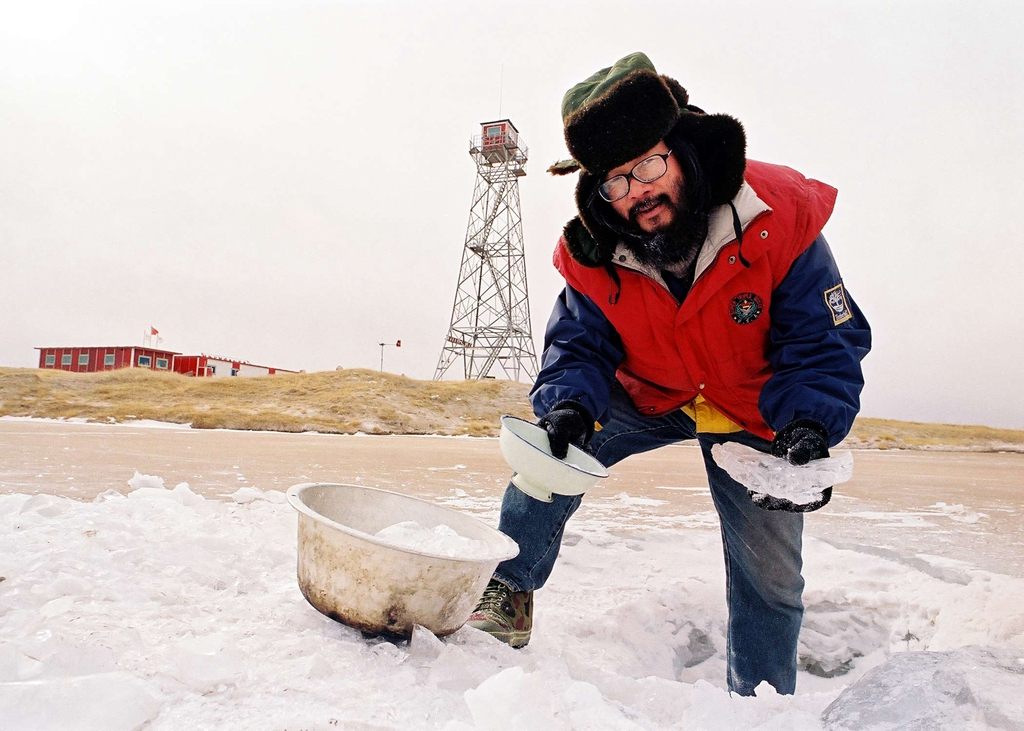
Yang Xin collects water near Suonandajia Station, the first civilian protection station of China. /Photo Courtesy: Yang Xin
Yang Xin collects water near Suonandajia Station, the first civilian protection station of China. /Photo Courtesy: Yang Xin
I got little out of the meeting, except we are leaving the next day at 7:00 a.m.
Cruel.
It’s the same billowing wind at the Bande Lake, an hour’s drive into a no-man zone from Yang’s headquarters. But the landscape has changed since we last visited. Yang’s team has set up a watch station here with container boxes, equipped with monitoring computers, solar panels and all other equipment he promised.
About a dozen volunteers man the station. They are live streaming the breeding process of the bar-headed geese to 18 zoos across the country to raise awareness on environmental protection. Yang goes live every weekend for two hours to explain the process.
“We want to try to make this watch station permanent,” he said. For an NGO, that means painstaking fundraising. Yang jokes about being a part-time conservationist and full-time lobbyist.
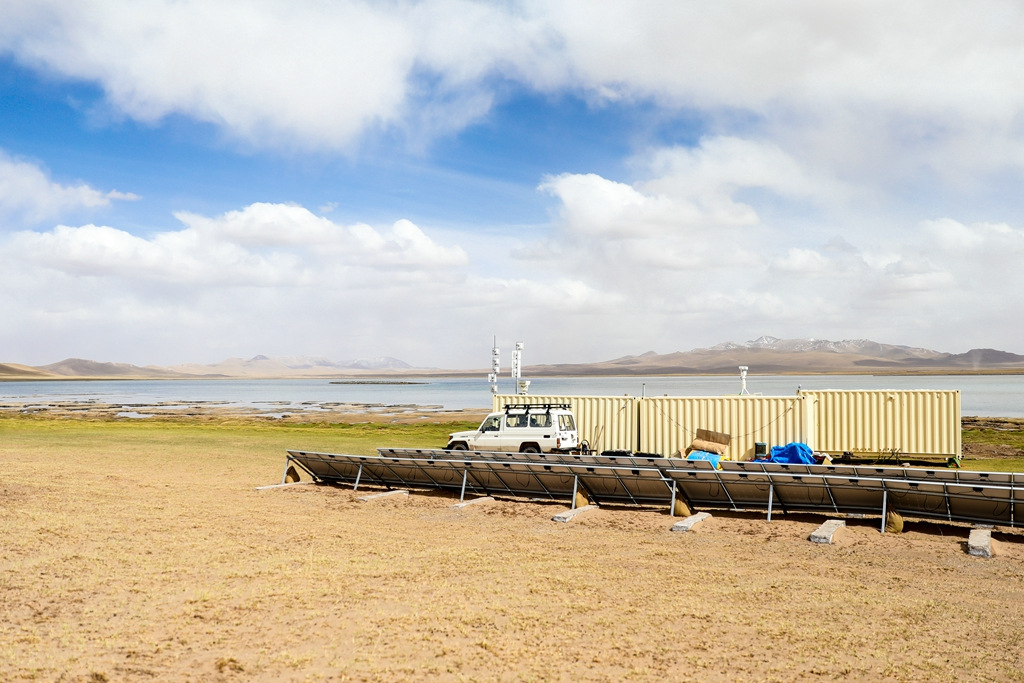
Yang Xin’s satellite and 4G equipped watch station by Bande Lake. /CGTN Photo
Yang Xin’s satellite and 4G equipped watch station by Bande Lake. /CGTN Photo
The small island in the center of Bande Lake is filled with birds, although they are only tiny blinking dots to the naked eye. Occasionally, a pair cut through the air, making a low quacking sound. Surrounding the island are ten computer-controlled cameras Yang’s team towed across the frozen lake over the winter.
He invited us to the control room. On the monitor, a baby bird is hobbling behind its parents.
“They are trying to get to the water so the chick could have its first dip,” explains Yang. He knows these birds as well as any ornithologist. “Notice how other birds are pecking on the chick?” he called to my attention. “We still don’t know why they do it,” he sighed, “But I suspect that it’s some sort of a rite of passage.” On the screen, the parent birds are sticking out their necks as a sign of aggression. “There’s still so much we don’t understand about these birds,” Yang says.
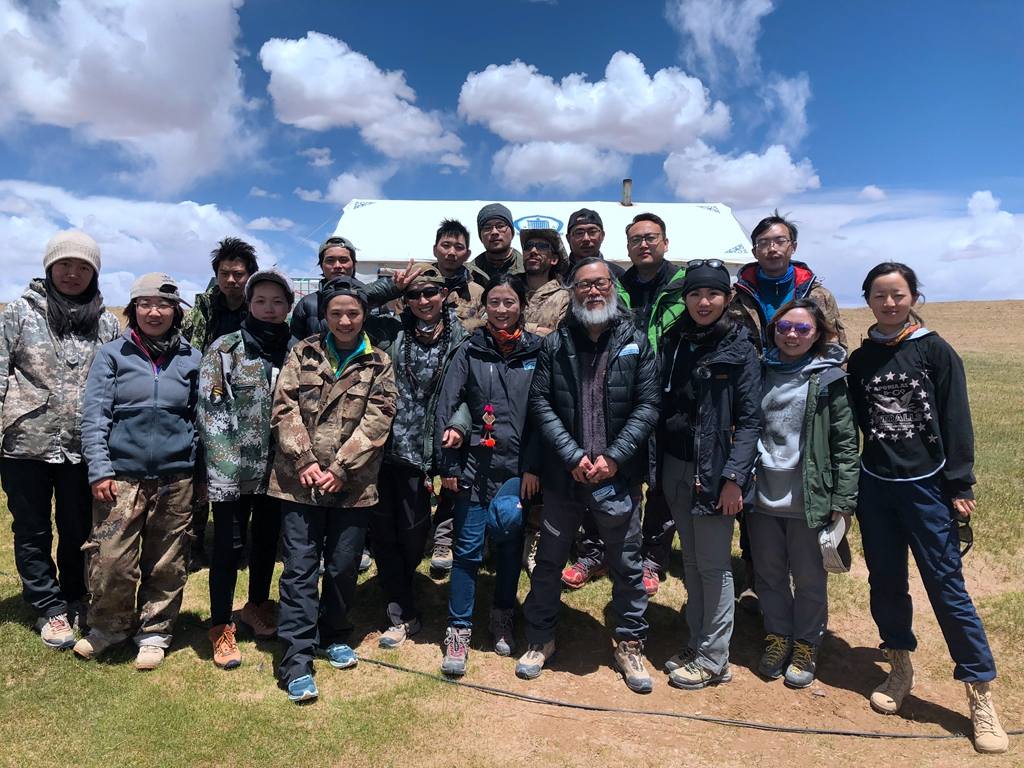
Yan Xin and his team take a photo with the CGTN crew at Bande Lake. /CGTN Photo
Yan Xin and his team take a photo with the CGTN crew at Bande Lake. /CGTN Photo
Other volunteers congregated to listen. They live in a tent next to the watch station. Every morning, they collect water from the lake, and pick yaks’ excrement for cooking and heating. In this “pure land,” they abandoned their modern lifestyle.
The gosling has finally reached the island’s edge. Without any hesitation, he jumped into the lake. His parents followed, fending off the attackers. Everybody cheered.
In November, he’ll soar 7,000 above to reach his winter refuge. When he returns next spring, Yang will be here waiting for him.
(Video by Zhang Youze. Some clips courtesy of Greenriver. Jiang Zhengfeng also contributed to this report.)