
World
19:59, 17-Jun-2018
It is raining gemstones amid Hawaii's volcanic eruption
 ["north america","other","the Central Pacific"]
Share







Copied
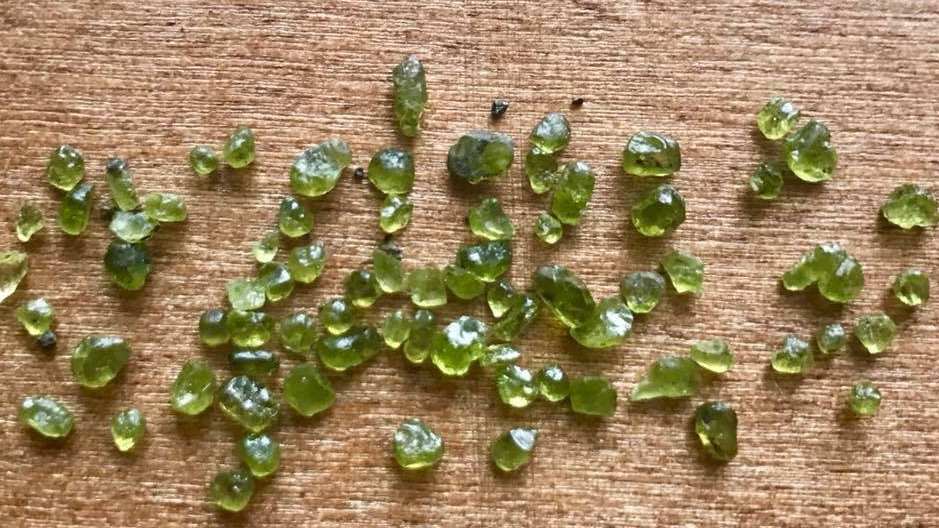
Five weeks after Kilauea volcano began erupting, the island is now reportedly going through a green gemstone “rain.”
“Friends of mine live in Hawaii, right next to the area impacted by the most recent lava flows. In the midst of the destruction nearby and stress of the unknown, they woke up to this -- tiny pieces of olivine all over the ground. It is literally raining gems. Nature is truly amazing,” Erin Jordan, a US meteorologist, wrote on her Twitter soon after the “rain” started.
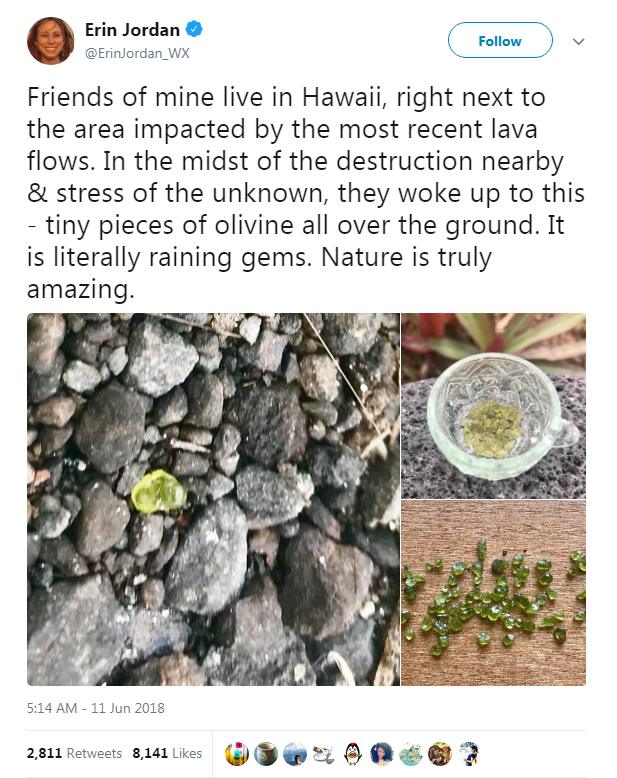
Erin's post has attracted a heated discussion about the origins of the gemstone.
Erin's post has attracted a heated discussion about the origins of the gemstone.
The post stirred a heated discussion about the origins of these olivine crystals.
“Olive crystals like that must mean that the melt source is pretty deep right? Like, I understand that the hotspot is plume fed; the olivine isn’t from quite that deep, but still pretty deep? My basic geology and wiki search is failing,” a netizen under the name SrirachaLockeMissesKatsup commented below the post.
“The olivine could be from the mantle but it could also be crystallized from the magma itself, which is likely to be quite basic,” VolColMac said. “But that fact suggests that the magma originated in the mantle.”
The little gems, known as olivine crystal, are “extremely common component of volcanic rocks,” which can be found in most of Hawaii’s lava rocks. Because of the high concentration of olivine that has quickly weathered from the mafic lava, some beaches in Hawaii are green.
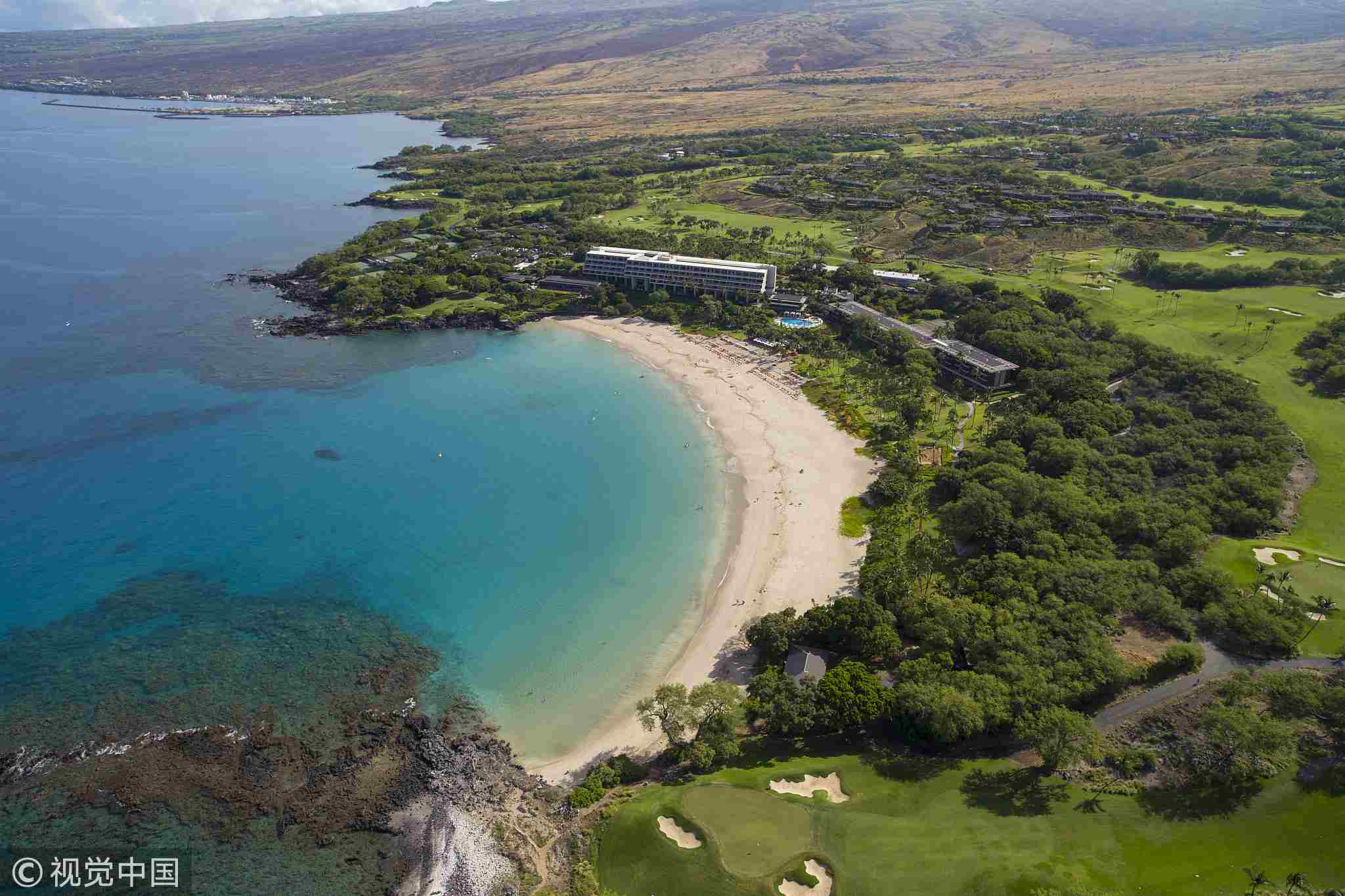
The high concentration of olivine makes some beaches in Hawaii green. /File picture from VCG
The high concentration of olivine makes some beaches in Hawaii green. /File picture from VCG
But it is unusual to find them separated from the parent rock nor of gem quality, according to Wendy Stovall, a US Geological Survey scientist.
“Yes, the lava that is erupting now is very crystal-rich and it is quite possible that residents might be finding olivine,” Cheryl Gansecki, a geological professor at the university of Hawaii-Hilo, said. “The olivine is carried in the rapidly cooled lava, not the plume of ash.”
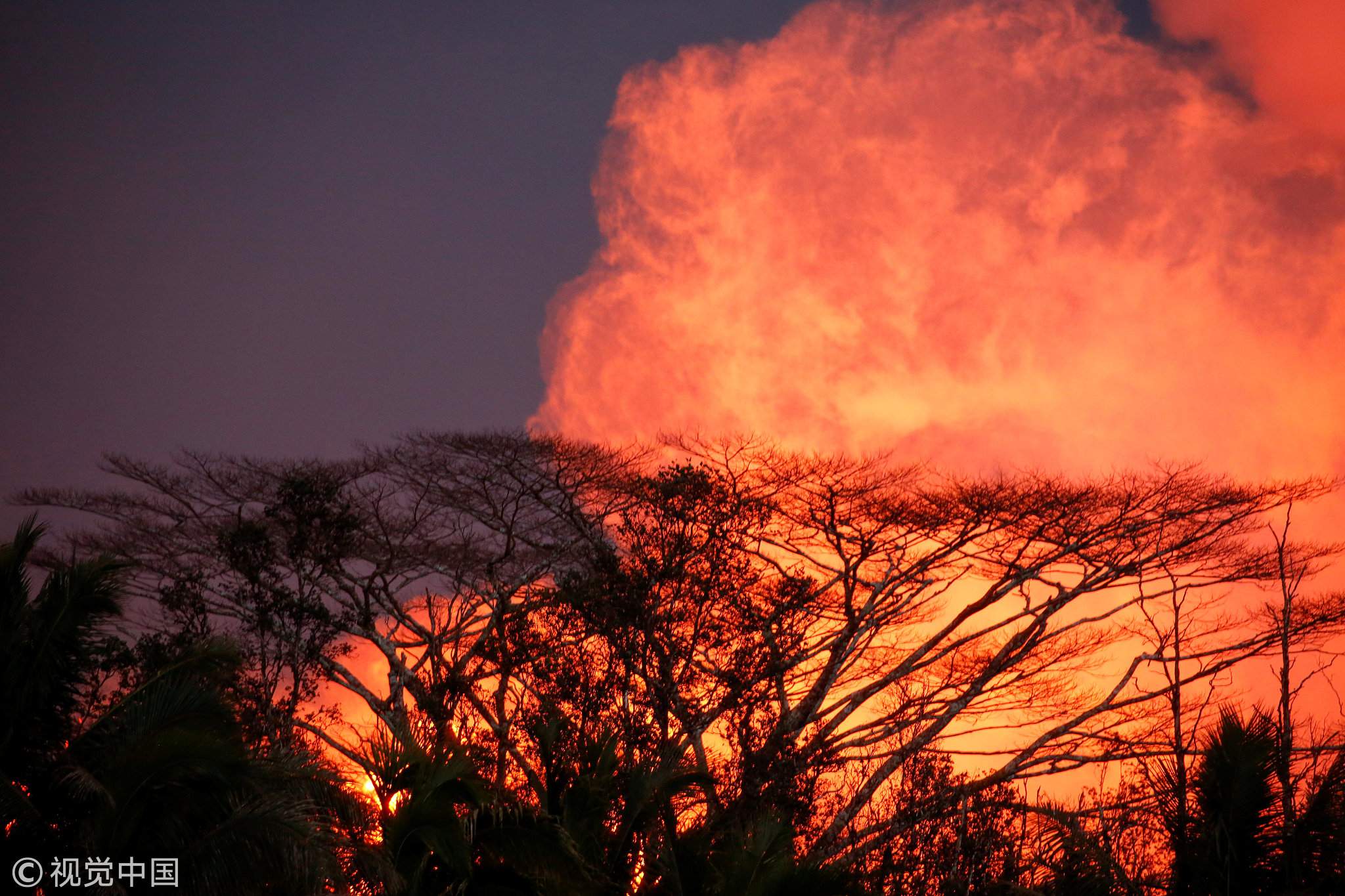
The eruption of Kilauea volcano has destroyed over 600 houses on the island. /File picture via VCG
The eruption of Kilauea volcano has destroyed over 600 houses on the island. /File picture via VCG
According to Cheryl, the sudden ejection of lava into the sky rapidly cools down and then separates the molten material, allowing them to crystallize as tiny gemstones.
Meanwhile, scientists under the University of Hawaii at Hilo have conducted a series of chemical analyses of the lava and found that the olivine in erupted material does not match the crystal size and the shape of the ones photographed in the tweet.
“However, falling from the sky during an eruption is an unusual event. I have never heard of it raining out as single crystal like this,” Concord University volcanologist, Janine Krippner, said.
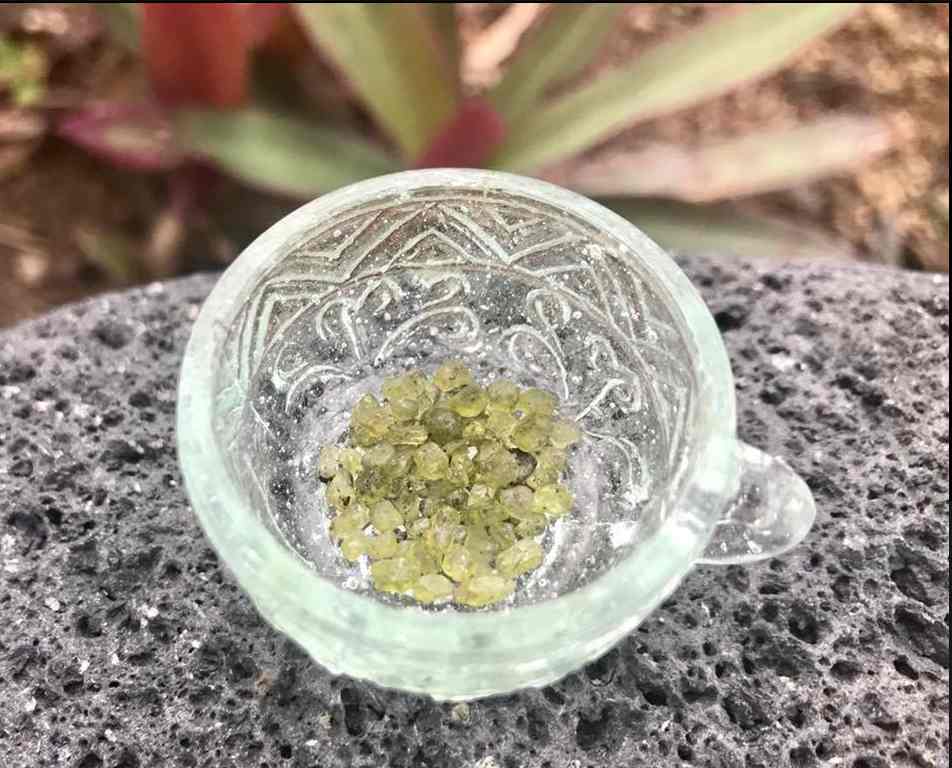
In some cases, the olivine can be worth as much as 450 US dollars per carat. /Photo via Twitter
In some cases, the olivine can be worth as much as 450 US dollars per carat. /Photo via Twitter
Olivine is often used to make Peridot, a popular jewelry stone. In some cases, it can be worth as much as 450 US dollars per carat.