
Education
21:58, 30-Mar-2019
Chinese parents help children adapt to AI revolution
Updated
22:31, 30-Mar-2019
 ["china"]
Share







Copied
03:29

The Ministry of Education earlier this month endorsed artificial intelligence (AI) and computer coding curriculum in primary and secondary schools. Many Chinese parents are already helping their children adapt to the tech revolution.
Spinning slowly to capture and create a 3D selfie, and learning to build a robot that could complete complex tasks, Tongcheng & Tongmei, a private learning center in Beijing, offers coding classes for children aged 6 to 18. The digital generations are learning the language of the future, a whole new set of ABCs, where the C stands for coding.
"I think coding classes will help me get to my dream school, like Harvard," said Song Peihong, a 4th grader.
And from the teachers' point of view, there are other, more important benefits.
Yang Jianwen, the teaching director of the learning center, said coding training is helpful for them to develop logical minds, critical thinking, and a habit of being meticulous, and also enables them to gain a better understanding of technology and how it's shaping the world.
Aware of the significance of learning to code, in July 2017, China's State Council gave coding education a big boost when it issued a statement endorsing AI curriculum development in primary and secondary schools. Last year, a pilot project in the eastern coastal province of Zhejiang included coding as part of the college entrance exam.
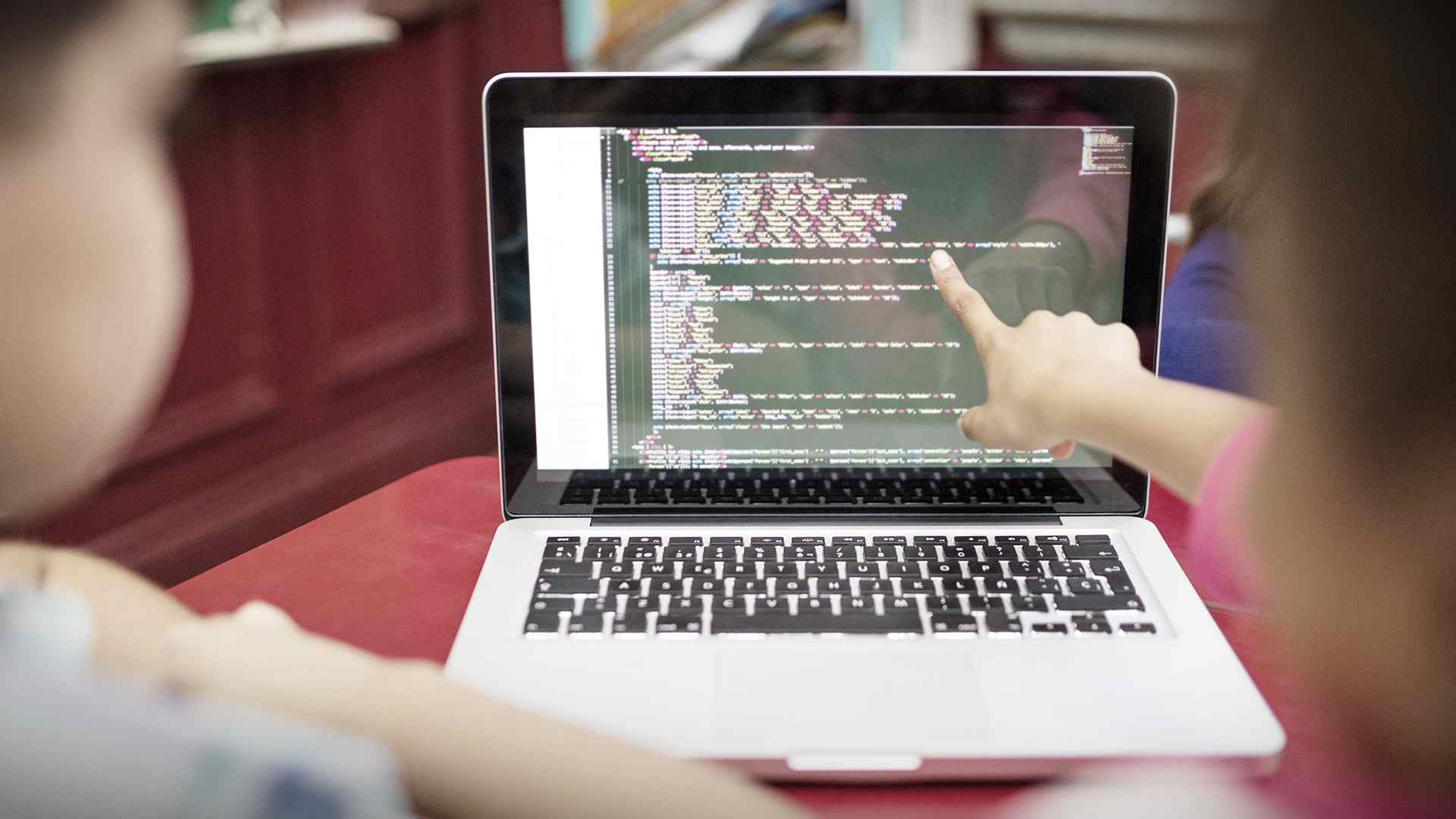
A Chinese student learns to code. /VCG Photo
A Chinese student learns to code. /VCG Photo
But as more and more children in China get the chance to acquire the skills, there's also a concern that the wave could widen the educational divide. For children in low-income households or less developed areas with limited access to computers, any such innovative class is a luxury. So many companies are looking for alternatives, like Hetao coding.
Launched in 2017, the startup provides online computer programming courses for children. To date, the platform has enrolled hundreds of thousands of paid users all across China, generating monthly revenue of over 15 million yuan or some 2.2 million U.S. dollars.
"Online coding lessons could reach a much wider demographic of students, due to its flexibility in schedule and location, and its lower price as well. I still remember that one of our members is from an underdeveloped county in southeast China... he kept taking... hours of our online courses, and the notes he took during the courses have also become a model that inspired many of our other members. That was really impressive to me," said CEO Zeng Pengxuan.
The current wave of enthusiasm in China to learn coding comes as the country strives to become an AI powerhouse. Statistics show that over 80 registered companies currently offer computer programming lessons for children, and most of these were founded in or after 2014.
The rapid development of the coding education industry also means these companies are attracting huge amounts of capital.
Gao Hang, the executive director of Tianhong innovation asset management, thinks there's a huge potential in this particular education market in China.
"Family spending on education would see a tremendous rise when a country's average GDP reached 9,000 U.S. dollars. More and more families would very likely invest more on their kids' education, the tech sector in particular. The current market share of the entire coding education industry in China is about 10 percent, which is still much lower than that of developed countries," he said.
Perhaps the future is already here, and chances are these kids will be the ones who will be shaping it.