
World
14:13, 09-Aug-2018
Death toll climbs over 320 from Sunday's quake in Indonesia's Lombok
Updated
14:10, 12-Aug-2018
 ["china"]
Share







Copied
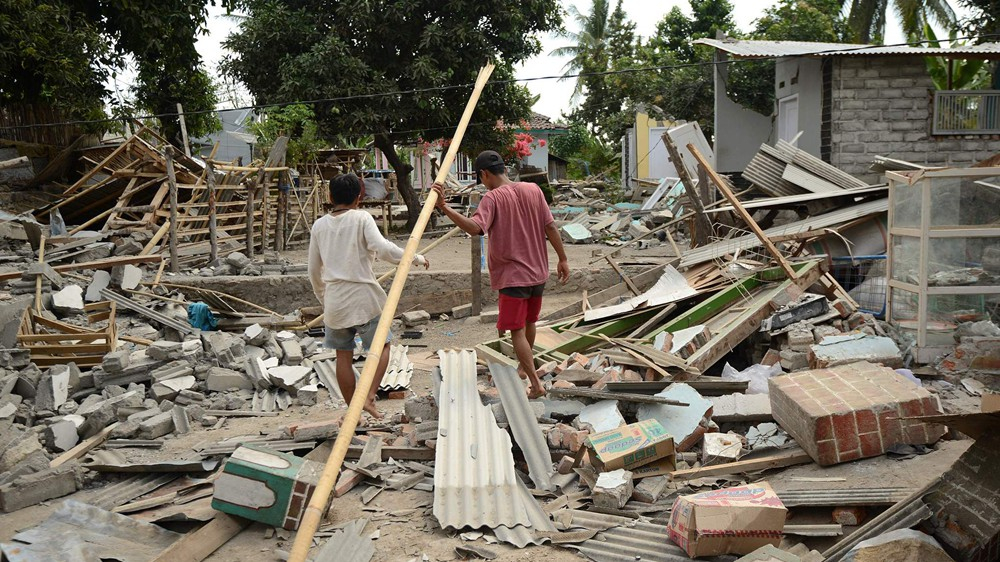
The death toll from Sunday's powerful earthquake in Indonesia's Lombok island has climbed to more than 320, Indonesia's national disaster mitigation agency said on Friday.
Officials said 321 deaths had been confirmed and over 270,000 people had been forced to leave their homes because of a series of tremors over the past two weeks.
The death toll stood at 259 on Thursday with authorities warning the figure could further rise as relief efforts picked up pace.
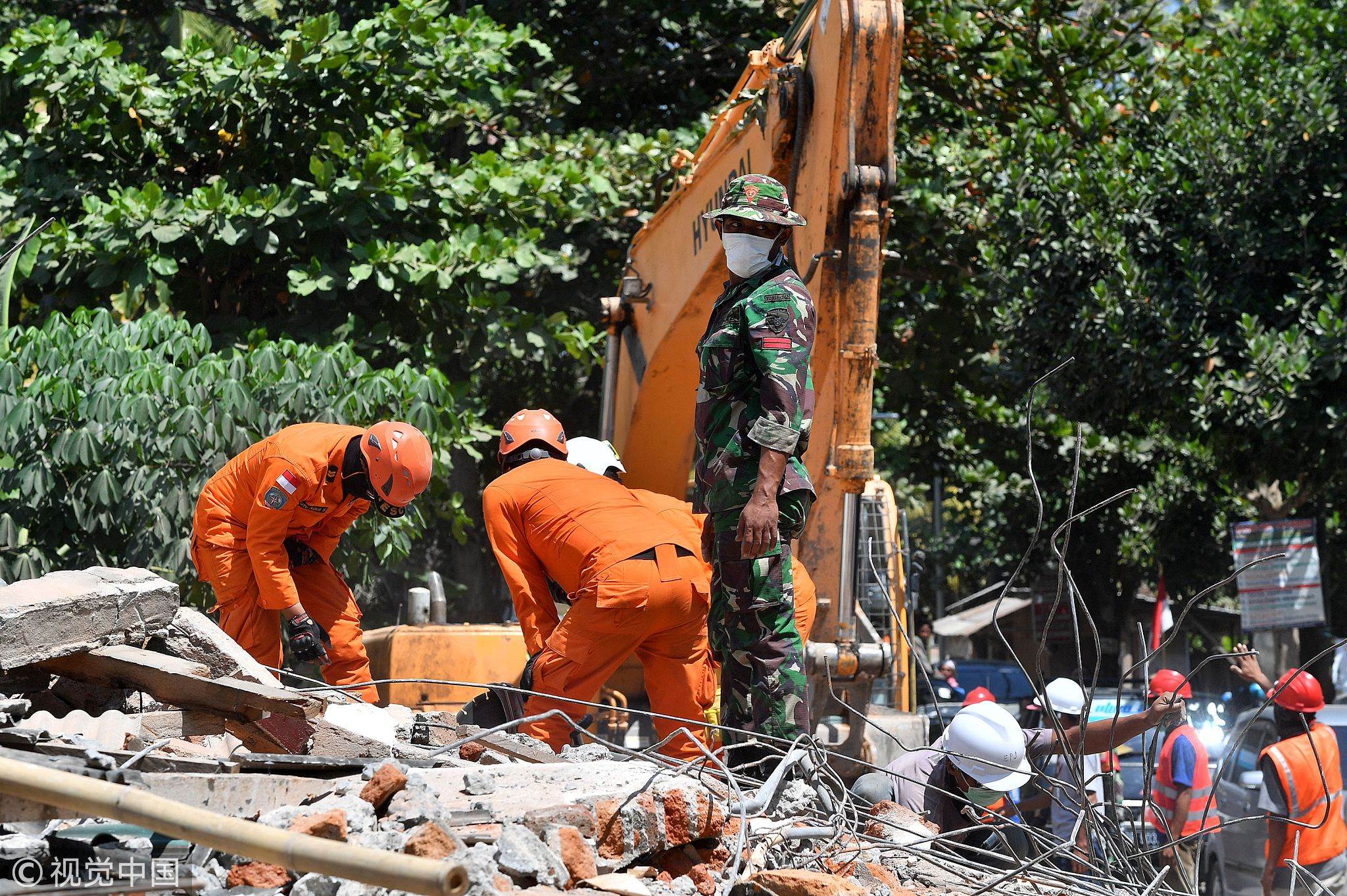
Members of an Indonesian search and rescue team look for victims of the recent quake on Lombok island, August 9, 2018. /VCG Photo
Members of an Indonesian search and rescue team look for victims of the recent quake on Lombok island, August 9, 2018. /VCG Photo
Strong aftershock
Meanwhile, a 5.9-magnitude earthquake hit Indonesia's Lombok at 0525 GMT on Thursday, according to the United States Geological Survey (USGS).
It was the strongest of some 355 aftershocks that have rattled the island since Sunday, said Sutopo Purwo Nugroho, a spokesman for the disaster mitigation agency. Some witnesses reported buildings had collapsed.
"Evacuees and people ran out of houses when they felt the strong shake... People are still traumatized. Some buildings were damaged further because of this quake," Nugroho said on Twitter.
The epicenter of the earthquake was recorded at a depth of 10 kilometers. Officials said the epicenter was on land and so there was no risk of a tsunami.
A humanitarian crisis is also looming in Lombok, where thousands have been left homeless and in desperate need of clean water, food, medicine and shelter.

Displaced residents rest in tents set up in Kayangan in northern Lombok island, August 9, 2018, following the August 5 earthquake. /VCG Photo
Displaced residents rest in tents set up in Kayangan in northern Lombok island, August 9, 2018, following the August 5 earthquake. /VCG Photo
Officials said about three-quarters of Lombok's rural north had been without electricity since Sunday, although power had been restored in most areas. Aid workers have found some hamlets hard to reach because bridges and roads were torn up by the disaster.
Thousands of tourists have left the island, fearing further earthquakes, some on extra flights provided by airlines and others on ferries to the neighboring island of Bali.
(With input from Reuters)
5390km