
Politics
13:13, 25-Apr-2018
Macron's Iran nuclear deal proposal: Details and challenges
 ["other"]
Share






Copied
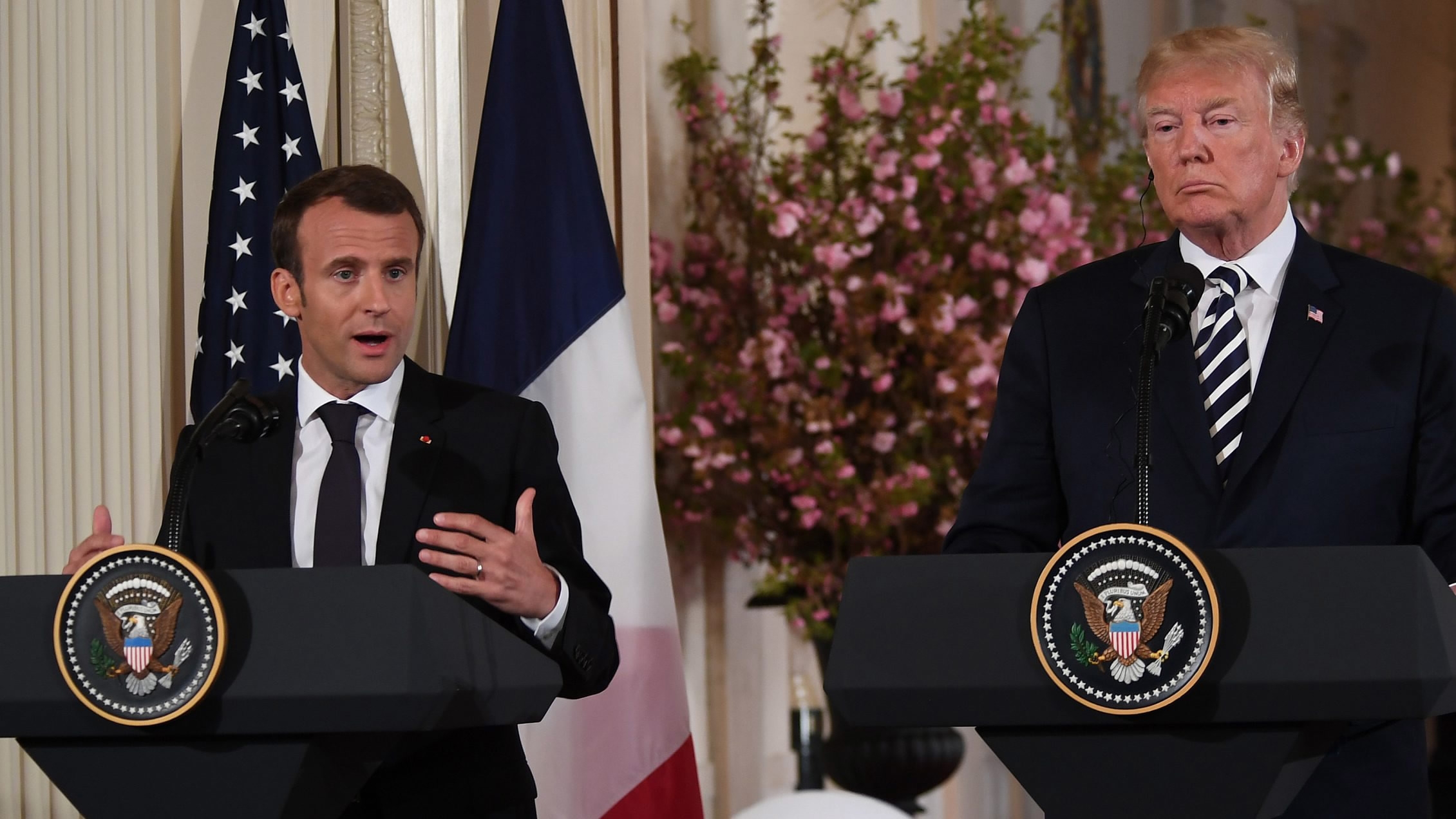
French President Emmanuel Macron on Tuesday proposed a "new deal" to address US President Donald Trump's concerns about the existing nuclear pact with Iran.
Read more: Macron urges US not to back out
Read more: From handshakes to arm-twisting?
Speaking alongside the US president at a press conference at the White House, Macron said the international community deserved credit for the deal struck in 2015 but argued that additional factors need to be tackled.
What did Macron propose?
Macron said the 2015 Iran nuclear deal did not go far enough, while crediting it for allowing the international community "some control" over Iran's nuclear activities.
The French president said that several other areas needed to be addressed: Iran's nuclear activities after 2025 when so-called sunset clauses in the current deal kick in; Iran's ballistic missile activities; and a political means to limit Iran's activities in Yemen, Syria, Iraq, and Lebanon.
"It's not about tearing apart an agreement and having nothing, but it's about building something new that will cover all of our concerns," he said.
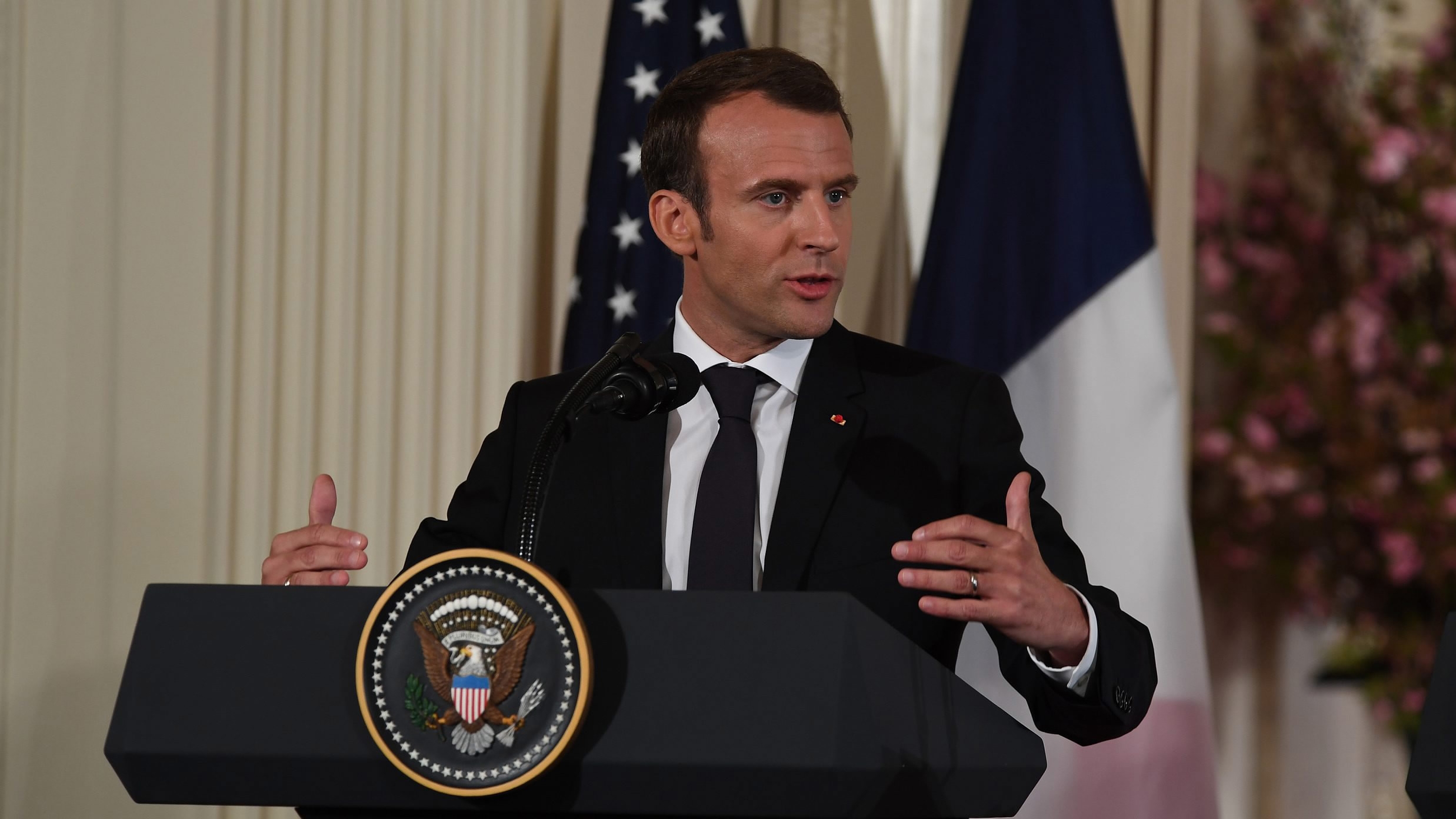
French President Emmanuel Macron speaks at a press conference at the White House, Washington, DC, April 24, 2018. /VCG Photo
French President Emmanuel Macron speaks at a press conference at the White House, Washington, DC, April 24, 2018. /VCG Photo
Macron added that France and its allies want "sustainable stability," following months of Trump anger at the original Iran deal and threats to back out of it.
"I believe that the discussions we've had together make it possible to... pave the way for a new agreement, an agreement on which we will work, and beyond our European partners, we would like to involve the regional powers, and of course, Russia and Turkey," he said.
Macron indicated his suggestion was for a separate accord that would run alongside the current deal. "I'm not saying that we move from one agreement to another."
The proposal appears to repackage a solution previously floated by the Europeans to meet Trump's demands, by taking a tougher line on Iranian missile activity and Tehran's regional influence, but without ripping up the existing nuclear deal.
What are the obstacles?
Trump has shown little appetite for international deal-making and his rhetoric on the Iran deal – a mainstay of his presidential campaign – has been uncompromising.
Iran has already signaled that any talk of curbing its missile program is off limits, and has said the 2015 deal cannot be negotiated and warned of "severe consequences" if the US implements sanctions again.
China and Russia have backed the existing deal, which was struck in 2015 after 21 months of grueling diplomacy, while France, Britain and Germany have also committed to it.
Read more: What is the Iran nuclear deal?
In return for the lifting of punishing international sanctions, Iran froze its nuclear program, ending a 12-year standoff with the West, which worried that Tehran was developing a nuclear bomb.
Britain, China, France, Russia, the United States and Germany signed off on the deal that, among other things, requires Iran to slash the amount of uranium it can enrich.
What did Trump say?
Trump has repeatedly lambasted the accord signed by his predecessor Barack Obama, calling it at one point the "worst deal ever."
On Tuesday, he described it as "insane," and in October he refused to certify that Iran was respecting its commitments on the pact – though he stopped short of walking away altogether.
Read more: Trump warns Iran
However, speaking alongside Macron, the US leader appeared receptive to trying to reach some sort of grand bargain.
"I think we will have a great shot at doing a much bigger, maybe, deal," said Trump, stressing that any new accord would have to be built on "solid foundations."
"They should have made a deal that covered Yemen, that covered Syria, that covered other parts of the Middle East," said Trump.
The next decision deadline for Trump on the Iran deal is May 12, when he must decide whether to again implement US sanctions on Tehran.
"We're going to see what happens," he said.
(With input from agencies)