
Politics
17:25, 20-May-2018
Hearing-impaired Wei: ‘We also have dreams’
 ["china"]
Share







Copied

May 21, 2018 marks China's 28th National Day for Helping the Disabled. The specially-designed day was first proposed as part of the Law of the People's Republic of China on the Protection of the Disabled, which sets the third Sunday of May the national day for physically challenged people. The law was passed by the Standing Committee of the 7th National People's Congress (NPC) on December 28, 1990.
After the approval, the National Day for Helping the Disabled has been celebrated every year.
When Wei Jingyang was in primary school, she told her mom she wanted to learn dancing.
Her mom said no.
“How can you dance if you can’t hear the music?”
Wei, 22, lost her hearing in a medical accident at the age of one. She was one of those young kids who were sitting in front of the television, with her eyes glued on the marvelous performance of “thousand-hand bodhisattva” at the 2005 CCTV’s Spring Festival gala, the world’s most watched television program recognized by Guinness World Records.

August 23, 2005: China Disabled People’s Performing Art Troupe (CDPPAT) performs in Shenyang, northeast China's Liaoning Province. /VCG Photo
August 23, 2005: China Disabled People’s Performing Art Troupe (CDPPAT) performs in Shenyang, northeast China's Liaoning Province. /VCG Photo
The dance performance, presented by 21 hearing-impaired women and men with the China Disabled People’s Performing Art Troupe (CDPPAT), caused a nationwide sensation. Every single movement was of extraordinary precision – 21 dancers’ "thousand hands" were as if they belonged to one body.
01:12

The performance inspired millions of physically-challenged people to really stand up and pursue their dreams.
It also shifted Wei’s mother’s opinion, and that was the start of Wei’s dancing career.
“Practice, practice and practice. Again and again, over and over,” Wei said, as she cannot hear like the normal dancers do. Hearing-challenged dancers like her need to closely follow the sign language instruction of the tutor to keep track with the music.
“We split the dance into small pieces and learn one by one,” she said. For every dance she performed, she really feels the beat deep down in her heart.
“Being disabled is not pitiful,” the 22-year-old dancer said. “We also have dreams.”

Wei Jingyang during a dance performance. /CGTN Photo
Wei Jingyang during a dance performance. /CGTN Photo
China now has a disabled population of over 85 million, or 6.21 percent of its total population, according to the China Disabled Persons’ Federation (CDPF), among which people with hearing disability or visual disability taking up the highest percentage.
Government efforts
Over the past 30 years, the Chinese government has carried out a set of legislative and administrative actions, looking to improve the living conditions and social status of the disabled.
The Law on the Protection of Disabled Persons was introduced in 1991, detailing on areas including the rehabilitation, education, employment, cultural life, welfare of those who are physically challenged while safeguard their rights.
For example, a quota system that requires all public and private employers to reserve no less than 1.5 percent of job opportunities for persons with disabilities has been set up, in accordance with specific regulations established by local provincial governments.
In addition, many infrastructures have also been built specially for the livelihoods of the disabled.
00:57
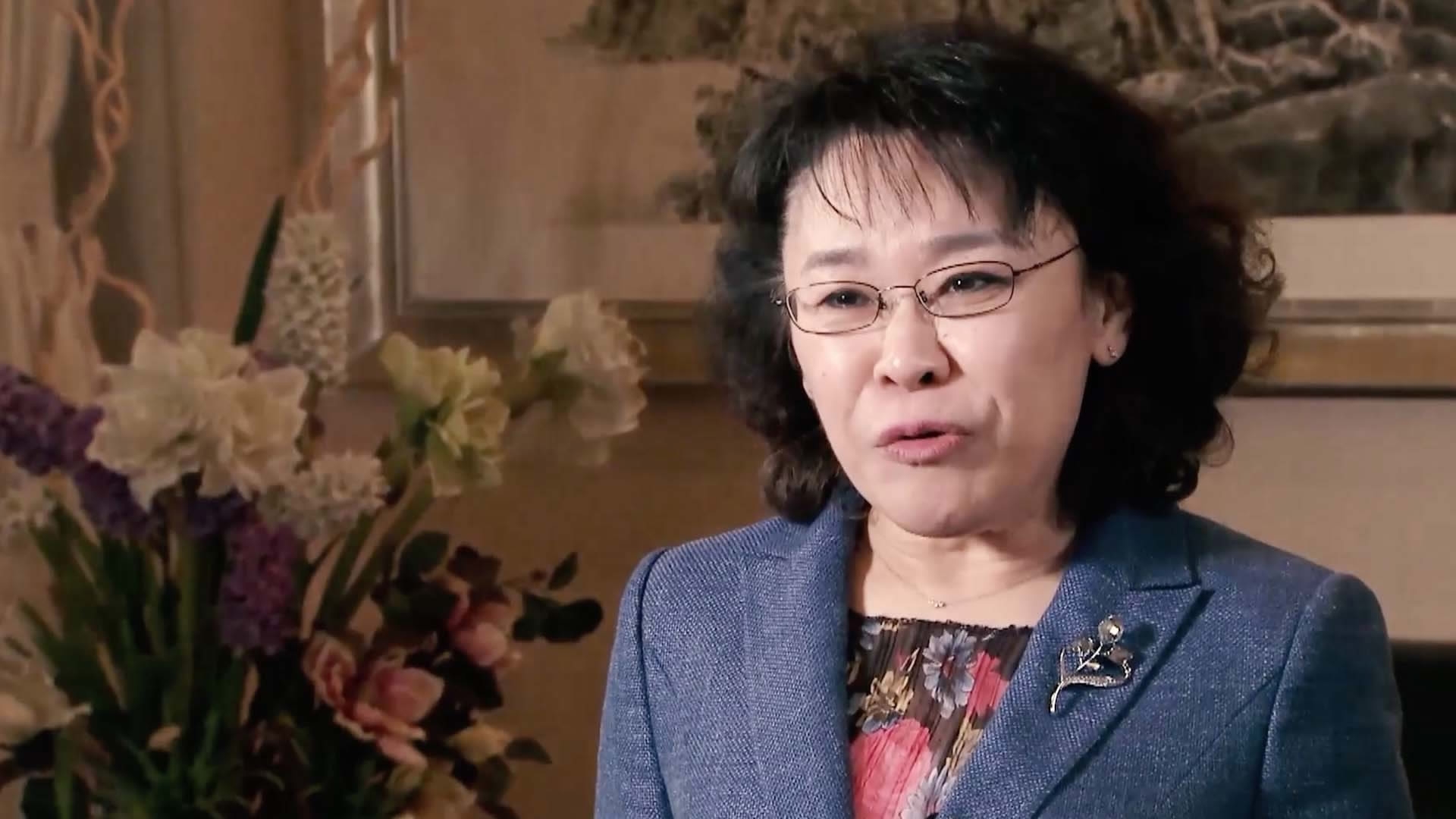
"When I was a child, I had no idea about rehabilitation,” Zhang Haidi, chairwoman of the CDPF, said. “But now, rehabilitation centers are everywhere in China, covering all provinces, municipalities and autonomous regions. Some of them are equipped with top-notch facilities.”
Read more:
China is also looking to establish a barrier-free transport system by 2020, according to the Ministry of Transport (MOT), which will allow guide dogs to get on public transport, and braille signs on public transport facilities, as Xinhua reported in January.
Professor Karen Fisher with the Social Policy Research Center of the University of New South Wales believes China’s strength in e-commerce can also greatly benefit the disabled.
“People with disabilities are using that digital economy as a way to have social contact, and to really reach out to economic opportunities they never had in the past,” Fisher said, adding that these are opportunities that cannot be seen outside China, as online shopping has always become something that's thoroughly embedded in Chinese people’s daily life.