
World
15:37, 22-Jun-2018
Monsoon season threatens Rohingya refugees in flimsy shelters
 ["china"]
Share







Copied
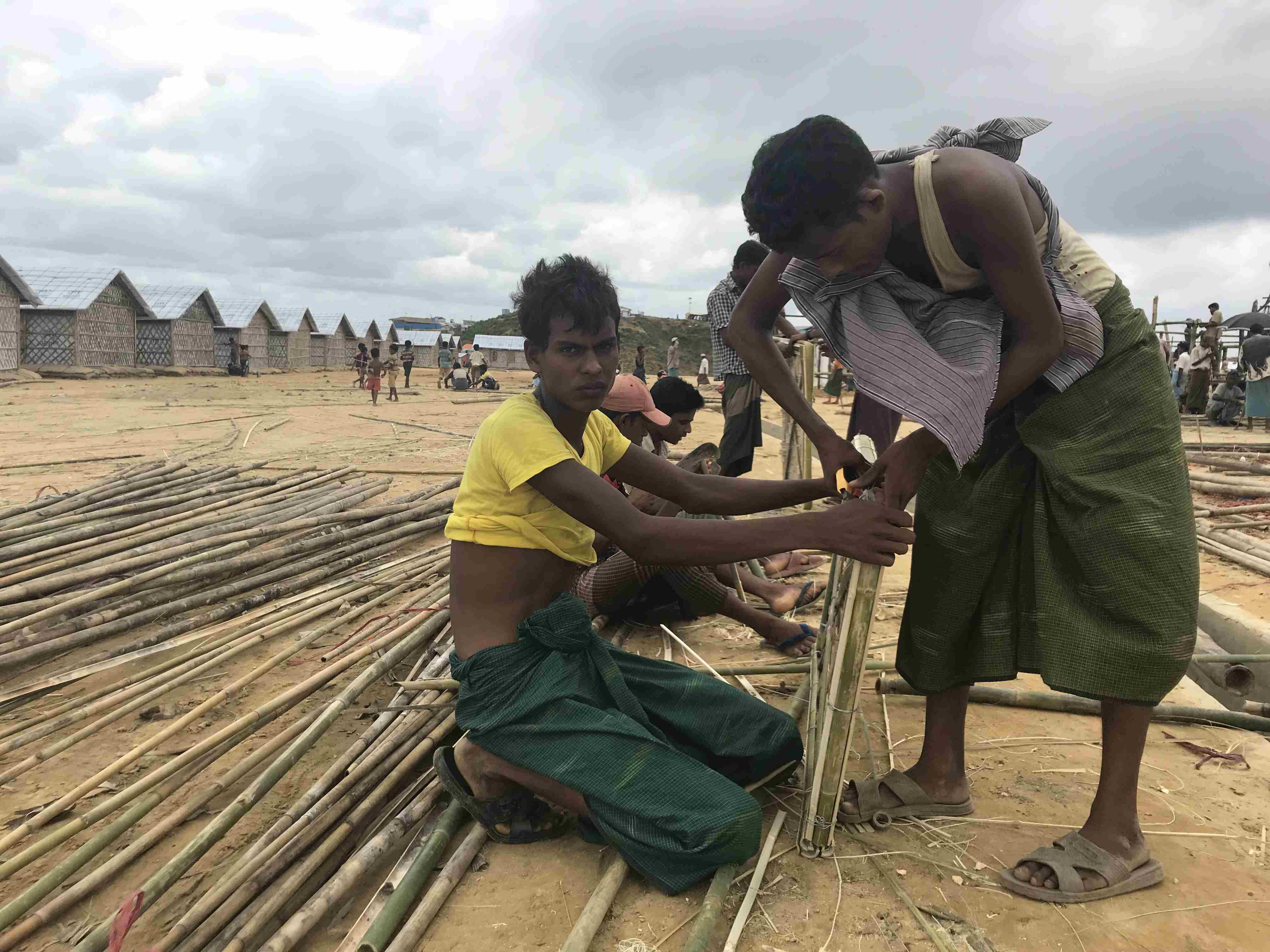
One of the most common sites while on the highway from Cox's Bazar, a town on the southeastern coast of Bangladesh, to the border with Myanmar, are trucks loaded with bamboos. As one approaches Kutupalong, one of the biggest refugee camps housing Rohingya refugees, stacks of bamboo sticks are piled on the sides of the road.
One can't help but wonder if the plant is being transported from here to somewhere else. But it's not really the case. It's used as a material to build shelters for more than 100,000 Rohingya refugees who crossed the border from Myanmar to escape the crackdown by the army last August.
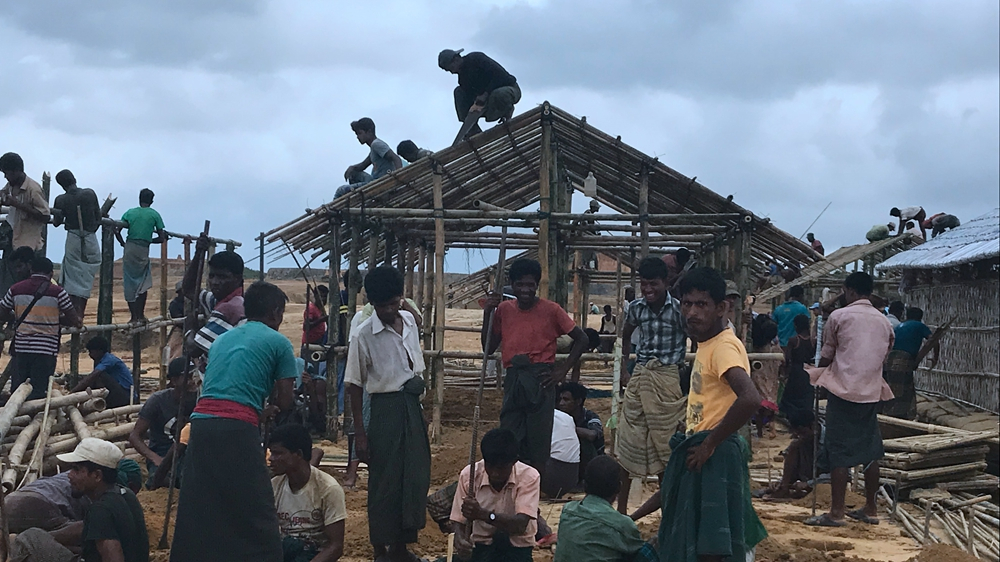
A visit to the camp explains why so much bamboo lies around. Refugees are living in flimsy shelters made from bamboo and tarpaulin. Some of the makeshift shelters are on hilly areas, and families living there are facing the threat of landslides.
Rohingya refugees use bamboo poles to build shelters at Kutupalong refugee camp in Cox's Bazar, Bangladesh. /CGTN Photo
Rohingya refugees use bamboo poles to build shelters at Kutupalong refugee camp in Cox's Bazar, Bangladesh. /CGTN Photo
With monsoon hitting the coast, aid and government officials have been working against odds to move these refugees to safer areas.
The Kutupalong camp-in-charge Mohammad Rezaul Kharim Reza says, "It's a challenge for us to convince the refugees to leave their present homes, but with the help of community leaders we manage to shift them. If they do not agree we have to use force sometimes because it is our duty to save their lives."
About 123 acres of new forest land are being flattened to create news homes for the refugees who are at risk because of landslides. About 40,000 families have been relocated to new tent cities but this is not even half the number of people who are at risk this monsoon season. The government and international aid agencies are building drainage systems, strengthening existing shelters and making better roads. A possible human catastrophe is pushing the authorities to mobilize resources and manpower to build homes suitable for refugee relocation.
"It is our concern that the monsoon might create havoc, so we are doing all we can to ensure safety," adds Reza.
Heavy rains last week resulted in some deaths, including three-year-old Mohammed Fakran, due to a collapsing wall.

Rohingya refugees wait in line for aid at Kutupalong refugee camp in Cox’s Bazar, Bangladesh. /CGTN Photo
Rohingya refugees wait in line for aid at Kutupalong refugee camp in Cox’s Bazar, Bangladesh. /CGTN Photo
On June 17, downpour caused the wall of a shelter to give way in the wee hours of the morning, killing Fakran and injuring his mother Sayeda Khatun.
The 28-year-old bereaved mother sits in her tent with a broken leg and a broken heart.
"I feel miserable. I am sad. As a mother I cannot bear this pain. What to do? It was God's will so this happened. I just have to accept it. I am feeling sad and am missing my son," a devastated Khatun says. She received around 60 bamboo sticks and some tarpaulin as aid but that was not enough to build her shelter. Lacking money, she opted for the cheaper option of building a wall with mud, which became the cause of her expensive loss.
The authorities fear that rain might cause more such losses so the families in risky areas should be evacuated soon.
Sanjida, 35, has just arrived in a newly established camp which is an extension of camp 4 in Kutupalong. She is in tears seeing her new home.
From Myanmar to Bangladesh and now this camp, she has moved three houses in the last 10 months. She protests that new shelters are not big enough to accommodate her family of eight.
"We will not die if we go back to our previous shelter. But we will face many difficulties here. After meals we will have no space to rest or sit. We were promised comfort here but we will be uncomfortable as this house cannot accommodate me and my family members," laments Sanjida.
Little does she know this will be the only place to hide from strong winds in the absence of proper cyclone shelters.