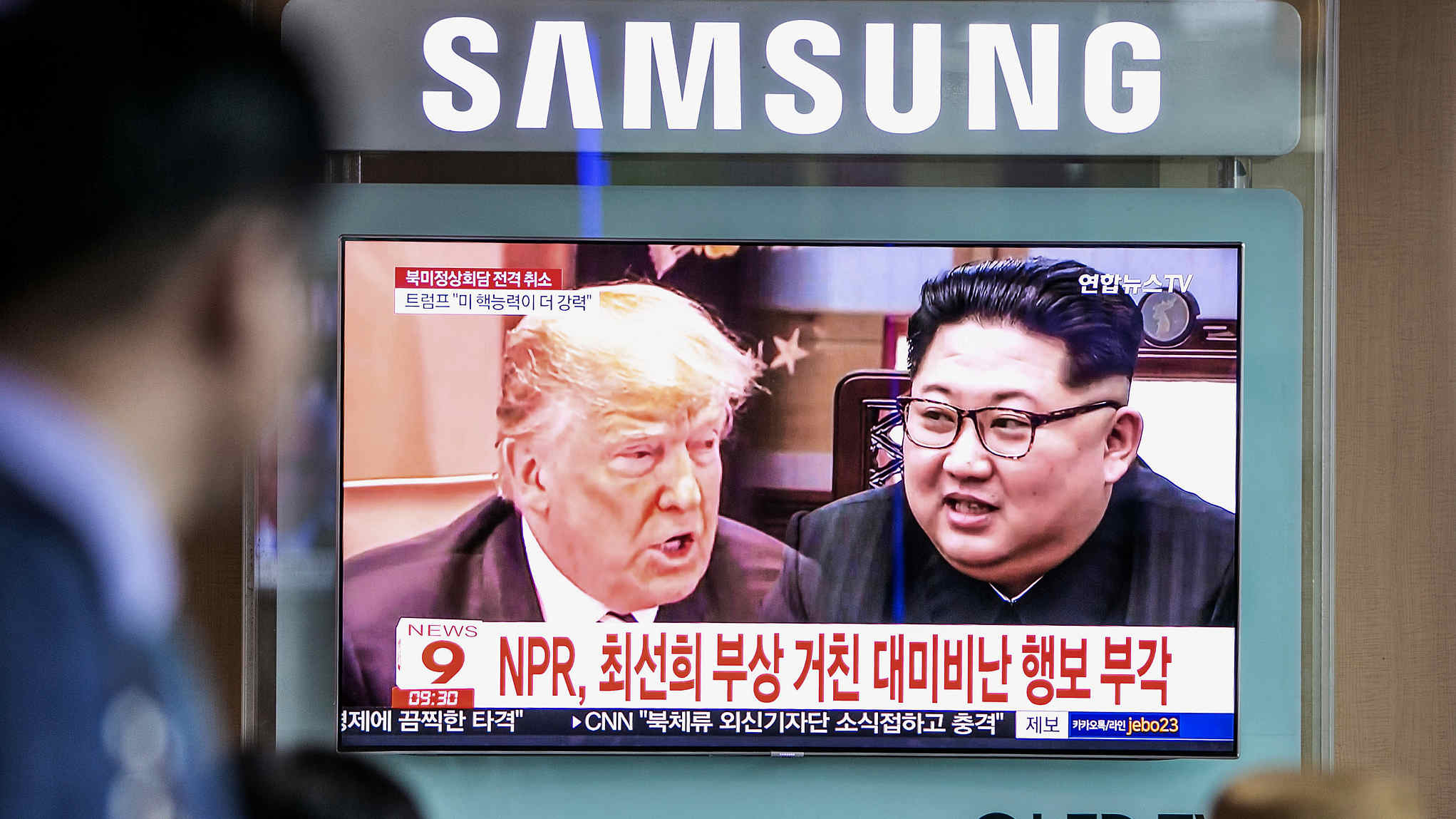
Editor’s note: This article is based on an interview with Wang Chong, a senior research fellow of the Charhar Institute and Li Hua, professor at Shanghai University.
As the whole world set their eyes on Singapore, looking forward to a historical summit between Trump and Kim, the meeting was “sadly” cancelled.
Only a few hours ago before Trump’s cancellation, the Democratic People's Republic of Korea (DPRK) showed the world its efforts to denuclearize: it dismantled its only known nuclear test site. But clearly, the US did not think it was good enough.
The prospect of this meeting started to go down when US National Security Adviser John Bolton compared the DPRK with Libya in terms of denuclearization; and US Vice President Mike Pence confirmed that this could end up like the Libya model if Kim “doesn’t make a deal.”
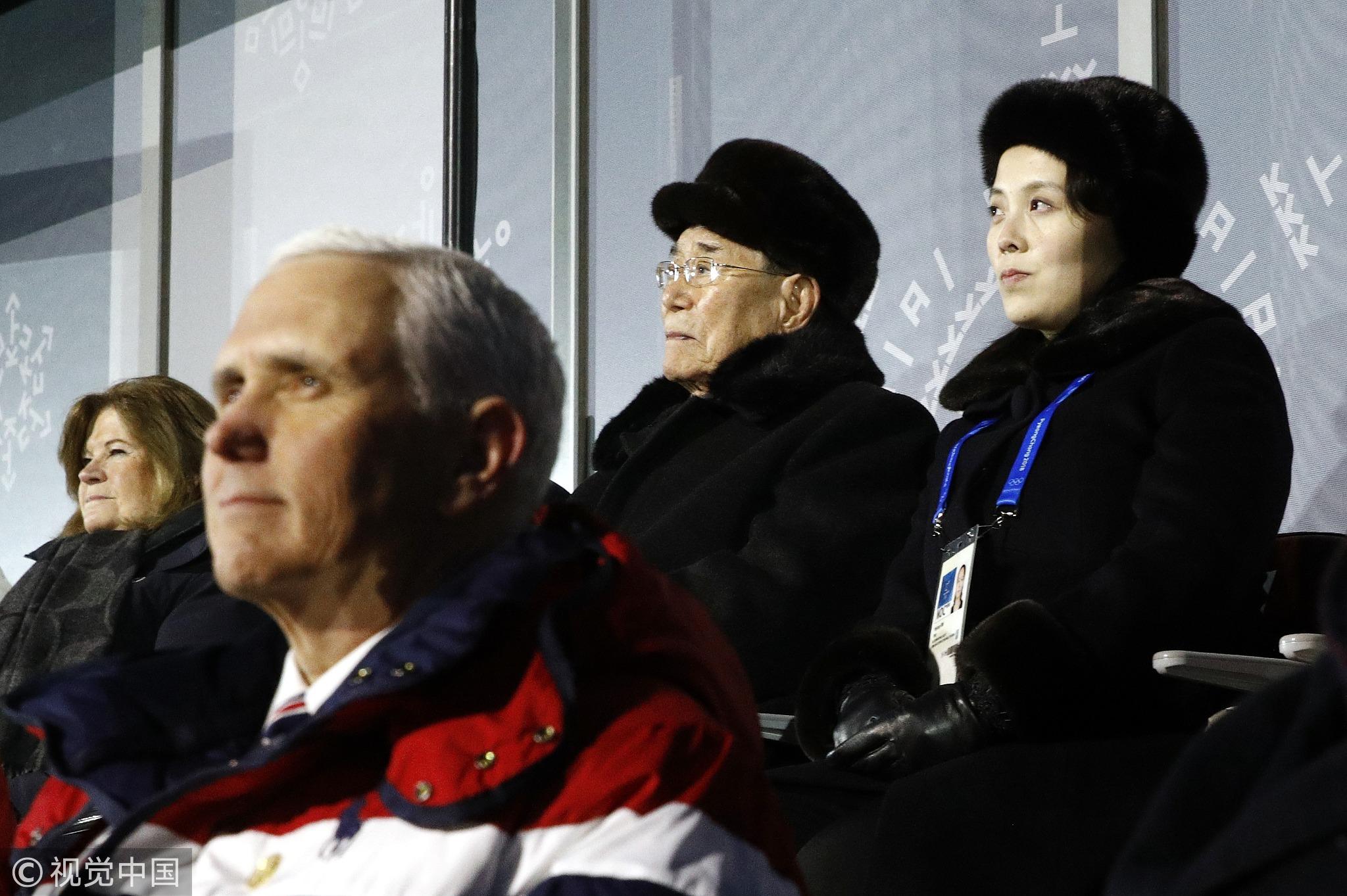
Kim Yo Jong, top right, sister of DPRK leader Kim Jong Un, sits alongside Kim Yong Nam, president of the Presidium of North Korean Parliament, and behind US Vice President Mike Pence as she watches the opening ceremony of the 2018 Winter Olympics at PyeongChang Olympic Stadium on February 9, 2018 in Pyeongchang-gun, Republic of Korea (ROK)./VCG Photo
Kim Yo Jong, top right, sister of DPRK leader Kim Jong Un, sits alongside Kim Yong Nam, president of the Presidium of North Korean Parliament, and behind US Vice President Mike Pence as she watches the opening ceremony of the 2018 Winter Olympics at PyeongChang Olympic Stadium on February 9, 2018 in Pyeongchang-gun, Republic of Korea (ROK)./VCG Photo
If the Libya model that the US is talking about is that its long-time leader was killed by a NATO-backed army less than a decade after it gave up its nuclear program, then the DPRK does have a reason to be mad.
Choe Son Hui, a vice-minister in the DPRK Foreign Ministry slammed Pence’s comments as “ignorant” and “stupid”; and threatened that the US has to decide whether to meet at a “nuclear-to-nuclear showdown.”
“This comment has aggravated Trump in a bad way,” Wang Chong, a senior research fellow of the Charhar Institute told CGTN. Just like the DPRK, he certainly does not enjoy being threatened.
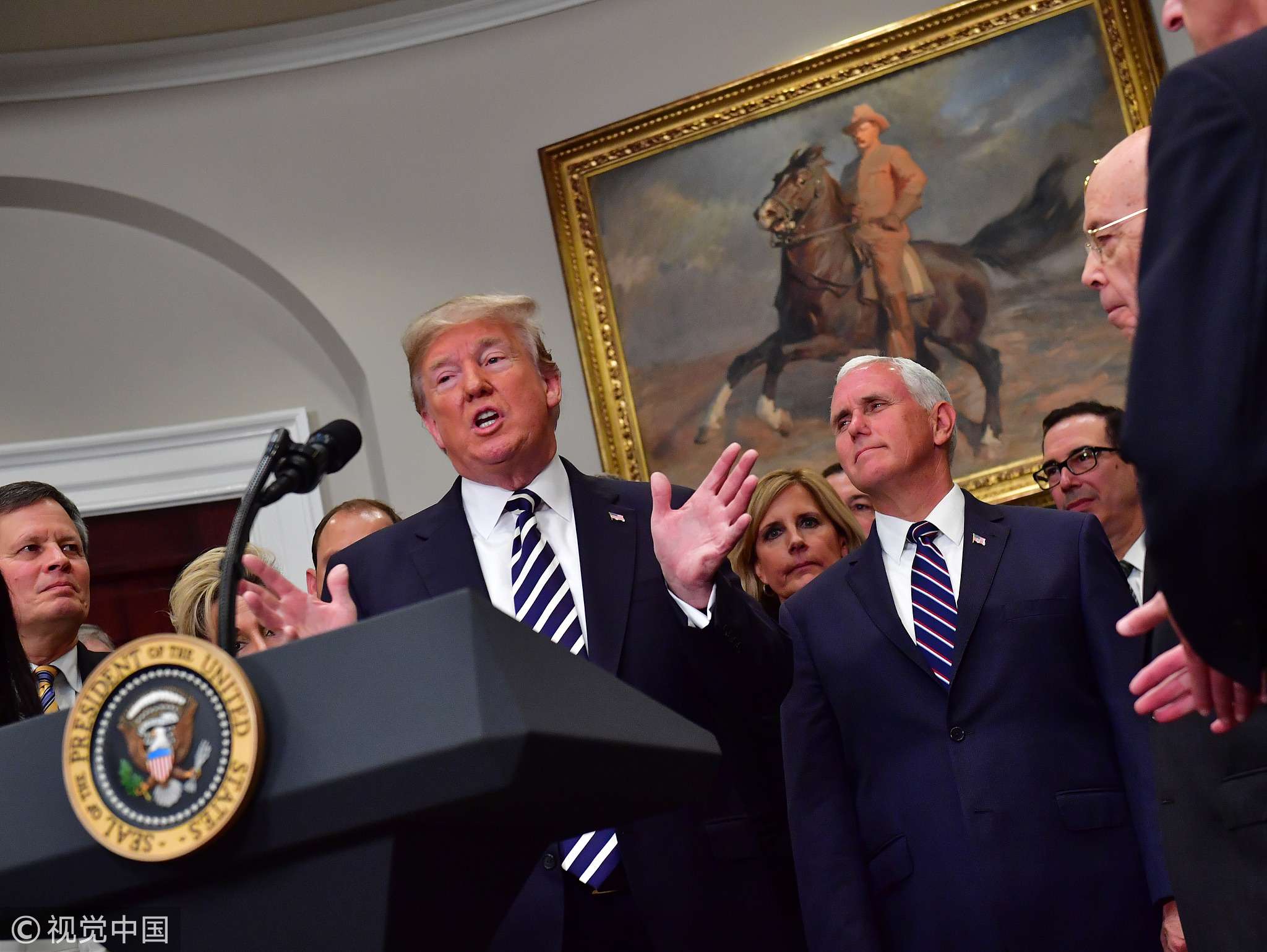
President Donald Trump speaks alongside Vice President Mike Pence after speaking on the recent cancelation of his meeting with DPRK Leader Kim Jong Un at the White House on May 24, 2018 in Washington, DC/VCG Photo
President Donald Trump speaks alongside Vice President Mike Pence after speaking on the recent cancelation of his meeting with DPRK Leader Kim Jong Un at the White House on May 24, 2018 in Washington, DC/VCG Photo
Li Hua, professor at Shanghai University says that the motivation behind the DPRK's remarks was the perceived lack of sincerity from Trump's side.
“The DPRK has already made its efforts public regarding denuclearization and its desire to become part of the international community. Still Trump decided to carry out the US-ROK military exercise and credit DPRK’s move to America’s maximum pressure campaign."
But as Wang Chong points out, “the strategic reason behind this decision is still the huge gap between two sides on the agenda of the summit and ultimately, the denuclearization process on the Korean Peninsula.”
The US has never given up its tough stance on DPRK’s denuclearization and insisted on a “complete and verifiable and irreversible dismantlement.” And as Wang Chong points out, US patience for the DPRK has worn out and it its long-time lack of faith in the DPRK has pushed the denuclearization issue in a “now or never” situation.
In the Panmunjom Declaration signed during the Kim-Moon meeting, the common goal of “a nuclear-free Korean Peninsula” was also established by the DPRK and Republic of Korea (ROK).
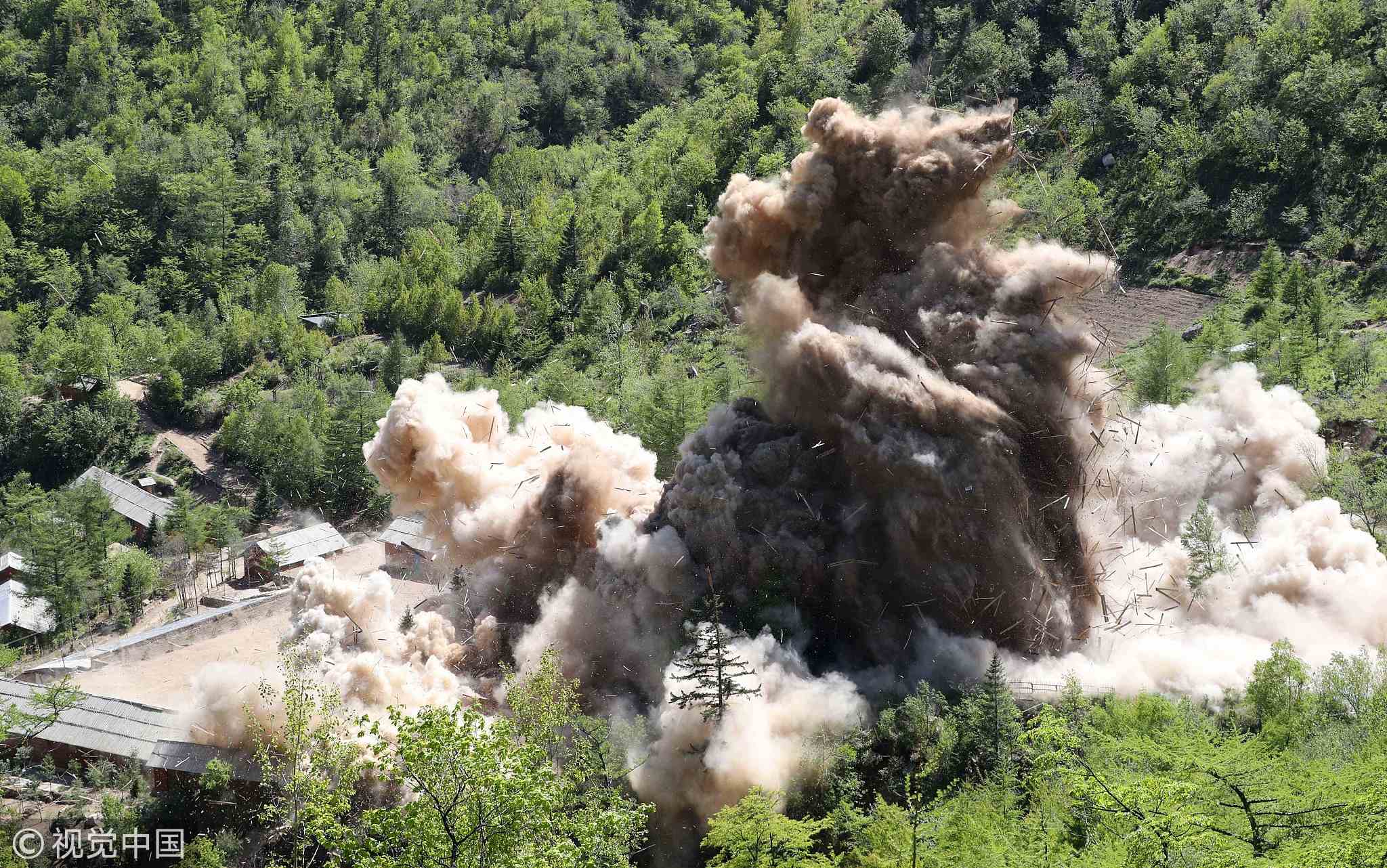
A general view of a dust cloud surrounding the area near the entrance to a tunnel at DPRK's Punggye-ri nuclear test facility, during a demolition 'ceremony'. May 24, 2018. /VCG Photo
A general view of a dust cloud surrounding the area near the entrance to a tunnel at DPRK's Punggye-ri nuclear test facility, during a demolition 'ceremony'. May 24, 2018. /VCG Photo
However, according to Wang Chong, the specific measures were left out and DPRK has made it clear that it did not want to follow the same disastrous road as Muammar Gaddafi, former leader of Libya. Thus, denuclearization is a stage-by-stage process for the DPRK and it would require America’s commitment along the road.
Li Hua also adds that the DPRK asks for an “equal negotiation” with the US as two nuclear countries, which the US would never accept. The DPRK’s requirements that America should abandon its nuclear weapons as well are not likely to be fulfilled either.
In the current situation, the outcome of the Trump-Kim meeting would be very likely to fail the expectations of both parties.
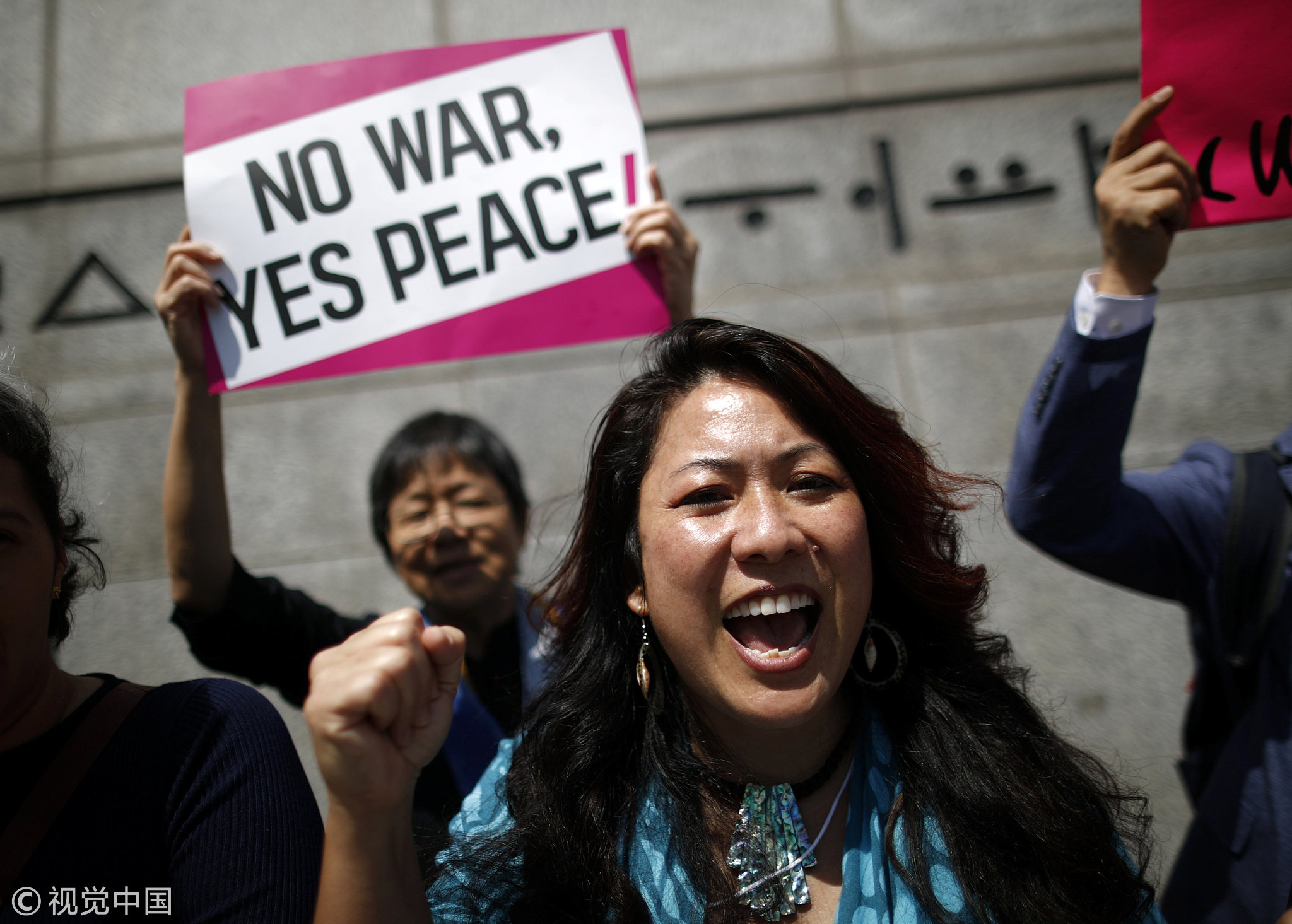
Women attend a protest against US President Donald Trump near US embassy in Seoul, Republic of Korea, May 25, 2018. /VCG Photo
Women attend a protest against US President Donald Trump near US embassy in Seoul, Republic of Korea, May 25, 2018. /VCG Photo
Can the huge gap be bridged and is the meeting ever going to happen at all?
“Unless the DPRK and the US find a common ground on the interpretations and process of denuclearization, the meeting will blow,” explains Li Hua, but he still holds that the meeting is going to happen and obstacles are inevitable.
Wang Chong thinks that hopes and chances still exist. And the role of China and ROK as mediators has become more important than ever.
“Although China and ROK have different priorities in terms of the Korean Peninsula, but in a long-term a peaceful and prosperous Peninsula would be the common goal,” said Wang Chong, comparing it to a relationship: “It’s like an arguing couple who does not trust each other, China and ROK has to be the ‘matchmaker’ and build a communication channel between them.”
Li Hua also adds that he thinks the ROK president is incompetent as he has not explained DPRK’s position on denuclearization to the US more clearly. In this regard, China might understand the DPRK better and will surely give its support on DPRK on the Trump-Kim meeting, as DPRK’s opening-up and prosperity will surely benefit China and the whole Asia-Pacific region.
Shortly after Trump’s decision to cancel, he tweeted that he is already talking to the DPRK and said that “everybody plays games.” So far it seems that the DPRK has got the edge as it is winning credibility. Only time will tell who will eventually win at this game.

 ["china"]