
Transport
09:54, 10-Jul-2018
Changes brought by China-Europe rail links
Updated
09:00, 13-Jul-2018
 ["china"]
Share







Copied
02:08
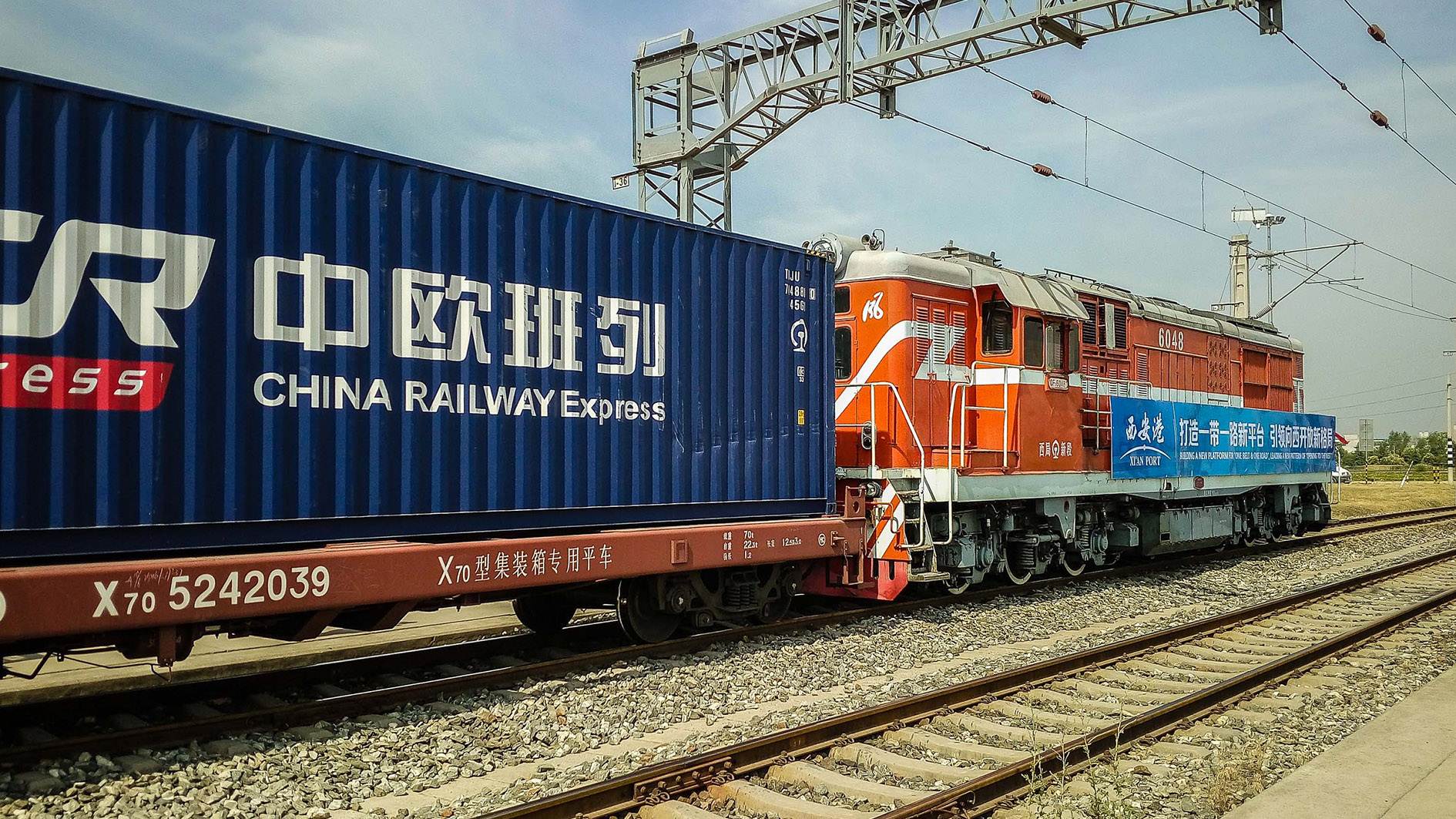
In 2011, Jiang Tong drove the first freight train from Southwest China’s Chongqing Municipality to Duisburg in Germany. This train started at the beginning of the rail network that developed to link 48 Chinese cities with 42 destinations in 14 European countries. At least five freight trains depart from China to Europe every day.
When the World Cup kicked off last month, some 100,000 crayfish from Central China’s Hubei Province were also on the way to Moscow, Russia. Frozen in navy blue containers, the delicacy maintained its freshness after a multi-day journey that traversed two continents.
The carrier of the crayfish, China-Europe freight train, is becoming China’s new name card. Jiang Tong said he feels proud to witness the changes, “When we launched the service at first, there was only one train a week. Now every week there are 10 trains or more.”

Crayfish from China to be loaded onto freight train en route to Russia. /CGTN Photo
Crayfish from China to be loaded onto freight train en route to Russia. /CGTN Photo
They carry Chinese special products like dumplings and tea, as well as China-made electronic parts, electrical appliances and other industrial goods. On the way back, containers are loaded with cheese and wine from France, beef and beer from Germany, milk from Belarus, and oil from Russia. The goods quickly become accessible on market shelves.
That’s how people see the benefits of the expanding rail network, including Zhang Wei who works at China Railway Container Transport Corp. in Chongqing.
He noted that the demand boom on rail service took place in 2017, and ascribed the rise to the low cost of China’s railway service. It's equal to one-fifth of the expense of air freight and one-third of the time of shipping.
It’s certainly true, but the real reason behind the growth is the increasing trade volume. Last year, China’s trade with the EU reached 616.9 billion US dollars, up 12.7 percent year-on-year.
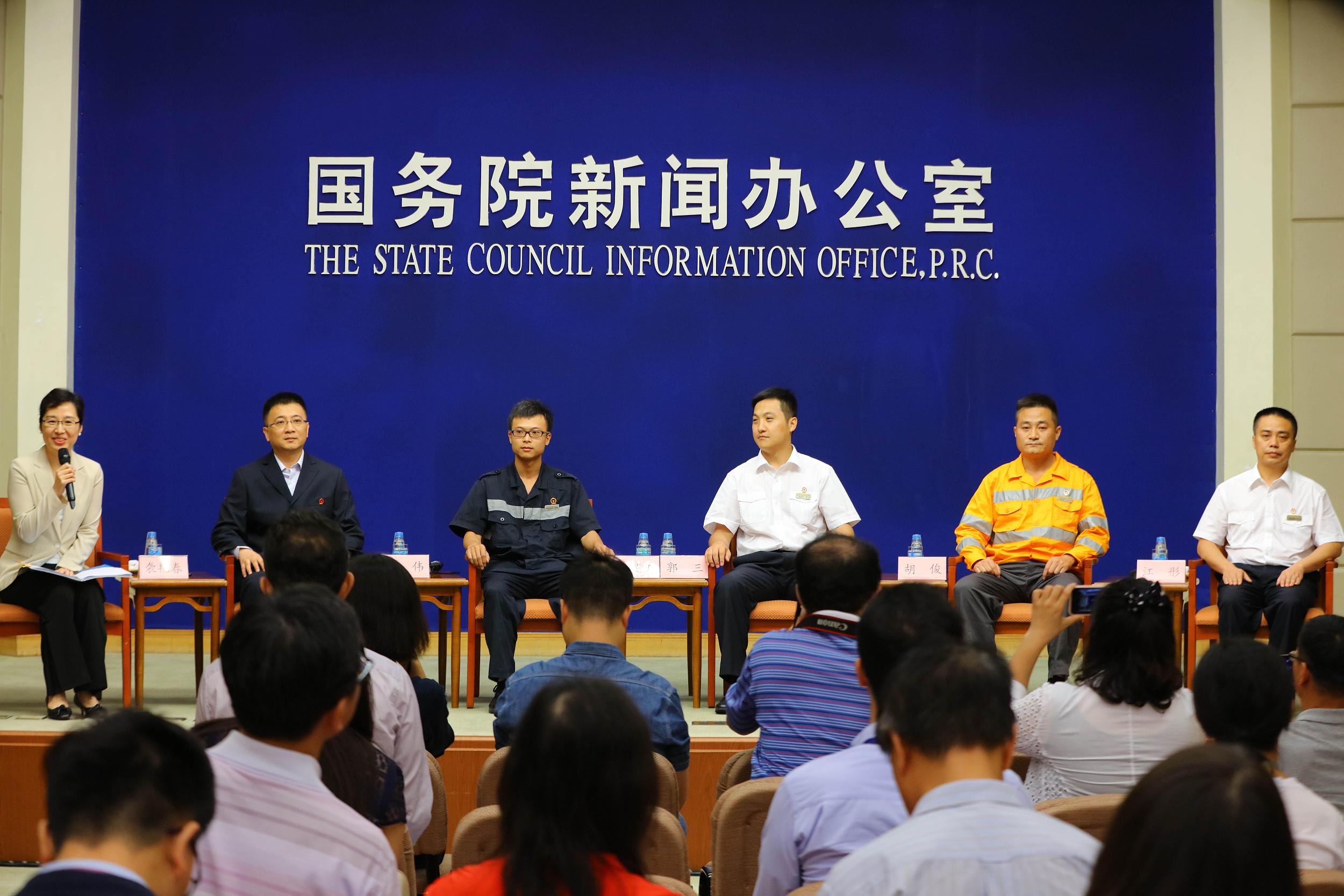
Five workers involved in the China-Europe rail newwork met press on July 9 in Beijing. /CGTN Photo
Five workers involved in the China-Europe rail newwork met press on July 9 in Beijing. /CGTN Photo
In Chongqing, trade structure is also changing as it actively engages in Belt and Road projects.
“In the past, there was a much bigger volume of domestic shipments in Chongqing than international shipments. Now it’s totally the opposite. International shipments play the major role, accounting for more than 80 percent of our railway transport in Chongqing region,” said Zhang.
Chongqing is aiming to make 1,000 trips this year, and that’s just part of 5,000 planned for the country as a whole by 2020. As more and more countries express willingness to build the Belt and Road, it shouldn’t be hard to reach the goal.
1464km