
Tech & Sci
19:59, 08-Aug-2018
Confucius Institute in Kenya’s Egerton University highlights in agriculture
Updated
19:04, 11-Aug-2018
 ["china"]
Share







Copied
02:18
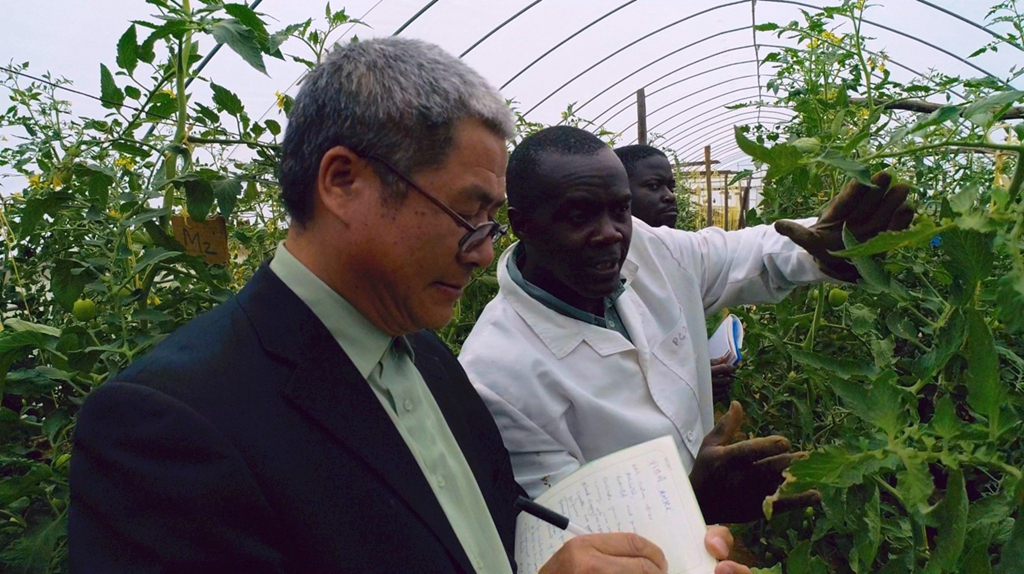
54 Confucius Institutes have been established in Africa over the years, as ties with countries in the continent get stronger. Speaking of these non-profit public institutions, many may relate them to the Chinese language and cultural exchange. But in Kenya’s Egerton University, there’s something unique and different: the Kenya-China Joint Laboratory for Crop Molecular Biology.
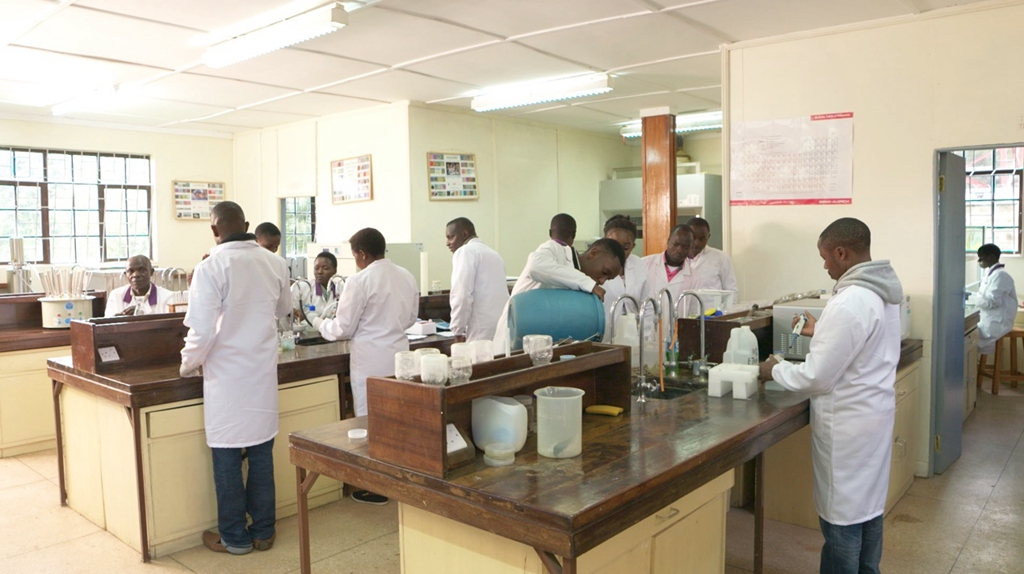
Students do experiments at the Kenya-China Joint Laboratory for Crop Molecular Biology. /CGTN Photo
Students do experiments at the Kenya-China Joint Laboratory for Crop Molecular Biology. /CGTN Photo
Established in 2016, the lab is equipped with state-of-the-art devices for Molecular Biology, and therefore became the most advanced lab of its kind in East Africa. Yet, this lab doesn’t belong to any biology faculty member, but rather to the university’s Confucius Institute, which – apart from teaching Chinese – specializes in agriculture.
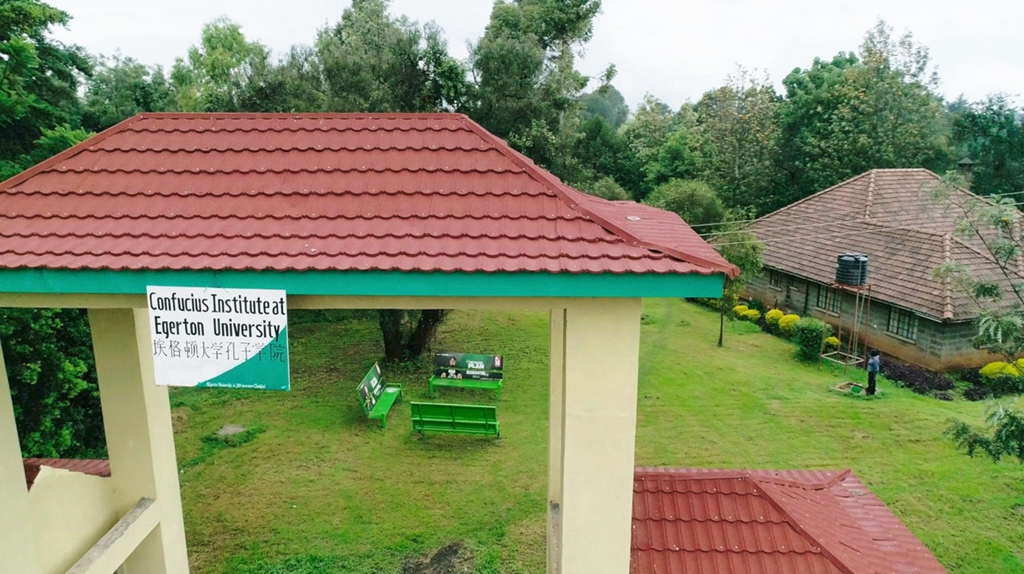
Confucius Institute at Egerton University in Kenya. /CGTN Photo
Confucius Institute at Egerton University in Kenya. /CGTN Photo
The lab is open to all students at Egerton University, not limited to those studying at the Confucius Institute. Sarah Nyamoita is a postgraduate majored in horticulture, she’s studying in commercializing wild blackberry.
“This lab has helped me a lot, because it has all required equipment for my experiments.” Saran told CGTN, “For example, we have an artificial intelligent climate box, it offers good temperature and humidity for the plants.”
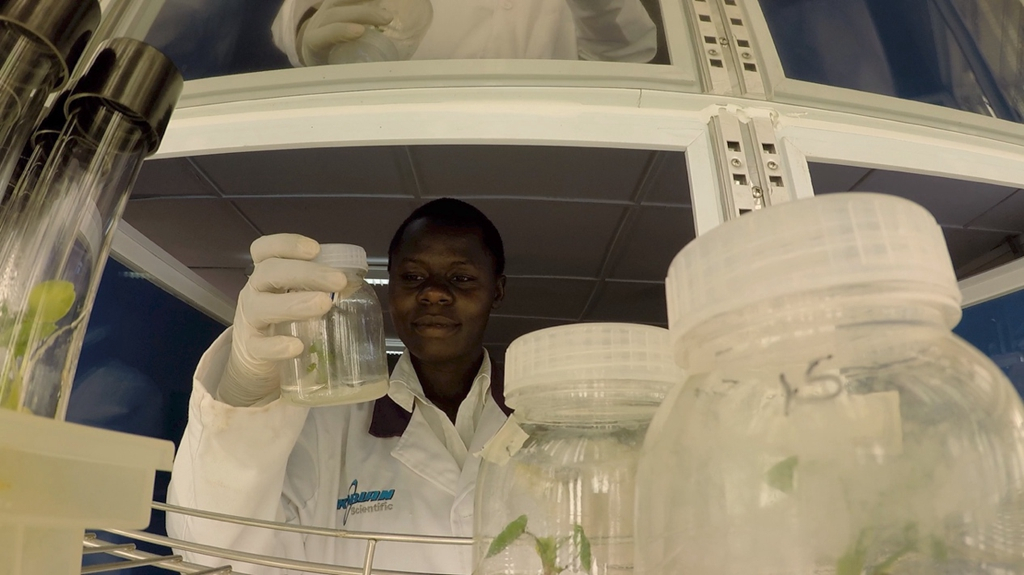
Sarah checks plants grown inside the AI climate box. /CGTN Photo
Sarah checks plants grown inside the AI climate box. /CGTN Photo
Zhang Hongsheng is a professor at China’s Nanjing Agriculture University, which has a collaboration project with Kenya’s Egerton University. Zhang was sent to work in Kenya for years and is now the director of the joint lab.
He told CGTN that this lab enables them to conduct many biological experiments in Kenya, “We found anti-disease genes from wild tomatoes in Kenya, and thanks to this lab, we can use the genes to cultivate a new type of tomato resistant to common disease.”
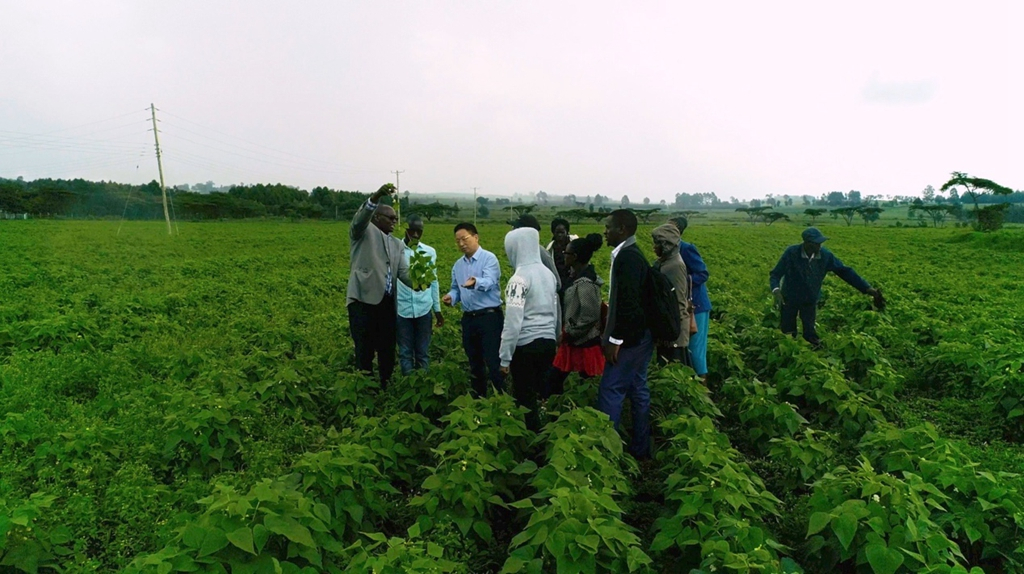
Apart from working at the lab, Zhang also gives practical training to African students. /CGTN Photo
Apart from working at the lab, Zhang also gives practical training to African students. /CGTN Photo
Different from any other Confucius Institute in the world, this one in Kenya has a large piece of farmland, where practical training is held regularly for local students.
The farmland is called Agro Science Park. It grows a variety of plants and crops for study, including rice, corn and wheat.
According to official data, agriculture is one of the key sectors of Kenya’s economy, accounting for over 30 percent of the country’s GDP. But many farmers work without proper knowledge or updated technology, so there’s huge demand for agricultural professionals.
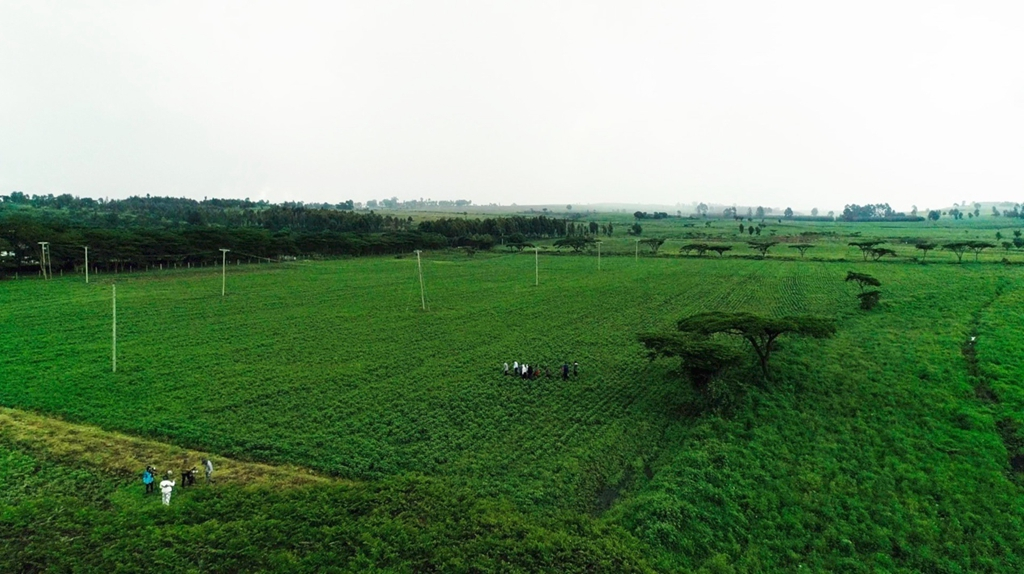
A bird eye view of Agro Science Park at Egerton University. /CGTN Photo
A bird eye view of Agro Science Park at Egerton University. /CGTN Photo
The Confucius Institute, therefore, appeals to Kenyan students. Li Zhenhong, director of the institute says that they have a lot of graduates who not only understand Chinese language and culture but also know agriculture very well.
They’re very popular on job markets, especially among government bodies, other agricultural universities and scientific research institutions. “Language plus agriculture, this is what we’re best known for.”
Established in 2012, this Confucius Institute has provided agricultural training for over eight thousand people.