
Culture
11:43, 24-Oct-2018
600-year-old opera faces new challenges in today's modern society
Updated
11:13, 27-Oct-2018
 ["china"]
Share







Copied
04:10
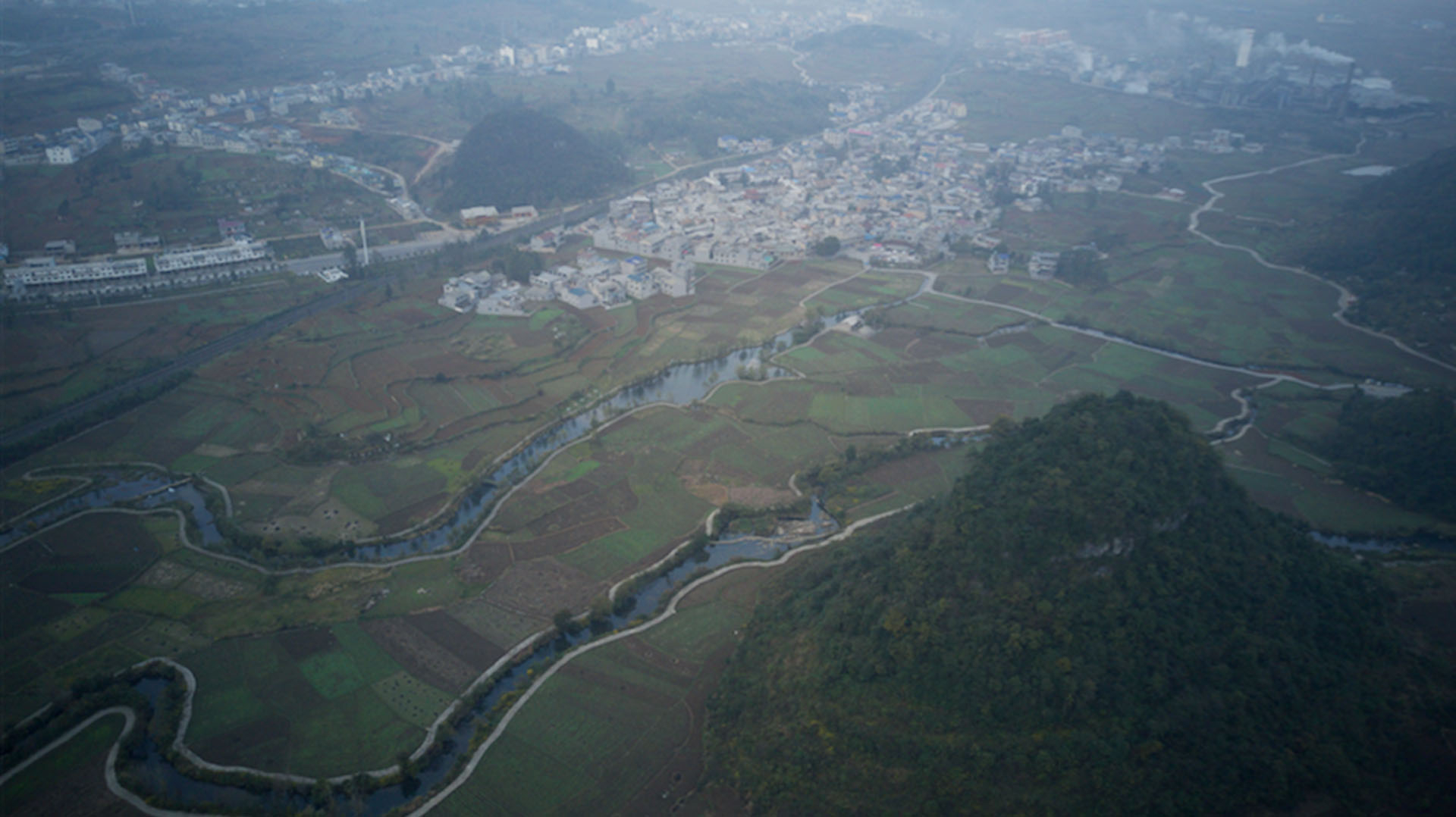
Today, while it's hard to find people practicing customs dating back to the Ming Dynasty (1368-1644 AD), there are people in old villages of southwest China's Guizhou Province that have inherited a special cultural heritage from their ancestors.
"Nuo Opera" or "Nuo drama" at Baojiatun village is characterized by its special features such as ferocious masks, unique dresses and adornments. The purpose of "Nuo Opera" is to drive away devils, disease and evil influences, and also to petition for blessings from the gods.
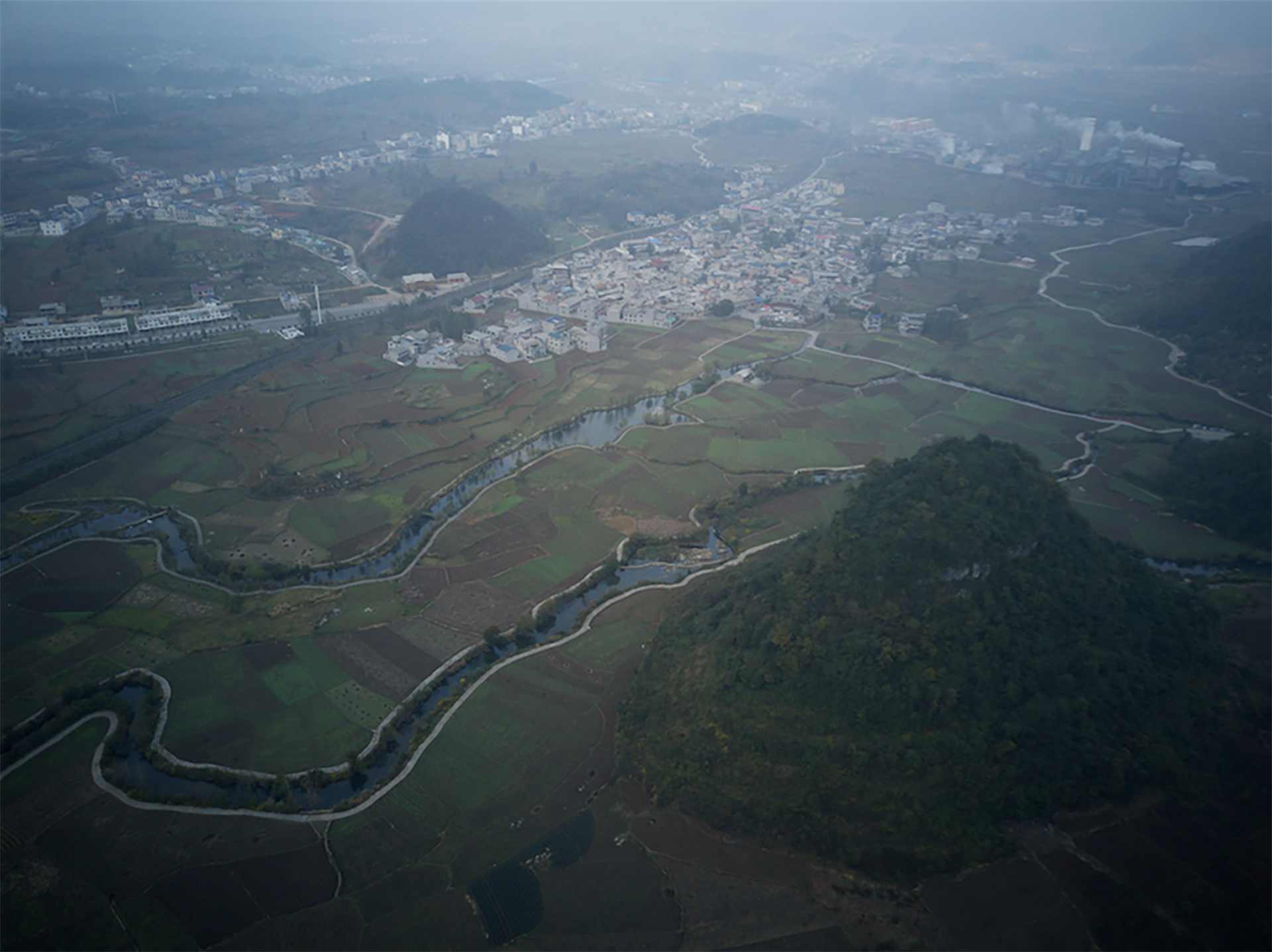
A bird's eye view of Baojiatun village /CGTN Photo | Daken Art
A bird's eye view of Baojiatun village /CGTN Photo | Daken Art
74-year-old Bao Youquan told CGTN that Nuo Opera is performed seasonally, held from the second to the 18th day of the first month of the Chinese lunar calendar.
The entire village comes out to watch the show, said Bao, adding that it's their way of honoring and paying a tribute to their ancestors and the culture of the Central Plains.
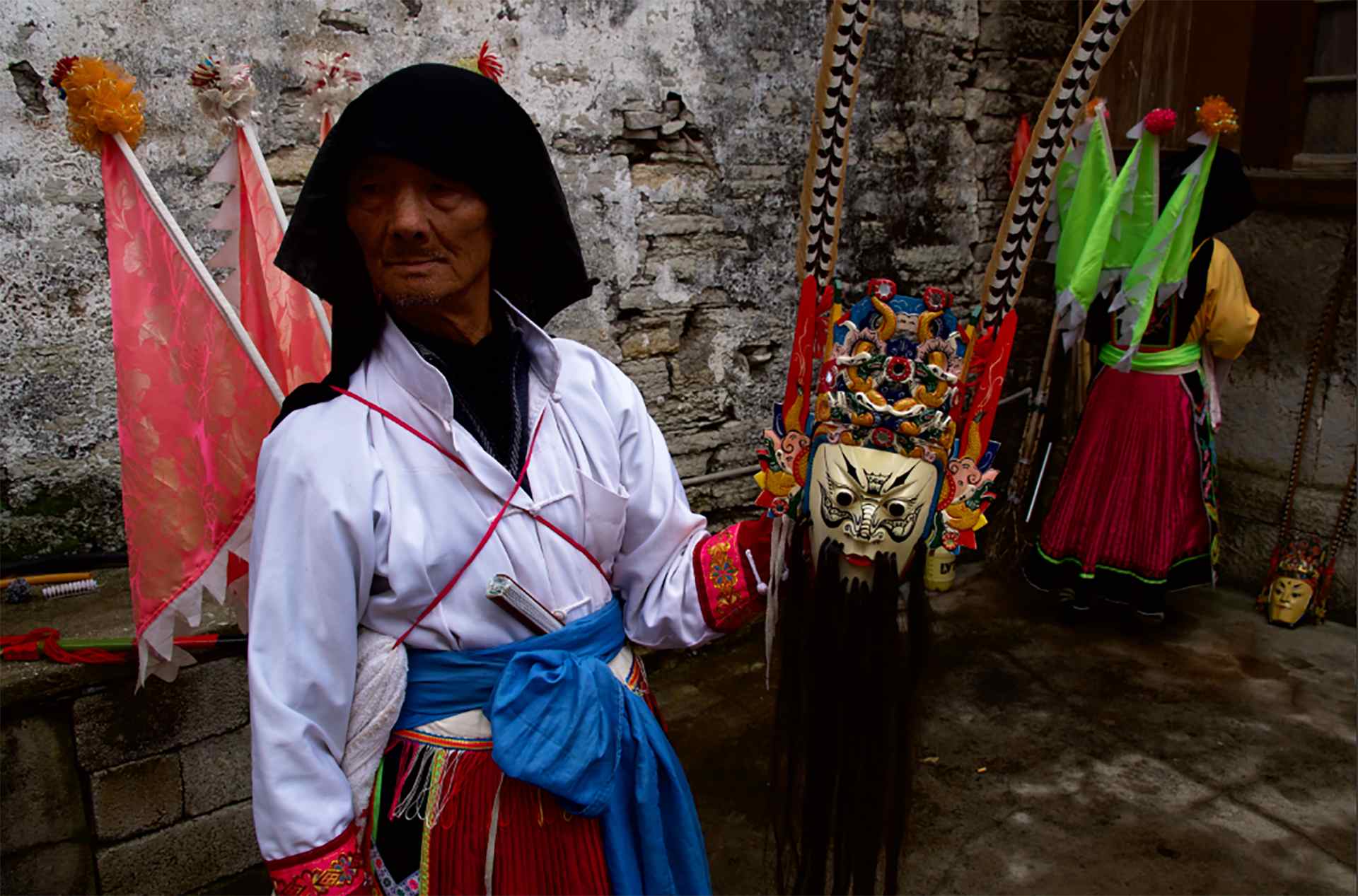
A Nuo Opera performer holding his mask /CGTN Photo |Daken Art
A Nuo Opera performer holding his mask /CGTN Photo |Daken Art
600 years ago, Zhu Yuanzhang, the first emperor of Ming Dynasty, dispatched an expedition of 300,000 soldiers to southwest China's Yunnan.
After crushing a revolt, he commanded garrison troops to grow wheat at a strategic point on the road to Guizhou.
Baojiatun was one of the first villages to be built during that period.
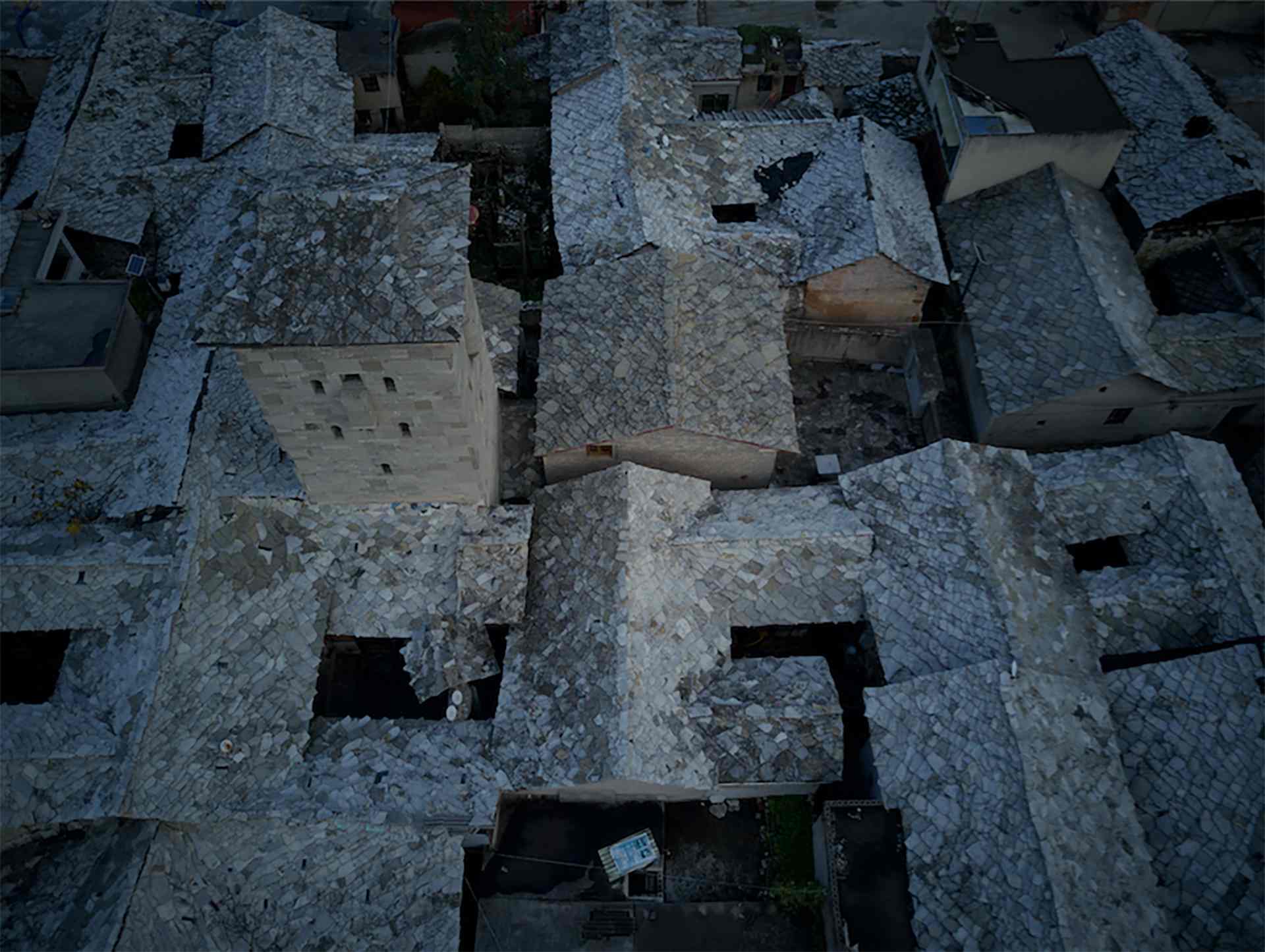
Buildings in the Baojiatun village are constructed using local stones. /CGTN Photo | Daken Art
Buildings in the Baojiatun village are constructed using local stones. /CGTN Photo | Daken Art
During those days people were either farmers or soldiers. Many even decided to quit farming to fight for their motherland.
For entertainment, they practiced their fighting skills, and over time it became a perfect blend of kung fu and dance and went on to be known as Nuo Opera.
Today, Nuo Opera is also called Di (ground) Opera, which refers to it being performed on the floor rather than a stage-like platform.
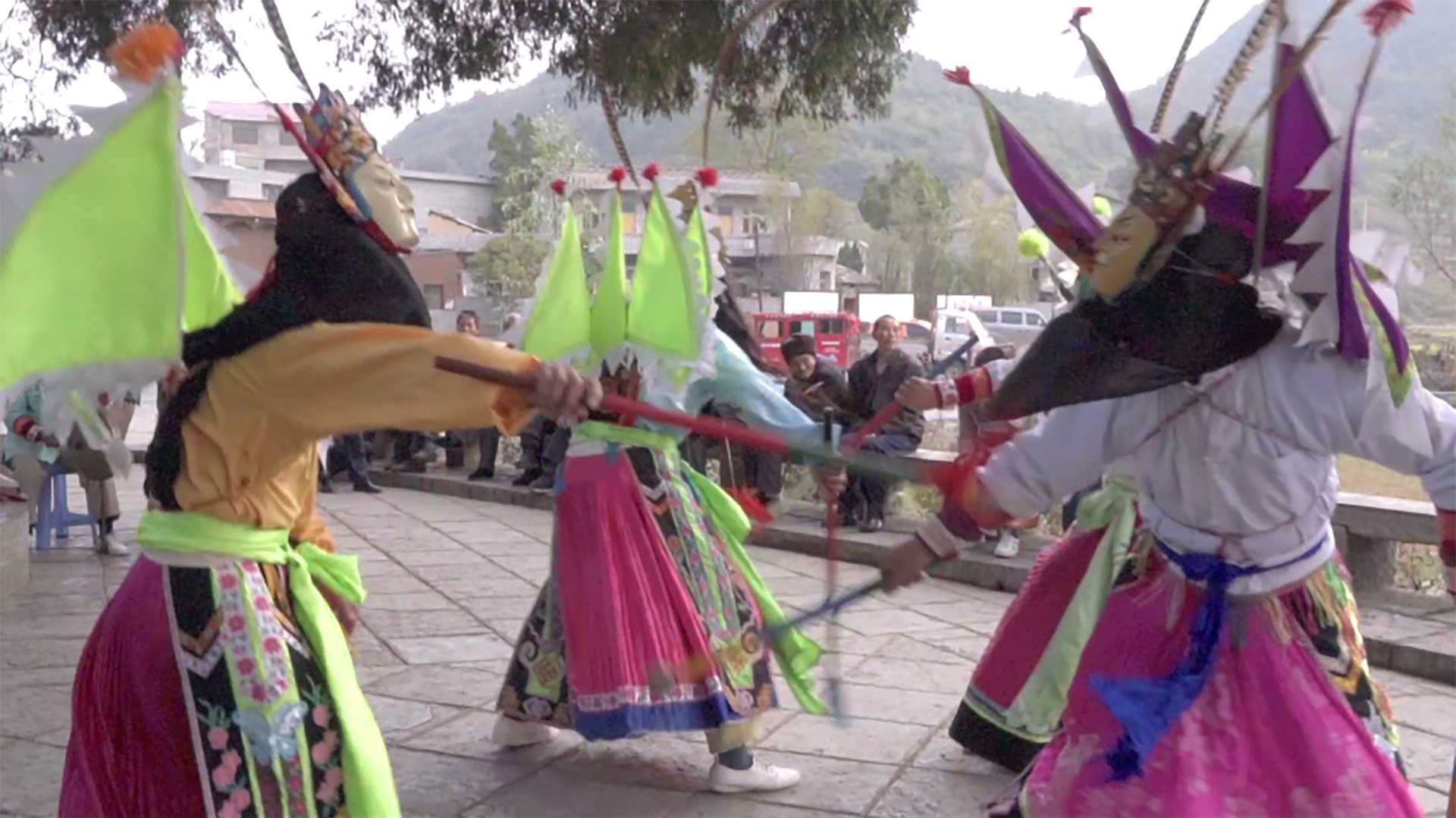
The performers from Baojiatun and other nearby villages performing Nuo Opera /CGTN Photo | Daken Art
The performers from Baojiatun and other nearby villages performing Nuo Opera /CGTN Photo | Daken Art
But this traditional art form is facing multiple challenges in modern times.
The number of Nuo Opera performers has now gone down from 30 to about 15.
"Society is changing, and students have a lot of homework. Young people have left home for work. Now, there are not many who learn Nuo Opera," said Bao, added that the youngest performer in the group is over 40 years old.
"Our Nuo Opera is losing its ground."
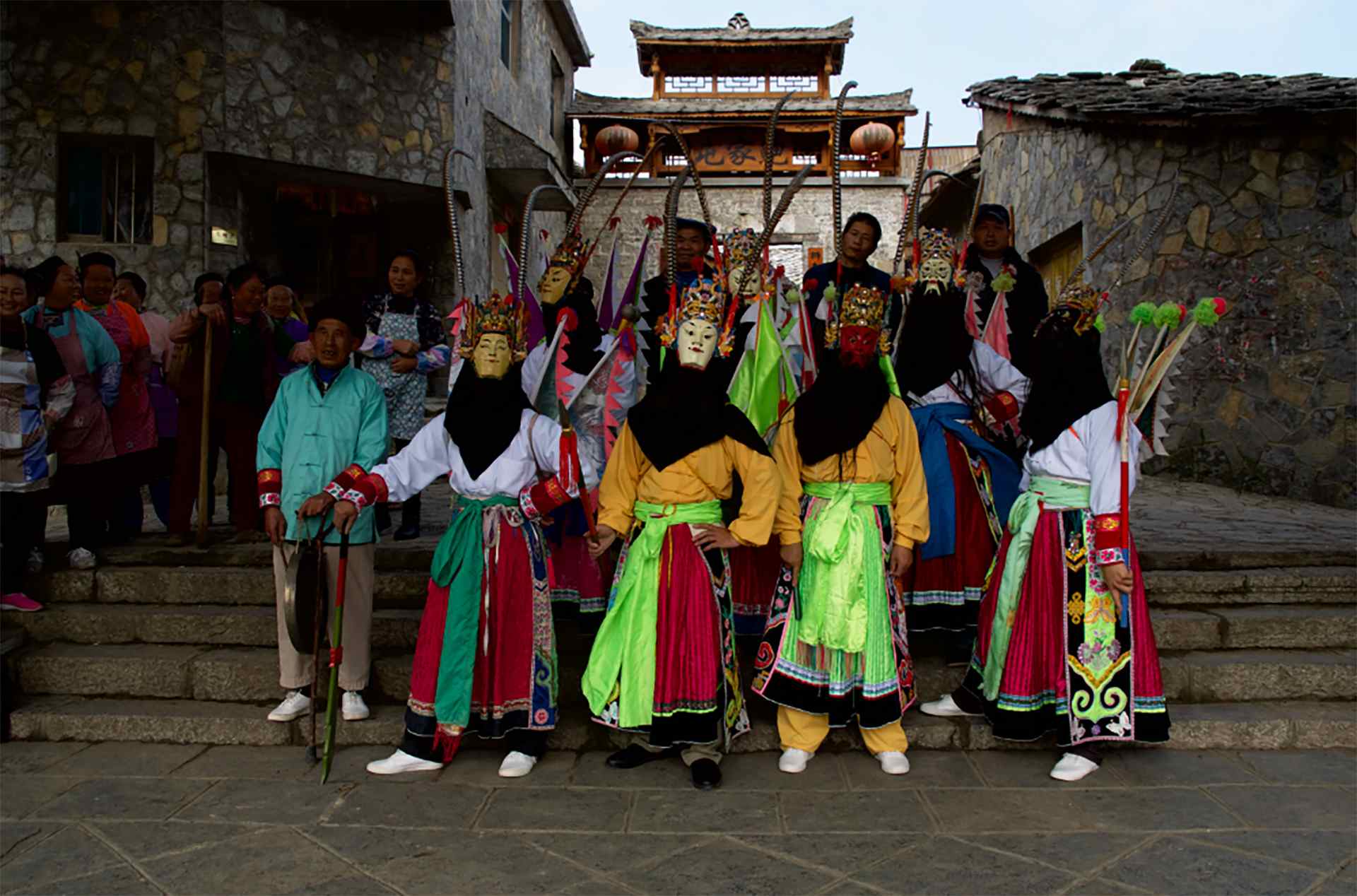
Nuo Opera performers pose for a group photo at the end of a show. /CGTN Photo | Daken Art
Nuo Opera performers pose for a group photo at the end of a show. /CGTN Photo | Daken Art
But Bao is still hopeful of passing Nuo Opera on to the next generation, an art form that has survived for over six centuries.