
Culture
11:30, 27-Apr-2018
Landmark Palestinian art museum opens doors in US
 ["china"]
Share







Copied
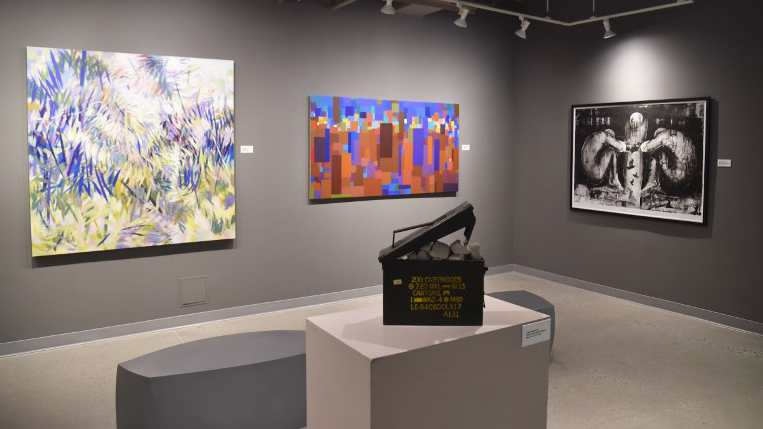
A bucolic Connecticut town may have outwardly little in common with the Middle East, but it's home to a new art museum hoping to change US attitudes toward the Palestinians.
Tucked away in Woodbridge, an affluent community near Yale University 80 miles (128 kilometers) north of Manhattan, it is well off the museum circuit and the bright lights of a big city, at least for now.
The achievement is that it exists at all, funded on a shoe-string budget of half-a-million dollars, and nine months in the making by its Palestinian-American businessman founder, determined to create the first museum dedicated to Palestinian art in the United States.
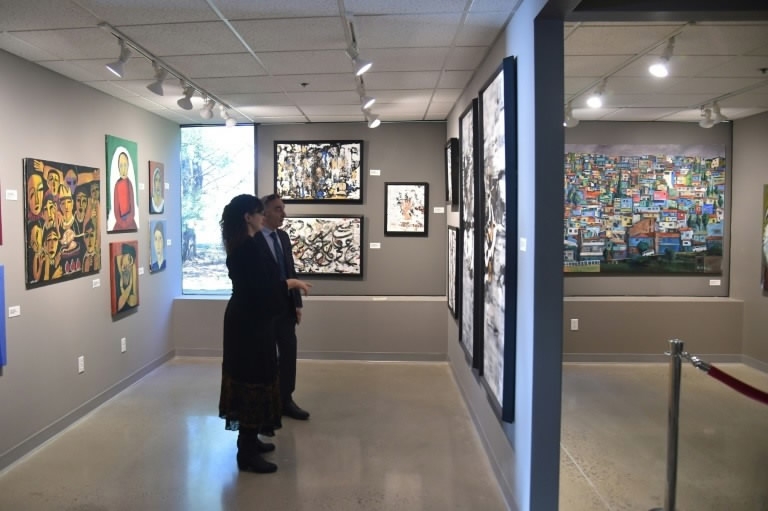
Visitors take in the exhibitions at the Palestinian Museum, a new art museum hoping to change US attitudes toward the Palestinians. /AFP Photo
Visitors take in the exhibitions at the Palestinian Museum, a new art museum hoping to change US attitudes toward the Palestinians. /AFP Photo
Israel's imminent 70th anniversary, the prospective US embassy move to Jerusalem, Washington's close relationship with the Jewish state, past suicide bombings and headlines about stabbing attacks overshadow much of the US discourse about the Israeli-Palestinian conflict.
"The media and the forces that are not friendly to Palestine have painted the Palestinians in a very negative light and in some ways they were dehumanized," museum founder Faisal Saleh, 66, told AFP.
His hope is for everyday Americans to visit and discover that the Palestinians have a rich artistic heritage.
"We have our own artists, just like everyone else has their own artists, and we have a disproportionate number," he said. "A lot of them are working under very austere conditions."
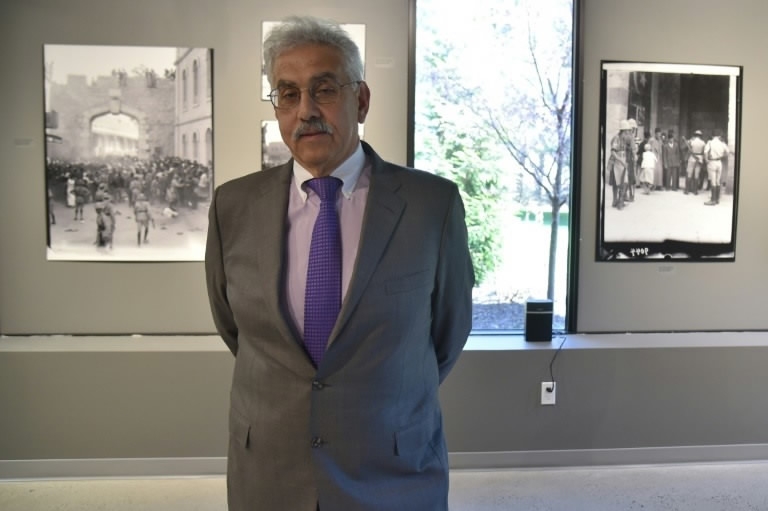
Faisal Saleh, founder of Palestinian Museum, speaks during its inauguration in Woodbridge, Connecticut. /AFP Photo
Faisal Saleh, founder of Palestinian Museum, speaks during its inauguration in Woodbridge, Connecticut. /AFP Photo
Called Palestine Museum US, it will open to the public this Sunday and for now will open only Sundays, free of charge and staffed by volunteers. It houses more than 70 works of art, 100 photographs, collections of embroidery, costumes and several modern installations.
While it's about art, not war, and the museum offers little education on the Israeli-Palestinian conflict itself, the longing for land, for peace and for self-determination permeates much of the work.
The airy 4,000 square feet (371 square meters) of gallery space, with sunlight flooding through the windows, starts with old photographs of Jerusalem under the British Mandate, and leads through to contemporary and abstract paintings.
Featuring the work of 29 artists, many living in Israel, the West Bank and the Gaza Strip, Saleh says it is proof of a concept that can be transported on a bigger scale.
Source(s): AFP