
World
16:44, 15-Oct-2018
The contradictions in Trump's Taiwan policy
Updated
16:44, 18-Oct-2018
 ["china"]
Share






Copied
01:02
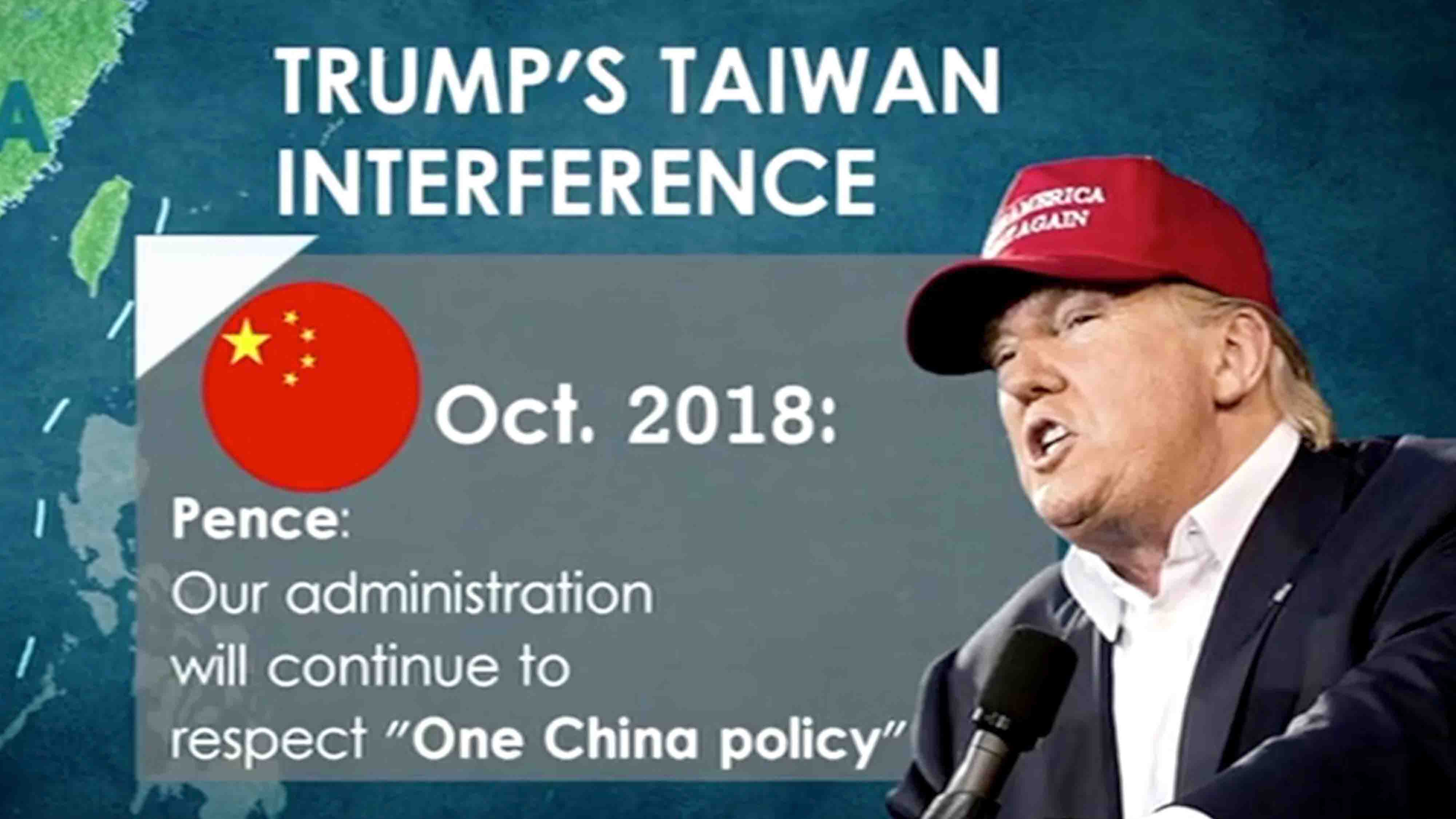
For decades, the US has acknowledged and respected the "One China principle" in regards to its policies with the Taiwan region. But the Trump administration has often used Taiwan as a bargaining chip with China, and in many instances, openly challenged China's sovereign rights over the island.
In June 2017, Trump approved an almost 1.5 billion US dollar arms sale to Taiwan.
Then in March 2018, the US President angered Beijing by signing the Taiwan Travel Act which allowed visits between US officials and those from Taiwan at all levels, a clear departure from the policy of previous US administrations.
In 1979, the US severed its official ties with Taiwan, but in June this year, the US opened the "American Institute in Taiwan". It was built at a whopping cost of 255 million US dollars. Experts say the institute is serving as the US' de facto embassy on the island.
America's meddling didn't end there.
Last month, US senators introduced a bill which proposed government action against any country that decides to cut diplomatic ties with Taiwan. The move followed El Salvador's decision to establish diplomatic ties with China.
Despite the interference, US Vice President Mike Pence, in his address at the Hudson Institute this month, officially stated that the US government will continue to respect the "One China policy". But, its actions on the ground are the complete opposite to the officially stated position.