
Art
14:44, 30-Apr-2019
At Amboise, Leonardo da Vinci's last years paint a picture of Franco-Italian harmony
 ["china"]
Share







Copied
Commemorations for Leonardo da Vinci's 500th anniversary begin this week in Amboise, in the Loire Valley, with France and Italy setting aside recent tensions to honor the memory of the Renaissance genius in the town where he spent his final years.
In 1516, Leonardo da Vinci, aged 64, left Italy to enter the service of King Francis I of France. Many of his masterpieces - St. John the Baptist, the Mona Lisa - followed him and were sold to the French monarch, forming a legacy now exhibited at the Louvre museum in Paris.
Amid diplomatic tensions between Rome and Paris, his legacy has become contentious, with Italy's culture undersecretary Lucia Borgonzoni in November telling Italian media she wanted to renegotiate the planned lending of his works to the Louvre for an anniversary exhibition, because "the French cannot have it all."
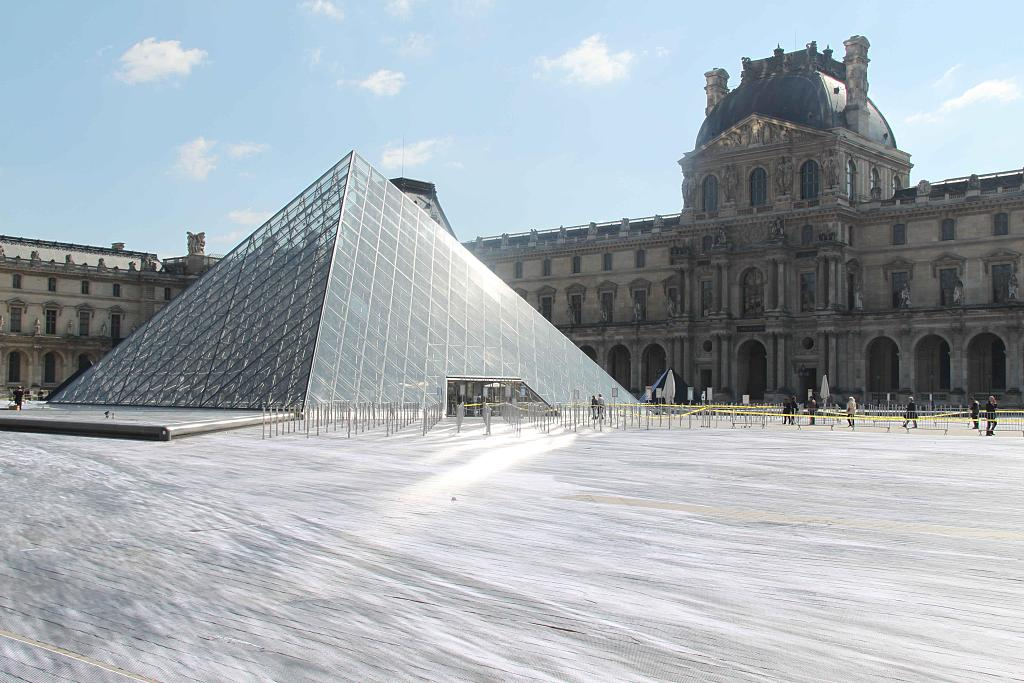
The Louvre pyramid in front of the Louvre museum in Paris. /VCG Photo
The Louvre pyramid in front of the Louvre museum in Paris. /VCG Photo
It is unclear, for example, whether the iconic drawing of the "Vitruvian Man" will eventually leave Venice to join the Louvre for the display.
But on Thursday, in Amboise, French President Emmanuel Macron and his Italian counterpart Sergio Mattarella will seek to ease strains between the two normally close allies that have grown more acute since mid-2018, mostly over migration policy.
They will gather at Leonardo's tomb, a modest grave in a chapel of Amboise castle containing his presumed remains, and will pay a visit to his house nearby, the Clos Luce, where he died on May 2, 1519.
"It's an extremely solemn gesture, showing that the two countries have this shared memory, this figure, a culture that binds our two countries," the director of Amboise castle Jean-Louis Sureau told Reuters in an interview.
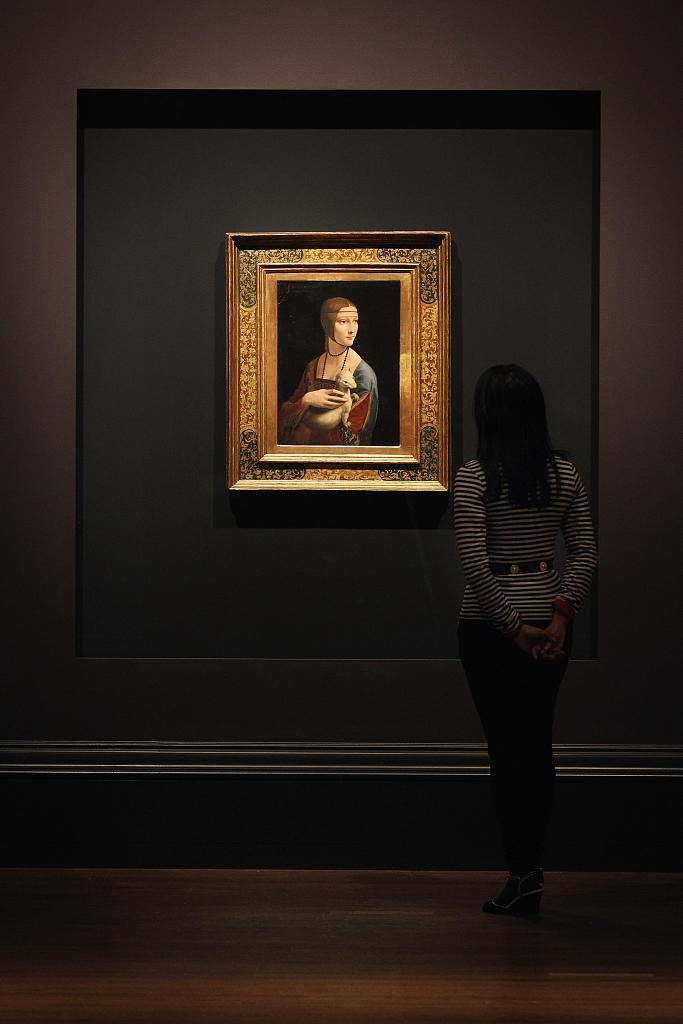
A gallery employee poses beside a painting by Leonardo da Vinci entitled 'Portrait of Cecilia Gallerani,' (The Lady with an Ermine) which forms part of the Leonardo da Vinci: Painter at the Court of Milan exhibition at the National Gallery on November 07, 2011 in London, England. /VCG Photo
A gallery employee poses beside a painting by Leonardo da Vinci entitled 'Portrait of Cecilia Gallerani,' (The Lady with an Ermine) which forms part of the Leonardo da Vinci: Painter at the Court of Milan exhibition at the National Gallery on November 07, 2011 in London, England. /VCG Photo
Da Vinci ‘s arrival in France was no accident because King Francis I wanted him to join the Court to participate in its international influence and refinement, Sureau said.
"Leonardo da Vinci was unquestionably born in Italy, he's Florentine, but beyond that, he led a career at the service of several powerful men. This career, and his life end here, in France," Sureau added.
During his three years in France, da Vinci focused on perfecting unfinished masterpieces, drawing, and scientific writing, but also took part in organizing lavish parties for the King of France.
"This universal man, who, to be clear, was first and foremost Italian, can also be seen as the symbol of European culture, built beyond traditional divisions," Catherine Simon Marion, delegate general of the Clos Luce, said.
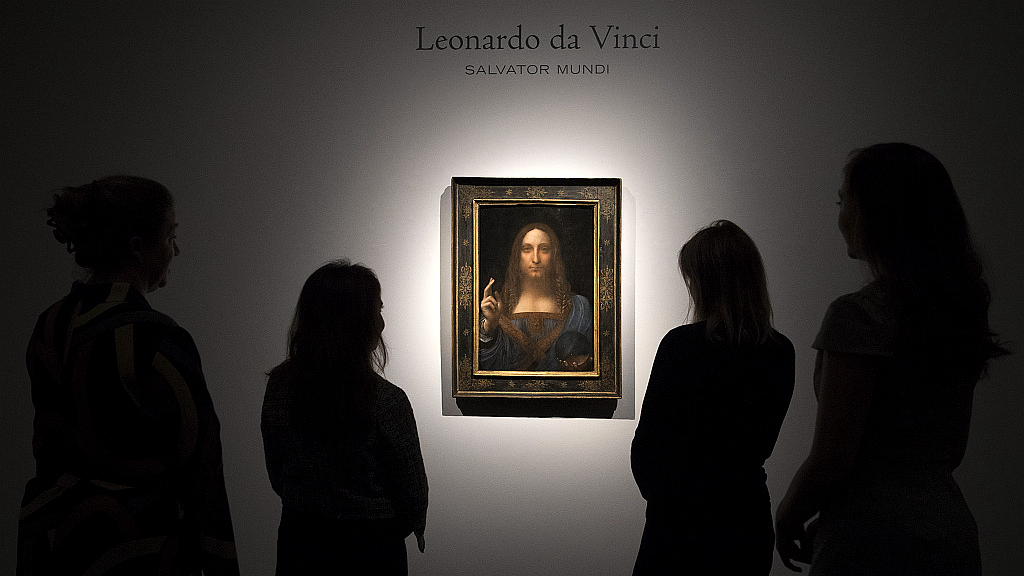
(Cover: Staff members pose next to a painting by Leonardo da Vinci entitled 'Salvator Mundi' before it is auctioned in New York on November 15, at Christie's on October 24, 2017, in London, England. /VCG Photo)
Source(s): Reuters