
Enviro
16:38, 15-May-2018
Study shows where the haze in Beijing comes from
 ["china"]
Share







Copied
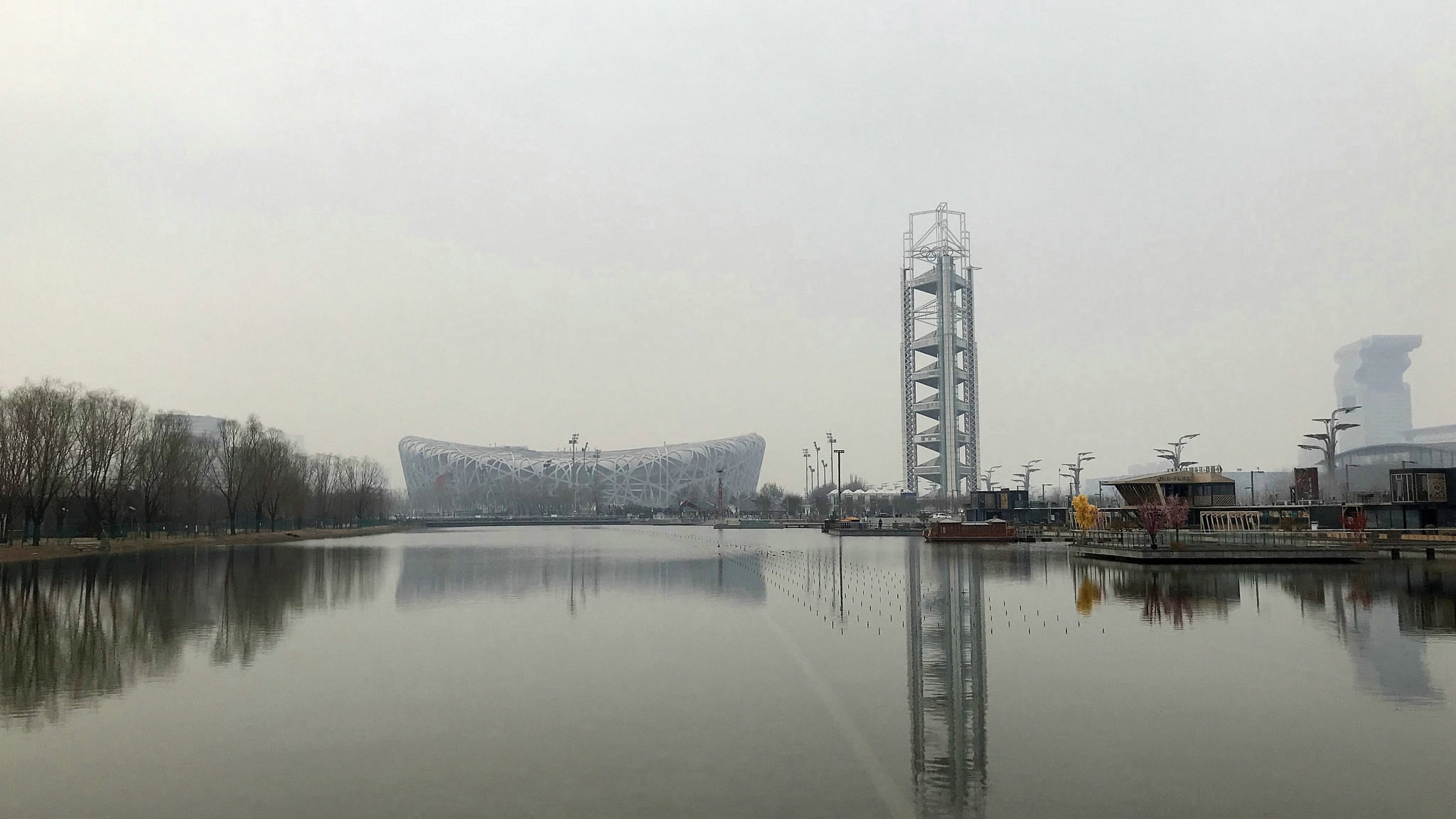
A study released on Monday by Beijing's environmental agency shows that the majority of Beijing's air pollution comes form sources outside the city.
PM2.5 refers to fine particles with a diameter of 2.5 micrometers or less that are suspended in Earth’s atmosphere. Along with impacting climate and precipitation, PM2.5 poses health risks. Because the particles are so fine, they can penetrate deep into the lungs and blood stream, leading to adverse health affects.
According to the study, more than half of the pollutants on heavily polluted days – defined as when the air quality index (AQI) exceeds 200 – come from Beijing's surrounding regions.
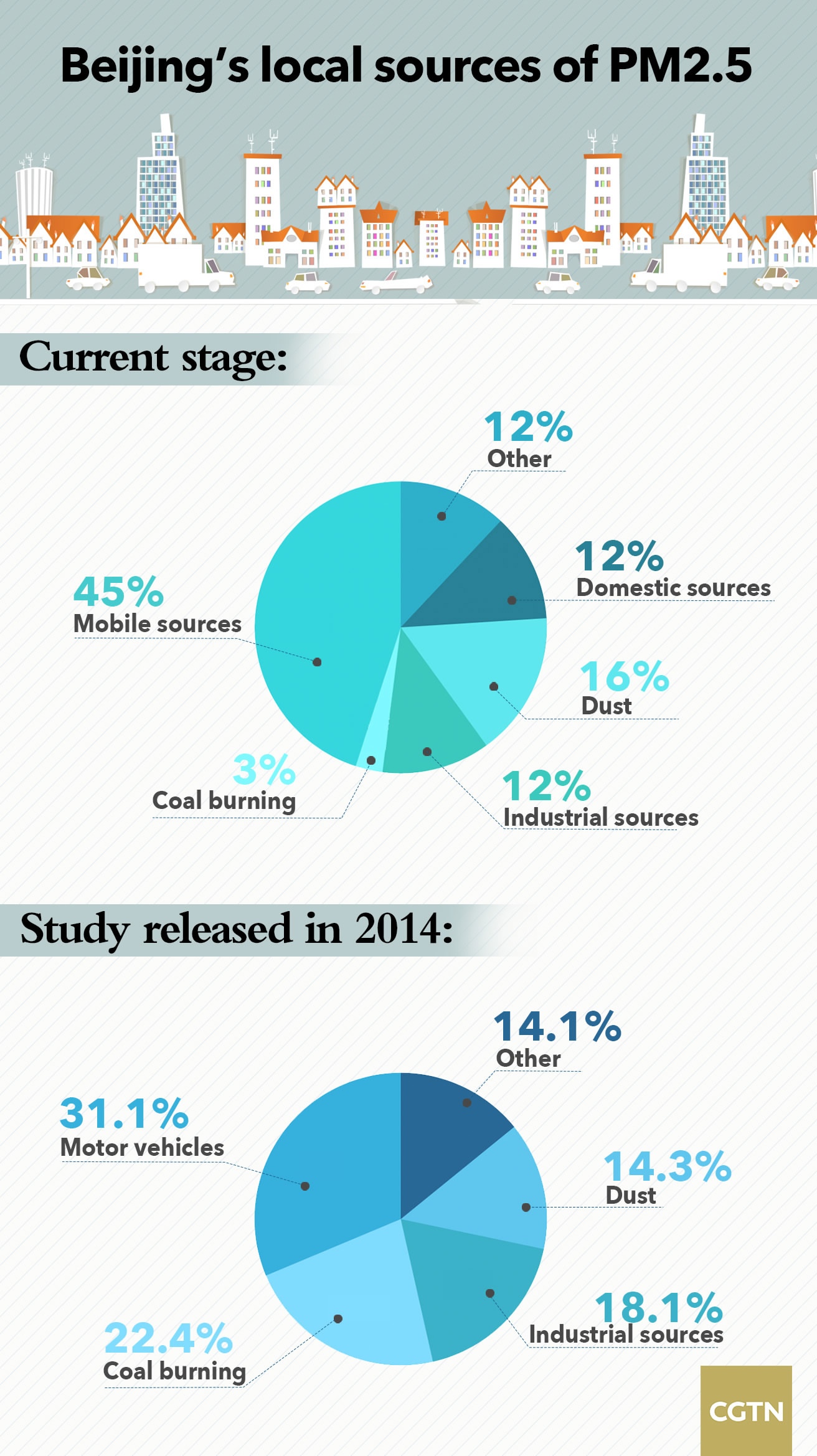
In terms of sources of PM2.5 within the city, motor vehicles and pollution-emitting engines accounted for the majority of the pollutants in the air.
CGTN Infographic
CGTN Infographic
Compared with 2014, the effects of coal burning has decreased significantly from 22 percent to three percent. The reduction can be attributed to increased use of natural gas for winter heating and the shutting down of smokestack factories.
Apart from giving people a clear picture about where the haze in Beijing comes from, the study also provides important clues for policymakers to carry on the battle against air pollution.
Experts suggest that the focus of the next phase should be controlling pollution caused by sources that are mobile (such as cars) and controlling the dust. Inter-regional mechanisms for joint prevention and control also need improving.
The study led by Beijing Municipal Environmental Protection Bureau, the city’s environment regulatory body, collected daily air samples in 11 different locations across Beijing and analyzed more than 300,000 sets of data.
[Infographic designed by CGTN's Yu Peng; Top image: File photo via VCG showing Beijing National Stadium, also known as the Bird's Nest, on a smogy day]