
Opinion
22:37, 29-May-2019
Trump's Japan visit: Differences beneath the face-saving harmony
 ["china"]
Share







Copied
Editor's note: Xu Fangqing is a senior editor at China News Week and an observer of Northeastern Asia and China's neighboring countries. The article reflects the author's opinion, and not necessarily the views of CGTN.
Trump wouldn't have bothered flying over the Pacific Ocean for a four-day state visit to Japan just for the ostensible honorary title as the first state guest in the new Reiwa era, considering the G20 summit is just around the corner in Osaka next month.
It would have been more practical to combine the state visit and G20 summit together.
But, why not? The answer lies in the schedule of Trump's stay in Japan.
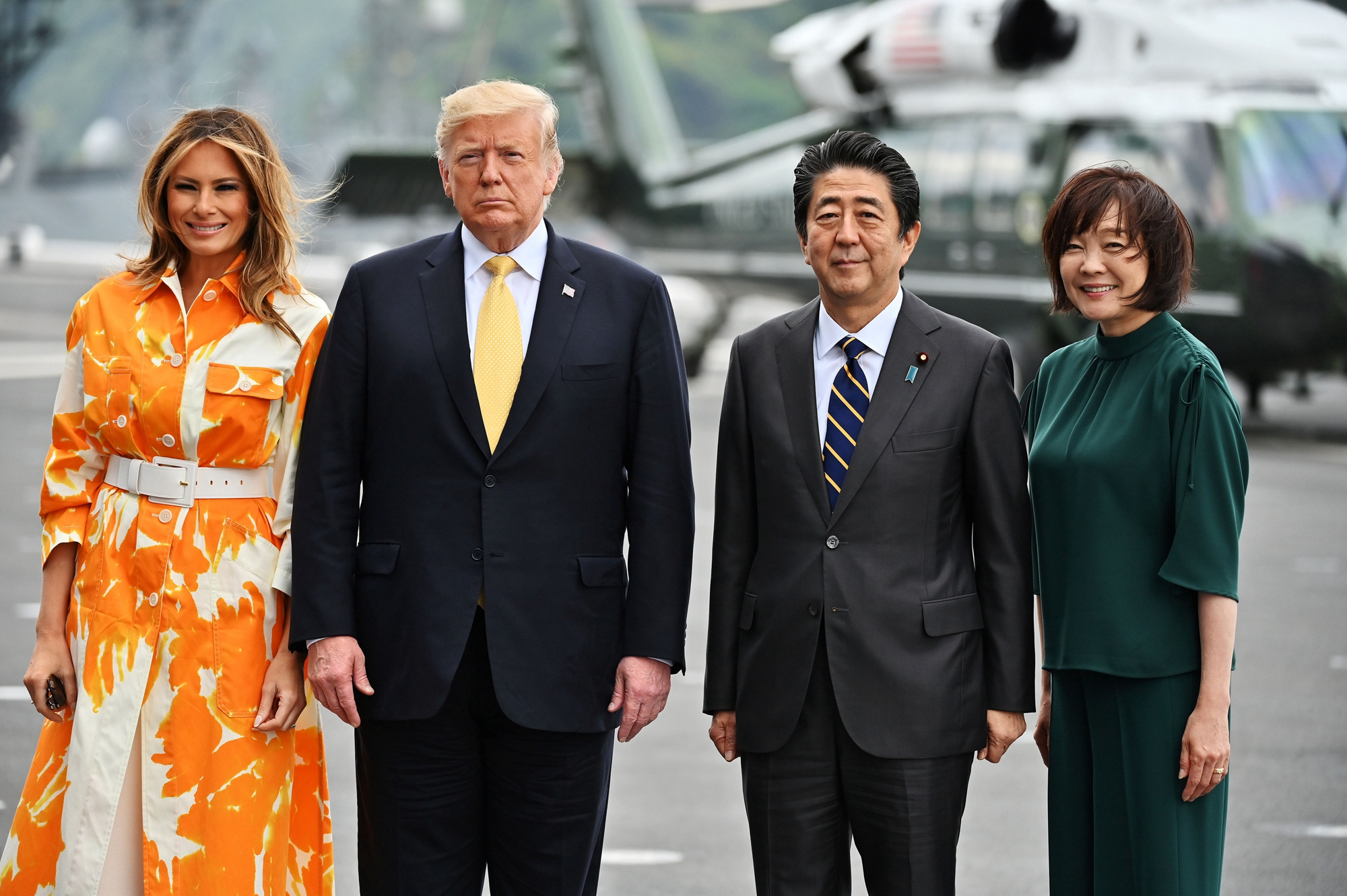
(L to R) U.S. First Lady Melania Trump, U.S. President Donald Trump, Japanese Prime Minister Shinzo Abe and his wife Akie Abe onboard Japan's warship Kaga in Yokosuka, Japan, May 28, 2019. /Reuters Photo
(L to R) U.S. First Lady Melania Trump, U.S. President Donald Trump, Japanese Prime Minister Shinzo Abe and his wife Akie Abe onboard Japan's warship Kaga in Yokosuka, Japan, May 28, 2019. /Reuters Photo
Economy, friendship, state guest and defense could be the four keywords of the four-day tour.
The banquet Trump joined after he landed included dignitaries and entrepreneurs in the Japanese business circle. Sensitive issues like car exports and agricultural tariffs were shied away from and the U.S. president saved his counterpart's face by agreeing to a period of 180 days to strike a deal about the vehicle issue.
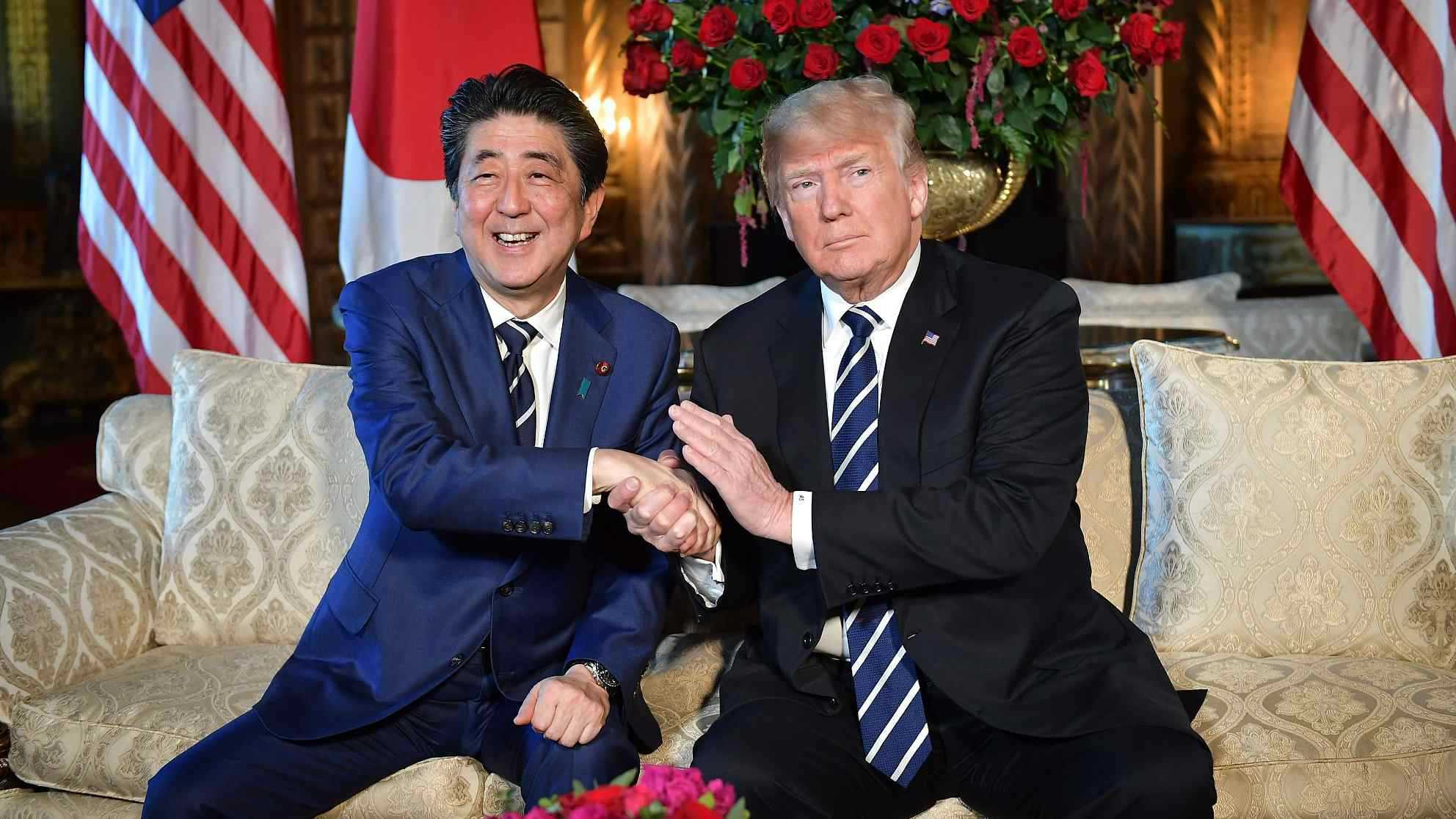
The outspoken president apparently softened his tough voice on trade, U.S. military stationing, and other issues while he enjoyed the golf-playing, sumo, barbecue and meeting the new emperor.
However, we may only see the above part of an iceberg and neglect a raft of differences between the long-term alliance. The rifts won't paralyze the bond which was forged since WWII but could challenge the conventional integrity.
The last day demonstrates this disloyalty when Trump boarded the converted helicopter-carrier ship and waved a bill worth of billions of dollars for 100 F-35 B jet fighters, while Abe said this was a critical step because the deal means that Japan, for the first time after WWII, owns its aircraft barrier, another historic breakthrough for Japan's military force.
Obviously, both get what they want through tacit coordination but this also sows the seed which undermines the foundation of the U.S.-Japanese alliance. Japan's appeal to be a "normal" and "independent" country would sooner or later go against the role America has been pinned as his Asian partner.
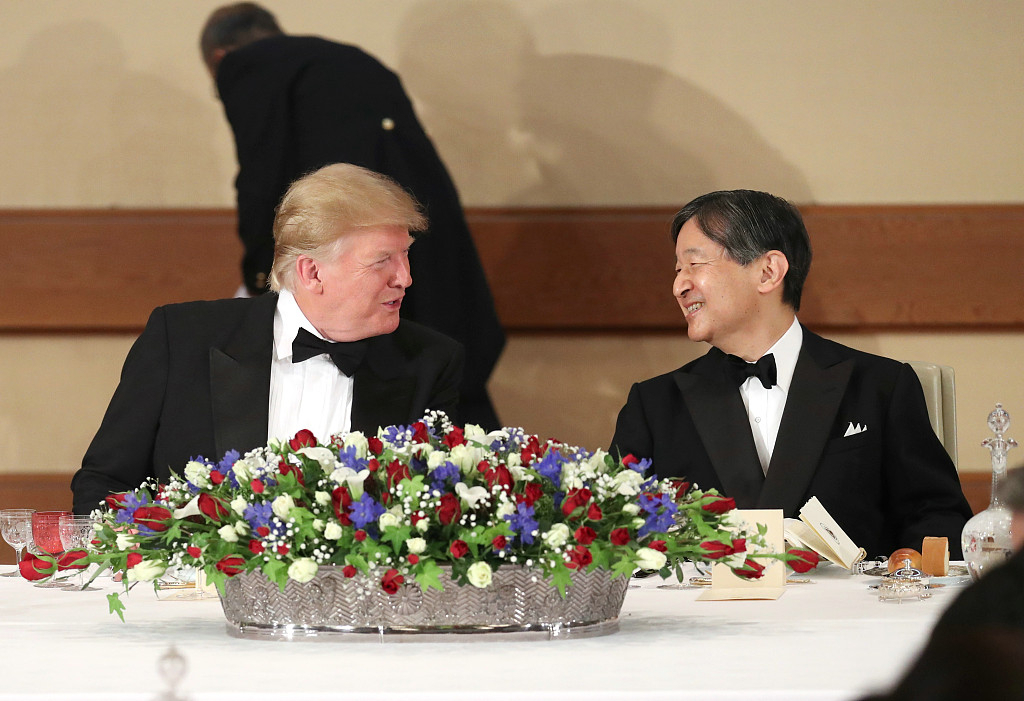
Japanese Emperor Naruhito (R) chats with U.S. President Donald Trump during a banquet at the Imperial Palace in Tokyo, Japan, May 27, 2019. /VCG Photo
Japanese Emperor Naruhito (R) chats with U.S. President Donald Trump during a banquet at the Imperial Palace in Tokyo, Japan, May 27, 2019. /VCG Photo
Moreover, the conservative-controlled U.S. administration has shied away from the multilateral trade system while Japan as the leading country of the Comprehensive Progressive Trans-Pacific Partnership (CPTPP) and other free trade agreements have advanced multinational free trade.
Besides, Japan and the U.S. hold contradictory positions over the nuclear issues in Iran and the Korean Peninsula. Iran, as a major crude oil provider to Japan, has special relations with Tokyo and its Prime Minister Shinzo Abe. Japan has rarely expressed its clear supportive stance over the Iranian nuclear deal which the Trump administration pulled out of.
Regarding of nuclear talks on the Korean Peninsula, Japan is more sensitive than U.S. Japan tends to overreact to any activity from the Democratic People's Republic of Korea (DPRK) as Tokyo sees its northwestern neighbor as one of its biggest security threats.
The current situation is more realistically that the two leaders are just playing their roles which benefit their own countries.
(If you want to contribute and have specific expertise, please contact us at opinions@cgtn.com.)