
Europe
22:24, 25-May-2019
Reporter's Diary: A divided Poland to vote on EU parliament
 ["china"]
Share







Copied

Just days before the EU elections started, European Commission President Jean-Claude Juncker unleashed a torrent of "insults" at some of the leaders of the EU countries while criticizing their position on migrants.
"These populist, nationalists, stupid nationalists, they are in love with their own countries," Juncker said.
The statement pushed Twitterati into an avalanche of anti-EU comments, which reflects the growing distrust in the institution. The division started in 2015 during the peak of the migrant crisis, when four EU members in Eastern Europe known as the Visegrad Four decided to act together to face the more powerful countries in Western Europe. Poland is the biggest and economically strongest among the Visegrad Four, and its government was leading the anti-EU establishment rebellion.
Yet not all Poles are supporting their government's move against the EU, and that is clearly visible ahead of Sunday's elections for the EU parliament. Polish citizens head to voting stations this Sunday to elect 51 representative to the EU parliament. In a country deeply divided over many EU related questions, and with the government embroiled in numerous spats with officials in Brussels, analysts are expecting the highest turnout in the history of EU elections.
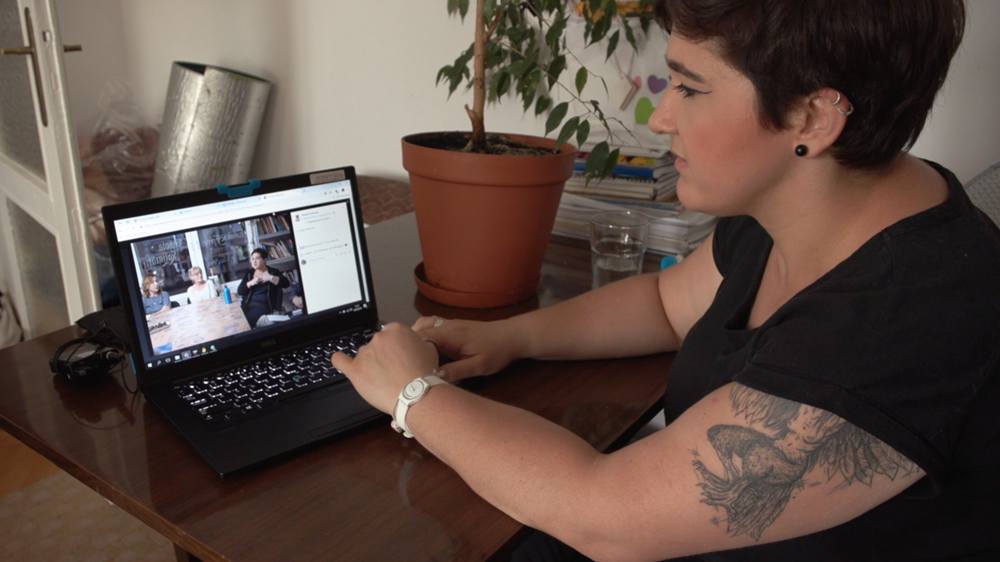
Anka Adamczyk, an EU supporter, shows her Facebook page where she promotes the agenda of the Razem party. /CGTN Photo
Anka Adamczyk, an EU supporter, shows her Facebook page where she promotes the agenda of the Razem party. /CGTN Photo
Anka Adamczyk is a feminist and social activist from Warsaw, who actively advocates for more Polish integration into the EU. In Sunday's elections, she'll vote for the pro-EU, leftist party Razem party. But she thinks the majority of votes will go to the ruling Law and Justice party.
"The thing that worries me more is that there are forces extremely far-right, it's not Law and Justice, it's the neo-fascists movements that seem to be able to have representatives in the European parliament right now and this is kind of scary," Anka said.
This "scary" scenario may have pushed president of the European Council, Donald Tusk, into coming to Poland last week to personally campaign for the pro-European option at the elections – the European Coalition. While Tusk and the European Coalition have significant support in Poland, their opposition is not lacking in numbers either.
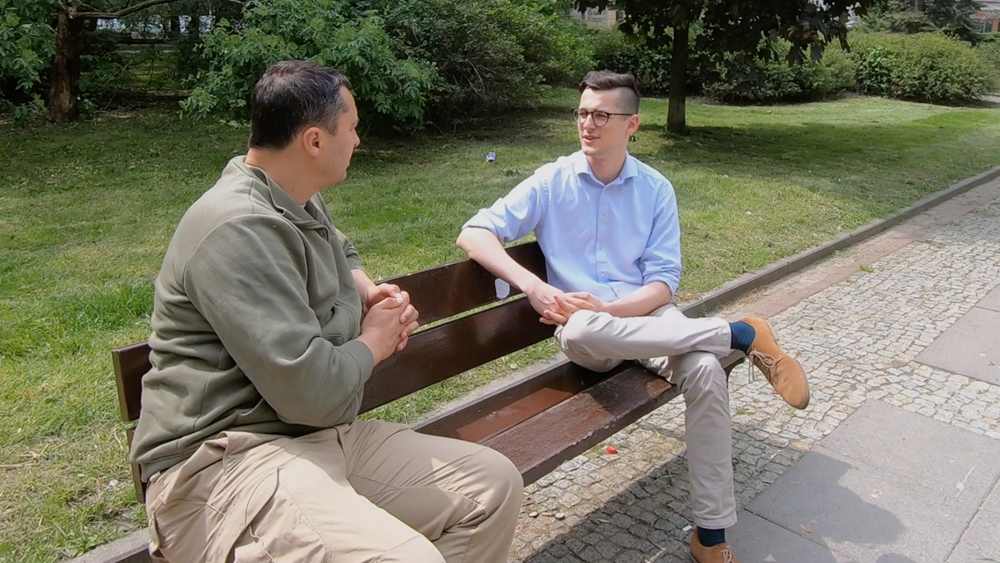
Rafal Pytko, a law student, speaks with CGTN's Aljosa Milenkovic. /CGTN Photo
Rafal Pytko, a law student, speaks with CGTN's Aljosa Milenkovic. /CGTN Photo
In Warsaw city center we met 24-year-old Rafal Pytko, a law student who is also taking an apprenticeship at a law firm. Rafal supports Poland's EU membership, but has some serious objections to how it is run.
"Currently the elites in the EU, they've lost connection with the basic fundamentals of the EU, which are a common market and treating every country equally. Because, right now in the EU we are facing a crisis which basically started many years ago," Pytko said.
Local analysts are saying that both the ruling Law and Justice party and the European Coalition will produce equal results at Sunday's elections.
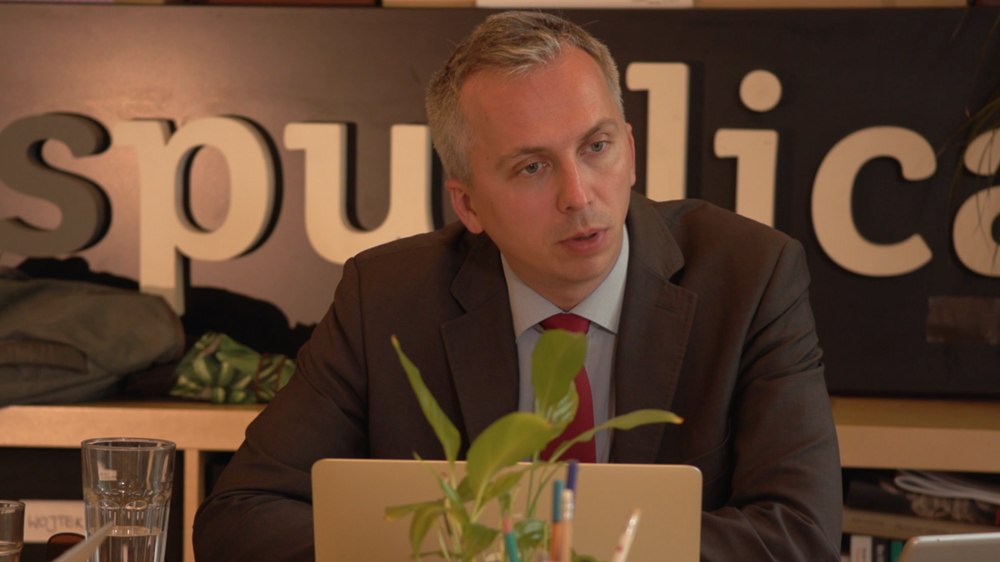
Wojciech Przybylski, chief editor of Visegrad Insight, at his office. /CGTN Photo
Wojciech Przybylski, chief editor of Visegrad Insight, at his office. /CGTN Photo
"What will be different is that the newcomers or critics of the EU will be more vocal, we will have some more room and space in the European parliamentary debate, and they will be more exposed to the discourse and to the media," Wojciech Przybylski, chief editor of Visegrad Insight told CGTN.
Among Polish citizens, there is no doubt that they want the EU and are rejecting the idea of a so-called "Polexit." But the string of recent spats between the governments in Warsaw and Brussels have seriously shaken many Poles' trust in the EU leadership.
(Cover: A digital clock at the Warsaw Central Train Station counting down to the EU elections. /CGTN Photo)