
Opinions
10:48, 06-Sep-2018
Opinion: Macron can't save multilateralism and the European project by himself
Updated
10:18, 09-Sep-2018
 ["china"]
Share







Copied
Editor's note: The article was first published in China Plus on September 5. It reflects the author's opinion, and not necessarily the views of CGTN.
Europe has traditionally taken on a leadership role in fostering international governance. But amid the current contest of ideas taking place in the world, it is beginning to struggle. This was evident towards the end of August, when France’s President Emmanuel Macron made a keynote speech at a meeting of the French diplomatic mission. Although the gathering aimed to promote multilateralism, the takeaway message was that France is struggling to lead the European Union through the challenges it is facing.
At the August meeting, Macron said that international multilateralism and the development of the European Union are now experiencing an "unprecedented crisis". The leaders of France and Germany are publicly engaging in dialogue with the United States, and have privately established personal relations with US President Donald Trump. But these efforts have been to no avail. The Trump administration has a deep-rooted belief in unilateralism, and President Trump can’t see past his belief that the European Union is taking advantage of the US. This is why he has taken no steps towards resolving the trade conflicts with Europe, and it’s why he is pushing the European members of NATO to inject more funding into the alliance.

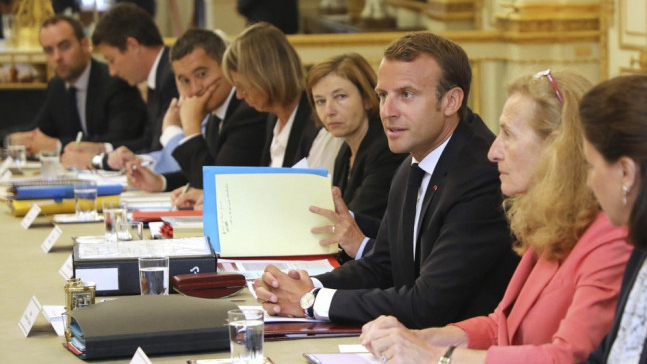
French President Emmanuel Macron looks on during a wreath-laying ceremony at the monument for fallen soldiers at the Citadel in Copenhagen, Denmark on Aug 28, 2018./VCG Photo
French President Emmanuel Macron looks on during a wreath-laying ceremony at the monument for fallen soldiers at the Citadel in Copenhagen, Denmark on Aug 28, 2018./VCG Photo
The United States is also creating obstacles for the European Union in other areas of concern, such as the Iran nuclear deal and the Paris climate change accord. This obstructionism puts the important achievements the European Union has made on the world stage at risk. President Trump is also doing his best to weaken the European Union by denigrating European integration, ignoring European concerns, and loudly heckling voices that support the European project. This behavior has led European Union leaders to go so far as to say that the United States no longer regards Europe as a strategic partner; instead, it is becoming an opponent to Europe.
This is taking place against a backdrop of rising doubt about the value of European integration. Brexit is a symptom, but the underlying problem is the gap in wealth between countries in northern and southern Europe. And it is compounded by the differences between Eastern and Western Europe on the issues of refugees and bloc governance. These factors are limiting Europe’s ability to shape international relations. The only area of growing consensus seems to be the desire to strengthen European defense cooperation.
At the meeting of French ambassadors, Macron carried forward France’s diplomatic strategic vision. Speaking to the themes of alliance, values, and interests, he expounded France's analysis and response to the international situation and various hot-button issues.
He criticized President Trump's unilateralism, but also explained why it was important to maintain an open dialogue. He affirmed China's participation in traditional multilateralism, but speculated that "China, for its part, is promoting its own worldview; its own vision of a reinvented more hegemonic multilateralism." And he spoke about a tendency in other parts of the world to look disparagingly at Europe, while reminding his audience about France's leadership in policy areas such as environmental protection, education, health, and security.
In terms of global governance, President Macron believes that China's Belt and Road Initiative "is a vision of globalization that has its virtues in terms of stabilizing certain regions." He, therefore, wants "France to be able to provide a balanced approach that will safeguard our interests and our vision of the world in this constructive, demanding, and confident dialogue with China."
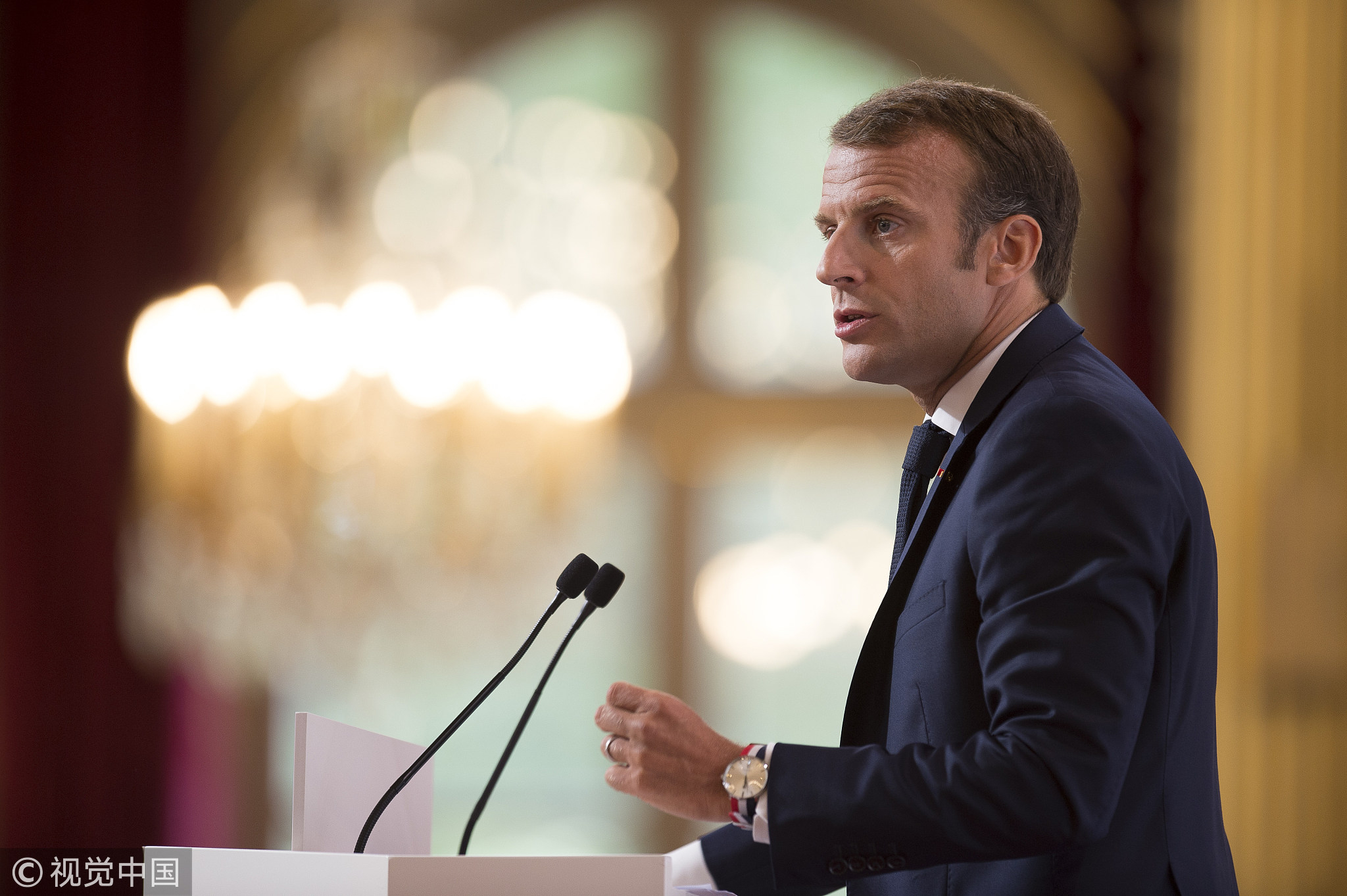
French President Emmanuel Macron delivers a speech during the annual French ambassadors' conference at the Elysee Palace in Paris, France, on Aug 27, 2018./VCG Photo
French President Emmanuel Macron delivers a speech during the annual French ambassadors' conference at the Elysee Palace in Paris, France, on Aug 27, 2018./VCG Photo
And he affirmed his belief in the importance of maintaining European integration, and for France to be a role model in Europe that stands in opposition to a growing tendency towards decentralization. He also spoke of the need to promote European Union reform.
President Macron has visited 14 of the 28 European Union member countries, including Denmark – his visit was the first to the country by a French head of state in 36 years. And he announced that France will host the G7 summit next year with the goal of promoting "a new Indo-Pacific strategic objective." This flurry of diplomatic activity is undoubtedly positive when it comes to pushing back against unilateralism and revitalizing the European integration project. But the challenge is in turning a short-term burst of goodwill into a sustained improvement in lasting relationships.
When he proposed the goal that the European Union will catch up with the United States and China by 2024, he was criticized for being out of touch with reality. His plan to grant more power to the Eurozone, especially regarding the establishment of mutual funds, was opposed by the Netherlands and Germany. And what’s worse, President Macron's travels throughout Europe have been seen by some as being self-interested, as his newly established political party is seeking a seat in the European Parliament next year. The French public understands that France alone cannot revitalize Europe, but are divided about where they should turn for support.
The promotion of multilateralism is a core concern for France, and for the European Union more broadly. China shares this concern, which is why it is strengthening its cooperation with the European Union so that together they can safeguard the international multilateral system. This is a partnership that will doubtlessly make a positive contribution to the ongoing development of international relations. To this end, China and the European Union should strengthen their mutual trust and understanding, and work together for everyone's benefit.
(If you want to contribute and have a specific expertise, please contact us at opinions@cgtn.com.)