
Business
15:29, 19-Jun-2018
'The American consumer is going to pay the bill' for NAFTA negotiations
 ["north america"]
Share







Copied
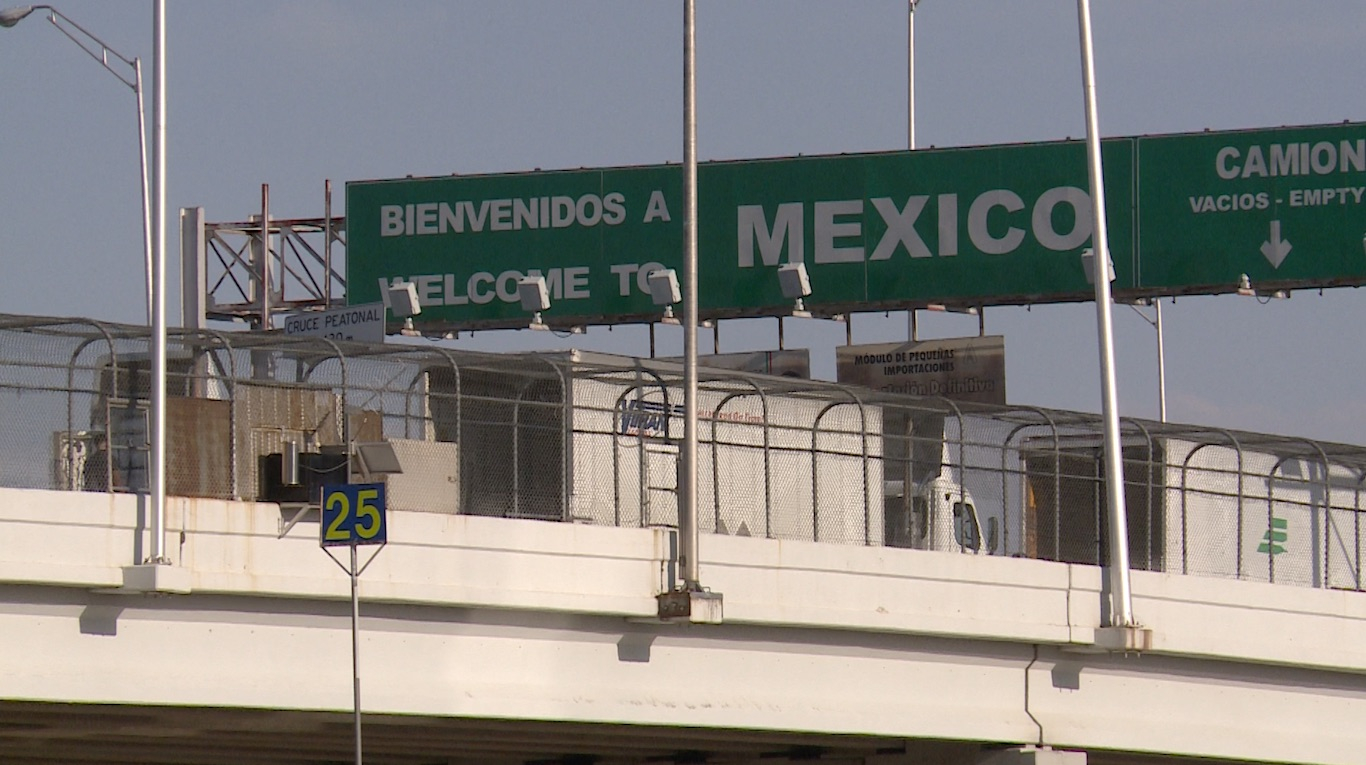
As trade tensions build between the US and China, efforts continue to salvage another of America’s key trade relationships. The US, Canada and Mexico say talks on renegotiating the North American Free Trade Agreement, or NAFTA, will press ahead this year despite Washington’s decision to impose steel and aluminum tariffs on its neighbors. A spat between President Trump and Canada’s Prime Minister Justin Trudeau at the recent G7 summit has cast doubt on whether a deal can be reached.
As those NAFTA talks struggle to make headway, parts of the United States that depend on cross-border trade are watching developments closely. Among those areas are communities along the US border with Mexico. The largest urban area on the frontier is made up of the cities of El Paso, Texas and Ciudad Juárez in the Mexican state of Chihuahua.
The sprawling “Borderplex,” as it’s known locally, has a highly integrated economy spanning both sides of the border. In this area it’s hard to find a business that would agree with President Trump’s assertion that NAFTA is the worst trade deal made by any country.
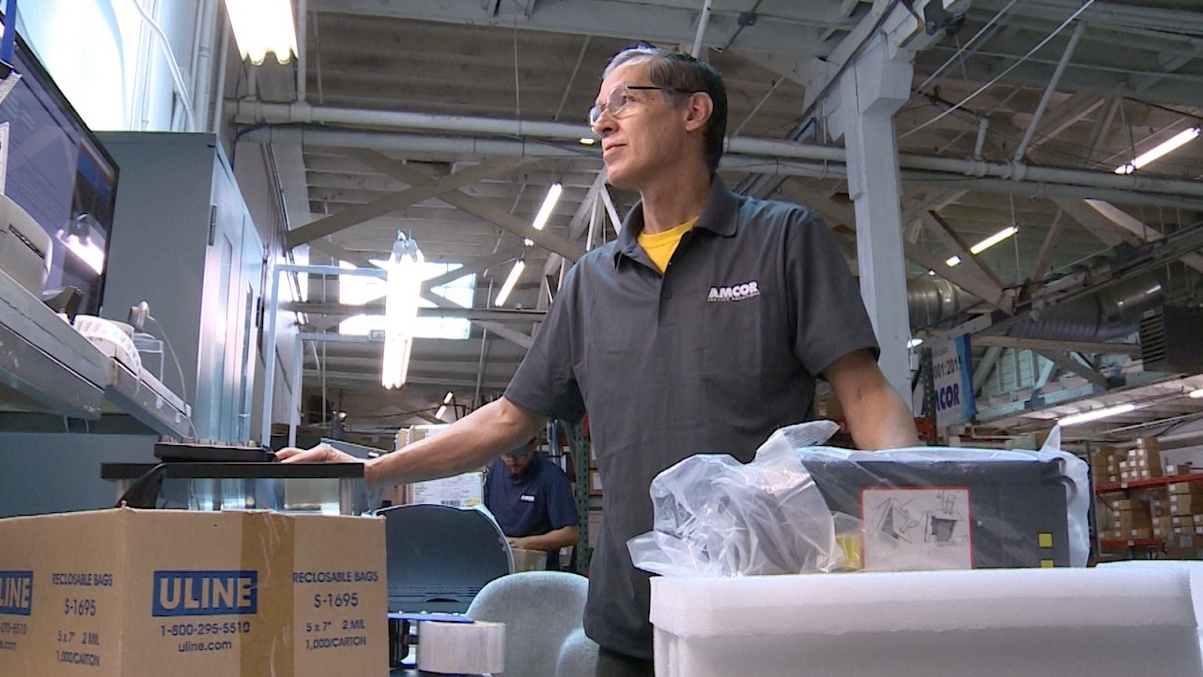
An employee processes shipments at Tecma’s warehouse in El Paso. The company ships packages in and out of Mexico for large US manufacturing firms looking to reduce costs by using Mexican workers. /CGTN Photo
An employee processes shipments at Tecma’s warehouse in El Paso. The company ships packages in and out of Mexico for large US manufacturing firms looking to reduce costs by using Mexican workers. /CGTN Photo
“It is not the worst trade deal. It has done more for North America than anyone could even have anticipated,” said K. Allen Russell, chief executive of El Paso manufacturing company Tecma. His company depends on tariff-free movement of goods across the US-Mexico border. Tecma provides US corporations with warehouse storage space in El Paso, and manufacturing facilities in Ciudad Juárez. It employs around 8,000 people in Mexico where labor costs are lower.
“The American consumer is going to pay the bill,” said Russell, predicting what might happen if tariffs come into force should the US leave NAFTA. “The product is just going to be more expensive. It doesn’t mean anybody is going to move from Mexico to the US to produce the product,” he said.
El Paso-Juárez is one of the largest international border regions in the world. It has a population of around 2.5 million people, and an economy to match. Mexico is Texas’ largest export market, and more than a fifth of cross-border trade between Texas and Mexico flows over the border at El Paso.

Thomas Fullerton looks out over Ciudad Juarez, Mexico, from the campus of the University of Texas at El Paso. /CGTN Photo
Thomas Fullerton looks out over Ciudad Juarez, Mexico, from the campus of the University of Texas at El Paso. /CGTN Photo
“It will throw a monkey wrench into how things operate rather seamlessly at this point,” said Thomas Fullerton, who studies the region’s economy at the University of Texas at El Paso. “Existing operations will probably remain in place but the level of investment and business formation will plummet,” he warns.
But not everyone is so sure. Nicole Grado, who runs a company that sells packaging, says 90 percent of her customers ship internationally. She’s now looking for ways to diversify her business, and says she’s confident other US companies could thrive without NAFTA. “There would be changes,” she said, “but it’s like everything, you adjust to those changes and you adapt. And you figure out ways to continue moving forward.”
While the outcome of the NAFTA talks remains far from certain, business on the border continues. El Paso’s economy is projected to grow 2 percent this year. But most here hope a long-term deal can be reached soon to avoid the lingering uncertainly hanging over this region’s economy.